
GE HealthCare Technologies Inc.

Search documents
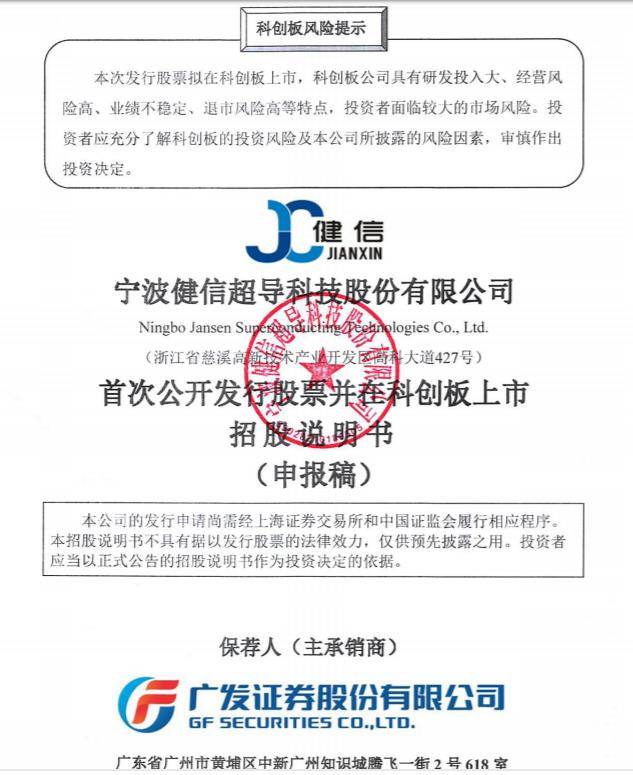
健信超导IPO:许建益一家三口控制六成表决权,妹夫赵吉明持股8.7%
Sou Hu Cai Jing· 2025-05-13 06:52
Core Viewpoint - Ningbo Jianxin Superconducting Technology Co., Ltd. has received acceptance for its IPO application on the Sci-Tech Innovation Board, with Guangfa Securities as the sponsor [3] Company Overview - Jianxin Superconducting primarily engages in the research, production, and sales of core components for medical magnetic resonance imaging (MRI) equipment, including superconducting magnets, permanent magnets, and gradient coils, which account for approximately 50% of the cost of MRI equipment [3] - The company ranks fifth globally and second among domestic companies in terms of market share for superconducting magnets used in MRI equipment, making it the largest independent supplier of superconducting magnets worldwide [3] Financial Performance - Total assets as of December 31, 2024, are projected to be 671.28 million yuan, an increase from 643.48 million yuan in 2023 and 527.12 million yuan in 2022 [4] - The company's net profit is expected to rise to 55.78 million yuan in 2024, up from 48.73 million yuan in 2023 and 34.63 million yuan in 2022, indicating profit growth without revenue increase in 2024 [4] - The operating income for the years 2022 to 2024 is reported as 359.3 million yuan, 450.64 million yuan, and 424.5 million yuan respectively [4] Shareholding Structure - Xu Jianyi holds 41.51% of the company's shares, making him the controlling shareholder, while his family members Xu Hui and Xu Dianbo hold 4.36% each, collectively controlling 59.92% of the voting rights [6][7] - The family members have signed a concerted action agreement, indicating a unified decision-making process among them [7] Leadership Background - Xu Jianyi, born in September 1953, has extensive experience in the magnetic resonance industry since the late 1980s and has held various leadership positions in related companies [8]

高盛:中国医疗保健 - 2025 年 4 月中国医院设备招标 - 环比增长高于预期
Goldman Sachs· 2025-05-13 05:39
Investment Rating - The report maintains a "Buy" rating for both Mindray and United Imaging, indicating a positive outlook for their stock performance in the near future [82][83]. Core Insights - The procurement value of main medical devices in China has shown strong year-over-year (YoY) growth, with a month-over-month (MoM) increase of 13% in April, surpassing expectations [1]. - The report anticipates a high level of activity in medical equipment procurement throughout 2025, driven by government funding and a recovery in hospital demand [1][25]. - Mindray is expected to maintain its market leadership with multiple growth drivers, while United Imaging is projected to see significant long-term growth potential due to increasing service-related revenue [82][83]. Summary by Sections Procurement Trends - The total bidding value for nine main medical devices in China has reached a high level, with positive MoM growth observed in seven out of nine devices in March [26]. - The report notes that procurement activities are supported by government funding and the implementation of a trade-in program, which is expected to drive demand in the coming quarters [1][25]. Company Performance - Mindray's revenue growth is projected to be +10% in 2Q24, +40% in 3Q25, and +36.5% in 4Q25, reflecting a recovery in its end markets [9]. - United Imaging's management expressed optimism about the upcoming trade-in program in 2025, expecting a smoother process compared to 2024 [9]. Market Dynamics - The report highlights that both domestic and multinational companies achieved notable YoY growth in April, indicating a balanced competitive landscape in the medical device sector [64]. - The trend of domestic substitution is not particularly evident, as both local and multinational companies are performing well in the procurement market [64].
健信超导科创板IPO“已受理” 主营医用磁共振成像设备核心部件研发及产销
智通财经网· 2025-05-09 10:37
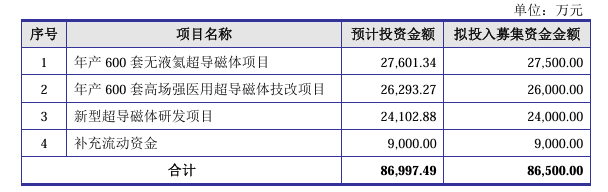
Core Viewpoint - Ningbo Jianxin Superconducting Technology Co., Ltd. has initiated its IPO process on the Shanghai Stock Exchange's Sci-Tech Innovation Board, aiming to raise approximately 865 million yuan for its operations in the MRI equipment sector [1]. Company Overview - Jianxin Superconducting specializes in the research, production, and sales of core components for medical MRI equipment, including superconducting magnets, permanent magnets, and gradient coils, which account for about 50% of the MRI equipment's core component costs [1]. - The company has established itself as the leading independent supplier of superconducting magnets globally, with a diverse product matrix that includes various types of superconducting magnets [1]. - In the permanent magnet sector, Jianxin is recognized as the largest supplier of MRI permanent magnets worldwide, offering high-quality products that are economically viable and suitable for grassroots medical systems [1][2]. Market Position - As of 2024, Jianxin holds a global market share of approximately 4.2%, ranking fifth among the top five superconducting magnet manufacturers, following Siemens Healthineers, GE Healthcare, Philips Healthcare, and United Imaging Healthcare [2]. - The company has formed strategic partnerships with renowned MRI equipment manufacturers, enhancing its supply chain and reducing delivery costs significantly [2]. Financial Overview - The company reported revenues of approximately 359 million yuan, 451 million yuan, and 425 million yuan for the years 2022, 2023, and 2024, respectively, with net profits of about 34.63 million yuan, 48.73 million yuan, and 55.78 million yuan during the same periods [3]. - As of December 31, 2024, the total assets of the company are approximately 671.28 million yuan, with a debt-to-asset ratio of 29.48% [4]. - The company has maintained a consistent increase in net profit margins, with a basic earnings per share of 0.44 yuan for 2024, up from 0.28 yuan in 2022 [4]. Fundraising and Investment Plans - The funds raised from the IPO will be allocated to several key projects, including the production of nitrogen-free superconducting magnets and the development of new superconducting magnet technologies, with a total investment plan of approximately 869.97 million yuan [3].
飞利浦下调2025年利润指引,预计关税致成本增加3亿欧元 | 财报见闻
Hua Er Jie Jian Wen· 2025-05-06 08:17
Group 1 - Philips reported Q1 2025 sales of €4.1 billion, a 2% year-over-year decline, exceeding analyst expectations of €4.02 billion [1] - The company lowered its full-year profit forecast due to increasing trade barrier costs, expecting adjusted operating profit margins to be between 10.8% and 11.3%, a decrease of 100 basis points from previous expectations [1] - Despite the profit forecast reduction, Philips reaffirmed its comparable sales growth forecast of 1% to 3% for the year [1] Group 2 - The U.S. market represents approximately 40% of Philips' projected sales for 2024 and contributes one-third of its tax revenue, highlighting the impact of U.S. trade policies on the company [2] - CEO Roy Jakobs emphasized the focus on controllable factors amid uncertainties from potential tariff impacts, noting that competitors like GE HealthCare also warned of profit impacts due to tariffs [3] - Philips is accelerating production in 46 U.S. factories and further localizing operations in China to mitigate trade tensions, although the specifics of tariff rates and timelines remain unclear [4]

MedTechs Adjust 2025 Outlook Amid Tariffs: What Investors Need to Know
ZACKS· 2025-05-05 20:00
Core Insights - The MedTech industry, particularly health technology, is facing challenges in 2025 due to rising tariffs and unstable capital markets, leading to adjusted expectations across companies [1][4] Industry Overview - The re-emergence of aggressive U.S. trade policies, including a 145% baseline tariff on Chinese imports, has significantly impacted global supply chains, particularly for medical technology companies with manufacturing ties to China and Mexico [2] - Health tech startups are experiencing more difficulties compared to larger companies, facing production delays, higher costs, and tighter access to funding, which may hinder innovation in key areas [4][12] Company Performance - GE Healthcare reported a 3% increase in first-quarter revenues and a 51% surge in net income, but reduced its full-year adjusted EPS forecast due to an 85 cents per share tariff impact [5] - Johnson & Johnson disclosed a $400 million tariff burden affecting its medical device exports to China, while also announcing a $55 billion domestic investment plan [6][7] - Abbott achieved a 4% revenue increase and 8.2% growth in net earnings in Q1, but anticipates a significant tariff impact, although it maintained its earnings forecast [8][9] - Boston Scientific's first-quarter adjusted EPS rose by 33.9% with a 20.9% revenue growth, and the company raised its 2025 guidance despite expecting a $200 million tariff hit [10][11] Startup Challenges - U.S. digital health funding rose to $3 billion in Q1 2025, but remains below the $6.6 billion peak in 2021, indicating a cautious investment environment for startups [12] - Startups like Reperio Health are facing pressures from tariffs and supply chain issues, while others like Float Health are focusing on cost-cutting and improving patient access [12][13] Future Outlook - Most MedTech companies are preparing for a future with persistent trade barriers, emphasizing the need for supply chain diversification and U.S. manufacturing investments [14]





商务部反倾销调查开启,中美印 CT 球管博弈升级
Guan Cha Zhe Wang· 2025-05-04 08:20
Core Viewpoint - The Ministry of Commerce of China has initiated an anti-dumping investigation into imported medical CT tubes from the United States and India, escalating the competition in the high-end medical equipment sector among China, the U.S., and India [1]. Industry Overview - CT tubes are critical components of CT devices, often referred to as the "heart" of the equipment, affecting image quality and device lifespan [2][3]. - The global market for CT tubes is valued at hundreds of billions, with a replacement demand of approximately 100,000 to 140,000 units globally. In China, the annual demand for new CT tubes is around 5,000 units, with a replacement demand exceeding 100,000 units due to an aging population and increasing health check needs [4]. Market Dynamics - The global CT tube market is dominated by major international players such as Siemens, GE, and Philips, which hold about 72% of the market share. Domestic manufacturers face challenges in performance and quality compared to foreign products, which have advanced technologies [4]. - The anti-dumping investigation presents both opportunities and challenges for domestic companies. High-end hospitals require high-performance CT tubes, while county-level hospitals prioritize cost-effectiveness [5]. Domestic Market Developments - Domestic manufacturers are making strides in the mid-to-low-end market, with companies like Wandong Medical and Kunshan Yiyuan achieving breakthroughs in key technologies. The government supports domestic CT tube development through policies that mandate a minimum percentage of domestic equipment in hospitals [6][7]. - The domestic CT tube market is expected to grow, with a projected increase in domestic production rates to over 40% by 2025. Currently, domestic CT tubes are priced 30%-50% lower than imports, with maintenance costs reduced by 60% [6]. Investment and Innovation - The CT tube sector has seen active financing activities since 2020, indicating a focus on overcoming key technological challenges. Emerging companies are developing advanced products, such as high-capacity tubes and liquid metal bearing tubes, to penetrate the high-end market [7][8].


或超181亿!肿瘤介入公司收购
思宇MedTech· 2025-05-02 13:29
Core Viewpoint - HistoSonics is evaluating potential acquisition offers from strategic investors including Medtronic, GE Healthcare, and Johnson & Johnson, with a valuation exceeding $2.5 billion (approximately 18.17 billion RMB), which could become a significant platform acquisition in the interventional oncology space [2][3]. Group 1: Overview of Acquisition Rumors - Several companies are reportedly interested in acquiring HistoSonics, with Citigroup serving as the financial advisor for the transaction [3]. - HistoSonics had considered an IPO but has shifted focus to a sale due to macro market uncertainties [3]. Group 2: Valuation Logic - HistoSonics' technology, Histotripsy, is characterized by its unique non-thermal, non-ionizing, and non-invasive properties, resulting in minimal damage to healthy tissue while maintaining treatment precision [5]. - The clinical outcomes for liver cancer patients show a 12-month local tumor control rate of 90%, and the company has received FDA de novo approval [8]. - HistoSonics is advancing clinical trials for pancreatic cancer treatment, targeting patients who are not surgical candidates, indicating a clear expansion of indications [8][9]. Group 3: Potential Industry Impact of Acquisition - If acquired by Medtronic, it could enhance their minimally invasive tumor surgery portfolio by integrating ablation devices [10]. - GE Healthcare could leverage the real-time imaging guidance of Histotripsy to create a comprehensive diagnostic and treatment loop [10]. - Johnson & Johnson's acquisition could represent a natural progression of their investment in HistoSonics, strengthening their non-invasive solutions for soft tissue and tumor removal [10]. Group 4: Trends to Watch - The approval pace for indications like pancreatic and kidney cancer will influence market entry speed [11]. - The reimbursement system will need to adapt to the new treatment pathway offered by Histotripsy [11]. - The complexity of the device necessitates a structured training program for physicians to facilitate widespread clinical adoption [11]. - A successful acquisition by a major player could trigger accelerated financing and exits in the minimally invasive/non-thermal treatment sector [11].

美国品牌霸榜,2025全球医疗仪器设备品牌价值榜公布
仪器信息网· 2025-04-28 09:05
导读: 英国品牌评估机构"品牌金融"(Brand Finance)最新发布了2025全球医疗设备品牌价值榜(Medical Devices Brands 2025)。美 敦力、费森尤斯、雅培名列前三位。 特别提示 微信机制调整,点击顶部"仪器信息网" → 右上方"…" → 设为 ★ 星标,否则很可能无法看到我们的推送。 | #1 | Medtronic | $7.4 bn | +2% | | --- | --- | --- | --- | | #2 | Fresenius | $7.3 bn | -5% | | #3 | Abbott | $5.8 bn | +6% | | #4 | Philips | $5.5 bn | +24% | | #5 | Stryker | $5.2 bn | +22% | | #6 | Siemens Healthineers | $5.2 bn | +17% | | #7 | BD | $3.3 bn | -5% | | #8 | Boston Scientific | $3.2 bn | +12% | | #d | GE HealthCare | $3.1 bn | | 榜 ...


天津自贸区迎来十周年,49项制度创新成果在全国复制推广
Di Yi Cai Jing· 2025-04-27 12:36
Core Insights - Tianjin Free Trade Zone (FTZ) has implemented 686 institutional innovation measures and has seen 49 of these innovations replicated nationwide over the past ten years, marking its significance as a platform for high-level opening-up and reform in China [1][3] Institutional Innovation - The Tianjin FTZ has established a system that aligns with international trade rules, completing all pilot tasks and leading in several initiatives that have been replicated across the country [3] - The FTZ has significantly improved customs efficiency, achieving an average import clearance time of 26.55 hours, well below the international standard of 48 hours [3] Financial Innovation - Over the past decade, the People's Bank of China in Tianjin has implemented more than 50 high-impact innovative policies, benefiting around 90,000 businesses in the FTZ [4] - The FTZ has facilitated cross-border transactions, with a total of $430 billion in cross-border receipts and 870 billion yuan in cross-border RMB settlements, accounting for 25% and 32% of the city's totals, respectively [4] Industrial Empowerment - The Tianjin FTZ has attracted major global companies, such as GE Healthcare, which has established a significant manufacturing base in the region, planning to invest an additional 500 million yuan [5] - The FTZ has fostered a cluster of over 200 key biopharmaceutical companies, generating an output value of nearly 50 billion yuan through innovative policies and regulatory frameworks [5] Leasing and Shared Economy - The Tianjin FTZ has pioneered various leasing models, with over 70% of the national cross-border leasing business in aircraft and ships originating from the region [6] - The FTZ has developed a comprehensive service system for the shared economy, integrating millions of drivers and vehicles, and achieving significant logistics volumes and revenue [6]
医疗器械巨头并购热情不减,这些赛道值得关注
Di Yi Cai Jing· 2025-04-26 01:00
Core Insights - The medical device industry is experiencing significant merger and acquisition (M&A) activity, with expectations for more transactions despite current tariff uncertainties [1][2] - Major companies like Medtronic, Johnson & Johnson, and BD are leading the M&A landscape, with substantial cash flows enabling them to acquire innovative technologies [1][3] - The focus of future M&A targets is shifting towards publicly listed companies as private firms may see reduced acquisition interest due to a recovering IPO market [2] Group 1: M&A Activity - Medtronic reported a revenue of $33 billion, leading the global medical device market, followed by Johnson & Johnson at $30.4 billion and Abbott at $27.9 billion [1] - Johnson & Johnson announced two significant acquisitions in 2024, acquiring Shockwave for $13.1 billion and V-Wave for $1.7 billion [1] - Stryker acquired Inari Medical for $4.9 billion, while Siemens Healthineers completed a $10 billion acquisition of Altair [2] Group 2: Strategic Focus Areas - Analysts highlight peripheral vascular markets and surgical robotics as key areas for future M&A, requiring substantial R&D investments [2] - Johnson & Johnson aims to triple its market size in interventional cardiology through acquisitions, having invested over $30 billion in M&A since the current CEO took office [3] - Danaher has historically utilized cash for acquisitions, with 85% of its cash flow allocated to M&A activities [4] Group 3: Company Strategies - Medtronic's CEO emphasized a "top-down" approach focusing on smaller acquisitions and portfolio management [4] - Boston Scientific is also active in M&A, with expectations for continued profit growth driven by its Farapulse product, projected to exceed $1 billion in annual revenue in 2024 [4]