迪安诊断

Search documents
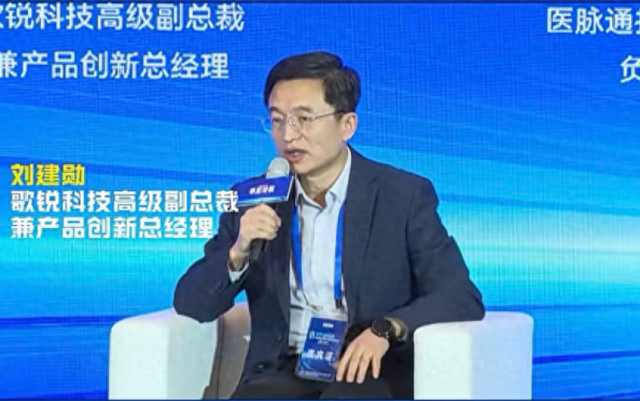
歌锐科技刘建勋:AI医疗创新必须立足临床,破解支付难题需共建产业生态|聚焦2025华夏大健康
Hua Xia Shi Bao· 2025-11-24 09:48
Core Viewpoint - The trend of AI in healthcare is irreversible, with all AI-based medical products originating from clinical needs and ultimately providing greater value than clinical applications [2][4]. Group 1: AI in Healthcare - AI and large models are seen as tools that must address clinical problems effectively [2][3]. - Liu Jianxun, Senior Vice President of GeRui Technology, emphasizes that technology innovation must focus on solving real clinical issues [3][4]. - The company has made significant advancements in orthopedic fields, including the launch of a fully electric integrated intraoperative 3D imaging system and the "Newton" orthopedic endoscopic surgical robot, which is entering multi-center human clinical trials [2]. Group 2: Clinical Value and Innovation - The essence of AI medical innovation is to return to clinical fundamentals, ensuring that technology meets actual clinical needs [3][4]. - Liu Jianxun highlights the importance of accurately defining clinical needs to address genuine clinical pain points [3]. Group 3: Commercialization and Industry Ecosystem - Liu Jianxun stresses the need for a collaborative effort to improve the industry ecosystem, particularly regarding payment systems for innovative medical devices [4]. - He notes that a diversified payment system in international markets supports the promotion of innovative medical technologies, which should be emulated in China [4]. - The expectation is for all stakeholders, including medical institutions, enterprises, and insurance agencies, to explore solutions suitable for the Chinese market to foster healthy industry development [4].

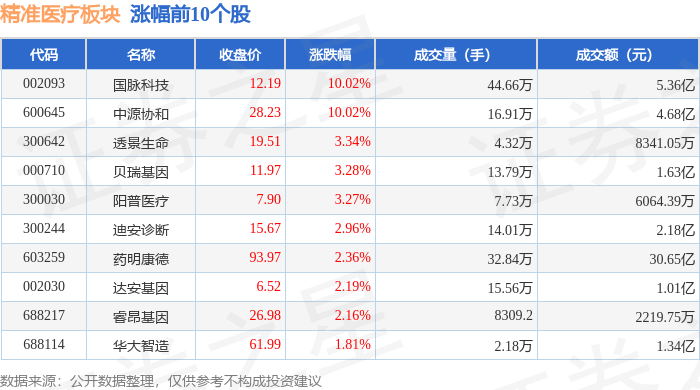
精准医疗板块11月24日涨1.92%,国脉科技领涨,主力资金净流入5.26亿元
Sou Hu Cai Jing· 2025-11-24 09:19
Core Insights - The precision medicine sector experienced a 1.92% increase on November 24, with Guomai Technology leading the gains [1] - The Shanghai Composite Index closed at 3836.77, up 0.05%, while the Shenzhen Component Index closed at 12585.08, up 0.37% [1] Stock Performance - Guomai Technology (002093) closed at 12.19, up 10.02% with a trading volume of 446,600 shares and a transaction value of 536 million [1] - Zhongyuan Xiehe (600645) also rose by 10.02% to 28.23, with a trading volume of 169,100 shares and a transaction value of 468 million [1] - Other notable performers include: - Toukeng Life (300642) at 19.51, up 3.34% [1] - Beirui Gene (000710) at 11.97, up 3.28% [1] - Yangjin Medical (300030) at 7.90, up 3.27% [1] Capital Flow - The precision medicine sector saw a net inflow of 526 million from institutional investors, while retail investors experienced a net outflow of 143 million [2] - The main capital inflow and outflow for key stocks include: - WuXi AppTec (603259) with a net inflow of 251 million [3] - Guomai Technology (002093) with a net inflow of 241 million [3] - Zhongyuan Xiehe (600645) with a net inflow of 102 million [3]




对近期重要经济金融新闻、行业事件、公司公告等进行点评:晨会纪要-20251124
Xiangcai Securities· 2025-11-24 02:02
Macro Strategy - The LPR remained unchanged in November, with the 1-year and 5-year rates at 3.00% and 3.50% respectively, indicating stable monetary policy despite weak macro data in October [2][3] - A-share indices experienced significant declines from November 17 to 21, with the Shanghai Composite Index down 3.90% and the ChiNext Index down 6.15%, primarily due to reduced expectations for a December rate cut by the Federal Reserve [3][4] - All primary industries in the A-share market declined, with energy metals and communication equipment showing the highest cumulative gains for 2025 at 83.18% and 78.97% respectively [5][6] Investment Recommendations - For the long term, 2026 is expected to be a year of growth driven by the "14th Five-Year Plan," with a stable A-share market anticipated [7] - Short-term strategies should focus on sectors benefiting from long-term capital inflows, traditional sectors related to "anti-involution," and consumer areas such as motorcycles and medical services [7] North Exchange Overview - As of November 21, 2025, the North Exchange had 284 listed stocks, with an average total market value of 864.16 billion yuan, a decrease of 4.16% from the previous week [10][11] - Notable new listings included Dapeng Industrial, which saw a 1211.11% increase in its stock price during its first week [10][12] Medical Services Industry - The pharmaceutical and biological sector fell by 6.88%, underperforming the Shanghai Composite Index by 3.11 percentage points [16][17] - The medical services sector's PE ratio is currently at 31.22, with a recent decline of 2.25 [18] - High-growth areas such as ADC and TIDES CDMO are recommended for investment, with companies like WuXi AppTec and WuXi Biologics highlighted [19][20][21] Automotive Industry - Yuanrong Qixing showcased 200,000 mass-produced vehicles at the Guangzhou Auto Show, aiming for a cumulative delivery of 1 million vehicles by 2026 [23][24] - The automotive sector is expected to benefit from the acceleration of intelligent technology adoption and supportive policies for vehicle consumption [25][26] - Investment opportunities are significant in the automotive and parts sectors, particularly for companies involved in smart components and electric vehicles [26][27]
“湘”当能“械” 体制创新驱动湘潭医疗器械产业蝶变
Zhong Guo Zheng Quan Bao· 2025-11-24 00:48
Core Insights - Hunan Xiangtan is transforming from a traditional Chinese medicine distribution center to a leading hub for medical device innovation in China, with a projected total output value exceeding 13 billion yuan by 2024 [1] Group 1: Industry Development - The Hunan Medical Device Industrial Park has been recognized as a national benchmark for medical device industrial parks for two consecutive years, showcasing successful integration of technological and industrial innovation [1] - The park has established a unique "4+N" service system that integrates government support with market efficiency, addressing common industry challenges such as slow approval processes and intellectual property conversion [2] Group 2: Approval Process Innovation - The establishment of the Hunan Provincial Drug Supervision Administration's Xiangtan branch has significantly improved the efficiency of product registration, allowing companies to obtain necessary certifications much faster than the industry average [2] - For instance, Hunan Deps Medical Technology Co., Ltd. received its registration certificate in just one month, compared to the typical six months for medical device production licenses [2] Group 3: Corporate Innovation - The Hunan Medical Device Industrial Park has developed a comprehensive industrial ecosystem that supports companies through all stages, from concept validation to clinical trials and logistics [3] - Companies like Huaxin Medical are gaining a foothold in the global market, with their products being exported to over 160 countries and regions, achieving a leading market share in disposable bronchoscopes [3] Group 4: Ecosystem and Cluster Development - The industrial park has nurtured a diverse ecosystem, with 55 national high-tech enterprises and 6 national specialized "little giant" companies, creating a robust industrial cluster [4] - By October 2025, the park has attracted over 290 enterprises, with more than 95% coming from regions with developed medical device industries, including notable companies like Huaxi Biological and Dian Diagnostics [4] Group 5: Future Growth Potential - The Hunan Medical Device Industrial Park aims to further enhance its development momentum through reform and innovation, with expectations to achieve an annual output value of 20 billion yuan, tax revenue of 1 billion yuan, and create 8,000 jobs by the end of the 14th Five-Year Plan [5]
体制创新驱动 湘潭医疗器械产业蝶变
Zhong Guo Zheng Quan Bao· 2025-11-23 22:59
Core Insights - Hunan Xiangtan is transforming from a traditional Chinese medicine distribution center to a leading hub for medical device innovation in China, with a projected total output value exceeding 13 billion yuan by 2024 [1][5] Group 1: Industry Development - The Hunan Medical Device Industrial Park has been recognized as a national benchmark for medical device industrial parks for two consecutive years, showcasing successful integration of technological and industrial innovation [1][5] - The park has established a unique "4+N" service system that integrates government support with market effectiveness, addressing common industry challenges such as slow approval processes and intellectual property conversion [2] Group 2: Approval Process Innovation - The establishment of the Hunan Provincial Drug Supervision Administration's Xiangtan branch has significantly improved the efficiency of product registration and approval, allowing companies to bring products to market faster [2] - Companies like Hunan Depus Medical Technology Co., Ltd. have experienced expedited approval processes, receiving registration certificates in as little as one month compared to the typical six months [2] Group 3: Corporate Innovation - The Hunan Medical Device Industrial Park focuses on meeting corporate needs, creating a comprehensive industrial ecosystem that includes concept validation, clinical trials, and logistics [3] - Companies such as Huaxin Medical are gaining a foothold in the global market, with their products being exported to over 160 countries and achieving a leading market share in disposable bronchoscopes [3] Group 4: Ecosystem Development - The industrial park has cultivated a diverse ecosystem with 55 national high-tech enterprises and 6 national specialized "little giant" companies, fostering a collaborative environment for innovation [4] - By October 2025, the park is expected to attract over 290 enterprises, with a focus on medical devices, consumables, in vitro diagnostics, and medical software [4] Group 5: Future Outlook - The Hunan Medical Device Industrial Park aims to further enhance its development through reform and innovation, targeting an annual output value of 20 billion yuan, tax revenue of 1 billion yuan, and the creation of 8,000 jobs by the end of the 14th Five-Year Plan [5]
“湘”当能“械” 体制创新驱动 湘潭医疗器械产业蝶变
Zhong Guo Zheng Quan Bao· 2025-11-23 20:15
Core Insights - Hunan Xiangtan is transforming from a traditional Chinese medicine distribution center to a leading hub for medical device innovation in China, with a projected total output value exceeding 13 billion yuan by 2024 [1] Group 1: Industry Development - The Hunan Medical Device Industrial Park has been recognized as a national benchmark for medical device industrial parks for two consecutive years, showcasing effective integration of technological and industrial innovation [1] - The park has established a unique "4+N" service system that integrates government support with market efficiency, addressing common industry challenges such as slow approval processes and intellectual property conversion difficulties [2] Group 2: Approval Process Innovation - The establishment of the Hunan Provincial Drug Supervision Administration's Xiangtan branch has significantly improved the efficiency of product registration and approval, allowing companies to bring products to market faster [2] - For instance, Hunan Deps Medical Technology Co., Ltd. received its registration certificate in just one month, compared to the typical six-month timeframe for medical device production licenses [2] Group 3: Corporate Innovation - The Hunan Medical Device Industrial Park has developed a comprehensive industrial ecosystem that supports companies through all stages, from concept validation to clinical trials and logistics [3] - Companies like Huaxin Medical are gaining a foothold in the global market, with their products being exported to over 160 countries, demonstrating the park's capacity for fostering innovation [3] Group 4: Ecosystem and Cluster Development - The industrial park has cultivated a diverse ecosystem, with 55 national high-tech enterprises and 6 national specialized "little giant" companies, indicating a robust industrial cluster [4] - By October 2025, the park is expected to host over 290 enterprises, with a focus on medical devices, consumables, in vitro diagnostics, medical aesthetics, and software [5]
体制创新驱动湘潭医疗器械产业蝶变
Zhong Guo Zheng Quan Bao· 2025-11-23 20:06
Core Insights - Hunan Xiangtan is transforming from a traditional Chinese medicine distribution center to a leading hub for medical device innovation in China, with a projected total output value exceeding 13 billion yuan by 2024 [1][4] - The Hunan Medical Device Industrial Park has been recognized as a national benchmark for medical device industrial parks for two consecutive years, showcasing successful integration of technological and industrial innovation [1][4] Group 1: Approval and Efficiency - The establishment of the Hunan Provincial Drug Administration's Xiangtan branch has significantly improved the efficiency of medical device registration, allowing companies to expedite their product launches [2] - For instance, Hunan Deps Medical Technology Co., Ltd. received its registration certificate in just one month, compared to the typical six months for production licenses and even longer for product registration [2] Group 2: Enterprise Innovation and Global Market - The Hunan Medical Device Industrial Park focuses on meeting enterprise needs, creating a comprehensive industrial ecosystem that includes concept validation, clinical trials, and logistics [2] - Companies like Huaxin Medical are gaining a foothold in the global market, with their disposable bronchoscopes being exported to over 160 countries and achieving a leading market share [3] Group 3: Industrial Ecosystem and Growth - The park has developed a diverse industrial ecosystem characterized by leading enterprises and numerous small and medium-sized companies, with 55 national high-tech enterprises and 6 national specialized "little giant" companies nurtured within the park [3][4] - By the end of October 2025, the park aims to attract over 290 enterprises, with a focus on medical devices, consumables, in vitro diagnostics, and medical software, contributing to a projected annual output value of 20 billion yuan and tax revenue of 1 billion yuan [4]
陶钧:构建AI医疗生态,从诊断服务商迈向智能解决方案引领者
Xin Lang Cai Jing· 2025-11-22 16:54
Core Viewpoint - The article discusses the emergence of AI in the healthcare sector, highlighting how companies like Di'an Diagnostics are transitioning from traditional diagnostic services to AI-driven health management and solutions [3][6]. Strategic Layout - Di'an Diagnostics' AI development is structured in three phases: tool-based, platform-based, and ecosystem-based [4]. - The initial phase involves creating AI tools for medical diagnostics, such as the AI pathology software launched this year [3]. - The platform phase includes the launch of the Zhijian Lianyu platform, which integrates regional healthcare resources and addresses the interoperability of diagnostic results [4]. - The future vision is to build an open ecosystem that connects medicine, pharmaceuticals, patients, and diagnostics through AI [4]. Core Advantages - Data is identified as a critical barrier to entry in AI healthcare products, with Di'an accumulating 21PB of data and an annual increase of 1PB from self-testing services [5]. - The company has access to multimodal data from hospitals and public health data from regions like Chongqing, enhancing the quality of AI model training [5]. - Di'an's extensive offline service network, including 36 laboratories and over 800 collaborative centers, provides a competitive edge in commercializing AI solutions [5]. Commercialization Challenges - Di'an acknowledges the challenges in commercializing AI products, emphasizing the need for patience and the importance of demonstrating product value in clinical settings [6]. - Currently, the direct revenue from AI commercialization is in the tens of millions, indicating a gradual approach to market penetration [6]. - The company aims to transform data into compliant and efficient clinical products, positioning itself as both a technology service provider and a data-driven solution developer [6]. Conclusion - Di'an Diagnostics is actively embracing AI and adapting its business model to become a leader in intelligent diagnostic solutions, leveraging its data accumulation and clinical insights to navigate the evolving healthcare landscape [6].


迪安诊断董秘陶钧:构建AI医疗生态,从诊断服务商迈向智能解决方案引领者|聚焦2025华夏大健康
Hua Xia Shi Bao· 2025-11-22 14:45
Core Viewpoint - The article discusses the transition of Di'an Diagnostics from a traditional "product + service" provider to a leader in intelligent diagnostic solutions, emphasizing the role of AI in healthcare management, drug development, and commercial health products [2][3]. Strategic Layout - Di'an Diagnostics' AI development is structured in three phases: tool-based, platform-based, and ecosystem-based. The initial phase involves developing AI tools for medical diagnostics, such as the AI pathology software for cervical cell image processing [3]. - The platform phase includes the launch of the Smart Inspection Linkage Platform, which integrates medical resources and addresses the challenge of mutual recognition of test results [3]. - The future vision is to create an ecosystem that deeply engages in AI applications across medicine, pharmaceuticals, and patient diagnostics [3]. Core Advantages - Data is identified as the core barrier for AI medical products, with Di'an accumulating 21PB of data and an annual increase of 1PB from self-testing operations. This extensive data foundation supports sustainable and compliant AI applications [5]. - The company boasts a large offline service network, including 36 laboratories and over 800 collaborative centers, which enhances its competitive edge in commercializing AI solutions [5]. Commercialization Challenges - Di'an acknowledges the challenges in commercializing AI products, particularly in securing dedicated funding from hospitals. The strategy focuses on demonstrating product value before widespread clinical adoption, especially in tertiary hospitals [5][6]. - Currently, Di'an's direct revenue from AI commercialization is in the tens of millions, indicating a cautious yet optimistic approach to monetizing AI technologies [6]. Conclusion - Di'an Diagnostics is committed to embracing AI and evolving its industry structure, positioning itself as a builder of ecosystems rather than just a technology service provider. The company is exploring a transformative path from a diagnostic service provider to a leader in intelligent solutions [6].

北京普华诊所总经理张敬:AI医疗破局需构建“技术+场景+商业”新范式,临床价值是根本出发点|聚焦2025华夏大健康
Hua Xia Shi Bao· 2025-11-22 14:41
Core Insights - The future of AI in healthcare is characterized by a collaborative ecosystem built on technology, clinical practices, payment models, and data, transitioning from a focus on technical barriers to a combination of technology, scenarios, and business [2][4] Group 1: Industry Trends - AI technology is reshaping the healthcare ecosystem, but challenges remain in realizing its true value due to clinical pain points, payment models, and industry cycles [2][3] - The industry is shifting from a focus on technical barriers to a more integrated approach that combines technology with practical applications and business strategies [3][4] Group 2: Key Discussions - The roundtable discussion featured representatives from various healthcare companies, including Di'an Diagnostics, Sino Medical, and GeRui Technology, focusing on the practical applications of AI in medical settings [2][3] - Key topics included the integration of AI in medical devices, the construction of AI ecosystems, barriers to AI usage, and the development of AI recognition in physician service platforms [3][4] Group 3: Strategic Vision - The development philosophy of "looking to the future while building an ecosystem, and being pragmatic while refining products" was emphasized as a clear direction for the AI healthcare industry [4] - There is a need for a sustainable business model that addresses real-world clinical challenges and fosters a collaborative industry ecosystem [4]