AI医疗

Search documents
云知声黄伟:AI 医疗要打破资源不均
Feng Huang Wang Cai Jing· 2026-02-26 08:01
Core Viewpoint - The core objective of CloudWalk (09678.HK) in its AI healthcare initiative is to promote equity in healthcare access, addressing issues such as high medical costs and uneven distribution of medical resources [1] Group 1: AI Healthcare Initiative - CloudWalk aims to leverage AI capabilities in healthcare to alleviate difficulties in accessing medical services, particularly in under-resourced areas [1] - The company emphasizes collaboration with top-tier hospitals to enhance AI healthcare services, particularly for elderly individuals and those in less accessible regions [1] - The vision is to create a "warm" AI that serves humanity and adds value, rather than replacing or controlling human roles [1]
2026年将发生七件大事,选择优于努力
泽平宏观· 2026-02-21 16:05
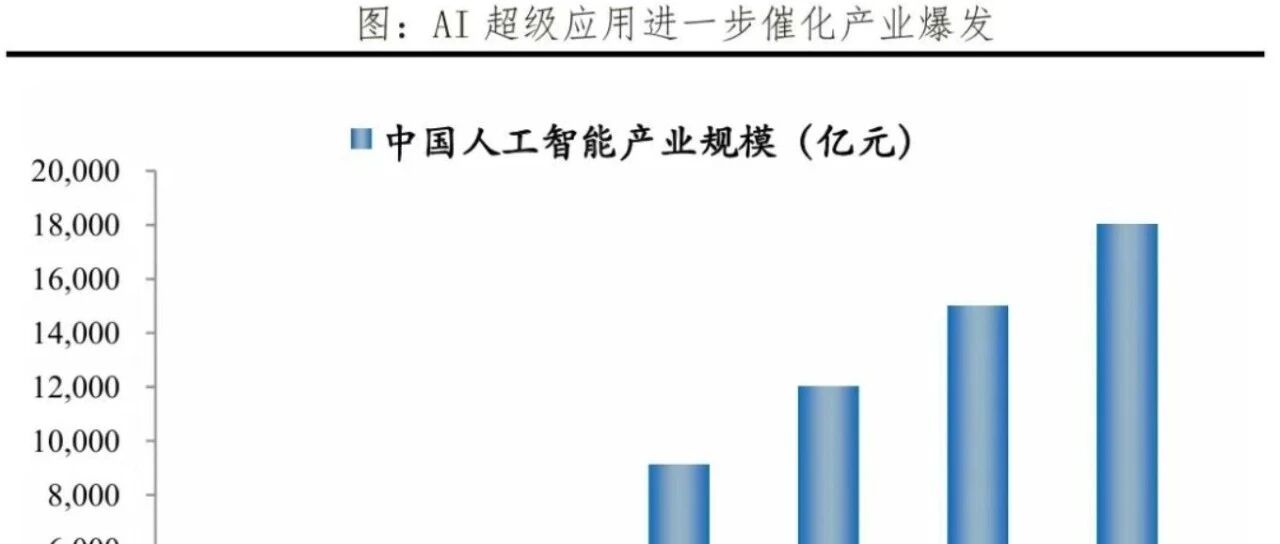
Group 1 - The article outlines seven major events expected to occur by 2026, including significant interest rate cuts in the US and China, the explosive growth of AI applications, and increased geopolitical tensions [2][3] - The AI revolution is in its early stages, with large-scale deployment of GPUs and computing centers leading to a significant drop in costs, resulting in the commercialization of super applications by 2026 [3][5] - The article emphasizes that AI is not just a trend but a transformative force, likening its impact to a tsunami rather than a mere windfall, marking the beginning of a fourth technological revolution [3][5] Group 2 - The upcoming bull market is driven by three strong forces: continuous monetary easing, a new wave of technological revolution, and ample liquidity, characterized as a confidence bull market [5][6] - The capital market is tasked with three historical missions: developing new productive forces, aiding in major power technological competition, and repairing household balance sheets [5] - The article encourages a long-term perspective, focusing on essential trends and making decisive actions rather than relying solely on hard work [7]

任泽平:“2026年将发生七件大事”
Sou Hu Cai Jing· 2026-02-10 04:37
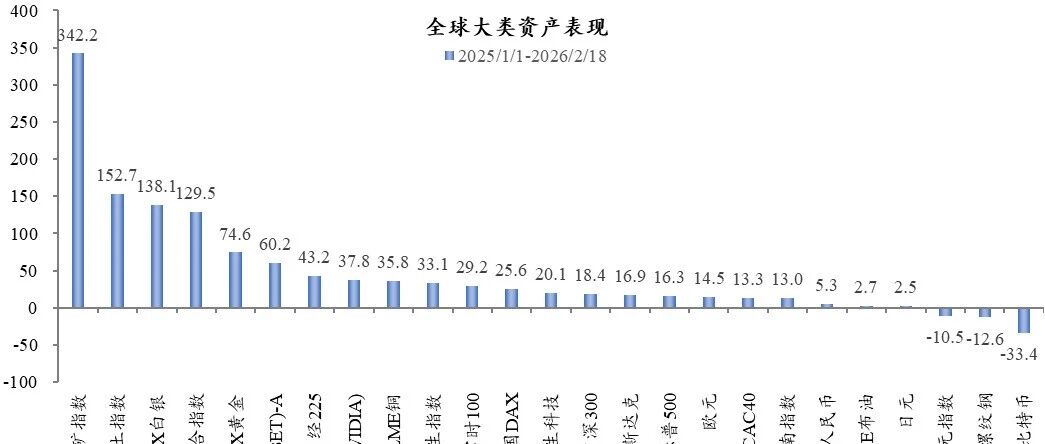
Group 1 - Ren Zeping predicts seven major events will occur in 2026: significant interest rate cuts in China and the US, explosive growth of AI super applications, the rise of China's AI capabilities, increased geopolitical tensions, a year of commodity boom, a confidence-driven bull market, and a bifurcation in the real estate market [3] - The AI revolution is in its early stages, with large-scale deployment of GPUs and computing centers leading to a significant drop in costs, resulting in the commercialization of super applications by 2026, including large models, AI agents, autonomous driving, AI healthcare, humanoid robots, brain-computer interfaces, commercial space travel, and satellite communication [4] - Countries are engaged in an AI race, initiating large-scale infrastructure capital expenditures that are driving up commodity prices, with silver, non-ferrous metals, energy, photovoltaics, and chemicals becoming increasingly important [5] Group 2 - The rapid development of AI is heavily reliant on computing power, which in turn depends on electricity; the pace of AI advancement is so fast that a month without updates can make one feel outdated, indicating a historical opportunity presented by the fourth technological revolution in the Kondratiev wave, occurring once every 60 years [6] - An AI bubble may temporarily arise but will ultimately be supported by future commercialization; opportunities typically go through four phases: invisible, undervalued, misunderstood, and too late [7] - The current capital market is tasked with three historical missions: developing new productive forces, aiding major power technological competition, and repairing household balance sheets [8]
长城基金医药投资团队:继续看好医疗新科技 寻找创新药新逻辑
Xin Lang Cai Jing· 2026-02-05 12:31
Core Viewpoint - The market is experiencing a phase of adjustment after a period of overheating, primarily due to expectations of tightening overseas liquidity and pressure from cyclical sector corrections [1][5]. Group 1: Market Outlook - February is identified as a rare performance vacuum period, with a stable situation in the Asia-Pacific region; however, the extended Spring Festival may lead to early profit-taking by some funds [6]. - The market is expected to exhibit a volatile pattern, emphasizing the importance of stock selection [6]. Group 2: Investment Opportunities in Medical Technology - The company remains optimistic about the ongoing wave of technological innovation in the medical and consumer sectors, particularly driven by AI and domestic industry advancements, which present investment opportunities in the Chinese capital market [7][8]. - Key areas of focus include AI in healthcare, brain-computer interfaces, surgical robots, AI-driven innovative drugs, innovative medical devices, and cell gene nucleic acid therapies [7][8]. Group 3: New Logic for Innovative Drugs - The previous BD (business development) trading model for innovative drugs is losing effectiveness, necessitating a new guiding logic for the capital market to foster a new market trend [9]. - Three potential directions for innovative drugs are identified: 1. Core value return, where the globalization of domestic innovative drugs does not require excessive speculation 2. Performance explosion, with some outbound platform-type innovative drug companies expected to show nonlinear profit releases 3. Positive cycle of BD trading, where market sentiment is cyclical, transitioning from excessive enthusiasm to extreme lows, leading to a significant drop in overseas BD expectations for many companies [9].
长城基金投资札记:春季躁动有望延续,短期或维持震荡
Xin Lang Cai Jing· 2026-02-05 12:31
Market Overview - The market is currently experiencing a phase of consolidation after a period of overheating, primarily due to expectations of tightening overseas liquidity and pressure from cyclical sector corrections [1][12] - As these factors may gradually diminish, the market is expected to enter significant time windows such as the Spring Festival and the Two Sessions [1][12] Investment Insights - **Yang Jianhua**: Focus on sectors with performance realization. The market in January exhibited extreme volatility, and with a lack of new investment themes, a period of observation is anticipated. Consistent expectations have led to short-term fluctuations, but sectors with enduring narratives and performance potential may still present investment opportunities [2][13] - **Liao Hanbo**: Attention on AI and cyclical sectors. The market remains heated, with no immediate downward risks observed. However, rapid sector rotation complicates investment decisions. Future focus will be on new investment opportunities in AI and marginal changes in cyclical sub-sectors [3][14] - **Tan Xiaobing**: Short-term market may experience fluctuations. February presents a rare performance vacuum, and with a lengthy Spring Festival, some funds may realize profits early. The market is likely to show a fluctuating pattern, emphasizing stock selection [4][15] - **Long Yufei**: Continued optimism for new medical technologies. The ongoing wave of technological innovation in the medical and consumer sectors is expected to create investment opportunities, particularly in AI healthcare, brain-computer interfaces, surgical robots, AI innovative drugs, and innovative medical devices [5][17] - **Liang Furui**: Seeking new logic in innovative pharmaceuticals. The previously dominant BD trading model in the innovative drug sector has weakened, necessitating a new consensus to guide future market trends. Key directions include core value return, performance explosion from certain overseas platform-type innovative drug companies, and a positive cycle in BD trading [6][18] - **Chen Ziyang**: Potential differentiation in cyclical stocks. Strong performance in metals, oil, and chemicals is driven by positive economic expectations and liquidity support. High short-term price volatility necessitates finding a new balance between expectations and actual demand, with anticipated differentiation among cyclical stocks [7][19] - **Zhang Jian**: Focus on domestic consumption and price-increasing varieties. Key investment directions include domestic consumption resilience, price-increasing commodities like metals and chemicals, non-bank sectors benefiting from strong insurance growth, and the overseas expansion of Chinese manufacturing [8][20] - **Su Junyan**: Optimism for the spring market continuation. The strong inflow of funds at the beginning of the year is expected to sustain a bullish spring market, with manageable external risks and limited impact from the Federal Reserve's balance sheet reduction narrative [10][21] - **Lin Hao**: Structural market trends likely to continue. With new capital entering the market, there is sustained interest in technology growth sectors, cyclical sectors benefiting from "anti-involution," and commercial aerospace. The market may trend towards decoupling, with a focus on self-sufficiency and resource value reassessment [11][22]
中国光谷瞪羚企业超2000家 “双高”趋势渐显
Zhong Guo Xin Wen Wang· 2026-01-30 12:38
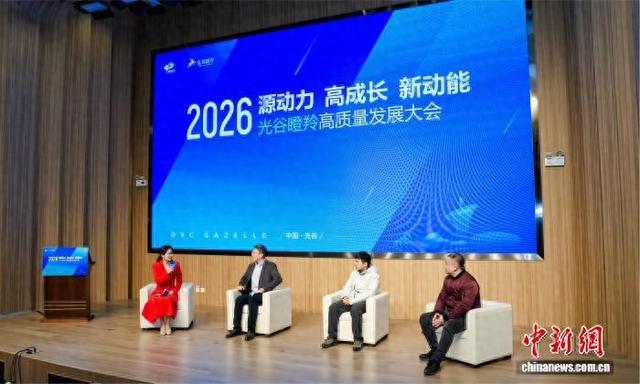
Core Insights - Wuhan East Lake High-tech Zone, also known as "China Optics Valley," aims to recognize 505 "Gazelle" enterprises by 2025, totaling 2,043 recognized enterprises to date [1][4] - The "Gazelle" enterprises are driven by innovation and business operations, moving towards a dual high trend of "high R&D and high revenue" [1][3] Group 1: R&D and Innovation - In 2024, the average R&D investment intensity of the 505 "Gazelle" enterprises is projected to be 25.8%, three times the average level of "Gazelle" enterprises in Hubei province [3] - The number of newly authorized invention patents in 2024 will account for nearly one-quarter of the total authorized invention patents among small and medium-sized enterprises in Hubei province [3] Group 2: Revenue and Profitability - The total revenue of the 505 "Gazelle" enterprises is expected to grow by 34.4% year-on-year in 2024, exceeding the growth rate of national high-tech "specialized and innovative" enterprises by nearly 25 percentage points [3] - The profit margin of these enterprises is projected to reach 13.9%, nearly double that of the national "specialized and innovative" enterprises [3] Group 3: Growth Drivers - The rapid growth of "Gazelle" enterprises is attributed to the establishment of high-level innovation platforms in East Lake High-tech Zone, providing comprehensive services such as R&D, pilot testing, and result transformation [3][4] - Close interaction between enterprises and universities promotes the transformation of research results, accelerating the process from innovation to industrialization [3][4] Group 4: Investment and Market Presence - Since 2021, nearly 280 "Gazelle" enterprises have received equity investment, with a total financing amount exceeding 37 billion yuan, accounting for 45% of the total equity financing in Hubei province [4] - A total of 27 "Gazelle" enterprises have successfully gone public, and 8 have become unicorn companies [4] Group 5: Industry Trends - The distribution of "Gazelle" enterprises reflects the industrial development trends in Optics Valley, with significant growth in integrated circuits, artificial intelligence, and biomanufacturing since 2020 [4][5] - The emergence of "Gazelle" enterprises in advanced semiconductors, humanoid robots, and future display industries is accelerating, supporting the development of world-class optoelectronic information and life health industry clusters [5]
科创医药ETF跳水,三生国健业绩暴增领涨,尼帕病毒引发市场关注
Xin Lang Cai Jing· 2026-01-27 03:36
Core Viewpoint - The market sentiment is cautious, with the Kexin Pharmaceutical ETF (588130) experiencing a decline of approximately 1% despite a strong performance from some constituent stocks like Sanofi, which saw its share price increase by over 10% due to significant earnings forecasts [1] Group 1: Company Performance - Sanofi has forecasted a revenue of around 4.2 billion yuan and a net profit of approximately 2.9 billion yuan for 2025, representing year-on-year increases of 251.76% and 311.35% respectively, primarily driven by the confirmation of a 2.89 billion yuan upfront payment from the Pfizer 707 project [1] - The performance of constituent stocks within the ETF is notably divergent, with Sanofi leading the gains in the sector [1] Group 2: Industry Trends - Huafu Securities believes that a new cycle of global innovative drugs has begun, with China poised to fully participate and potentially lead this trend [1] - Guosen Securities emphasizes the importance of focusing on new technological directions, particularly in areas such as dual antibodies, small nucleic acids, AI healthcare, and brain-computer interfaces [1] Group 3: Market Concerns - Recent reports of Nipah virus infections in West Bengal, India, with five confirmed cases and around 100 close contacts under home quarantine, have raised concerns in the capital markets regarding overseas epidemic dynamics [1]

国信证券医药生物业2026年投资策略:关注创新出海 重视新技术方向
智通财经网· 2026-01-27 02:48
Group 1 - The core viewpoint is that innovative drugs are expected to show significant excess returns in 2025, driven by continuous BD overseas expansion, excellent clinical data, and policy support [1] - The CXO sector is anticipated to experience substantial growth due to the recovery in demand and improved investment environment in the global pharmaceutical industry [1] - The report emphasizes the importance of focusing on new technologies, particularly bispecific antibodies, small nucleic acid drugs, AI healthcare, and brain-computer interface innovations [3] Group 2 - Domestic supply and demand are relatively stable, with national health expenditure showing a year-on-year growth of 4.7% from January to November 2025, marking a positive turnaround after two years of decline [2] - The medical insurance fund's income and expenditure growth rates continue to decline, with total income of 2.63 trillion yuan (+2.9%) and expenditure of 2.11 trillion yuan (+0.5%) from January to November [2] - The report suggests that the commercialization of new drug forms is entering a critical phase, with significant clinical data supporting the application of B-cell depletion therapies in autoimmune diseases [3] Group 3 - Investment recommendations include focusing on innovative overseas expansion and new technology directions, with suggested stocks such as Mindray Medical, WuXi AppTec, and others [4] - The report highlights the potential for explosive growth in the global market for brain-computer interfaces, supported by policy incentives and technological breakthroughs [3]






机构最新研判:医药行情看这四条主线丨每日研选
Shang Hai Zheng Quan Bao· 2026-01-27 01:17
Core Viewpoint - The pharmaceutical sector is experiencing significant capital inflow, driven by the emergence of Nipah virus cases in India, which has heightened interest in vaccines and innovative drugs, alongside the continuous expansion of Chinese pharmaceutical companies in overseas markets [1] Group 1: Market Dynamics - On January 26, the pharmaceutical sector saw a notable increase in capital inflow, with market sentiment becoming more active due to multiple factors, including marginal improvements in industry fundamentals and supportive policies [1] - The emergence of overseas pandemic events, such as Nipah virus infections, has reignited market focus on vaccines, antiviral drugs, and public health defense systems, reinforcing long-term investment confidence in the pharmaceutical sector, particularly in innovative drugs, vaccines, and diagnostics [1] Group 2: Structural Opportunities - Recent institutional insights indicate that structural opportunities within the pharmaceutical sector are becoming clearer, with the strong momentum of innovative drugs continuing to be a core driver of the sector [1] - By January 2026, several companies, including Yilian Biotech and Rongchang Biotech, have achieved licensing agreements, validating the global competitiveness of Chinese innovative drugs, especially in cutting-edge technology areas like ADC, bispecific antibodies, and small nucleic acids [1] Group 3: Sector Developments - Progress in specific subfields is enhancing confidence in the sector, with small nucleic acid drugs showing positive clinical data in chronic hepatitis B and metabolic diseases, attracting accelerated investments from leading domestic and international companies [2] - Breakthroughs in oral immunomodulatory drugs targeting new pathways provide new treatment options for difficult diseases such as psoriasis and ulcerative colitis, warranting ongoing monitoring of related domestic companies' clinical advancements [2] - The GLP-1 class products maintain high demand in the weight loss and diabetes markets, with a gradually forming domestic pricing system and rapid overseas market expansion opening up further growth opportunities [2] Group 4: Investment Strategies - Institutions suggest investors focus on the following main lines for pharmaceutical sector investments: - Concentrate on cutting-edge areas of innovative drugs, particularly in the accelerating overseas expansion of bispecific antibodies, ADC, and small nucleic acids, such as YK Pharma and Sunlight Novo [3] - Capitalize on innovative breakthroughs in tumor therapeutic vaccines [3] - Invest in the CXO and research service industry chain that supports innovative research and development, such as Yinos and Zhaoyan New Drug [3] - Pay attention to traditional Chinese medicine and pharmacy sectors with overseas potential or high dividend defensive attributes, such as Zoli Pharmaceutical, Dong'e Ejiao, and Yifeng Pharmacy [3]




达沃斯论坛宣告旧世界瓦解,新世界来临
泽平宏观· 2026-01-25 16:06
Core Viewpoints - The 2026 Davos Forum marks a watershed moment, showcasing a world "without the West," signaling the end of the old order and the rise of a new one, where the rules-based order is replaced by a jungle law of power and interests [2] - The fragmentation of the Western alliance is accelerating, with the U.S. adopting unilateralism and tariff coercion, while middle powers like Canada, Denmark, and France awaken to the reality and abandon their illusions [2][4] - Amidst the geopolitical turmoil, a technological revolution driven by AI is set to unleash a productivity explosion, indicating a new world order [3][9] Group 1: Western Fragmentation - The Western world is divided into four camps: the U.S. promoting unilateralism; middle powers like Canada and France awakening to the need for collective action; traditional allies remaining silent; and smaller nations seeking their own security [5] - Canadian Prime Minister Mark Carney emphasized the death of the old rules-based international order, criticizing the U.S. for weaponizing tariffs and financial sanctions, and advocating for a coalition of middle powers [5][6] - U.S. President Trump asserted "America First," promoting fossil fuels and criticizing European energy policies, while also engaging in a pragmatic compromise to avoid a full-blown trade war [6][7] Group 2: New Economic and Technological Order - The emergence of a new Kondratiev wave driven by AI is anticipated, representing a significant leap in productivity that will reshape human production and lifestyle [9][10] - The transition from a carbon-based world to a silicon-based civilization is underway, with AI expected to solve complex scientific problems and drive economic growth [13][14] - The demand for computing power, essential for AI applications, will lead to a surge in energy and commodity investments, marking the arrival of a new commodity cycle [14][15] Group 3: China's Role in Global Trade - China is positioned as a pillar of free trade and world peace, advocating for multilateralism and opposing protectionism, while seeking to expand economic cooperation with other nations [19][20] - The fragmentation of U.S. alliances may lead some countries to seek deeper economic ties with China, as evidenced by discussions with Canada and European nations during the Davos Forum [20][21] - Long-term strategies for China include enhancing self-reliance in key technologies and diversifying energy and resource supply chains to mitigate external risks [21]