Panasonic

Search documents
消费电子巨头松下撤退,将欧美电视销售移交创维,该合作将于4月1日生效
Xin Lang Cai Jing· 2026-02-24 03:57
Core Viewpoint - Panasonic Holdings has officially announced that it will transfer its television sales business in North America and Europe to Chinese home appliance manufacturer Skyworth Group starting from April 2026, while focusing on the domestic market in Japan and the development and production of high-end models [1] Group 1 - Panasonic will fully hand over its television sales operations in North America and Europe to Skyworth Group [1] - The transition is set to take effect in April 2026 [1] - Panasonic aims to concentrate on the Japanese domestic market and the research and development of high-end television models [1]
松下将欧美电视销售交给中国创维
Ge Long Hui A P P· 2026-02-24 03:11
Core Viewpoint - Panasonic will transfer its television sales business in Europe and North America to China's Skyworth Group starting in April, aiming to cease self-sales and reduce costs related to labor and logistics [1] Group 1: Business Strategy - The collaboration includes a comprehensive agreement that covers the transfer of sales and joint efforts in product development and manufacturing [1] - Panasonic will focus on sales in Japan and the production of high-end models, while delegating sales and production of low-cost products to external partners [1] Group 2: Financial Implications - This strategic move is intended to improve the profitability of Panasonic's declining television business [1]
Can Japan’s Business Culture Survive Its Economic Reinvention?
Bloomberg Television· 2026-02-22 15:00
This is a story about Bunker. It's a Japanese term for culture. The Japanese have developed their unique culture over a thousand years.It's a culture that has informed the way Japan does business. Now Japan is pursuing a new economic strategy. Peter Drucker famously said that culture eats strategy for breakfast.So what will happen as Japan's new economic strategy comes up against its ancient culture. The economic growth of Japan has been the most spectacular in recent history. A fine example of what a syste ...


Inside Sony, Panasonic and Japan’s Corporate Reinvention
Bloomberg Television· 2026-02-22 13:00
This is a story about Ji Sen. That's a Japanese term, meaning putting theory into practice. Japan is changing the way it does business so it can have the money it needs to invest in productivity.What does that mean for Japanese corporations. The way they are structured and the way they finance those investments. There is a real corporate revolution going on.The notion of every company needing a plan to get above one times book and essentially using shame as a tool for reform has been very, very effective as ...


Video Management Software Market Size Worth USD 42.72 Billion by 2033 | SNS Insider
Globenewswire· 2026-02-21 04:00
Market Overview - The video management software market was valued at USD 14.02 billion in 2025 and is projected to reach USD 42.72 billion by 2033, growing at a CAGR of 14.94% from 2026 to 2033 [1] - The U.S. video management software market is expected to grow from USD 5.33 billion in 2025 to USD 16.23 billion by 2033, with a CAGR of 14.20% [3] Growth Drivers - Key factors driving market growth include the demand for intelligent video surveillance systems across sectors such as BFSI, transportation, government, and retail [1] - Increasing deployment of IP-based surveillance systems, investments in smart city infrastructure, and the demand for cloud-based solutions are significant contributors to market expansion [3] Segmentation Analysis By Technology - Analog-based video systems held 68% of the market share in 2025, primarily due to their presence in developing regions [4] - IP-based video management systems are rapidly growing, driven by advancements in technology such as higher resolution and AI integration [4] By Deployment - The on-premises segment accounted for 71% of revenue share in 2025, favored for its control and data security [5] - The cloud segment is experiencing rapid growth due to its scalability and integration with AI tools [5] By Application - The video analytics segment dominated the market in 2025, while remote monitoring is the fastest-growing segment due to the rise of cloud-based systems [7] By Vertical - Retail and e-commerce led the market in 2025, while healthcare is the fastest-growing vertical due to increased surveillance needs [8] Regional Insights - North America dominated the market in 2025 with a 36% revenue share, attributed to early adoption of advanced surveillance technologies [9] - Asia-Pacific is expected to grow the fastest during the forecast period, driven by urbanization and smart city initiatives [10] Market Trends - The increasing demand for real-time surveillance in urban and critical infrastructure settings is a primary factor for market expansion [11] - Investments in advanced video management systems by large corporations and government organizations are enhancing operational monitoring and public safety [11] Key Players - Major companies in the video management software market include Milestone Systems, Genetec Inc., Avigilon, Bosch Security Systems, and Honeywell International Inc. [14] Recent Developments - Milestone Systems launched XProtect 2024R2 in March 2025, enhancing cloud-connected management and AI integration [15] - Genetec Inc. unveiled Security Center SaaS in January 2025, emphasizing its leadership in cloud-first deployments [16]

How Japan’s work culture is evolving #shorts #japan #workculture
Bloomberg Television· 2026-02-20 19:03
There was the salary man that we all talked about when you had a long-term job, fairly quiet, not a lot of raises, but it was a lot of stability. This is a different world. >> Well, that yes, that's a kind of uh uh stereotype kind of image of the Japanese workers.But it's amazingly since uh 2015 or 16 about one out of three new freshmen to the companies are thinking to leave the company to join their startups is one of the most popular job the university students to choose. used to be like a bureaucrats or ...

Evergy(EVRG) - 2025 Q4 - Earnings Call Transcript
2026-02-19 15:02
Financial Data and Key Metrics Changes - For the full year 2025, the company reported adjusted earnings of $894 million, or $3.83 per share, compared to $878 million, or $3.81 per share for the same period last year, reflecting a slight increase in earnings despite challenges [26] - The company raised its long-term adjusted EPS growth target to 6%-8%+ through 2030, with expectations of exceeding 8% annually beginning in 2028 [5][43] - The financial results in 2025 were negatively impacted by weather and weak industrial demand, leading to a decrease in EPS by $0.43 due to higher operation and maintenance costs and depreciation [6][27] Business Line Data and Key Metrics Changes - The company executed a capital investment plan of $2.8 billion in 2025 to modernize infrastructure and improve reliability, despite facing challenges from weather and demand [6][9] - New electric service agreements for four major data center projects were announced, representing 1.9 GW of steady-state peak demand, which is expected to increase total peak system demand by nearly 20% [10][11] Market Data and Key Metrics Changes - The company has grown its pipeline to over 15 GW, with significant legislative support in Missouri and Kansas for infrastructure investment [6][8] - The approval of new large load power service tariffs in both Kansas and Missouri is expected to drive affordability benefits for existing customers while supporting economic growth [7][15] Company Strategy and Development Direction - The company aims to maintain competitive and affordable rates, with a focus on cost discipline and infrastructure investment to support economic development in Kansas and Missouri [20][23] - A rolling five-year investment plan totaling approximately $21.6 billion is set to drive 11.5% annualized rate base growth through 2030, with a significant portion allocated to new generation investments [22][35] Management's Comments on Operating Environment and Future Outlook - Management expressed confidence in the updated financial outlook, which has been tested against various outcomes, and emphasized the importance of consistent financial performance for long-term value creation [6][43] - The company expects a return to normal residential load growth in 2026, with strong early indications for industrial demand compared to 2025 [27][83] Other Important Information - The company raised its dividend by 4% to an annualized $2.78, with expectations for the payout ratio to decline over time to a revised target of 50%-60% [9][37] - The LLPS tariffs established a framework for new large customers to pay a premium demand rate, which will generate significant benefits for existing customers [15][17] Q&A Session Summary Question: Can you discuss the equity issuances planned for 2030? - Management indicated no planned equity issuances for 2030 due to expected improvements in cash flow, but noted that additional capital opportunities may arise [49][51] Question: What is the potential for additional electric service agreements (ESAs)? - Management expects at least one more executed ESA in 2026, with potential for additional sizable opportunities beyond that [55][56] Question: How does incremental load growth affect CapEx and earnings? - Management stated that each ESA will depend on negotiations with customers, and historically, a 50/50 debt-equity funding approach is used for incremental capital [94]

Evergy(EVRG) - 2025 Q4 - Earnings Call Transcript
2026-02-19 15:00
Financial Data and Key Metrics Changes - For the full year 2025, Evergy delivered adjusted earnings of $894 million, or $3.83 per share, compared to $878 million, or $3.81 per share for the same period last year, reflecting a slight increase in EPS [25] - The company raised its long-term adjusted EPS growth target to 6%-8%+ through 2030, with expectations of exceeding 8% annually beginning in 2028 [4][41] - The financial results in 2025 were negatively impacted by weather and weak industrial demand, despite cost mitigation actions [5] Business Line Data and Key Metrics Changes - The company executed a capital investment plan of $2.8 billion in 2025 to modernize infrastructure and improve reliability [5] - New electric service agreements for four major data center projects were announced, representing 1.9 GW of steady-state peak demand, which is expected to increase total peak system demand by nearly 20% [10][11] - The company expects retail load growth of 6% annually through 2030, significantly higher than the historical growth rate of 0.5%-1% [12] Market Data and Key Metrics Changes - Evergy's cumulative change in all-in rates since 2017 is approximately 4.9%, compared to a regional peer average of 19% and inflation of 29% [20] - The company has made significant progress in advancing economic development opportunities, growing its pipeline to over 15 GW [5][12] Company Strategy and Development Direction - Evergy's strategy focuses on affordability, reliability, and sustainability, with a commitment to maintaining competitive rates [4][22] - The company plans a rolling five-year investment of approximately $21.6 billion from 2026 to 2030, which includes over $3 billion in new generation investment [21][33] - The company aims to execute a cost-effective, all-of-the-above generation strategy, investing in natural gas, storage, and solar [24] Management's Comments on Operating Environment and Future Outlook - Management expressed confidence in the updated financial outlook, which has been tested against a range of outcomes [5] - The company anticipates a return to normal residential load growth in 2026, with strong early indications for industrial load compared to 2025 [26][82] - Management highlighted the importance of the LLPS tariffs in supporting economic growth and ensuring affordability for existing customers [6][17] Other Important Information - The company raised its dividend by 4% to an annualized $2.78, with expectations for the payout ratio to decline over time to a revised target of 50%-60% [9] - The approval of new large load power service tariffs in Kansas and Missouri is expected to drive affordability benefits for existing customers [6][17] Q&A Session Summary Question: Can you discuss the equity issuances planned for 2030? - Management indicated no planned equity issuances for 2030, with expectations of strong FFO improving each year [48][50] Question: What is the potential for additional electric service agreements (ESAs)? - Management expects at least one more executed ESA in 2026, with potential for additional sizable opportunities [53][56] Question: How does the company plan to finance incremental capital needs? - Historically, the company has cited a 50/50 debt-equity funding approach for incremental capital, which remains a rule of thumb [91]
松下裁员规模扩至1.2万人 日本家电企业转型“道阻且长”
Xin Lang Cai Jing· 2026-02-06 11:25
Core Viewpoint - Japanese home appliance giants are undergoing profound strategic restructuring and self-reinvention in response to significant changes in the global market competition landscape and ongoing pressures on their business structures [1][12]. Company-Specific Developments - Panasonic announced an increase in layoffs from 10,000 to 12,000 employees as part of its structural reform, with an estimated cost of 30 billion yen (approximately 1.34 billion RMB) impacting its performance [3][14]. - For the period from April to December 2025, Panasonic's sales are expected to decline by 8% to 5.8837 trillion yen, with net profit dropping by 57% to 125.2 billion yen [4][15]. - Panasonic's AI business has faced significant challenges, with the previously announced AI application project "Umi" being reset, indicating difficulties in commercialization and scalability [3][14]. - The company plans to restructure its core subsidiaries into three independent business units by April 2026, aiming for a profit improvement of over 150 billion yen [6][17]. Industry Trends - The transformation of Panasonic reflects a broader trend among Japanese home appliance companies, which are collectively shifting from their former glory to a period of deep transformation amid global competition [8][19]. - Sony and TCL have announced a joint venture to manage Sony's home entertainment business, indicating a strategic shift for Sony to focus on its core areas while TCL takes a controlling stake [10][19]. - Sharp plans to launch its first electric vehicle by 2027 and is optimistic about the growth potential in the electric vehicle market, despite current slow growth [20].
海外动力电池装车量TOP10:两中企取代特斯拉及PPES上榜 松下份额回升
Xin Lang Cai Jing· 2026-02-06 05:05
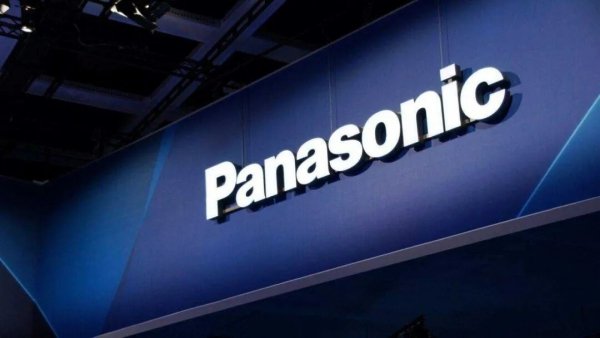
Core Insights - In 2025, global electric vehicle battery installation volume is projected to reach 1187 GWh, representing a year-on-year growth of 31.7% [10] - Excluding China, the global electric vehicle battery installation volume is expected to be 463 GWh, with a year-on-year increase of 26.0% [1] Group 1: Market Performance - The top 10 companies in global electric vehicle battery installation volume (excluding China) for 2025 are led by CATL, LGES, and SK On, with CATL achieving 138.8 GWh and a market share of 30.0% [2][4] - BYD has shown remarkable growth, with a 140.3% increase in installation volume to 36.6 GWh, elevating its market share to 7.9% [4][6] - Samsung SDI is the only company in the top 10 to experience a decline, with a 6.7% drop in installation volume [4][12] Group 2: Market Share Dynamics - In 2025, the combined installation volume of Chinese companies CATL and BYD reached 175.4 GWh, accounting for 37.9% of the market, surpassing the total of the three major Korean companies (168.4 GWh) [4][6] - Among the top 10 companies, six Chinese firms, including CATL, BYD, and Guoxuan High-Tech, saw an increase in market share, while LGES, SK On, and Samsung SDI experienced declines [6][11] - The market share of LGES decreased by 4.0%, while BYD's market share increased by 3.8% [6][9] Group 3: Ranking Changes - The rankings of the top four companies remained stable, with CATL, LGES, SK On, and Panasonic maintaining their positions [2][12] - Guoxuan High-Tech moved up to fifth place, while Samsung SDI dropped to sixth [2][12] - New entrants to the top 10 include Honeycomb Energy, which replaced PPES, and Zhongxin Innovation, which took the tenth spot [2][12]