
中国中铁

Search documents
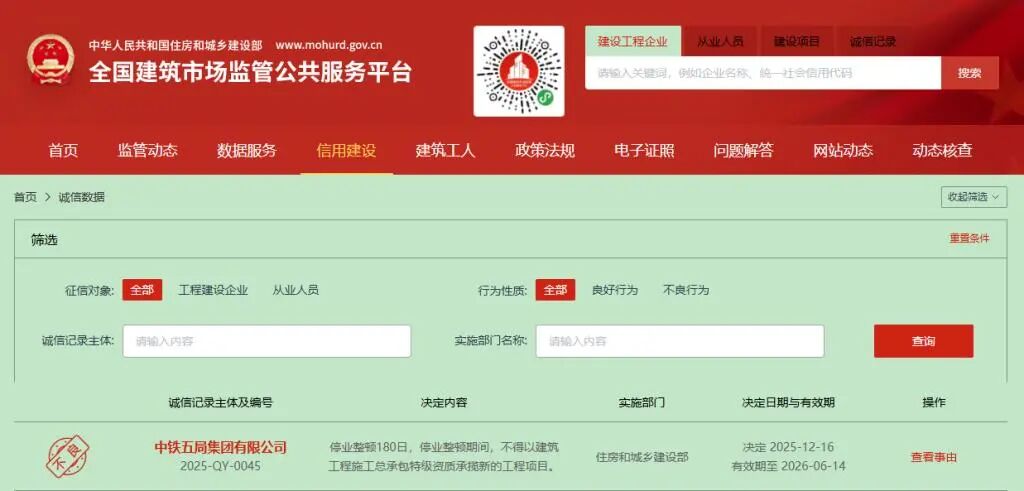
中铁五局被停业整顿180日
新华网财经· 2026-01-09 03:51
往期推荐 雷军回应"丢轮保车" 豆包否认AI眼镜将出货 日前,全国建筑市场监管公共服务平台信息显示,中铁五局集团有限公司(以下简称"中铁五局")被住房和城乡建设部实施停业整顿180日,决定时间为 2025年12月16日,有效期至2026年6月14日。停业整顿期间,不得以建筑工程施工总承包特级资质承揽新的工程项目,涉及的具体事由未公开。 对此,记者拨打中铁五局官网披露的联系方式尝试进一步了解,截至发稿电话未能接通。 记者查询后发现,这并非公司近年来首次被通报。2024年10月,中铁五局下属的中铁五局集团机械化工程有限公司,在格库铁路七个泉站铁路线路安全保 护区内施工作业过程中,不遵守保证铁路安全的施工安全规范,导致挖断电缆,构成铁路交通一般事故。2025年4月10日,兰州铁路监督管理局给予该公 司罚款60000元的行政处罚。 2025年10月,海口市住建局发布建筑工地文明施工红黑榜,中铁五局因其负责施工的项目现场未能较好地落实"六个百分百"要求,施工现场(美玉村碎石 厂)未保持整洁、未采取有效设施防止尘土污染环境上了黑榜。 官网信息显示,中铁五局是世界500强企业中国中铁股份有限公司骨干成员企业,始建于1950 ...

恋爱期间消费、婚前买车买房算彩礼吗?最高法发布典型案例,为“天价彩礼”划红线
Mei Ri Jing Ji Xin Wen· 2026-01-09 03:40
中铁五局集团有限公司坐落于贵州贵阳,成立于1999年12月29日,注册资本76.15亿元,总资产863亿元。 每经编辑|陈柯名 近日,中铁五局集团有限公司(以下简称"中铁五局")被住房和城乡建设部处以停业整顿180日的行政处罚。停业整顿期间(2025年12月16日至2026年6月 14日),不得以建筑工程施工总承包特级资质承揽新的工程项目。具体事由并未公开。 校对|段炼 封面图来源:视觉中国(图文无关) 每日经济新闻综合自半岛都市报(记者 李晓芳) 经济参考报(记者 于典)、公开信息等 另据《经济参考报》,记者查询发现,这并非公司近年来首次被通报。2024年10月,中铁五局下属的中铁五局集团机械化工程有限公司,在格库铁路七个 泉站铁路线路安全保护区内施工作业过程中,不遵守保证铁路安全的施工安全规范,导致挖断电缆,构成铁路交通一般事故。2025年4月10日,兰州铁路 监督管理局给予该公司罚款60000元的行政处罚。 2025年10月,海口市住建局发布建筑工地文明施工红黑榜,中铁五局因其负责施工的项目现场未能较好地落实"六个百分百"要求,施工现场(美玉村碎石 厂)未保持整洁、未采取有效设施防止尘土污染环境上了黑榜 ...
中铁五局被停业整顿180日
第一财经· 2026-01-09 02:23
对此,《经济参考报》记者拨打中铁五局官网披露的联系方式尝试进一步了解,截至发稿电话未能接 通。 据经济参考网1月8日消息,日前,全国建筑市场监管公共服务平台信息显示,中铁五局集团有限公 司(以下简称"中铁五局")被住房和城乡建设部实施停业整顿180日,决定时间为2025年12月16 日,有效期至2026年6月14日。停业整顿期间,不得以建筑工程施工总承包特级资质承揽新的工程 项目,涉及的具体事由未公开。 2025年10月,海口市住建局发布建筑工地文明施工红黑榜,中铁五局因其负责施工的项目现场未能 较好地落实"六个百分百"要求,施工现场(美玉村碎石厂)未保持整洁、未采取有效设施防止尘土 污染环境上了黑榜。 官网信息显示,中铁五局是世界500强企业中国中铁股份有限公司骨干成员企业,始建于1950年, 原为铁道部第五工程局,1999年改制为中铁五局集团有限公司;下辖18个实体性子分公司、7个区 域总部、33个经营性分公司、18个境外派驻机构及设计研究院。主要从事国内外建筑工程投资、设 计、施工及运营管理,拥有铁路、建筑、公路、市政、水利水电工程等施工总承包特级资质8项。 记者查询后发现,这并非公司近年来首次被通报。 ...

45人上榜!第三届“海南省优秀高技能人才奖”名单公布
Hai Nan Ri Bao· 2026-01-09 02:04
Core Points - The third "Hainan Province Outstanding Skilled Talent Award" recognizes 45 individuals for their contributions to various industries, promoting a culture of respect for labor and skills [1] - The award includes three categories: Senior Technician Award, Technician Award, and Skilled Talent Award, with 15 recipients in each category [1] - Awardees come from diverse sectors, including education, energy, pharmaceuticals, and agriculture, highlighting the importance of skilled talent in supporting Hainan's Free Trade Port development [1] Group 1: Award Categories - The Senior Technician Award recognizes individuals with outstanding contributions, with notable winners from institutions like Hainan Technician College and companies such as China National Offshore Oil Corporation [2] - The Technician Award also features significant contributors from various fields, including tea production and pharmaceuticals, showcasing the breadth of skilled professions in Hainan [3] - The Skilled Talent Award honors individuals excelling in technical roles across multiple industries, emphasizing the critical role of skilled workers in the local economy [4] Group 2: Industry Representation - Awardees represent a wide range of industries, including energy (Hainan Nuclear Power Co., China National Petroleum Corp.), education (Hainan Technician College), and agriculture (Hainan Tea Industry) [1][2][3] - The recognition of skilled talent from both public institutions and private enterprises indicates a collaborative effort to enhance skill development in Hainan [1] - The initiative aims to create a supportive environment for skilled professionals, which is essential for the sustainable growth of Hainan's economy and its Free Trade Port ambitions [1]
委内瑞拉变天后 作为最大的投资者和债权人-中国能否保障投资和债务主权?
Sou Hu Cai Jing· 2026-01-08 15:05
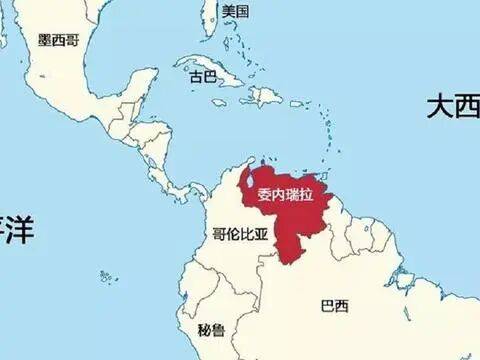
Core Insights - China's investment and loan scale in Venezuela is the largest in Latin America, with cumulative loans estimated between $60 billion to $67 billion, accounting for approximately 40%-50% of China's total loans to the region [2] - As of early 2026, Venezuela's outstanding debt to China is approximately $19 billion to $20 billion [3] Group 1: Energy and Oil Sector - Oil cooperation is a cornerstone of the relationship, with China National Petroleum Corporation (CNPC) as a key player [4] - The Sino-Venezuelan oil joint financing project has an initial amount of $4 billion, with subsequent extensions and expansions [4] - Chinese investments in the Orinoco heavy oil belt exceed $10 billion to enhance oil production and refining capacity [4] Group 2: Infrastructure and Housing Investment - The "Great Housing Mission" project involves significant participation from Chinese companies, constructing tens of thousands of social housing units [5] - The Tinaco-Anaco Railway, a flagship infrastructure project, has a contract amount of approximately $7.5 billion but has faced delays due to Venezuela's economic collapse [5] - Projects include modernization of Puerto Cabello and technical support for multiple thermal and hydroelectric plants [5] Group 3: High-Tech and Aerospace Cooperation - Venezuela is the Latin American country with the most in-depth space cooperation with China [6] - Satellite projects include the "Venezuela 1" communication satellite with an investment of about $400 million and two remote sensing satellites with investments of $140 million [7] Group 4: Mining and Agriculture Cooperation - Chinese enterprises have signed agreements to assist Venezuela in resource exploration in the Orinoco mining arc [8] - Agricultural development projects, such as irrigation and rice processing in Delta Amacuro state, have contract amounts around $3 billion [9] Group 5: Current Challenges and Risks - China's direct loans to Venezuela have become cautious, but bilateral cooperation has seen a resurgence after being elevated to an "all-weather strategic partnership" in 2023 [10] - The opening of direct flights from Caracas to Guangzhou in June 2024 has strengthened trade ties [11] - Some projects have faced significant issues, such as the Tinaco-Anaco Railway, which is only 30% complete due to payment issues since 2015 [12] Group 6: Debt and Asset Risks - China's "bad debt" in Venezuela is a dynamic and complex figure, with outstanding loans estimated at $19 billion to $20 billion, primarily owed to China Development Bank (CDB) [14] - The value of joint venture assets in the oil sector has incurred losses of approximately $10 billion to $15 billion [15] - The total financial risk exposure for China in Venezuela could exceed $100 billion when considering all financial aid and technical transfers [16] Group 7: Political Changes and Implications - The political upheaval in Venezuela poses high risks to China's investments and sovereign debt [22] - If a new regime does not recognize previous "oil-for-loan" agreements, China could face significant financial losses [23] - The potential for asset protection and the challenges of proving the legitimacy of debts in a new political landscape are critical concerns [23] Group 8: International Dynamics - The role of the IMF and the U.S. in Venezuela's economic reconstruction could complicate China's position, as the new government may prioritize debt sustainability analysis [27] - The U.S. may exert pressure on the new regime to reduce ties with China, potentially freezing Chinese energy assets in Venezuela [27] Group 9: Future Scenarios for Debt Management - The new regime's approach to inheriting Chinese debt could involve selective defaults or audits, potentially leading to significant debt reductions [30] - Possible scenarios include full debt inheritance, selective inheritance, or debt-to-equity swaps, depending on the new government's strategy [31][32]
14名央企领导职务调整




新华网财经· 2026-01-08 13:32
Group 1 - Zhao Dianlong appointed as Deputy Secretary of the Party Committee and Director of China Railway Engineering Group Co., Ltd., nominated as the candidate for General Manager of the company, and relieved of his position as a member of the Standing Committee of the Party Committee of China Railway Construction Group Co., Ltd. [1] - Chen Zhiming appointed as Deputy Secretary of the Party Committee of China Railway Construction Group Co., Ltd. [2] - Sun Liqiang appointed as a member of the Standing Committee of the Party Committee of China Railway Construction Group Co., Ltd. [3] Group 2 - Lin Cunzeng appointed as Deputy Secretary of the Party Committee and Director of China Steel Research Group Co., Ltd., nominated as the candidate for General Manager of the company, and relieved of his position as a member of the Standing Committee of the Party Committee of China CRRC Group Co., Ltd. [4] - Zhao Tao appointed as a member of the Standing Committee of the Party Committee of China Chemical Engineering Group Co., Ltd. [5] Group 3 - Liu Xueshi no longer serves as Chief Accountant of China Guoxin Holdings Limited, retiring from the position. [6] Group 4 - Zhang Zhenga appointed as an external director of China Chengtong Holdings Group Co., Ltd., while Ma Liangjie is no longer an external director of the company. [7] - Wu Aihong appointed as an external director of China International Technology and Intelligence Cooperation Group Co., Ltd. [8] - Zhu Ze appointed as an external director of China Agricultural Development Group Co., Ltd., while Yang Youhong is no longer an external director of the company. [9] - Huang Xudan appointed as an external director of China Forestry Group Co., Ltd. [10] - Tan Xinghui appointed as an external director of China Poly Group Co., Ltd., while Guo Jianxin is no longer an external director of the company. [11]
基础建设板块1月7日涨0.63%,中国核建领涨,主力资金净流入1.92亿元
Zheng Xing Xing Ye Ri Bao· 2026-01-07 08:58
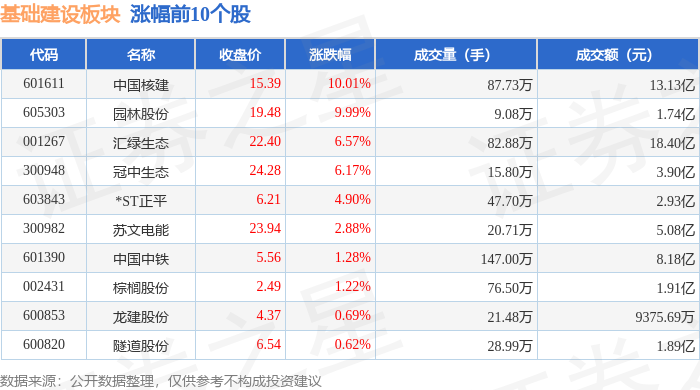
Market Performance - The infrastructure sector increased by 0.63% compared to the previous trading day, with China Nuclear Engineering leading the gains [1] - The Shanghai Composite Index closed at 4085.77, up 0.05%, while the Shenzhen Component Index closed at 14030.56, up 0.06% [1] Key Stocks in Infrastructure Sector - China Nuclear Engineering (601611) closed at 15.39, up 10.01%, with a trading volume of 877,300 shares and a transaction value of 1.313 billion [1] - Garden Holdings (605303) closed at 19.48, up 9.99%, with a trading volume of 90,800 shares and a transaction value of 174 million [1] - Huylin Ecological (001267) closed at 22.40, up 6.57%, with a trading volume of 828,800 shares and a transaction value of 184 million [1] - Other notable stocks include Crown Zhong Ecological (300948) up 6.17% and ST Zhengping (603843) up 4.90% [1] Capital Flow Analysis - The infrastructure sector saw a net inflow of 192 million from institutional investors, while retail investors experienced a net inflow of 742,390 [2] - The main capital outflow was from speculative funds, which saw a net outflow of 199 million [2] Individual Stock Capital Flow - China Nuclear Engineering had a net inflow of 321 million from institutional investors, but a net outflow of 150 million from speculative funds [3] - Huylin Ecological experienced a net inflow of 12.5 million from institutional investors, with a net outflow of 12.7 million from speculative funds [3] - Garden Holdings had a significant net inflow of 66.51 million from institutional investors, despite a net outflow of 36.27 million from speculative funds [3]


小摩:对中国国铁行业预测保守 但料续超额完成目标
智通财经网· 2026-01-07 08:28
Group 1 - The core viewpoint of the article is that China's National Railway Group plans to invest in over 2,000 kilometers of new railway lines and aims for infrastructure investment to reach 520 billion RMB, which sets a solid foundation for the industry's next phase [1] - Morgan Stanley believes that despite a cautious tone in mainland policies, actual investment delivery and new mileage have consistently exceeded expectations, with the National Railway exceeding its annual new line targets by approximately 20% for four consecutive years, a trend expected to continue until 2026 and beyond [1] - The report highlights that China CRRC (01766, 601766.SH) and CRRC Times Electric (03898, 688187.SH) have outperformed the market among domestic railway stocks, with better performance opportunities anticipated for the industry this year [1] Group 2 - The report indicates that increased MU density, ongoing expansion of high-speed rail, and clear demand for multiple units, locomotives, and rail vehicles are expected to continue driving vehicle demand [1] - Both China CRRC and CRRC Times Electric possess strong order volumes and hold dominant market shares, which positions them favorably in the industry [1] - For China Railway Group (00390), even as revenue growth normalizes, the transition to high-value national projects and steady growth in overseas orders will support profit margin resilience and create new growth engines [1]



摩根大通:中国中车及时代电气在内地铁路股中表现跑赢大市
Jin Rong Jie· 2026-01-07 06:50
Group 1 - The core viewpoint of the article is that China National Railway Group plans to invest in over 2000 kilometers of new railway lines and aims for infrastructure investment to reach 520 billion yuan, which lays a solid foundation for the industry's next phase [1] - Morgan Stanley believes that despite a cautious tone in mainland policies, actual investment delivery and new mileage have consistently exceeded expectations, with the National Railway exceeding its annual new line targets by approximately 20% for four consecutive years [1] - The trend of exceeding targets is expected to continue until 2026 and beyond, indicating a positive outlook for the industry [1] Group 2 - Companies like CRRC and Times Electric are outperforming the market within the mainland railway sector, and the industry is anticipated to have better performance opportunities this year [1] - The demand for vehicles is expected to be driven by increased MU density, ongoing expansion of high-speed rail, and clear demand for multiple units, locomotives, and rail vehicles [1] - Both CRRC and Times Electric possess strong order volumes and hold dominant market shares, which positions them well for future growth [1] Group 3 - For China Railway Group, even as revenue growth normalizes, the transition to high-value national projects and steady growth in overseas orders will support profit margin resilience and create new growth engines [1]

大行评级|摩根大通:中国中车及时代电气在内地铁路股中表现跑赢大市
Ge Long Hui A P P· 2026-01-07 06:29
Group 1 - The core viewpoint of the article is that China National Railway Group plans to invest in over 2000 kilometers of new railway lines and aims for infrastructure investment to reach 520 billion yuan, which is seen as a solid foundation for the industry's next phase and supports a constructive outlook for the 14th Five-Year Plan [1] - Despite a cautious tone in mainland policies, actual investment delivery and new mileage have consistently exceeded expectations, with the national railway exceeding its annual new line targets by approximately 20% for four consecutive years, a trend expected to continue until 2026 and beyond [1] - Companies like CRRC Corporation and Times Electric are outperforming the market within the mainland railway sector, and the industry is anticipated to have better performance opportunities this year [1] Group 2 - The demand for vehicles is expected to continue to be driven by increased MU density, ongoing expansion of high-speed rail, and clear demand for multiple units, locomotives, and rail vehicles [1] - Both CRRC Corporation and Times Electric possess strong order volumes and hold dominant market shares [1] - For China Railway Group, even as revenue growth normalizes, the transition to high-value national projects and steady growth in overseas orders will support profit margin resilience and create new growth engines [1]