
Huawei

Search documents
Global Markets React to Huawei’s Chip Ambitions, UAE Rate Cut, and Geopolitical Tensions
Stock Market News· 2025-09-18 03:39
Huawei's AI Chip Development - Huawei is advancing its AI chip development with plans for new Ascend and Atlas series chips, including the Ascend 910C, which is set for mass production in Q1 2025 as a domestic alternative to Nvidia's H20 chip [3][8] - The Ascend 910C faces challenges with a yield rate of approximately 20% from SMIC's N+2 process, which is below the commercially viable threshold [3] - Future releases include the Ascend 950PR and Ascend 950DT chips in 2026, and the Atlas 950 Supercluster, expected to launch in late 2025, aimed at enhancing China's domestic AI computing capabilities [4][8] UAE Interest Rate Cut - The Central Bank of the UAE has reduced its benchmark interest rate by 25 basis points, bringing the Overnight Deposit Facility rate down from 4.40% to 4.15%, effective immediately [5][8] - This rate cut follows a similar action by the U.S. Federal Reserve, reflecting the UAE dirham's peg to the U.S. dollar [5] - The UAE has slightly revised its inflation forecast for 2025 to 1.9% from 2% and for 2026 to 1.9% from 2.1% [5] South Korea E-commerce Joint Venture - The Fair Trade Commission in South Korea has conditionally approved a joint venture between AliExpress Korea and a unit of Shinsegae Group, named "Grand Opus Holding" [7][8] - This joint venture involves Emart affiliate Apollo Korea contributing 100% equity in Gmarket, while Alibaba affiliate BK4 invests $225 million in cash and 100% equity in AliExpress Korea [7] - The merger is expected to reshape the domestic e-commerce landscape, intensifying competition with existing players like Coupang and Naver [7][8] Geopolitical Developments - Iranian Foreign Minister engaged in discussions with European nations regarding Iran's nuclear program, aiming to prevent the re-imposition of international sanctions [10] - Poland is advocating for a 2026 deadline for the EU to halt Russian oil imports, citing geopolitical risks and the need to stop financing Russia's military actions [11]


What China Banning Nvidia Chips Means for the AI Race
Yahoo Finance· 2025-09-17 20:05
Group 1 - China's ban on tech companies purchasing Nvidia chips signifies a pivotal moment for its semiconductor industry, indicating it may no longer rely on American AI hardware [1][2] - The directive from Chinese regulators requires companies like ByteDance and Alibaba to shift from Nvidia's RTX Pro 6000D processors to domestic alternatives, fundamentally altering their AI infrastructure [2][5] - Chinese regulators believe that homegrown chips from companies such as Huawei and Cambricon have sufficiently closed the performance gap to support the country's AI ambitions [3] Group 2 - In 2024, China published 23,695 AI-related research papers, surpassing the combined output of the United States (6,378), the United Kingdom (2,747), and the European Union (10,055) [4] - Recent assessments indicate that China's AI processors now match or exceed the capabilities of Nvidia products that are subject to U.S. export controls, a significant shift from two years ago [4] - The ban on Nvidia chips is expected to impact the company significantly, as it previously generated up to 17% of its total revenue from the Chinese market, with potential annual losses estimated between $8 billion to $16 billion [6]

Tech Check: Nvidia China catalyst in doubt
Youtube· 2025-09-17 17:21
Group 1 - Nvidia's shares have declined nearly 3% following reports of a ban by Chinese regulators on technology companies from purchasing Nvidia's new AI chips, specifically the B40 chip [1][2] - Major Chinese companies like ByteDance and Alibaba have been ordered to halt testing and cancel tens of thousands of chip orders due to this ban [2] - Nvidia's CEO Jensen Wong expressed disappointment over the situation, indicating that it reflects larger geopolitical tensions between China and the United States [3] Group 2 - The ban signifies China's confidence in its domestic chip manufacturing capabilities, suggesting that they believe they can produce sufficient AI chips to meet demand [3][4] - China is actively pursuing semiconductor independence and promoting domestic alternatives, such as Huawei's Ascend 910B chip, as competitive with Nvidia's offerings [5] - Despite progress, Chinese chip manufacturers are still years behind the most advanced semiconductor technologies, which could impact Nvidia's revenue opportunities in the region [6] Group 3 - The ban represents a significant loss for Nvidia, potentially blocking an annual revenue opportunity of $15 to $20 billion from Chinese sales, which are currently close to zero [6]
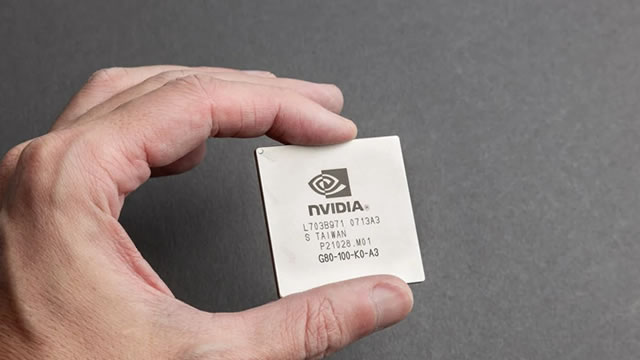
As Nvidia Retreats, These AI Chip Stocks Show Strength
Investors· 2025-09-17 16:26
China's internet regulator ordered the country's biggest tech companies, including Alibaba (BABA) and ByteDance, to stop buying Nvidia's AI chips, the Financial Times reported Wednesday. Previously, Beijing strongly urged local firms to not purchase Nvidia chips. China is seeking to boost its domestic semiconductor industry, including Chinese chipmakers Huawei and Cambricon, the FT said. The U.S. has banned exports of advanced chips and chipmaking equipment to China, but has allowed sales of throttled proce ...
Nvidia shares drop, China tech surges as Beijing tries to push homegrown AI chips
Yahoo Finance· 2025-09-17 16:16
Group 1 - Nvidia faces regulatory challenges in China as the Cyberspace Administration of China has instructed major tech firms to halt testing of its RTX Pro 6000D chip, leading to a 2.5% drop in Nvidia's shares [1] - Despite Nvidia's stock decline, Chinese tech stocks have surged, with the Hang Seng Tech Index rising by 4.2% to its highest point in four years, and up 45% year-to-date [2] - The RTX Pro 6000D, launched in July, is Nvidia's attempt to create a chip compliant with U.S. export controls for the Chinese market, following restrictions on selling advanced products to Chinese companies since 2022 [3] Group 2 - Chinese chip designers like Huawei and Cambricon are catching up, with domestic processors now potentially offering competitive alternatives to Nvidia's products allowed in China [4] - Nvidia has acknowledged the risk of being unable to create a competitive product for China's data center market that meets U.S. government approval, which could exclude it from this market [5] - Nvidia reported a decline in sales to Chinese customers, with $2.8 billion last quarter compared to $3.7 billion a year ago, excluding any sales of the H20 chip [6] Group 3 - The U.S. government recognizes the competition Nvidia faces and has indicated the importance of keeping Chinese companies reliant on U.S. chips, which may influence export license decisions for products like the H20 [6] - Nvidia has removed China sales from its forward guidance due to geopolitical uncertainties, but the CFO suggested potential sales of up to $5 billion if the H20 were permitted for sale in China [7]
Nvidia's China Strategy In Shambles—Beijing Blocks Chips Amid Antitrust Probe
Benzinga· 2025-09-17 12:55
Core Insights - Nvidia's operations in China are facing significant challenges due to U.S. export limits and Chinese regulatory actions, including an antitrust probe and bans on its custom AI chips [1][2][3] - The Chinese market, valued at $7 billion for Nvidia, is becoming increasingly difficult to navigate, with domestic competitors gaining ground [3][4] - The geopolitical landscape is shifting, with Nvidia's relevance in China diminishing as local companies receive regulatory support [4][6] Regulatory Environment - Chinese regulators have halted testing and procurement of Nvidia's RTX6000D chip, indicating a move towards supporting domestic alternatives [1][2] - An antitrust investigation into Nvidia suggests that the Chinese government aims to undermine its position in the AI ecosystem rather than merely address market dominance [2][6] Market Dynamics - As Nvidia's presence in China weakens, competitors like Advanced Micro Devices Inc may benefit from the demand for high-performance GPUs that Nvidia can no longer fulfill [5][6] - Domestic chipmakers, including Huawei and Alibaba-backed startups, are positioned to gain from the regulatory shift towards self-reliance in AI semiconductors [6][7] Investor Implications - Nvidia's previous growth narrative in China is now viewed as a liability, raising concerns about its ability to maintain global AI dominance amid increasing restrictions [7]
Ives: Nvidia's years ahead. Their chips are the new gold or oil
Youtube· 2025-09-17 12:01
Group 1: Nvidia's Market Position and Challenges - Nvidia shares are down about 1%, with concerns about Chinese sales not being factored into guidance [1] - China's cyber watchdog is ordering local companies to stop using Nvidia's advanced chips, specifically the RTX Pro 6000D, to promote domestic alternatives [6][7] - Despite regulatory pressures, Chinese tech firms still desire Nvidia's chips, indicating Nvidia's significant lead in technology [4][10] Group 2: Chinese Tech Industry Response - Chinese internet stocks are seeing positive movement, with companies like Alibaba and Baidu experiencing share price increases [8][11] - The Chinese government is encouraging the development of domestic AI and tech industries, which could benefit local companies [9][10] - Reports suggest that Chinese firms are developing chips comparable to Nvidia's, which may impact Nvidia's market share in China [2][6] Group 3: Broader Market Trends - The AI revolution is a global phenomenon, with Nvidia playing a crucial role, but the focus is shifting towards domestic capabilities in China [10][12] - The UK is becoming a focal point for tech investments, with companies looking to establish a presence there due to favorable regulations compared to the EU [13][15] - The intersection of AI and crypto is emerging as a significant trend, with companies exploring new opportunities in this space [22]

X @Bloomberg
Bloomberg· 2025-09-16 22:30
US lawmakers are asking Futurewei, a subsidiary of the blacklisted Chinese firm Huawei, to explain why it shared buildings in Silicon Valley with Nvidia, thrusting the US chipmaker into the crossfire of an investigation into possible Chinese espionage. https://t.co/SaEVD09Tav ...
The Asian Banker Leads 30 Overseas Bankers on a Visit to Lexin, Praising China's AI Agent Development as Leading International Peers
Globenewswire· 2025-09-16 17:05
Core Insights - The visit of 30 renowned overseas bankers to Lexin's headquarters highlights the growing global interest in Chinese enterprises' technological capabilities, particularly in AI [2][3] - Lexin's "Hybrid Agent Matrix" is a significant innovation that allows for complex, multi-tasking scenarios, positioning the company as a leader in the AI industry [4] - Lexin's expansion into overseas markets, particularly in Mexico and Indonesia, demonstrates its commitment to providing inclusive financial services [4][5] Group 1 - The visit was organized by The Asian Banker magazine, focusing on key Chinese enterprises leading in AI technology, including Lexin, Huawei, TikTok, and others [3] - Lexin's "Hybrid Agent Matrix" is described as a composite system of multiple AI agents, enhancing collaboration and efficiency in task completion [4] - The delegation expressed strong interest in future collaboration with Lexin, indicating a positive reception of its technological innovations [5] Group 2 - Lexin has received multiple accolades, including the Annual Award from The Asian Banker for seven consecutive years and recognition as a top service enterprise in China [6] - The company plans to increase R&D investment and focus on integrating new technologies like AI and digital finance to empower its operations [6] - Lexin aims to actively promote overseas business development, contributing positively to the financial industry's progress [7]

Pain or Gain Ahead of Apple? ETFs in Focus
ZACKS· 2025-09-16 12:36
Core Insights - Apple shares have shown mixed performance, gaining 1% over the past month, 9.4% over six months, but losing 4% year-to-date, with the iPhone 17 launch failing to excite investors [1][2] - Competition from Xiaomi is intensifying as it prepares to launch its flagship Xiaomi 17 series, directly targeting Apple's premium market share [3][4] - Apple's strong presence in China is supported by government subsidies, but challenges remain due to competition and economic factors [6][8] Financial Performance - Apple's iPhone currently holds 62% of the $600 and above smartphone market [4] - Greater China sales accounted for 16.3% of Apple's total sales in Q3 of fiscal 2025 [9] - Apple shares trade at a forward P/E of 31.8X, higher than Xiaomi's 23.75X and the industry average of 28.2X [13] Market Competition - Xiaomi's premium smartphone sales surged 55% in the first half of the year, indicating its ambition to capture more market share [5] - IDC data shows Apple with a 15.7% global smartphone market share, behind Samsung's 19.7% and ahead of Xiaomi's 14.4% [5] AI Developments - Concerns exist regarding Apple's progress in artificial intelligence, with delays in AI features and departures of key AI researchers [10][11] - Apple has made several acquisitions to enhance its AI capabilities and plans to launch an AI-powered web search tool next year [12] Price Target and Investment Strategy - Analysts have set an average price target of $241.14 for Apple, representing a potential increase of 4.83% from its recent closing price [14] - A basket approach through ETFs is recommended to mitigate company-specific risks while capitalizing on potential rallies in Apple shares [15][16]

