Blue Origin

Search documents
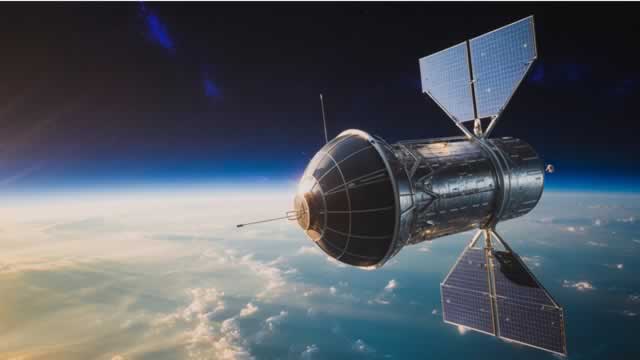
Amazon asks FCC for extension for Leo satellite internet service
CNBC· 2026-01-31 01:26
Core Viewpoint - Amazon is seeking a 24-month extension from the FCC to meet its satellite deployment deadline due to delays caused by external factors, aiming to compete with SpaceX's Starlink [3][4][9]. Group 1: Satellite Deployment and Network Plans - Amazon has committed at least $10 billion to develop its satellite network, now branded as Amazon Leo, which aims to provide internet services from space [2]. - The company has launched over 150 satellites since April and plans to deploy approximately 700 satellites by July 30, moving towards becoming the second-largest satellite constellation in orbit [7]. - Amazon has booked more than 100 launches and recently secured 10 additional launches with SpaceX and 12 with Blue Origin [5]. Group 2: Challenges and Delays - The company cites a shortage of rocket availability, manufacturing disruptions, and limitations on spaceport capacity as reasons for the delays in satellite deployment [3][6]. - Amazon's request for an extension is also based on the extended development timelines of next-generation launch vehicles, which have exceeded initial projections [6]. Group 3: Competitive Landscape - Amazon Leo's primary competitor is SpaceX's Starlink, which has over 9,000 satellites and approximately 9 million customers, while OneWeb operates with more than 600 satellites [8]. - Amazon has initiated an "enterprise preview" of Leo to select users ahead of a broader commercial launch [8]. Group 4: Regulatory Considerations - The company argues that denying the extension would undermine the FCC's goals of expanding spectrum access and promoting rapid deployment, noting that similar extensions have been granted in the past [9]. - Amazon emphasizes that an extension would facilitate ongoing deployment efforts, while strict enforcement of deadlines could disrupt its plans [10].



Stocks Lower as Commodities and Tech Weigh on S&P; Gold, Silver Dip | The Close 1/30/2026
Youtube· 2026-01-30 23:39
Market Overview - The S&P 500 experienced a decline of 0.60% on the last trading day of January, marking a sour end to what had been a strong month [1][3] - The dollar index rose by approximately 0.75%, indicating a strong performance in the currency market [2] - Precious metals, particularly silver, saw a historic drop of nearly 27%, the worst since 2008, while gold faced its largest decline since 1983 [2][4] Federal Reserve Nomination - President Trump nominated Kevin Warsh as the next Chair of the Federal Reserve, which has created significant interest in financial markets [1][25] - Warsh's nomination is seen as a potential shift in monetary policy, with expectations that he may be less supportive of aggressive rate cuts compared to other Fed officials [6][26] - There are concerns regarding the confirmation process, with potential opposition from some senators, which could delay his appointment [8][9] Economic Indicators - The labor market shows signs of stabilization, with an unemployment rate of 4.4% reported last month, although concerns remain about the overall trend [11][12] - Inflation is projected to be around 3% or more, complicating the Fed's decision-making regarding rate cuts [12][19] - The Fed's recent actions have included a reduction of the federal funds rate by 75 basis points since September, indicating a cautious approach to monetary policy [10][19] Company Insights - Starbucks reported an 18% gain in January, its best monthly performance in about a year, attributed to a turnaround under new CEO Brian Niccol [67] - The company is focusing on enhancing customer experience and maintaining high-quality offerings, which has contributed to its positive performance [68][69] - Starbucks is also exploring growth opportunities in China, aiming to expand its presence significantly with local partnerships [78][80]

X @TechCrunch
TechCrunch· 2026-01-30 21:14
Blue Origin pauses space tourism flights to focus on the moon https://t.co/86EmDhs8y8 ...
X @Bloomberg
Bloomberg· 2026-01-30 20:44
Jeff Bezos’ Blue Origin will pause tourist flights to space for “no less than two years” in order to shift resources to accelerating the development of its moon lander and other lunar technologies https://t.co/eDwET6huuT ...
After Beating TSLA in EVs, is China Eyeing Musk's SpaceX Ambitions?
ZACKS· 2026-01-30 14:06
Core Insights - Tesla has lost its position as the world's largest electric vehicle (EV) seller to BYD, which sold approximately 2.25 million EVs in 2025, marking a 28% year-over-year increase, while Tesla faced declining sales and profits [2][9] - SpaceX is preparing for a significant IPO focused on deploying AI data centers in orbit, amidst increasing competition from China's space ambitions [5][6] Group 1: Electric Vehicle Market - BYD dethroned Tesla in 2025, selling 2.25 million electric vehicles, ending Tesla's two-year growth streak [2][9] - Tesla's challenges include an aging product lineup and increased competition from Chinese automakers, leading to two consecutive years of declining sales and profits [2][9] - BYD's success is attributed to its scale, pricing power, and strong domestic demand in China [2] Group 2: Space-Based AI Data Centers - China's CASC plans to launch space-based AI data centers over the next five years, aiming to process Earth-collected data in orbit [4][9] - SpaceX intends to deploy solar-powered AI data center satellites within the next two to three years, leveraging abundant solar energy and natural cooling in space [6][7] - Major technology companies, including Google, NVIDIA, and Blue Origin, are also exploring space-based data centers, indicating a competitive landscape [7][11] Group 3: Competitive Landscape in Space Technology - Google has initiated Project Suncatcher to test AI computing hardware in orbit, with plans to launch prototype satellites by early 2027 [8] - NVIDIA's Starcloud startup successfully demonstrated AI model training in space with its satellite carrying an NVIDIA H100 GPU [10] - Blue Origin is developing systems to support AI workloads in orbit, viewing orbital computing as a natural extension of the AI boom [11] Group 4: Future Outlook - The coming years, particularly around 2027, will be critical in determining the scalability of space-based data centers and the competitive dynamics between SpaceX and China's CASC [12][13]


Jeff Bezos capped his Amazon salary at $80,000: ‘How could I possibly need more incentive?’
Yahoo Finance· 2026-01-28 16:41
Jeff Bezos is the world’s third-richest man with a current net worth of $266 billion. But the Amazon founder said his actual salary was much lower than that. During the early years of the now $2.61 trillion online retailer, Bezos said he asked the board “not to give me any comp,” beyond a modest base salary of just $80,000. “I already owned a significant amount of the company, and I just didn’t feel good about taking more,” Bezos said during a 2024 interview at the New York Times DealBook Summit. “I ju ...
X @Bloomberg
Bloomberg· 2026-01-28 15:04
Blue Origin wants to enter the new and complicated industry of beaming down data from space. https://t.co/gkxp7R8frt ...
3 Top Lesser-Known Space Stocks to Buy Now That Are Poised to Benefit From NASA's Artemis Moon Missions
Yahoo Finance· 2026-01-28 11:20
Core Insights - The article focuses on under-the-radar stocks that may benefit from NASA's Artemis program, highlighting that smaller companies could see more significant financial impacts from contracts than larger, well-known aerospace and defense contractors [1] Group 1: Artemis Program Overview - Artemis is a long-term program aimed at returning humans to the moon and eventually exploring Mars, with Artemis III set to send humans to the lunar South Pole and Artemis IV introducing a lunar space station called Gateway, potentially launching as early as September 2028 [2][3] - The Artemis II mission is a crucial step in this program, involving a 10-day crewed flight test around the moon, with the earliest launch window opening on February 6, 2026 [4][5] Group 2: Company Profiles - **Karman Holdings**: A newly public company focused on manufacturing complex systems for aerospace and defense, recently acquiring Seemann Composites for $220 million to expand into maritime defense [6][7][8] - **MDA Space**: A mid-cap Canadian company involved in the Artemis program, supplying advanced robotics systems, including the AI-powered "Canadarm3" for the Gateway lunar space station [10][12][13] - **Graham Corp.**: A long-established small-cap company that designs critical systems for various industries, currently supplying life-support components for the Artemis III mission and experiencing significant growth with a record backlog of $500.1 million [14][15][17]
海外科技周报(26/01/19-26/01/23):特朗普对欧关税TACO黄金引领货币体系重构-20260128
Hua Yuan Zheng Quan· 2026-01-28 03:11
Group 1: AI Energy Sector - The AI energy sector has seen significant catalysts recently, with uranium prices continuing to rise, reaffirming investment opportunities in this sector. The World Nuclear Association's report indicates that if governments meet their nuclear power construction goals, global nuclear capacity could reach 1,446 GW by 2050, exceeding the previous target of 1,200 GW [5][11] - To achieve the 1,446 GW target by 2050, a structured annual grid connection rhythm is required, with specific capacity targets set for different periods: 14.4 GW from 2026 to 2030, 22.3 GW from 2031 to 2035 (a 55% increase), 49.2 GW from 2036 to 2040 (doubling), and 65.3 GW from 2046 to 2050 [12][11] - The report emphasizes that nuclear power and uranium are transitioning from "optional energy" to "strategic necessities," which is expected to enhance their long-term pricing power, cash flow stability, and capital attractiveness [12] Group 2: Financial Technology Sector - The financial technology sector experienced a downturn this week, with most stocks under pressure. Credicorp led the gains with a 7.0% increase, following the announcement that its digital banking subsidiary, Tenpo, received operational approval in Chile, making it the first licensed new bank under Chile's banking law [14][16] - Capital One announced plans to acquire fintech company Brex for approximately $5.15 billion, aiming to expand its presence in corporate payments and expense management, reflecting the trend of traditional financial systems integrating with new technologies [16][17] - Interactive Brokers reported Q4 2025 earnings that exceeded market expectations, with a 15.4% year-on-year revenue increase to $1.64 billion, and a non-GAAP EPS of $0.65, surpassing general market forecasts by 11% [17] Group 3: Quantum Computing Sector - D-Wave announced the completion of its acquisition of Quantum Circuits Inc., solidifying its position as the only dual-platform quantum computing company globally. This acquisition enhances D-Wave's capabilities in error correction, crucial for commercializing gate model quantum computers [21][22] - The market saw fluctuations, with top gainers including Oxford Instruments (+3.9%) and Microsoft (+1.3%), while D-Wave experienced a significant drop of 11.1% [19][20] - The report highlights that D-Wave's acquisition addresses a critical shortcoming in the gate model route, with the dual-track qubit being a key asset for accelerating error correction, indicating a clearer timeline for the gate model project's deliverables [22] Group 4: Commercial Aerospace Sector - The aerospace sector experienced a slight pullback this week, with major indices showing declines, including a 1.9% drop in the US Space Economy Index and a 3.2% decline in the S&P Aerospace and Defense Select Industry Index [24] - Blue Origin announced its TeraWave project, which aims to provide up to 6 Tbps of symmetrical data transmission rates globally, utilizing a constellation of 5,408 interconnected satellites. This project is designed to meet the connectivity needs of businesses and government users, particularly in remote areas [26][27] - GE Aerospace reported Q4 earnings that slightly exceeded market expectations, but the stock fell due to a notable decline in operating profit margins in its core commercial engine business [24]
Space firm Redwire stock rockets 28% after joining $151 billion contract for Trump's 'Golden Dome'
CNBC· 2026-01-27 18:19
Core Insights - Redwire Corporation's shares increased by 28% following its participation in a Defense Department contract worth up to $151 billion to support the 'Golden Dome' initiative [1] - The 'Golden Dome' defense system is designed to create new defense, aerospace, and cybersecurity systems to protect the U.S., similar to Israel's Iron Dome [2] Group 1: Company Developments - Redwire Corporation is among thousands of vendors awarded contracts under the Missile Defense Agency to develop advanced defense systems [1] - Other notable companies involved in the contract include AeroVironment, Palantir, Firefly Aerospace, Lockheed Martin, Anduril, and Blue Origin [2] Group 2: Industry Context - The 'Golden Dome' initiative was announced by former President Trump, with an estimated cost of $175 billion and a projected operational timeline of about three years [2]