XPeng

Search documents
2 high-flying Chinese EV stocks to buy now
Finbold· 2025-03-12 11:03
Several Chinese electric vehicle (EV) stocks are surging, defying the broader downturn in U.S. equities, which are experiencing historic losses. The rally in China’s EV sector is partly fueled by strong government support and rising sales, steadily chipping away at Tesla’s (NASDAQ: TSLA) market dominance.Meanwhile, Tesla is struggling with its fundamentals, particularly sales, which are declining in key markets such as Europe. In this line, Finbold has identified two Chinese EV stocks that present compellin ...



【汽车】两会聚焦汽车智能化, 新车密集发布潮开启——汽车和汽车零部件行业周报(20250303-20250307)(倪昱婧)
光大证券研究· 2025-03-10 09:08
Core Viewpoint - The automotive sector has shown strong performance, particularly in the context of new energy vehicles (NEVs), which are expected to benefit from supportive government policies and increasing consumer demand [3][4][5]. Group 1: Automotive Sector Performance - The automotive sector outperformed the market this week, with the CITIC automotive industry index rising by 3.4%, compared to a 1.4% increase in the CSI 300 index, ranking 6th among 30 CITIC primary industries [3]. - In February, domestic retail sales of new energy passenger vehicles increased by 85% year-on-year, reaching 720,000 units, with a penetration rate of approximately 51.54% [4]. Group 2: Government Policy and Market Trends - The 2025 Government Work Report emphasizes support for the intelligent transformation of new energy vehicles, including the development of smart connected vehicles and related infrastructure [5]. - The report indicates that the market for new energy vehicles is expected to see a dual optimization of supply and demand, driven by declining raw material prices and competitive pressures among automakers [5]. Group 3: New Vehicle Launches and Market Dynamics - A wave of new vehicle launches is anticipated, with several models recently introduced, which may stimulate consumer demand and sales growth [6]. - The potential escalation of tariffs on Chinese products by the U.S. could impact the export of automotive components, necessitating close monitoring of trade relations [6].
科技的未来 - 低空经济起飞
2025-03-10 03:11
Summary of Key Points from the Conference Call Industry Overview - The low-altitude economy is expected to take off in 2025 with the issuance of the first operating licenses, leading to a new era in transportation [1] - The Global Urban Air Mobility (UAM) market is projected to grow from US$5 billion to US$24 billion by 2030, driven by commercial services [2] - The low-altitude economy encompasses various sectors including transport, logistics, agriculture, and emergency services [2] Market Dynamics - The cumulative order backlog for Electric Vertical Takeoff and Landing (EVTOL) aircraft has surpassed 18,000 units as of the end of 2024, reflecting a 27% year-over-year increase [2] - The global helicopter market has a Total Addressable Market (TAM) of US$40 billion, with EVTOL expected to be several times larger due to lower costs [2] Regulatory Environment - Regulatory support has been crucial, with favorable regulations and accelerated certification processes emerging since the second half of 2023 [3] - EHang is the only company to have received type, production, and airworthiness certificates from the Civil Aviation Administration of China (CAAC) [3][39] - In the US, companies like Joby and Archer are making significant progress in the certification process [3] Technological Advancements - Advances in battery technology, particularly in energy density and power density, have been key enablers for EVTOL development [4] - Current battery technology allows EVTOLs to carry 2-4 passengers over distances of 300 km, with future advancements expected to support ranges of 2,000-3,000 km [4] Cost Structure and Market Potential - EVTOLs are expected to significantly reduce travel costs compared to helicopters, with potential trip costs of US$0.5-1.5 per seat-km [5] - The initial use case for EVTOLs is anticipated to be tourism, expanding to mass transportation in congested areas over time [5] Competitive Landscape - Chinese companies benefit from regulatory support and lower costs, while US companies focus on long-haul transport [6] - EHang, with a market cap exceeding US$5 billion, is a leader in the EVTOL space, having achieved commercial deliveries [6] Investment Implications - The low-altitude economy is positioned as a disruptive technology, with the potential to open air travel to the masses [9] - The market for urban air mobility could grow to over US$40 billion by 2035, with EHang leading in regulatory approvals in Asia [9] Infrastructure and Support - The low-altitude economy requires critical infrastructure such as flight command-and-control centers, communication networks, and takeoff/landing platforms [20] - Local governments in China are providing substantial funding and subsidies to support the development of the low-altitude economy [52] Future Outlook - The integration of autonomous flight technology and AI is expected to enhance the efficiency and safety of low-altitude operations [26] - The market for EVTOLs is projected to grow significantly, with estimates of cumulative units in service ranging from 5,000 to 50,000 by 2030 [27] Conclusion - The low-altitude economy is on the verge of commercialization, driven by regulatory support, technological advancements, and significant market potential [9][20]



Musk's Political Moves Costing Tesla Investors: What to Do Now?
ZACKS· 2025-03-05 15:00
Core Viewpoint - Tesla's brand image and stock performance are suffering due to CEO Elon Musk's increasing political involvement, which is alienating potential buyers and current owners [2][3][12]. Group 1: Impact of Musk's Political Involvement - A survey indicates that 59% of potential buyers are discouraged from purchasing a Tesla because of Musk's political stance, with 61% of current EV owners considering switching to a Chinese brand [3]. - Protests against Musk's political ties have occurred outside Tesla stores in major U.S. cities, and anti-Musk sentiment is also growing in Europe [4]. - Some Tesla owners are expressing their discontent by selling their cars and using bumper stickers that criticize Musk's behavior [5]. Group 2: Financial Performance and Market Position - Tesla's stock has dropped over 30% year-to-date, underperforming compared to its peers, and has lost all gains made after Trump's election win [6][12]. - Vehicle deliveries have significantly declined, with a 45% year-over-year drop in Europe and a 50% drop in China sales [10]. - Tesla's U.S. EV market share has fallen below 50%, down from 63% in 2022, indicating a loss of dominance in its home market [11]. Group 3: Challenges and Future Outlook - Tesla is facing slowing sales, rising competition, and a tougher market environment, which is compounded by Musk's distraction with political affairs [9][12]. - The company reported its first-ever annual drop in global deliveries in 2024, increasing pressure on Musk to focus on launching affordable models and advancing autonomous driving technology [12]. - Despite challenges, Tesla is still recognized for its strong technology and potential in AI and robotics, with initiatives like the Optimus robot and Full Self-Driving (FSD) capabilities being key to its future growth [15][16][18].


Tesla rivals XPeng and BYD see EV sales rocket in February
Proactiveinvestors NA· 2025-03-03 13:04
Group 1 - Proactive provides fast, accessible, informative, and actionable business and finance news content to a global investment audience [2][3] - The news team covers a wide range of sectors including biotech, pharma, mining, natural resources, battery metals, oil and gas, crypto, and emerging technologies [3] - Proactive has a presence in key finance and investing hubs with bureaus and studios located in major cities such as London, New York, and Sydney [2] Group 2 - The company emphasizes the use of technology to enhance workflows and improve content production [4] - Proactive employs automation and software tools, including generative AI, while ensuring all content is edited and authored by humans [5]

NIO Rises 14% in a Month: Should You Buy, Sell or Hold the Stock?
ZACKS· 2025-02-28 15:40
Core Viewpoint - NIO has shown strong growth potential through expanding deliveries and new product launches, but faces challenges such as high valuation, rising costs, and intense market competition [17]. Group 1: Stock Performance - NIO shares have increased by 13.5% over the past month, outperforming the Zacks Auto, Tires and Trucks sector's decline of 16.2% and the Zacks Automotive – Foreign industry's growth of 2.1% [1]. - Despite this, NIO has underperformed compared to competitors XPeng and Li Auto, which saw share price increases of 50.3% and 38% respectively [1]. Group 2: Delivery and Product Portfolio - NIO's vehicle portfolio includes models such as ES6, ET5T, ES8, EC6, EL7, ET5, EC7, and ET7, contributing to a record 221,970 deliveries in 2024, marking a 38.7% year-over-year increase [2]. - The launch of the ONVO L60 signifies NIO's entry into the mainstream family market, and the upcoming ET9 model is expected to enhance its premium brand image [5]. Group 3: Infrastructure and Service Network - NIO is expanding its charging and power swap network, with 2,737 power swap stations globally and over 24,000 chargers in operation [6]. - The company has established a strong after-sales and service network with 398 service centers and 65 delivery centers worldwide [7]. Group 4: Financial Challenges - NIO's stock is currently considered overvalued, with a price/book ratio of 6.09, significantly higher than its median of 4.37 and the industry's 0.96 [10]. - Rising costs are impacting profitability, with SG&A expenses increasing by 13.8% year-over-year in Q3 2024, and R&D spending rising by 9.2% [14]. Group 5: Competitive Landscape - NIO faces strong competition from companies like Tesla, BYD, XPeng, and Li Auto, which poses challenges for cost management and profitability [15]. - The Zacks Consensus Estimate predicts a loss of $1.03 per share for NIO in 2025, indicating a year-over-year growth of 28.25% despite the expected loss [15].

Here's why this EV stock skyrocketed in a week
Finbold· 2025-02-27 16:20
Core Viewpoint - XPeng has experienced significant growth in 2023, marked by ambitious expansion plans, strong vehicle delivery results, and a notable stock price increase, despite a cautious outlook from analysts regarding its valuation and market competition [1][2][3]. Group 1: Company Expansion and Performance - XPeng plans to hire up to 6,000 new workers and expand to 60 markets, indicating aggressive growth strategies [1]. - In January, XPeng delivered 30,350 vehicles, surpassing 30,000 for the third consecutive month and outpacing rival Li Auto for the first time since September 2022 [2]. - As of February 27, XPeng's stock price reached $22.14, reflecting a 16.76% increase over the past week and a year-to-date gain of 90.14% [3]. Group 2: Analyst Insights and Market Position - UBS analyst Paul Gong upgraded XPeng's rating from 'Sell' to 'Neutral' and raised the price target from $8.8 to $18, indicating a cautious but improved outlook [4]. - Gong noted that XPeng's focus on AI technology could attract investor interest, especially following recent market shifts [5]. - The stock's valuation is considered high at 1.4x estimated 2026 price-to-sales, approximately double that of competitors like Li Auto and Nio [6]. - Despite recent sales momentum, XPeng faces vulnerabilities from price competition in the mass market and challenges from competitors like BYD [7].
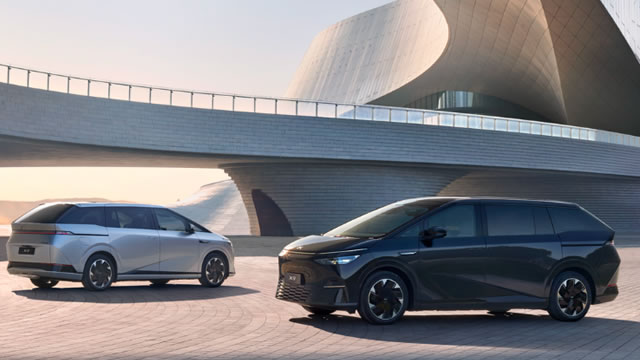
LI Unveils Li i8 SUV but Challenges Keep the Stock Under Pressure
ZACKS· 2025-02-26 17:00
Core Viewpoint - Li Auto is transitioning from hybrid vehicles to fully electric models, unveiling the Li i8 SUV, which is expected to enhance investor confidence in 2025 [1][2]. Company Overview - Li Auto has emerged as a leading luxury car brand in China, delivering 500,508 vehicles in 2024, significantly outperforming competitors XPEV and NIO, which delivered 221,970 and 190,068 units respectively [2]. Stock Performance - Over the past 12 months, Li Auto's shares have decreased by 37.5%, underperforming the Zacks Auto, Tires and Trucks sector's decline of 0.7% and the S&P 500's gain of 18.5% [3]. - In the same period, XPEV shares increased by 80.7%, while NIO shares fell by 21.4% [3]. Financial Metrics - Li Auto's shares are currently considered overvalued, with a Value Score of C, and a forward 12-month price/sales ratio of 1.12x, exceeding its median of 0.94x and the Zacks Automotive – Foreign industry's 0.59x [6]. - The average selling price (ASP) of Li Auto's vehicles is declining due to product mix changes, impacting revenue growth despite higher delivery numbers [9]. Expense Analysis - Selling, general and administrative (SG&A) expenses rose by 32.1% year-over-year, driven by increased employee compensation, while R&D expenses decreased by 8.2% year-over-year in Q3 2024 [9]. Strategic Initiatives - Li Auto is expanding its supercharging network, planning to build over 1,200 stations by the end of 2025, which will cover 90% of national highways, although this requires significant capital investment [10]. Market Challenges - The company faces macroeconomic uncertainties, potential tariff increases, and changing government policies regarding EV subsidies and market regulations, which could hinder long-term growth [11]. - The Zacks Consensus Estimate for Li Auto's 2025 EPS is currently $1.70, reflecting a decrease of 2 cents over the past month [11]. Conclusion - Despite strong delivery growth and a shift to fully electric vehicles, Li Auto is encountering substantial challenges that may impact its growth trajectory and stock performance [12].