xTool

Search documents
创想三维冲刺港股IPO,去年出货量不及拓竹六成|IPO观察
3 6 Ke· 2025-08-23 01:39
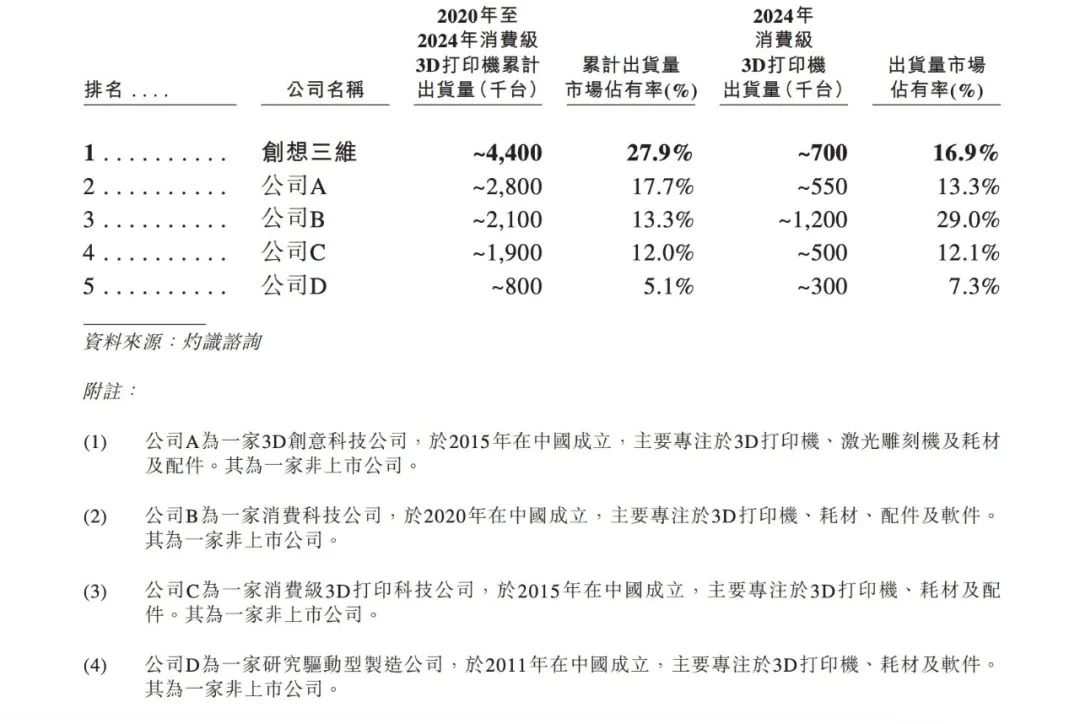
Core Insights - The article discusses the competitive landscape of the 3D printing industry, particularly focusing on the challenges faced by Creality, a leading Chinese 3D printer manufacturer, as it prepares for its IPO in Hong Kong. The company is facing intense competition from both established players and new entrants in the market [1][4][31]. Group 1: Company Overview - Creality was founded in 2014 and has grown to become a significant player in the 3D printing market, with revenue exceeding 2.288 billion RMB in 2024 [3][13]. - The company claims to be the largest consumer-grade 3D printer provider globally, with a cumulative market share of 27.9% from 2020 to 2024 [8][10]. - However, Creality's market position is challenged by competitors like Bambu Lab, which has rapidly gained market share, achieving revenue of over 5.5 billion RMB in 2024 [5][10]. Group 2: Market Dynamics - The consumer-grade 3D printing market is dominated by four Shenzhen-based companies, which collectively account for over 90% of global shipments [7][8]. - The market is experiencing a "Matthew Effect," where larger companies are gaining a disproportionate share of the market, making it increasingly difficult for smaller players to compete [8][10]. - Creality's sales of 3D printers are projected to decline from 870,000 units in 2023 to 720,000 units in 2024, as the company shifts focus to higher-end products [11][12]. Group 3: Financial Performance - Creality's revenue has shown modest growth over the past three years, with figures of 1.346 billion RMB in 2022, 1.883 billion RMB in 2023, and 2.288 billion RMB in 2024 [13]. - The company's gross margin improved slightly from 28.8% in 2022 to 30.9% in 2024, but net profit has decreased from 104 million RMB in 2022 to 88.66 million RMB in 2024 [13]. - The share of revenue from 3D printing machines has decreased from 81.7% in 2022 to 61.9% in 2024, indicating a diversification in revenue streams [12][13]. Group 4: New Business Ventures - In 2024, Creality became the leading company in global shipments of consumer-grade 3D scanners and ranked third in consumer-grade laser engraving machines [15]. - The market for consumer-grade 3D scanners is growing rapidly, with a compound annual growth rate of 47.8% from 2020 to 2024 [16]. - Creality's revenue from 3D scanners reached 208 million RMB in 2024, contributing 9.1% to total revenue, although this is still less than the revenue from 3D printing consumables [17][18]. Group 5: Competitive Landscape - The laser engraving machine market is also highly competitive, with xTool emerging as a significant player, projecting revenues of 20-30 billion RMB in 2024 [24]. - Creality's sales network has expanded significantly, with 74 self-operated online stores and 2,163 distributors covering approximately 140 countries [27]. - Despite the expansion of sales channels, product competitiveness remains crucial in the hardware industry, as evidenced by the success of competitors like Bambu Lab and xTool [28][29].

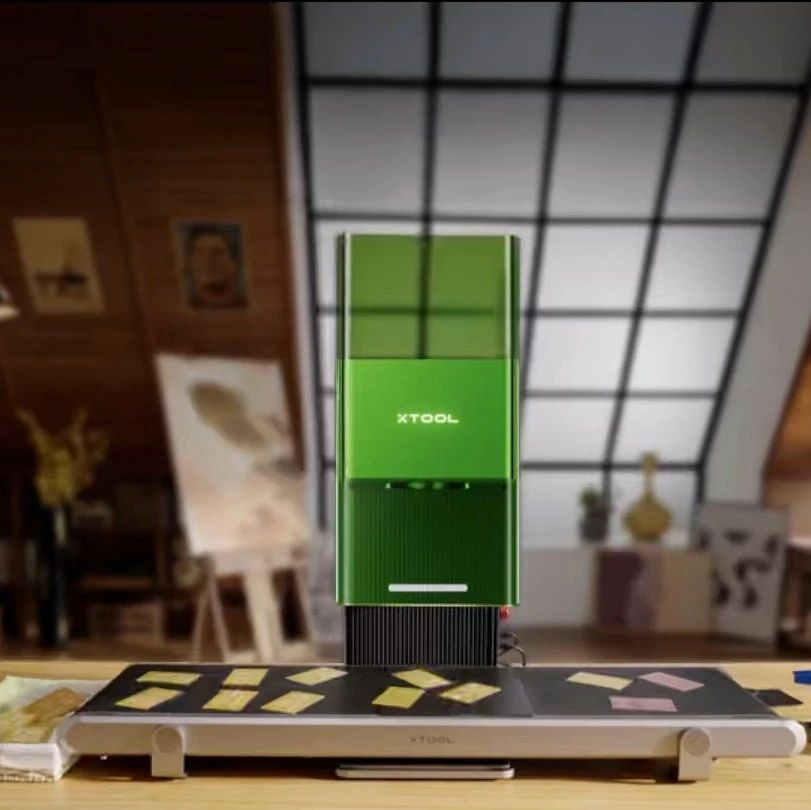
3D打印机巨头入局激光雕刻机赛道,新品最快年内上线
雷峰网· 2025-08-15 08:28
Core Viewpoint - A leading domestic 3D printer company is entering the laser engraving machine market, with plans to launch new products by 2025 or 2026, aiming for an initial shipment of approximately 300,000 units in the first year [3][4]. Group 1: Market Dynamics - The 3D printing industry, particularly the FDM segment, is expected to reach a saturation point in the next 3-4 years, with potential sales bottlenecks occurring at 3-4 million units [5]. - Laser engraving machines are considered essential tools for makers, with lower technical barriers compared to 3D printers, indicating a more accessible market for new entrants [5][6]. Group 2: Competitive Landscape - Numerous players, both new and established, are actively entering the laser engraving machine sector, including companies like Atomstack, LaserPecker, WeCreat, and ACCELaser, with Anker also showing interest [6]. - xTool, the leading company in the laser engraving machine market, may face significant pressure from increasing competition, prompting it to diversify into UV printers and welding machines [6].
消费级3D打印企业:拓竹营收突破55亿,利润近20亿,全球市占超50%
材料汇· 2025-08-04 15:12
Group 1: Desktop 3D Printing Market - The global desktop 3D printing market is projected to grow from $5.9 billion in 2024 to $20.9 billion by 2030, with a CAGR of 23% [14][11]. - In 2023, China's desktop 3D printing market size was $300 million, accounting for approximately 6% of the global market, with key applications in dental/healthcare (24%), jewelry (21%), and food (19%) [14][12]. - The desktop 3D printing technology is categorized into FDM and SLA, with FDM being more cost-effective but less precise compared to SLA [14][13]. Group 2: Competitive Landscape - Bambu Lab is a leading player in the desktop 3D printing market, achieving revenues of 2.7 billion yuan in 2023, with a projected revenue of 5.5 billion yuan in 2024 [28]. - Creality, established in 2014, has sold over 5.5 million 3D printers globally, maintaining a market share of approximately 39% in the entry-level segment [29]. - Voxelab, founded in 2015, has launched over 20 products and achieved annual revenues exceeding 1 billion yuan, focusing on cost-effective solutions [35]. Group 3: Laser Engraving Market - The global laser engraving market is expected to reach $4.4457 billion in 2024, with a CAGR of 8.7% from 2025 to 2030 [47]. - The desktop laser engraving machine market is growing rapidly, with a 23% increase in sales from 2022 to 2023, reaching 370,000 units sold [47][48]. - Major players in the laser engraving market include xTool, Ortur, and Atomstack, with xTool holding a significant market share [50][54]. Group 4: Key Companies and Financials - Bambu Lab's community forum has over 100,000 members, enhancing user engagement and product adoption [28]. - xTool's revenue exceeded 1 billion yuan in 2023, with projections of 2 to 3 billion yuan in 2024, aiming for over 5 billion yuan by 2025 [54]. - The laser control system supplier, Jin Chengzi, is expected to generate revenue of 212 million yuan in 2024, with a net profit margin of 13.9% [65].





谁是3D打印界的小米?
雷峰网· 2025-07-29 10:26
Core Viewpoint - The article discusses the competitive landscape of the 3D printing industry, particularly focusing on the emergence of Tuozhu as a significant player and its impact on existing companies like Chuangxiang Sanwei. It highlights the potential for investment opportunities and the challenges faced by traditional players in adapting to the new market dynamics [4][38]. Group 1: Investment Interest in Tuozhu - Recent rumors about Tencent's potential investment in Tuozhu have sparked interest among investors, although the validity of these rumors remains uncertain [4]. - Many investors are eager to invest in Tuozhu, viewing it as a leading company in the 3D printing sector, akin to Apple in its industry [5][6]. - The competition for investment opportunities has led some investors to seek alternative targets within the 3D printing space, looking for the next "Xiaomi" [5][6]. Group 2: Potential Competitors to Tuozhu - xTool is identified as a strong competitor to Tuozhu, having transitioned from the education sector to become a leader in laser engraving and is now entering the 3D printing market [7][8]. - xTool's projected revenue for 2024 is estimated to be between 2.3 to 2.4 billion RMB, with a net profit margin of 12%, but its high Pre-IPO valuation of 6 billion RMB raises concerns among investors [8][9]. - Another competitor, Chasing, has launched a 3D printing project called Atom Rebuild, which has completed a multi-million angel round of financing and is expected to release products soon [10][11]. Group 3: Chuangxiang Sanwei's Market Position - Chuangxiang Sanwei has historically dominated the consumer-grade 3D printing market, with projected revenues of 2.8 billion RMB and a net profit of 100 to 200 million RMB for 2024 [15]. - Despite its advantages, Chuangxiang Sanwei faces challenges due to its equal shareholding structure among founders, which could lead to decision-making inefficiencies and internal conflicts [18][19]. - The company has struggled to innovate and keep pace with Tuozhu, which has rapidly gained market share and established a strong brand presence [20][21]. Group 4: Industry Dynamics and Changes - The emergence of Tuozhu has prompted a shift in the 3D printing industry, with traditional players like Chuangxiang Sanwei adapting their strategies to remain competitive [24][30]. - Chuangxiang Sanwei is transitioning from a "machine sea strategy" to focusing on high-quality products, influenced by Tuozhu's market approach [26][27]. - The competitive landscape has led to a reevaluation of product development and marketing strategies among established companies, with many adopting a follower strategy in response to Tuozhu's innovations [30][38]. Group 5: IPO Prospects for Chuangxiang Sanwei - Chuangxiang Sanwei is reportedly preparing for an IPO in Hong Kong, aiming to become the first consumer-grade 3D printing company to go public [32]. - The company has faced challenges in its IPO journey, including a potential reduction in valuation from 6 billion RMB to 4.5 billion RMB due to market conditions [34][35]. - Successful IPO could provide Chuangxiang Sanwei with additional capital for R&D and production, benefiting the overall industry [36].

涂鸦智能前CFO加入明星硬件公司xTool,后者营收已超20亿|36氪独家
36氪· 2025-04-02 23:59
以下文章来源于硬氪 ,作者林晴晴 硬氪 . 专注全球化、硬科技报道。36kr旗下官方账号。 截至发稿,xTool未对此消息作出回应。 刘尧曾担任瑞士银行投行部执行董事,完成过逾百亿美元投融资项目。根据涂鸦智能公告,刘尧2019年5月起在涂鸦智能担任高 级副总裁及首席财务官,负责资本市场、投资、财务、法务及内部控制、战略分析及规划。2021年,涂鸦智能在纽交所上市,成 为"IoT云平台上市第一股"。2022年7月,涂鸦智能又在香港联交所主板完成双重上市。2024年8月,刘尧因个人原因离开涂鸦 智能。 一位投资人对硬氪表示:"刘尧有一个长板就是战略和募资,毕竟在瑞士银行待过,格局大。" 和创始人风格一致,xTool也常年保持低调,属于深圳典型的"不差钱"的硬件公司。 但它也经历过一段波折。2013年,王建军成立创客工场Makeblock,主攻STEAM教育,推出的主要是教育机器人和创客工具, 曾在2015年至2018年四年间先后拿到了红杉中国、深创投等机构累计超10亿元的融资。 2021年,因为教育业务放缓,公司成 立了xTool品牌,开始转型消费级激光雕刻机和3D打印。 xTool最早做工业级激光设备,后来转型 ...