TikTok

Search documents
澳大利亚青少年“社媒禁令”遭美在线平台起诉
Xin Hua She· 2025-12-12 06:10
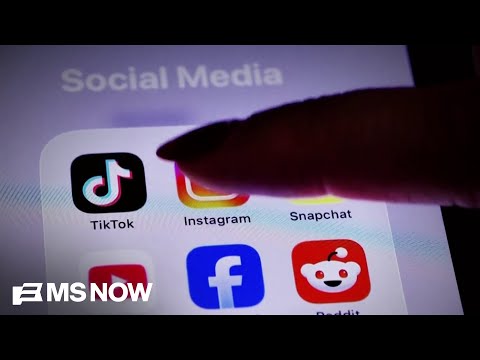
Group 1 - Reddit has filed a lawsuit against the Australian government regarding a social media ban for users under 16, seeking to declare the law invalid or inapplicable to its platform [1] - The Australian government emphasizes its commitment to protecting young people from social media harm, stating it stands with parents and children [1] - The amendment passed by the Australian Parliament last November mandates specific social media platforms to take "reasonable measures" to prevent users under 16 from having accounts, with non-compliance resulting in fines up to AUD 49.5 million (approximately CNY 230 million) [1] Group 2 - Since the amendment's passage, the Australian government has dynamically adjusted the list of platforms required to enforce the ban, which currently includes Facebook, YouTube, TikTok, X (formerly Twitter), Instagram, and Reddit among ten online platforms [2] - Research by the Australian government's cybersecurity agency found that 96% of teenagers aged 10 to 15 use social media, with 70% having encountered harmful content, highlighting the need for age restriction measures to mitigate negative impacts [2]
澳洲数字市场发展滞后 社媒禁令终将成为脱离国情的“空中楼阁”
Zhong Guo Xin Wen Wang· 2025-12-12 05:37
Core Viewpoint - The Australian Parliament's passage of the "2024 Cybersecurity (Minimum Age for Social Media) Amendment" has sparked global attention, prohibiting minors under 16 from using mainstream social media platforms, effective December 10. This ban raises concerns about its implications and effectiveness, revealing several issues with a one-size-fits-all approach [1][9]. Group 1: Children's Rights and Participation - The ban overlooks children's media rights and fails to respect their voices, as the execution of the social media ban lacks a solid foundation. In the digital age, access and participation rights for children are essential [1][2][3]. - The Australian government's approach deviates from fundamental principles by not involving minors in the policy-making process, raising questions about potential violations of children's basic rights [3]. Group 2: Political Motivations and Governance - The legislation appears driven by short-term electoral motives, reflecting a political struggle to secure parental votes, with 77% of parents supporting the ban. The rapid progression from proposal to approval indicates a lack of long-term governance strategy [4]. - The law's swift passage, with minimal public feedback opportunities, has led to skepticism from social media platforms regarding the underlying motives and the adequacy of scientific justification [4][5]. Group 3: Implementation Challenges - The ban simplifies complex issues of digital literacy and content governance into a physical isolation policy, revealing governmental inertia and a lack of nuanced strategies [5][6]. - The practical implementation of the ban faces significant challenges, including age verification difficulties and potential conflicts between parents and children, which may exacerbate existing issues rather than resolve them [6][7]. Group 4: Digital Market Context - Australia's digital market is underdeveloped, with the country ranking low in global internet quality and digital competitiveness. This context raises concerns about the feasibility and relevance of the social media ban [8][9]. - The government has allocated AUD 6.5 million to test age verification technologies, but the effectiveness of these systems remains uncertain, complicating the ban's implementation [8]. Group 5: Global Perspectives and Future Directions - The global trend in social media governance is shifting from rigid restrictions to more flexible guidance, emphasizing the need for a balanced approach that protects minors while allowing for their development [10]. - A more forward-looking strategy would focus on enhancing digital literacy and critical thinking among minors, rather than isolating them from digital environments, fostering a generation of informed digital citizens [10].
X @BBC News (World)
BBC News (World)· 2025-12-11 17:44
Ethiopia arrests 'indecently' dressed TikTok stars after awards ceremony https://t.co/3EWICZO2V8 ...
Reed: Gen Alpha will find other channels to keep the conversations going
CNBC Television· 2025-12-11 13:28
Business Model & User Engagement - Restrictions on younger users (Gen Alpha) may create latent demand, potentially increasing their desire to join platforms [1] - Banning access might lead to increased interest and a "you can't have it so you want it more" effect, potentially benefiting the business model [1] - Gen Alpha's conversations and word-of-mouth marketing will continue offline, requiring platforms to recognize second-order communications [1] Social Impact & User Agency - Removing agency and freedom for younger users can backfire, making them want access even more [1] - A mass ban approach may overlook the positive aspects of social media and the potential for responsible usage [1] - Helping kids use platforms responsibly could enhance their mental health and psychological well-being, rather than simply banning them [1] Regulatory & Market Outlook - The speaker doubts a complete ban on social media for those under 16 will happen in America due to the emphasis on freedom and choice [2]


专家报告 | 企业数据合规与风险管理:基于情报学的视角
Xin Lang Cai Jing· 2025-12-11 10:17
11月28日,第十五届信息安全法律大会在北京召开,会议以"安全的边界 执法的协同 文化的力量"为主题。信息安全与保密通信杂志社作为学术支持单位 与会。在本次会议数据安全与个人信息保护法治新图景论坛上,南京大学信息管理学院副教授张斌作了题为"企业数据合规与风险管理:基于情报学的视 角"的报告,以下为报告内容。 报告现场 一、背景 广泛地讲,情报学涵盖军事情报、公安情报等,而高校在研究情报学时,主要聚焦科技情报领域,主要方向是科技创新,为科技部等相关单位提供科技创 新发展规划支持。在研究科技创新的过程中,围绕数据、信息、知识、情报等展开,自然延伸到数字经济背景下的数字创新议题。反过来看,创新工作的 主体必然涉及企业,而企业在数字创新过程中难免遇到合规和风险问题,故而从学科视角来分享本次内容。 聚焦当前的数据合规形势。全球范围内,数据合规相关的判罚案例不断敲响警钟:2021年7月,亚马逊因用户隐私数据保护问题被卢森堡罚款;2022年7 月,滴滴因超范围收集用户个人信息被中国网信办罚款;2025年5月,TikTok因数据违规跨境被爱尔兰数据保护局罚款。这些案例背后,是全球监管体系 的不断完善与收紧。 从全球监管图景来 ...



16岁以下未成年人禁止使用社交媒体?澳大利亚最新政策引争议
Xin Jing Bao· 2025-12-11 08:11
Core Viewpoint - Australia has officially implemented a ban on social media accounts for individuals under the age of 16, becoming the first country to enforce such a regulation, which requires platforms to identify and disable accounts of users below this age [1][3]. Summary by Sections Implementation of the Ban - The ban mandates that technology companies behind social media platforms must identify and remove accounts of users under 16, with penalties of up to 49.5 million AUD (approximately 2.32 billion RMB) for non-compliance [1]. - Major platforms such as Facebook, Instagram, TikTok, and YouTube have indicated their intention to comply with the law, while some have already begun suspending accounts prior to the law's enactment [1][2]. Reporting Requirements - Companies are required to report the number of underage accounts on their platforms, both before and after the ban, with monthly updates for the following six months [1]. Age Verification Concerns - The government has stated that platforms have the discretion to determine age verification methods, but presenting an ID cannot be the sole method [3]. - Meta, the parent company of Facebook and Instagram, has not disclosed its age verification plans, while TikTok plans to use a combination of technology and manual review for age verification [3]. Global Implications - The ban has attracted international attention, with countries like Denmark, New Zealand, and Malaysia considering similar measures, positioning Australia as a test case for age restrictions on social media [3]. Public Reaction - The ban has received support from parents and child advocacy groups but has faced criticism from tech companies and free speech advocates [4]. - Following the announcement, X (formerly Twitter) became the last major platform to comply with the ban, stating it is a legal requirement [4]. Impact on Users - Some young users have expressed feelings of isolation due to the ban, particularly those from marginalized communities who rely on social media for connection and support [5]. - Critics argue that the ban may push children towards less regulated areas of the internet, potentially increasing risks [5].
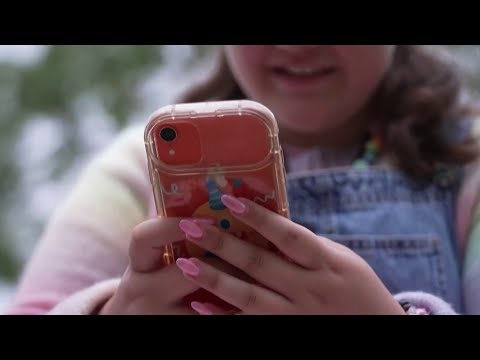
A new social media ban for children takes effect in Australia
MSNBC· 2025-12-10 16:36
Regulatory Landscape - Australia has implemented a social media ban for individuals under 16, requiring platforms to use age verification tools and facing potential fines for non-compliance [1][2][4] - The Australian law is facing a constitutional challenge from teenagers [1] - A Quinnipiac poll indicates approximately 60% of registered American voters support a similar ban in the US [6] Social Impact & Concerns - The law is designed to address the dangers young people face online, including rising suicide rates, teen depression, anxiety, and poor academic performance, with studies suggesting a causal link to social media [3] - A survey of over 17,000 Australians under 16 reveals that a majority (three out of four) believe the ban will not stop them from using social media [5] - Reddit expresses "deep concerns" that the law makes young people less safe online and undermines free expression, despite planning to comply [8] Company Compliance - Most of the 10 social media platforms affected by the Australian law have indicated they plan to comply [8]
TikTok美国小店“门票”涨价,卖家何去何从?
Sou Hu Cai Jing· 2025-12-10 08:17
Core Viewpoint - Starting from December 15, the threshold for doing business on TikTok's US platform has increased significantly, with the cross-border merchant deposit rising from $500 to $1,500, marking a 200% increase [1][4]. Group 1: Impact on Sellers - The adjustment affects sellers of different scales variably, with the increase in deposit aimed at addressing challenges in fulfillment and product quality due to rapid business growth [4]. - For small and medium-sized sellers, the additional $1,000 cash flow requirement may deter those with thin margins or those just starting out, potentially delaying their plans [6]. - Sellers operating multiple stores will face higher capital costs and operational risks, prompting a strategic shift from "quantity expansion" to "deep cultivation" of single stores with a focus on higher-quality products [6]. Group 2: Long-term Industry Implications - The increase in deposit is seen as a signal of the industry moving towards greater maturity and regulation, which could benefit the overall market environment and enhance consumer shopping experiences [4][5]. - Established and compliant merchants may experience limited impact, as the long-term effect could lead to a more regulated market conducive to healthy competition [6]. - Sellers are encouraged to reassess their investment and return based on their financial capabilities, concentrate resources on promising products or stores, and prioritize compliance as a foundation for long-term development [6].

澳大利亚如何执行16岁以下人群“社媒禁令”
Xin Hua Wang· 2025-12-10 05:42
Group 1: Core Perspective - Australia has implemented a social media ban for individuals under 16 years old, effective December 10, 2023, to protect youth from harmful content and excessive screen time [1][2] Group 2: Reasons for Implementation - The Australian Parliament passed the "2024 Cyber Security (Social Media Minimum Age) Amendment" in November 2022, mandating social media platforms to take reasonable measures to prevent under-16s from having accounts, with non-compliance penalties up to AUD 49.5 million (approximately CNY 232 million) [1] - Research indicates that 96% of 10 to 15-year-olds use social media, with 70% having encountered harmful content, prompting the government to act [1] Group 3: Execution of the Ban - Multiple social media platforms have committed to comply with the new regulations, offering options for under-16 users to deactivate or delete their accounts [3] - Platforms like Meta have begun closing youth accounts, while TikTok plans to use a combination of technology and manual review to identify non-compliant accounts [4] Group 4: Public Opinion - A recent poll shows high overall support for the ban among Australians at 73%, with 84% of teachers and 75% of parents in favor [5] - Experts believe the ban could alleviate peer pressure and online stress, thus protecting youth mental health [5] Group 5: Concerns and Criticism - Some experts worry that the ban may push youth to unregulated online spaces, suggesting that digital literacy education and parental guidance could be more effective than age restrictions [6] - Concerns have been raised regarding the large-scale data collection required for age verification, especially in light of past data breaches in Australia [6]
Australia launches world's first social media ban for kids under 16
NBC News· 2025-12-10 05:02
Social Media Ban in Australia - Australia has implemented a ban on social media for individuals under 16, potentially affecting 1 million accounts across major platforms [3] - The law requires tech companies to take measures to prevent underage account creation, facing fines up to $32 million for non-compliance [4] - A national study revealed that 96% of Australian children aged 10-15 use social media, with 70% exposed to harmful content [9] Potential Impacts and Concerns - The ban aims to protect young people from negative effects of social media, such as unrealistic body image and online bullying [6] - Critics argue the ban may infringe on constitutional rights and drive young users to unregulated platforms [8] - There are concerns about the methods tech companies may use to verify age, potentially raising privacy issues [5] Global Implications - Australia's ban is considered a potential template for other countries, with the EU also considering similar measures [9] - Malaysia is set to implement a similar ban starting January 1st, and New Zealand and Denmark are discussing it [15] - Some social media apps are implementing more restrictions for children and teens [16] Workarounds and Reactions - Young people are exploring ways to circumvent the ban, such as using VPNs or requesting adults to create accounts [12][13][14] - 77% of Australians surveyed support the ban [12]