
老百姓

Search documents
一纸文件征求意见 药店老板们睡不着觉了
Mei Ri Jing Ji Xin Wen· 2025-08-19 15:21
Core Viewpoint - The introduction of self-service medicine dispensing machines has raised concerns among traditional pharmacy owners about competition and safety, particularly regarding the dispensing of prescription medications [1][9][10]. Summary by Relevant Sections Self-Service Machines and Regulations - A draft regulation in City A allows self-service machines to dispense prescription and Class A non-prescription drugs, causing anxiety among pharmacy owners who fear they cannot compete with the lower operational costs of these machines [1][9]. - The self-service machines can operate with significantly lower costs, estimated at a few thousand yuan annually, compared to the nearly 20,000 yuan monthly labor costs for traditional pharmacies [1][12]. Industry Concerns - Pharmacy owners express worries that self-service machines could lead to unsafe medication practices, as they may bypass the necessary checks by licensed pharmacists [10][11]. - The lack of regulatory clarity on how prescription medications will be dispensed through these machines adds to the uncertainty and fear of potential misuse [9][10]. Cost and Competition - The operational cost disparity between traditional pharmacies and self-service machines is stark, with traditional pharmacies facing high labor and rental costs, while self-service machines require minimal investment [12][17]. - The ability to deploy multiple self-service machines quickly gives them a competitive edge over traditional pharmacies, which require significant investment and time to establish [18][20]. Market Dynamics - The self-service machine model could disrupt the traditional pharmacy market, as it allows e-commerce platforms to dominate both the distribution and sales of medications [22]. - Some pharmacy owners have attempted to implement self-service machines but found them unprofitable due to low sales volumes and high operational costs [21][23]. Future Implications - The potential widespread adoption of self-service machines could render traditional pharmacies less competitive, leading to significant changes in the retail pharmacy landscape [20][27]. - Industry experts suggest that while self-service machines can enhance convenience and efficiency, strict regulations and safety measures must be in place to protect consumers [11][27].

药店老板们睡不着觉了
Hu Xiu· 2025-08-19 12:24
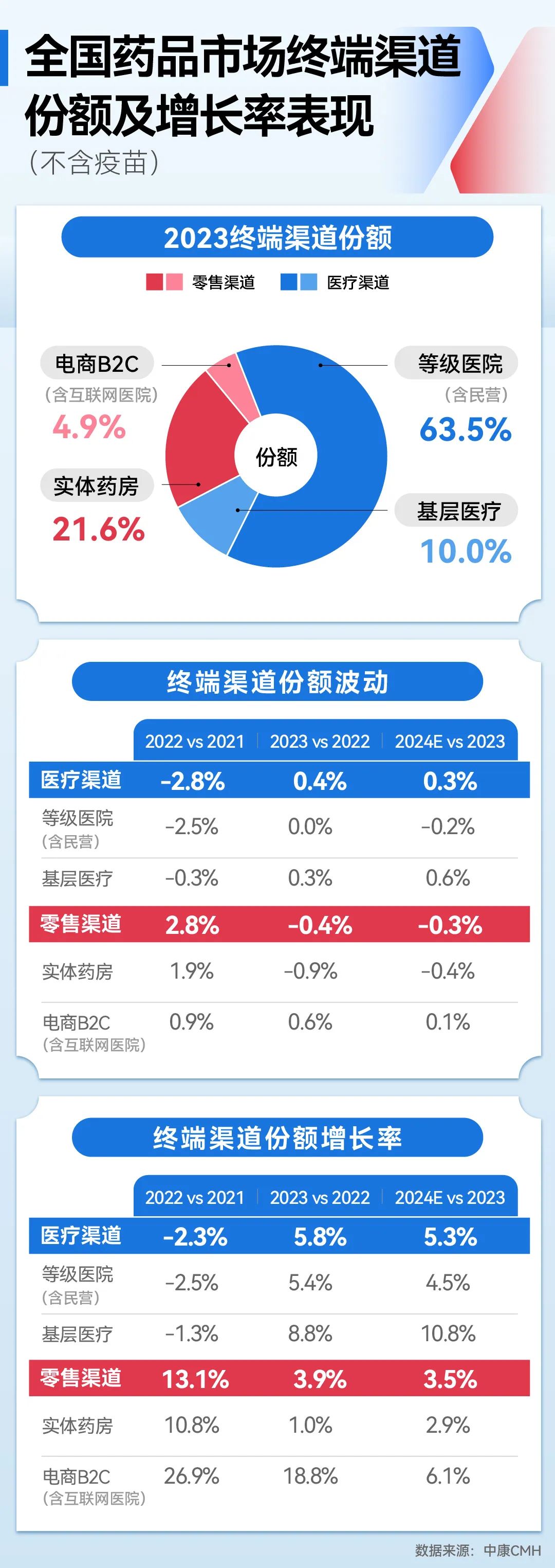
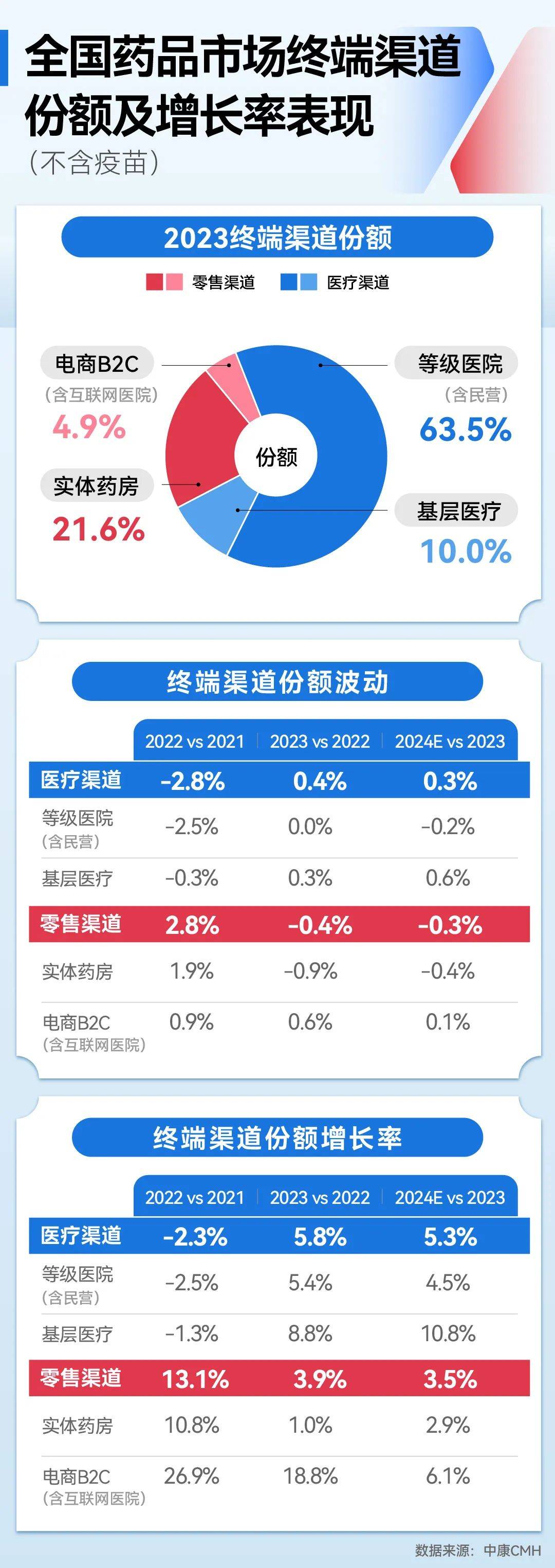
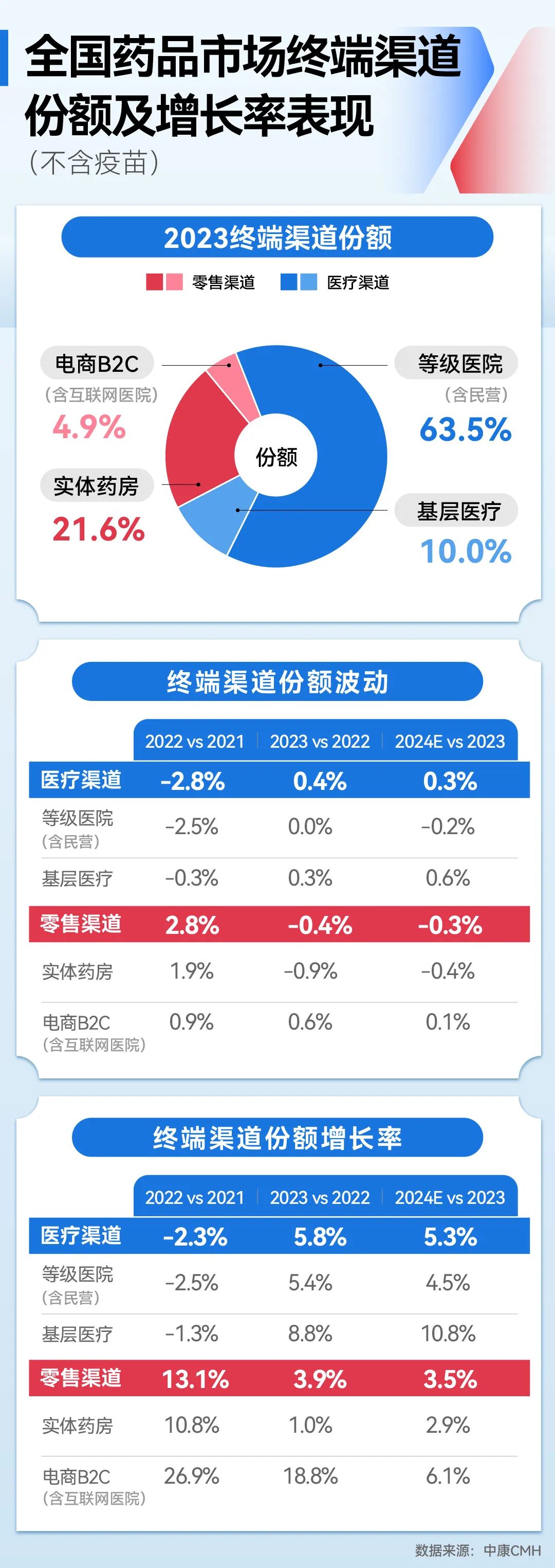
Core Viewpoint - The introduction of self-service medicine vending machines is raising concerns among traditional pharmacies about competition and regulatory compliance, particularly regarding the sale of prescription drugs [5][12][14]. Group 1: Market Trends and Data - The retail pharmacy sector is experiencing a decline in growth, with physical pharmacies projected to see a decrease of 0.4% from 2023 to 2024, following a drop of 0.9% from 2022 to 2023 [3]. - E-commerce B2C channels, including internet hospitals, are showing growth, with a 26.9% increase in 2022 compared to 2021, and an 18.8% increase in 2023 compared to 2022 [4]. - The self-service vending machines can hold over a thousand types of medications and are designed to meet the 24-hour medication needs of consumers, addressing the "last mile" issue in drug purchasing [5][7]. Group 2: Regulatory Environment - The Beijing regulations specify that self-service machines can only sell Class B non-prescription drugs (OTC), which has led to concerns about the potential for these machines to dispense prescription medications without proper oversight [9][10]. - The National Medical Products Administration has stated that self-service machines are not allowed to sell prescription drugs, emphasizing the need for regulatory compliance in the distribution of medications [13]. Group 3: Industry Concerns - Pharmacy operators are worried that self-service machines could operate without licensed pharmacists, leading to potential safety risks in medication dispensing [15][18]. - The operational costs for traditional pharmacies, including the need for licensed pharmacists, are significantly higher compared to the low overhead of self-service machines, which could create an uneven playing field [20][23]. - The rapid deployment of self-service machines could disrupt the traditional pharmacy model, as they can be set up quickly and at a lower cost compared to opening new physical locations [24][26]. Group 4: Economic Implications - The cost of maintaining a licensed pharmacist in a physical pharmacy can add approximately 20,000 yuan per month, while self-service machines do not incur such costs, leading to competitive disadvantages for traditional pharmacies [20][23]. - The profitability of self-service machines is questioned, as some operators report low revenue compared to the initial investment required for the machines [29][30]. - The potential for self-service machines to take over the market raises concerns about the sustainability of traditional pharmacies, especially in densely populated urban areas where competition is already fierce [34][35].
一纸文件征求意见,药店老板们睡不着觉了
3 6 Ke· 2025-08-19 11:53
Core Viewpoint - The introduction of self-service medicine dispensing machines is causing significant concern among traditional pharmacy owners, as these machines can potentially sell prescription drugs without the need for licensed pharmacists, leading to competitive disadvantages for brick-and-mortar stores [1][11][14]. Summary by Relevant Sections Self-Service Machines and Regulations - A draft regulation in A City allows self-service machines to dispense prescription and Class A non-prescription drugs, raising alarms among pharmacy owners about competition from e-commerce platforms [1][11]. - The self-service machines can operate at a fraction of the cost of traditional pharmacies, with estimates suggesting annual operating costs of only a few thousand yuan compared to nearly 20,000 yuan for a single pharmacy's labor costs [1][18]. Market Dynamics and Competition - The self-service machines are seen as a threat to traditional pharmacies, which are already struggling with high operational costs, including rent and staffing [22][25]. - The ability to set up multiple machines quickly and at low cost gives e-commerce platforms a significant advantage over traditional pharmacies, which require substantial investment to open new locations [23][26]. Safety and Regulatory Concerns - Experts express concerns about the safety of dispensing prescription drugs without the oversight of licensed pharmacists, as the machines could bypass necessary checks and balances [11][14][17]. - Current regulations in other cities, like Beijing, restrict self-service machines to non-prescription drugs, highlighting the need for careful consideration of safety and compliance [10][11]. Financial Viability of Self-Service Machines - Some pharmacy owners have attempted to implement self-service machines but found them unprofitable, with revenues failing to cover costs associated with the machines [26][27]. - The high initial investment and ongoing operational costs of self-service machines make them less appealing compared to traditional staffing solutions in densely populated areas [31]. Future Implications for the Industry - If the self-service machine model proves successful in A City, it could significantly disrupt the traditional retail pharmacy landscape, making it difficult for them to compete [24][25]. - The industry must find a balance between innovation and safety, ensuring that the introduction of self-service machines does not compromise patient care [25][31].
老百姓控股股东提前终止减持计划 41天减持套现3.41亿
Zhong Guo Jing Ji Wang· 2025-08-19 07:40
2025年5月7日,公司披露了《股东减持股份计划公告》(公告编号:2025-025),医药集团计划以集中竞 价和大宗交易方式减持公司股份合计不超过22,802,868股,即不超过公司股份总数的3%。其中集中竞价 减持股份的总数不超过公司总股本的1%,大宗交易方式减持股份的总数不超过公司总股本的2%。 公告显示,2025年6月20日至2025年7月30日,医药集团减持18,110,700股,减持价格区间17.60元/股至 21.55元/股,减持总金额340,973,023元。 中国经济网北京8月19日讯老百姓(603883.SH)昨晚发布控股股东提前终止减持计划暨减持股份结果公 告。按照减持计划,老百姓医药集团有限公司(简称"医药集团")需以集中竞价和大宗交易方式减持公司 股份合计不超过22,802,868股。截至公告披露日,医药集团实际减持股份18,110,700股,决定提前终止本 次减持计划。 在本次减持计划实施期间,医药集团于2025年6月20日、6月23日、7月30日通过集中竞价交易和大宗交 易方式合计减持公司股份18,110,700股,占公司总股本的2.38%,截至公告披露日,医药集团持有公司 股份1 ...

证券代码:603883 证券简称:老百姓 公告编号:2025-037
Zhong Guo Zheng Quan Bao - Zhong Zheng Wang· 2025-08-18 23:56
本公司董事会、全体董事及相关股东保证本公告内容不存在任何虚假记载、误导性陈述或者重大遗漏, 并对其内容的真实性、准确性和完整性承担法律责任。 重要内容提示: ● 大股东持股的基本情况 本次减持计划实施前,老百姓医药集团有限公司(以下简称"医药集团")作为老百姓大药房连锁股份有 限公司(以下简称"公司")控股股东,持有公司股份198,564,175股,占当时公司总股本的26.12%。 ● 减持计划的实施结果情况 2025年5月7日,公司披露了《股东减持股份计划公告》(公告编号:2025-025),医药集团计划以集中 竞价和大宗交易方式减持公司股份合计不超过22,802,868股,即不超过公司股份总数的3%。其中集中竞 价减持股份的总数不超过公司总股本的1%,大宗交易方式减持股份的总数不超过公司总股本的2%。 在本次减持计划实施期间,医药集团于2025年6月20日、6月23日、7月30日通过集中竞价交易和大宗交 易方式合计减持公司股份18,110,700股,占公司总股本的2.38%,截至本公告披露日,医药集团持有公 司股份180,453,475股,占公司目前总股本的23.74%,控股股东医药集团及其一致行动人陈秀 ...
老百姓大药房连锁股份有限公司控股股东提前终止减持计划暨减持股份结果公告
Shang Hai Zheng Quan Bao· 2025-08-18 19:09
Group 1 - The controlling shareholder, Yao Baixing Pharmaceutical Group Co., Ltd., held 198,564,175 shares before the reduction plan, accounting for 26.12% of the total share capital of the company [2] - The reduction plan announced on May 7, 2025, allowed for a maximum reduction of 22,802,868 shares, which is 3% of the total share capital, with a maximum of 1% through centralized bidding and 2% through block trading [3] - As of the announcement date, the controlling shareholder had reduced its holdings by 18,110,700 shares, representing 2.38% of the total share capital, bringing its total holdings to 180,453,475 shares, or 23.74% of the total share capital [3][4] Group 2 - The reduction plan was terminated early, with the actual reduction meeting the planned minimum reduction quantity [4] - The shareholding ratio of the controlling shareholder and its concerted parties decreased from 27.91% to 25.53% following the reduction [3][4]
乌克兰军方,正在把老百姓当“狗”抓
Hu Xiu· 2025-08-18 13:03
乌克兰正在把人,当狗抓!乌克兰征兵办现在跟疯了似的,大街上但凡见着个稍微年轻点的男的,管你 是干嘛的,管你身体条件行不行,先塞进车里再说!所以在现在乌克兰百姓眼中,征兵办的那帮人,比 俄军的温压弹还吓人!最狠的是,现在乌克兰人直接会给俄军发征兵办的坐标,还特意备注:麻烦炸准 点!今天就扒一扒乌克兰征兵办,看看他们到底是怎么把同胞逼成敌军盟友的。 ...
老百姓(603883) - 控股股东提前终止减持计划暨减持股份结果公告
2025-08-18 09:17
证券代码:603883 证券简称:老百姓 公告编号:2025-037 老百姓大药房连锁股份有限公司 控股股东提前终止减持计划暨减持股份结果公告 本公司董事会、全体董事及相关股东保证本公告内容不存在任何虚假记载、 误导性陈述或者重大遗漏,并对其内容的真实性、准确性和完整性承担法律责任。 重要内容提示: 大股东持股的基本情况 本次减持计划实施前,老百姓医药集团有限公司(以下简称"医药集团") 作为老百姓大药房连锁股份有限公司(以下简称"公司")控股股东,持有公司 股份 198,564,175 股,占当时公司总股本的 26.12%。 减持计划的实施结果情况 2025 年 5 月 7 日,公司披露了《股东减持股份计划公告》(公告编号: 2025-025),医药集团计划以集中竞价和大宗交易方式减持公司股份合计不超过 22,802,868 股,即不超过公司股份总数的 3%。其中集中竞价减持股份的总数不 超过公司总股本的 1%,大宗交易方式减持股份的总数不超过公司总股本的 2%。 在本次减持计划实施期间,医药集团于 2025 年 6 月 20 日、6 月 23 日、7 月 30 日通过集中竞价交易和大宗交易方式合计减持公司 ...
老百姓(603883.SH):医药集团累计减持2.38%股份
Ge Long Hui A P P· 2025-08-18 09:12
格隆汇8月18日丨老百姓(603883.SH)公布,在本次减持计划实施期间,医药集团于2025年6月20日、6月 23日、7月30日通过集中竞价交易和大宗交易方式合计减持公司股份18,110,700股,占公司总股本的 2.38%,截至本公告披露日,医药集团持有公司股份180,453,475股,占公司目前总股本的23.74%,控股 股东医药集团及其一致行动人陈秀兰合计持股比例由27.91%降低至25.53%。 ...
老百姓:医药集团累计减持2.38%股份
Ge Long Hui· 2025-08-18 09:08
格隆汇8月18日丨老百姓(603883.SH)公布,在本次减持计划实施期间,医药集团于2025年6月20日、6月 23日、7月30日通过集中竞价交易和大宗交易方式合计减持公司股份18,110,700股,占公司总股本的 2.38%,截至本公告披露日,医药集团持有公司股份180,453,475股,占公司目前总股本的23.74%,控股 股东医药集团及其一致行动人陈秀兰合计持股比例由27.91%降低至25.53%。 ...