
Samsung

Search documents
The 3 Fastest-Growing Stocks Heading Into 2026
Yahoo Finance· 2025-12-23 13:27
Core Insights - Arm Holdings is solidifying its position in the AI sector, with significant growth in licensing revenue and profitability driven by increased demand for AI-optimized systems [1][4] - The company reported a record revenue of $1.14 billion in Q2 of fiscal 2026, marking a 34% year-over-year increase, with royalties reaching $620 million [3] - Strategic collaborations with major tech companies like Meta and Samsung are enhancing Arm's AI capabilities across various devices [1][4] Financial Performance - Licensing revenue increased by 56% to $515 million, reflecting strong relationships and interest in AI systems [1] - Adjusted earnings per share (EPS) rose by 30% to $0.39, indicating improved profitability [1] - Arm's annualized contract value for licenses increased by 28%, showcasing robust demand for next-generation designs [3] Market Position and Growth Drivers - The Neoverse platform has surpassed 1 billion CPUs deployed globally, with major tech firms developing custom processors based on Arm architecture [2] - AI workloads are driving growth in data centers, smartphones, automotive systems, and IoT, expanding Arm's royalty base [2][3] - Management anticipates third-quarter revenue of approximately $1.22 billion, indicating continued growth momentum [6] Strategic Collaborations - Collaborations with companies like Meta and Samsung aim to enhance AI efficiency in wearables and smartphones [1] - New platforms such as Lumex CSS are providing powerful on-device AI capabilities, further expanding Arm's market reach [1] Analyst Sentiment - Wall Street analysts have a consensus rating of "Moderate Buy" for ARM stock, with an average target price suggesting a potential upside of nearly 50% [7] - The highest price estimate indicates a possible 90% rally over the next 12 months, reflecting strong investor interest [7]



X @Bloomberg
Bloomberg· 2025-12-23 08:14
Samsung-owned Harman International is buying the advanced driver assistance systems business of Germany’s ZF Group for €1.5 billion ($1.8 billion) https://t.co/AdVtmhOxep ...
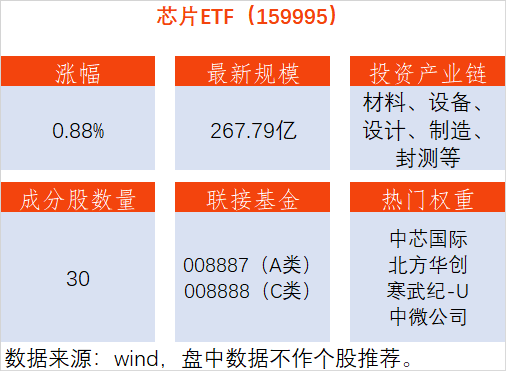
存储进入新一轮涨价周期!芯片ETF(159995)涨0.88%,北方华创涨4.50%
Mei Ri Jing Ji Xin Wen· 2025-12-23 06:21
Group 1 - The A-share market saw a collective rise in the three major indices, with the Shanghai Composite Index increasing by 0.26%, led by gains in sectors such as fine chemicals, forestry, and building materials, while aerospace and education sectors experienced declines [1] - The chip technology sector showed strength, with the chip ETF (159995) rising by 0.88%, and notable increases in component stocks such as Northern Huachuang (up 4.50%), Beijing Junzheng (up 4.10%), and Cambrian (up 3.99%) [1] Group 2 - The storage chip industry is expected to enter a new price increase cycle by Q4 2025, as major players Micron, Samsung, and SK Hynix have raised contract prices for DRAM and NAND Flash products, with corresponding increases in spot prices [3] - The AI server market's sustained high demand, along with the upgrade cycle for storage chips in smartphones like the iPhone, is anticipated to drive a new development cycle in the storage industry, prompting investment opportunities in domestic storage industry chain listed companies [3] - The chip ETF (159995) tracks the National Chip Index, comprising 30 leading companies in the A-share chip industry across materials, equipment, design, manufacturing, packaging, and testing, including SMIC, Cambrian, Changdian Technology, and Northern Huachuang [3]


iShares ACWX ETF Throws Out US Companies And Somehow Still Doubled The S&P 500 Returns
Yahoo Finance· 2025-12-22 12:27
Core Viewpoint - The iShares MSCI ACWI ex U.S. ETF (NASDAQ:ACWX) has experienced significant performance in 2025, benefiting from a resurgence in international stocks despite excluding U.S. companies from its portfolio [1]. Group 1: Fund Overview - ACWX tracks the MSCI ACWI ex USA Index, providing exposure to approximately 2,000 stocks across developed and emerging markets outside the United States, including companies like Tencent, SAP, ASML, and Samsung [2]. - The fund has $7.3 billion in assets, a 0.32% expense ratio, and a 2% dividend yield, with only 12% of its portfolio concentrated in the top 10 holdings, indicating a more balanced risk profile compared to U.S.-focused funds [4][7]. Group 2: Performance Drivers - The performance of international equities has been significantly influenced by the movement of the U.S. dollar; a weaker dollar enhances returns for U.S.-based investors when converting foreign currency returns back to dollars [3]. - In 2025, ACWX's gains were amplified by U.S. dollar weakness, which provided a favorable environment for international stocks [4]. Group 3: Sector Exposure and Diversification - ACWX offers more balanced sector exposure compared to the S&P 500, which has a 34% weight in technology stocks; ACWX diversifies risk across financials, industrials, healthcare, and consumer sectors, leading to different return characteristics [5]. Group 4: Future Considerations - Monitoring the U.S. dollar's stability or strength in 2026 is crucial, as a resurgent dollar could diminish the currency boost for U.S. investors, potentially compressing international equity returns even if foreign stocks perform well locally [6].
Vivo X300 Pro review: It goes beyond cameras
The Economic Times· 2025-12-20 10:09
Core Insights - The Vivo X300 Pro was launched in India on December 2, 2025, priced at Rs 1,09,999, featuring a single configuration of 16 GB RAM and 512 GB storage [1][41] - The device aims to compete directly with flagship models like the iPhone 17 Pro Max and Galaxy S25 Ultra, showcasing significant improvements in camera technology and overall performance [35][40] Design and Build - The X300 Pro retains Vivo's circular camera design while modernizing the overall look with a flat frame, back, and display, available in Elite Black and Dune Gold [2][3] - The device weighs 226 grams and features an aluminum alloy frame with glass on both sides, achieving IP68 and IP69 ratings for water resistance [3] - The introduction of a shortcut button enhances user experience by allowing customizable quick actions [4] Display and Audio - The phone features a 6.78-inch LTPO AMOLED display with a 1.5K resolution and a 120 Hz adaptive refresh rate, offering improved brightness of up to 4,500 nits [7][8] - The audio experience is enhanced with loud and clear stereo speakers, providing a convincing media experience [10][42] Software and Performance - The X300 Pro runs on OriginOS 6 based on Android 16, promising five major Android upgrades and seven years of security updates, with smoother animations and improved user interface [11][12] - It is powered by MediaTek's Dimensity 9500 chip, showing significant performance improvements over the previous generation, with efficient multitasking capabilities [16][17] Battery and Charging - The device is equipped with a 6510 mAh silicon-carbon battery, providing around 8+ hours of screen-on time, and supports 90W wired and 40W wireless charging [20][21] - The improved battery chemistry is expected to enhance longevity and usability during travel [22] Camera System - The rear camera setup includes a 50 MP main camera, a 200 MP periscope telephoto lens with 3.7x optical zoom, and a 50 MP ultra-wide camera, while the front camera has been upgraded to 50 MP with autofocus [23][34] - The camera system benefits from a multi-chip pipeline for enhanced image processing, resulting in improved dynamic range and detail in various lighting conditions [24][26] - The X300 Pro excels in portrait and zoom photography, often outperforming competitors in terms of detail and subject separation [27][28] Conclusion - The Vivo X300 Pro represents a significant advancement in Vivo's flagship offerings, combining strong camera capabilities with a modern design and robust performance, making it a serious contender in the premium smartphone market [35][40]


While IEFA is Bigger and SPDW Is More Affordable, There's 1 Subtle Difference Between These International ETFs
The Motley Fool· 2025-12-20 08:31
Core Insights - The article compares two international ETFs, SPDR Portfolio Developed World ex-US ETF (SPDW) and iShares Core MSCI EAFE ETF (IEFA), highlighting their differences in cost, size, and yield [1][2]. Cost and Size Comparison - SPDW has a lower expense ratio of 0.03% compared to IEFA's 0.07% [3]. - As of December 12, 2025, SPDW's one-year return is 26.6%, while IEFA's is 16.0% [3]. - SPDW has a dividend yield of 2.6%, slightly lower than IEFA's 2.9% [3]. - Assets under management (AUM) for SPDW is $33.3 billion, significantly smaller than IEFA's $163.0 billion [3]. Performance and Risk Metrics - Over five years, SPDW's maximum drawdown is -30.20%, while IEFA's is -30.41% [5]. - The growth of $1,000 invested over five years is $1,335 for SPDW and $1,330 for IEFA [5]. Sector Allocation and Holdings - IEFA includes 2,600 developed-market stocks, with major sectors being financial services (23%), industrials (20%), and healthcare (10%) [6]. - SPDW has a similar sector allocation, with top sectors being financial services (23%), industrials (19%), and technology (11%) [7]. - The largest holdings for both ETFs include ASML, AstraZeneca, and Roche, with SPDW also holding Samsung [7]. Investment Implications - Both ETFs provide pathways for international exposure, with IEFA being larger in terms of holdings and assets but with a higher expense ratio [8]. - SPDW offers broader international exposure by including Canadian companies, which constitute 11% of its geographical weighting [9]. - For investors prioritizing low cost and broad international exposure, SPDW is highlighted as a favorable option compared to IEFA [10].

Global Markets Brace for AI Chip Scramble, EV Slowdown, and Japan’s Economic Resurgence
Stock Market News· 2025-12-20 07:38
AI and Semiconductor Market - OpenAI has secured deals to purchase approximately 40% of the global raw, undiced DRAM wafer output until 2029, indicating a significant demand for advanced memory chips to support AI infrastructure and data centers globally [2][7] - Moore Threads Technology has emerged as a competitor to Nvidia in the AI chip market, completing a successful IPO in China with shares increasing by as much as 500%, aiming to reduce reliance on Nvidia's hardware [3][7] Global EV Market - The electric vehicle market is experiencing a slowdown, with Asian battery and car manufacturers adjusting strategies due to softening demand, high production costs, and slower consumer adoption [4][7] - Ford Motor Company is recalling over 270,000 electric and hybrid vehicles in the U.S. due to a parking function issue, which poses a roll-away risk [5][7] Japan's Corporate Landscape - Japan is undergoing significant corporate governance reforms, leading to a record $350 billion in mergers and acquisitions, indicating a shift towards improved shareholder returns and profitability [6][7] - Companies and households in Japan are reevaluating their financial strategies following a recent rate hike by the Bank of Japan [8][7] American Airlines Loyalty Program Changes - American Airlines will no longer offer AAdvantage miles or Loyalty Points for basic economy fares starting December 17, 2025, aligning its policy with competitors and impacting budget travelers [9][7]



How to disable ACR on your TV (and why you should do it ASAP)
ZDNET· 2025-12-19 19:02
Core Insights - The article discusses the use of Automatic Content Recognition (ACR) technology in smart TVs, which tracks viewing habits and collects data for targeted advertising [3][12][17] - In 2022, advertisers spent approximately $18.6 billion on smart TV ads, with expectations for continued growth in this area [4] - ACR technology captures up to 7,200 images per hour, providing detailed insights into viewer preferences and personal information [6][17] Group 1: ACR Technology Overview - ACR operates in the background, identifying content displayed on screens by capturing screenshots and cross-referencing them with a media database [5][12] - The technology allows marketers to tailor content recommendations and track the effectiveness of advertisements [7][12] Group 2: Privacy Concerns - There are significant privacy risks associated with ACR, including potential exploitation of sensitive information, which could lead to identity theft [8][18] - Many users are unaware of ACR's presence and find it challenging to opt out due to complex settings [9][12] Group 3: Disabling ACR - The article provides detailed instructions on how to disable ACR on various smart TV brands, including Samsung, LG, Sony, Hisense, and TCL [10][11][20] - Disabling ACR may limit some smart features but enhances user privacy [16][18]
Up 50% in 2025, Should You Buy ASML Stock Right Now?
Yahoo Finance· 2025-12-19 17:21
Core Viewpoint - ASML's stock has reached a record high, reflecting strong performance driven by the AI market, despite facing challenges in China [1][6]. Group 1: Company Overview - ASML is the largest producer of lithography systems, essential for etching circuit patterns on silicon wafers, and the sole producer of extreme ultraviolet (EUV) lithography systems [3]. - The company's EUV systems, costing between $200 million and $400 million, are utilized by leading foundries like TSMC, Samsung, and Intel for advanced chip production [4]. Group 2: Market Position and Challenges - ASML's monopoly on critical chipmaking technology positions it as a key player in the semiconductor market, but it faces restrictions on selling EUV systems to Chinese manufacturers since 2019, with increasing pressure on advanced DUV system sales [5]. - Despite a slowdown in growth in China, which accounted for 41% of net system sales in 2024, the expansion of the AI market has led to increased orders from non-Chinese customers [6]. Group 3: Financial Performance - In 2023, ASML's sales grew by 30%, gross margins expanded, and earnings per share (EPS) increased by 41%, driven by the growth in high-performance computing, cloud, data centers, and AI markets [10]. - The transition from low-NA to high-NA EUV systems is expected to significantly enhance revenues and margins in the coming years [7].

Intel vs. Taiwan Semiconductor Manufacturing: Which Stock Will Outperform in 2026?
Yahoo Finance· 2025-12-19 17:05
Key Points TSMC is the undisputed leader in manufacturing advanced chips. Intel's stock outperformed in 2025 after the company was backed by some big investors. TSMC has a clearer growth path between the two companies. 10 stocks we like better than Intel › When it comes to chip manufacturing, Taiwan Semiconductor Manufacturing (NYSE: TSM) is the undisputed foundry leader, while Intel (NASDAQ: INTC) is trying to make inroads. However, in 2025, it was Intel's stock that outperformed, up nearly 80% ...

