芯片ETF(159995)

Search documents
GTC大会开幕在即,芯片ETF(159995)分化调整,聚焦英伟达新品预期
Xin Lang Cai Jing· 2026-03-06 02:40
Market Overview - A-shares experienced a collective adjustment with the Shanghai Composite Index down by 0.26% during intraday trading, while sectors such as pharmaceuticals, environmental protection, and basic chemicals showed gains [1] - The chip technology sector displayed mixed performance, with the Chip ETF (159995.SZ) down by 0.16%, while individual stocks like Shengbang Co. rose by 2.88% and Huahai Qingke by 2.06% [1] Upcoming Events - NVIDIA's GTC 2026 conference is scheduled from March 16 to 19 in San Jose, California, where the next-generation AI chip architecture, codenamed Feynman, is expected to be unveiled, generating significant market interest [1] Industry Insights - Donghai Securities noted that NVIDIA's fiscal year 2026 performance continues to exceed market expectations, with data centers being a core growth driver. The newly released Rubin platform is expected to significantly reduce inference token costs [1] - The electronic industry is witnessing a sustained recovery in demand, effective supply clearance, and rising prices for storage chips, with an unexpected increase in domestic production efforts. The global memory industry has shifted to a seller's market, with price increases for DRAM and NAND expected to continue throughout 2026 [1] Chip ETF Information - The Chip ETF (159995) tracks the National Chip Index, comprising 30 leading companies in the A-share chip industry, including SMIC, Cambricon, Longji Technology, and Northern Huachuang [2]

芯片ETF(159995)开盘涨1.86%,重仓股中芯国际涨0.94%,海光信息涨3.00%
Xin Lang Cai Jing· 2026-02-24 01:39
Group 1 - The chip ETF (159995) opened with a gain of 1.86%, priced at 1.972 yuan [1] - Major holdings in the chip ETF include: - SMIC up 0.94% - Haiguang Information up 3.00% - Cambricon up 1.39% - Northern Huachuang up 1.17% - GigaDevice up 2.85% - Zhongwei Company up 1.26% - Lattice Technology up 3.27% - OmniVision up 1.02% - Tuojing Technology up 0.92% - Changdian Technology up 1.67% [1] - The performance benchmark for the chip ETF is the National Securities Semiconductor Chip Index return, managed by Huaxia Fund Management Co., Ltd. [1] Group 2 - Since its establishment on January 20, 2020, the chip ETF has achieved a return of 93.54% [1] - The return over the past month for the chip ETF is 3.60% [1]




芯片ETF(159995)开盘涨0.68%,重仓股中芯国际涨0.47%,海光信息涨1.96%
Xin Lang Cai Jing· 2026-02-12 02:39
Group 1 - The core point of the article highlights the performance of the Chip ETF (159995), which opened with a gain of 0.68% at 1.913 yuan on February 12 [1] - The major holdings of the Chip ETF include companies such as SMIC, Haiguang Information, and Cambrian, with respective opening gains of 0.47%, 1.96%, and 0.10% [1] - The performance benchmark for the Chip ETF is the National Securities Semiconductor Chip Index return, managed by Huaxia Fund Management Co., with a return of 89.97% since its inception on January 20, 2020, and a near-term return of -0.05% over the past month [1]

芯片ETF(159995)开盘跌0.88%,重仓股中芯国际跌1.89%,海光信息跌1.54%
Xin Lang Cai Jing· 2026-02-11 04:49
Group 1 - The core viewpoint of the article highlights the performance of the Chip ETF (159995), which opened down by 0.88% at 1.910 yuan on February 11 [1] - Major holdings in the Chip ETF include companies such as SMIC, which fell by 1.89%, Haiguang Information down by 1.54%, and Cambrian down by 1.09% [1] - The ETF's performance benchmark is the National Securities Semiconductor Chip Index return rate, managed by Huaxia Fund Management Co., with a return of 92.76% since its inception on January 20, 2020, and a 1.42% return over the past month [1]
中芯国际营收新高背后,是中国半导体的“稳”与“进”
Xin Lang Cai Jing· 2026-02-11 02:45
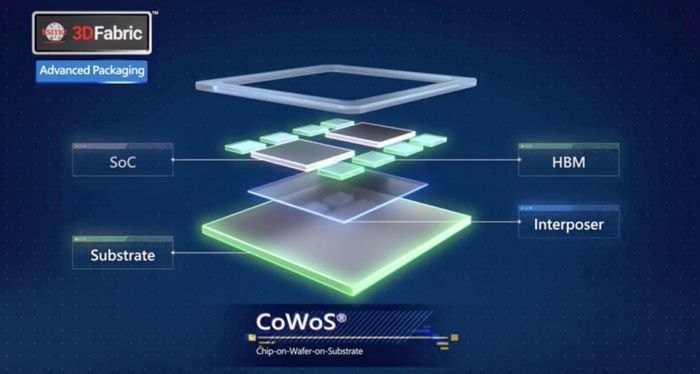
Core Viewpoint - The semiconductor industry is advancing along two parallel but distinct paths: TSMC leads in cutting-edge process technology, while SMIC focuses on mature processes and advanced packaging strategies, each holding unique advantages in the market [1][2][5]. Group 1: TSMC and SMIC Performance - TSMC reported a record monthly revenue of NT$401.26 billion (approximately $12.71 billion) in January, a year-on-year increase of 36.8% [1]. - SMIC achieved an annual revenue of $9.327 billion, marking a 16.2% year-on-year growth and setting a historical high [1][2]. - Despite differing growth rates, both companies are not in direct competition; TSMC is pushing the limits of process technology while SMIC is solidifying the foundation of Chinese manufacturing [2][5]. Group 2: Market Dynamics and Trends - The global semiconductor industry is experiencing a shift, with mature process capacity increasingly moving to mainland China, projected to contribute over one-third of global mature process capacity by 2027 [6]. - SMIC's production of 9.7 million wafers in the past year, with a capacity utilization rate of 93.5%, indicates strong demand and operational efficiency [5][6]. - The demand for mature processes remains robust, particularly in sectors like automotive and industrial control, which consume large volumes of chips [5][8]. Group 3: Advanced Packaging and Domestic Technology - Advanced packaging is becoming a strategic focus for domestic technology advancements, with China expected to capture 25% of the global advanced packaging market by 2028 [10]. - The penetration rate of domestic front-end equipment in 28nm and above production lines has exceeded 35%, indicating significant progress in self-sufficiency [8][10]. - The trend of advanced packaging is driving the upgrade of domestic equipment technology, creating a positive feedback loop that enhances the manufacturing ecosystem [10]. Group 4: Investment Strategies - Evaluating semiconductor companies solely based on process technology and growth rates may be misleading; TSMC represents technological excellence, while SMIC is a key player in domestic manufacturing recovery [11]. - For investors, direct investment in individual semiconductor companies carries high risks due to rapid technological changes and market volatility; a diversified approach through ETFs is recommended [11][12]. - Notable ETFs include the Chip ETF (159995), Semiconductor Equipment ETF (562590), and Sci-Tech Semiconductor ETF (588170), which provide exposure to the entire semiconductor supply chain and mitigate individual stock risks [12].

芯片ETF(159995)开盘跌1.49%,重仓股中芯国际跌1.28%,海光信息跌1.68%
Xin Lang Cai Jing· 2026-02-02 16:37
Group 1 - The chip ETF (159995) opened down 1.49% at 1.980 yuan on February 2 [1] - Major holdings in the chip ETF include companies like SMIC, Haiguang Information, and Cambrian, with declines ranging from 0.47% to 4.47% [1] - The performance benchmark for the chip ETF is the National Securities Semiconductor Chip Index, managed by Huaxia Fund Management Co., with a return of 100.82% since its inception on January 20, 2020, and a recent one-month return of 14.61% [1]
美联储暂缓降息,科创半导体ETF、半导体设备ETF华夏回调,存储基本面仍扎实
Sou Hu Cai Jing· 2026-01-29 03:44
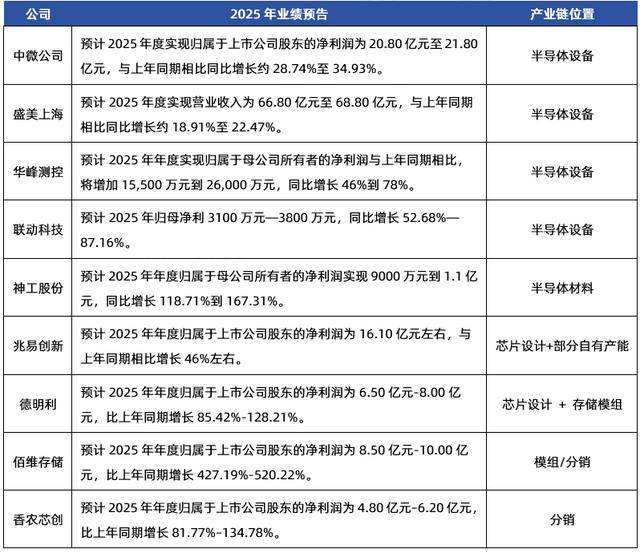
Group 1 - The core viewpoint of the articles highlights the impact of the Federal Reserve's interest rate decisions on the semiconductor industry, indicating that high rates lead to cautious capital expenditure among companies, while lower rates stimulate investment in technology and equipment [2][3] - The semiconductor sector is experiencing a mixed performance, with some stocks rising while others fall, but the trend of domestic substitution remains a key trading logic in the market [1] - Historical data shows that during past interest rate cuts, global semiconductor sales have significantly increased, suggesting a strong correlation between monetary policy and semiconductor demand [3] Group 2 - The fundamentals of the memory chip market remain solid, with companies like SK Hynix and Samsung reporting record revenues and profits in the fourth quarter, indicating robust performance in the sector [4][5] - Several companies in the semiconductor supply chain are expected to achieve substantial profit growth in 2025, with projections indicating increases in net profits ranging from approximately 28.74% to over 520% for various firms [6] - For investors, a strategy of index-based investment in semiconductor ETFs is recommended to mitigate risks associated with individual stocks, with several ETFs available that cover the entire semiconductor industry chain [7]

AI服务器出货与存储价格双升,芯片ETF(159995.SZ)跌1%,瑞芯微涨2.85%
Mei Ri Jing Ji Xin Wen· 2026-01-27 02:22
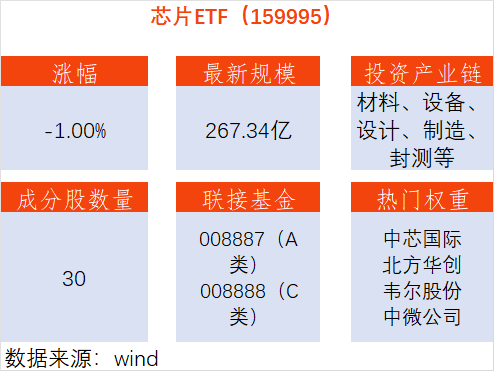
Group 1 - The A-share market experienced a collective decline on January 27, with the Shanghai Composite Index down by 0.32%. The sectors showing gains included metals, banking, and oil, while electric equipment and pharmaceuticals saw the largest declines [1] - In the semiconductor sector, the performance was mixed. The chip ETF (159995.SZ) fell by 1.00%, while some component stocks like Ruixin Micro and Zhongwei Company increased by 2.85% and 2.23%, respectively. However, companies like Jing Sheng Machinery and Sanan Optoelectronics performed poorly, with declines of -3.82% and -3.07% [1] Group 2 - According to TrendForce, the global server shipment volume is expected to grow at an annual rate of 12.8% by 2026, with AI server shipments projected to grow over 28%, up from 24.2% in 2025. This growth is driven by significant investments in AI infrastructure by global CSPs [3] - The storage industry, including DRAM and NAND Flash, is expected to see its market value reach $551.6 billion by 2026, a year-on-year increase of 134%, and continue to grow by 53% to $842.7 billion in 2027. Samsung Electronics is reported to increase NAND flash supply prices by over 100% in Q1 2026, highlighting a severe supply-demand imbalance in the semiconductor market [3] - The packaging and testing segment of the storage chip industry is benefiting from a recovery in downstream demand, with leading manufacturers operating at near full capacity and service prices increasing by approximately 30%. This indicates a positive trend in the storage industry, with growth in both volume and price [3]




存储大厂业绩预告亮眼,芯片ETF(159995.SZ)显分化,晶盛机电上涨8.56%
Mei Ri Jing Ji Xin Wen· 2026-01-23 02:13
Group 1 - A-shares opened on January 23 with all three major indices rising, with the Shanghai Composite Index up 0.09% during the session, led by gains in the power equipment, non-ferrous metals, and defense sectors, while telecommunications and home appliances saw declines [1] - The semiconductor sector showed mixed performance, with the Chip ETF (159995.SZ) down 0.24%, while component stocks like Jing Sheng Machinery and Sanan Optoelectronics rose by 8.56% and 5.05% respectively, whereas companies like Shengmei Shanghai and Longxin Zhongke experienced declines of -4.68% and -4.35% [1] - Global storage giants are gradually releasing strong earnings forecasts, with Samsung projecting a 23% year-on-year increase in revenue for Q4 2025 and a 208% year-on-year increase in operating profit, while Biwei Storage anticipates a 165% year-on-year increase in annual earnings [1] Group 2 - According to招商证券, the end of January and early February will see a concentrated earnings season for global storage giants, including Hynix, Samsung, SanDisk, and Western Digital, which is expected to bring positive news for the overall market [2] - There is an observed trend of rising prices in storage testing and packaging, with potential implications for related chips, suggesting that after the initial wave of price increases in testing, broader price increases in storage could follow [2] - The Chip ETF (159995) tracks the National Chip Index, comprising 30 leading companies in the A-share chip industry across materials, equipment, design, manufacturing, packaging, and testing, including firms like SMIC and Cambrian [2]
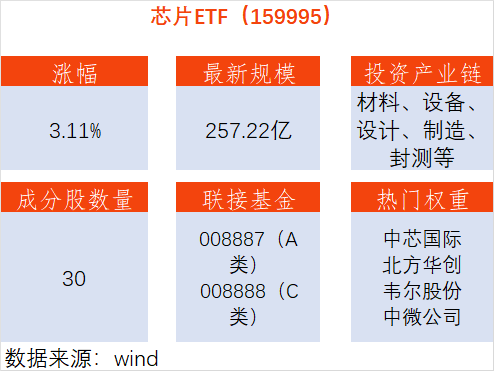
【千问APP实现全面接入阿里生态,芯片ETF(159995.SZ)上涨3.11%,龙芯中科涨停】
Mei Ri Jing Ji Xin Wen· 2026-01-21 11:30
Group 1 - A-shares opened on January 21 with all three major indices rising, with the Shanghai Composite Index increasing by 0.11%, led by gains in the electronics, communications, and defense sectors, while coal and retail sectors saw declines [1] - The domestic substitution trend is gaining momentum, with semiconductor technology stocks performing strongly; the Chip ETF (159995.SZ) rose by 3.11%, with key component stocks like Loongson Technology up by 20.00%, Haiguang Information up by 8.95%, and others showing significant increases [1] Group 2 - Alibaba held a product launch for the Qianwen APP, which integrates over 400 new features and connects with various Alibaba ecosystem services, marking a shift towards AI-driven operations [3] - According to Guotai Junan Securities, the rapid iteration of domestic model products like Qianwen is expected to stimulate demand for domestic computing power investments, enhancing the maturity of mainstream applications and increasing capital expenditure and penetration rates of domestic computing chips [3] - The Chip ETF (159995) tracks the Guozheng Chip Index, comprising 30 leading companies in the A-share chip industry across materials, equipment, design, manufacturing, packaging, and testing, including major players like SMIC and Cambrian [3]