
Neuralink

Search documents
《机器人年鉴》第 7 卷:BCI 及其他形态因素-The Robot Almanac-Vol. 7 BCI & Other Form Factors
2025-12-23 02:56
Morgan Stanley does and seeks to do business with companies covered in Morgan Stanley Research. As a result, investors should be aware that the firm may have a conflict of interest that could affect the objectivity of Morgan Stanley Research. Investors should consider Morgan Stanley Research as only a single factor in making their investment decision. For analyst certification and other important disclosures, refer to the Disclosure Section, located at the end of this report. Downloaded by Neil.Wang@trowepr ...

X @Tesla Owners Silicon Valley
Tesla Owners Silicon Valley· 2025-12-22 16:22
RT Andrea Stroppa 🐺 Claudius Nero's Legion 🐺 (@andst7)Ottimo racconto dell’@Adnkronos su come Neuralink di Elon Musk sta migliorando la vita di un ragazzo affetto da SLA https://t.co/Iu6KuDOCuy ...
麦澜德20251222
2025-12-22 15:47
公司预计 2027 年中期实现认知功能障碍系列产品商业化落地,精神心 理及运动功能障碍方向落地速度更快,未来业务增长率预计可达 20%- 30%以上。 Q&A 迈安德公司目前在脑机接口领域的业务和规划是什么? 迈安德公司目前在脑机接口领域的业务主要集中在结合现有技术基础上进行创 新应用,包括盆底康复业务等。我们注意到患者对心理疾病关注和需求增加, 因此利用脑机接口技术开拓新业务领域。公司的整体规划是以"脑机接口加身 心同治"为主题,重点发展三大方向:认知功能障碍干预、运动功能障碍干预 以及精神与心身疾病调控。 脑机接口行业的发展背景及市场前景如何? 2025 年被称为脑机接口的元年,全球范围内对该技术的研究非常火热,并取 得了一些进展和商业化落地。最早的研究源于各国的"脑计划",如美国 2013 年启动,欧盟紧随其后,中国则从 2016 年开始实施中国脑计划,并陆 续获得重大产业项目支持。经过 10 年的发展,基础技术已经有了一定储备, 市场潜力巨大。目前主要应用于医疗端,包括神经疾病、神经损伤及精神疾病 患者。此外,中国在十四五期间布局了相关研究,并在 2022 年启动了重大项 目,如帕金森和阿尔兹海默症认 ...

【中国青年报】90后科研伉俪“脑机”筑梦
Zhong Guo Qing Nian Bao· 2025-12-22 06:49
Core Viewpoint - The article highlights the significant advancements in invasive brain-computer interface (BCI) technology led by researchers Zhao Zhengtuo and Li Xue, showcasing their successful clinical trials that enable paralyzed patients to control devices using their thoughts, thus improving their quality of life [1][3][17]. Group 1: Clinical Trial Achievements - The second clinical trial demonstrated that a patient with high-level paraplegia could control a smart wheelchair and a robotic dog using only their thoughts, marking a breakthrough in BCI applications [1][4][17]. - The patient, who suffered from spinal cord injury, was able to control electronic devices like computers and tablets within 2-3 weeks of training after receiving the BCI implant [5][17]. - The technology evolved from controlling virtual devices to interacting with physical objects, allowing the patient to navigate real-world environments [6][7]. Group 2: Research and Development Approach - Zhao and Li emphasize the importance of addressing real-life problems faced by patients rather than merely showcasing technological capabilities [8][10]. - Their research approach has shifted from basic research to focusing on practical applications that enhance patients' daily lives, driven by the needs expressed by patients [9][10]. - The team has developed a flexible electrode that is less invasive, allowing for easier implantation compared to competitors, which is crucial for patient safety and comfort [14][15]. Group 3: Future Prospects and Vision - The researchers envision that BCI technology will not only assist patients with mobility issues but could also be applied in areas such as artificial sensory restoration and treatment of neurological disorders in the future [19][20]. - They aim for BCI devices to become as ubiquitous as smartphones, ensuring that anyone in need can benefit from this technology [20][21]. - The team is committed to continuous improvement and adaptation of their technology to meet evolving patient needs and to foster collaboration with various stakeholders in the healthcare and technology sectors [16][19].

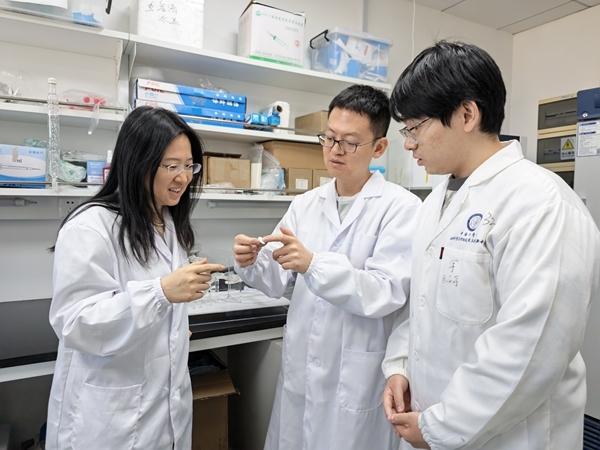
并非“脑洞大开”!中国脑机接口成功让瘫痪患者“脑控”轮椅遛弯
Ren Min Ri Bao· 2025-12-22 04:08
Core Insights - The article highlights the successful implementation of an invasive brain-machine interface (BMI) system that allows high-level paraplegic patients to control devices like electric wheelchairs and robotic dogs using their thoughts, marking a significant advancement in medical technology [1][2]. Group 1: Clinical Trials and Technological Advancements - The second invasive BMI clinical trial was successfully conducted by a team from the Chinese Academy of Sciences and Fudan University, following the first trial in June, which focused on enabling a patient to control electronic devices [1][2]. - The upgraded BMI system, WRS02, has improved data reading rates by four times compared to its predecessor, aiming to facilitate clinical applications and collaborations with various smart devices [2][3]. Group 2: Patient Experience and Control Capabilities - The second patient, who suffered from high-level paraplegia due to a spinal injury, was able to control physical devices after a few weeks of training, expanding his interaction with the physical world beyond electronic screens [3][8]. - The technology team achieved breakthroughs in decoding complex neural signals, enhancing the control experience by reducing latency to under 100 milliseconds, allowing for a more natural interaction with devices [9][10]. Group 3: Future Directions and Ethical Considerations - The research team envisions a future where BMI technology can restore motor and language functions on a large scale within three years, with further advancements in sensory restoration and mental health treatment in the following years [10][11]. - Ethical concerns regarding the use of BMI technology, particularly in enhancing normal human capabilities, are raised, emphasizing the need for clear guidelines on its application [11][12]. Group 4: Industry Collaboration and Talent Development - The success of BMI technology is closely linked to the development of external smart devices, with the team actively collaborating with manufacturers to create a unified control protocol [12][19]. - There is a call for nurturing young talent from the industry to drive innovation in the BMI field, as current research is primarily concentrated in academic institutions [12][19].

X @Tesla Owners Silicon Valley
Tesla Owners Silicon Valley· 2025-12-22 03:35
Financial Highlights - Elon Musk's net worth surpassed $700 billion after the Delaware Supreme Court ruling [1] - Musk emphasizes that his endeavors are not primarily driven by financial gain [1] Company Mission & Vision - Tesla aims to provide sustainable energy solutions [1] - SpaceX focuses on making humanity multiplanetary as a safeguard against extinction risks [1] - Neuralink and xAI are working towards the safe integration of AI [1] - The overarching goal is to extend consciousness and protect humanity's future [1] Strategic Perspective - Money is viewed as a resource to fuel the company's mission [2]

90后科研伉俪“脑机”筑梦
Zhong Guo Qing Nian Bao· 2025-12-21 20:32
Core Insights - The article highlights the advancements in invasive brain-computer interface (BCI) technology led by researchers Zhao Zhengtuo and Li Xue, showcasing their successful clinical trials that enable paralyzed patients to control smart devices using their thoughts [2][16]. Group 1: Clinical Trials and Patient Outcomes - The second clinical trial demonstrated that a patient with high-level paraplegia could control a smart wheelchair and a robotic dog, significantly improving their quality of life [2][16]. - The patient initially trained to control electronic devices like a computer cursor and tablet, but the focus shifted to interacting with the physical world, expanding their living boundaries [3][4]. - The team observed a neural mechanism where the patient's brain activity became more efficient over time, allowing for seamless control of external devices [4][5]. Group 2: Research and Development Approach - The research team emphasizes solving real-life problems for patients rather than merely showcasing technology, focusing on practical applications like wheelchair mobility and robotic assistance [6][8]. - The development process involves close collaboration with clinical settings, ensuring that the technology meets the actual needs of patients [9][10]. - The team has adopted a "lab-to-bedside" approach, refining their technology based on real-world testing and patient feedback [9][10]. Group 3: Technological Innovations - The BCI system developed by the team features flexible electrodes that are less invasive, allowing for implantation through a small puncture, which minimizes trauma [13][14]. - The technology aims to integrate with common household devices, making it accessible and beneficial for a broader range of patients [15][16]. - The researchers are focused on creating a universal interface that allows various smart devices to connect with the BCI system, enhancing its utility [15]. Group 4: Future Prospects and Vision - The team envisions that BCI technology will evolve to assist not only patients with mobility issues but also in areas like sensory restoration and treatment of neurological disorders [18][19]. - They aim for BCI devices to become as ubiquitous as smartphones, ensuring that anyone in need can benefit from the technology [19][20]. - The researchers are optimistic about the long-term potential of BCI, predicting significant advancements in the next decade that will integrate artificial intelligence with human cognitive functions [20].

Neuralink Update — December 2025
Neura Pod – Neuralink· 2025-12-20 22:49
Hey there, welcome to Neuropod, a channel covering everything related to Elon Musk's brain computer interface company, Neurolink. My name is Ryan Tanaka, and in this update episode, we have a ton of new developments. First, we'll start with an update on how many people in the world have a Neurolink device.Then, I'll share two posts from Neuralink's first patient, Nolan, one of which went super viral on X. Then David McMullen who has previously worked at DARPA, the NIH and as director at the FDA is joining N ...

X @Elon Musk
Elon Musk· 2025-12-19 03:24
Neuralink Technology & Impact - Neuralink's technology is restoring communication abilities to individuals who have lost their voice [1] - The technology allows individuals to communicate through thought [1] - Brad, diagnosed with ALS, regained communication abilities via a Neuralink brain implant [1] Clinical Application - Brad is the third person to receive a Neuralink brain implant [1] - The implant aims to restore voice, emotion, and presence [1]
脑机接口技术加速从实验室走向临床,中国又有新突破
2 1 Shi Ji Jing Ji Bao Dao· 2025-12-17 12:41
Core Viewpoint - The approval of the invasive brain-computer interface (BCI) product by Jingyu Medical Technology marks a significant milestone in the treatment of drug addiction, particularly for opioid dependence, showcasing the potential of BCI technology in serious medical applications [1][2][3]. Group 1: Product and Technology - Jingyu Medical's invasive brain deep stimulation system is the first globally approved BCI product for treating addiction-related mental disorders, specifically targeting difficult-to-treat moderate to severe opioid addiction [1][2]. - The system utilizes a dual-target technology to stimulate key brain areas, namely the nucleus accumbens and the anterior limb of the internal capsule, providing a new treatment option for patients [2][3]. - Clinical studies indicated that after implantation, patients showed improvements in negative emotions associated with addiction, with a 62.5% non-recurrence rate after 10 years of follow-up for the first batch of cases [2][3]. Group 2: Industry Landscape - The BCI industry is characterized by a diversified competitive landscape, with invasive and non-invasive technologies being developed for various applications, including medical and consumer sectors [4][6]. - Invasive BCIs are primarily focused on medical applications, while non-invasive BCIs are being utilized in consumer products and industrial applications [4][6]. - The global BCI market is projected to reach approximately $2.46 billion in 2024 and exceed $10.8 billion by 2033, with a compound annual growth rate (CAGR) of 16.5% [5]. Group 3: Future Trends and Challenges - The BCI industry is expected to experience rapid development, with trends including accelerated technology integration, expanded application scenarios, and improved industry chain collaboration [7]. - Despite the promising outlook, the industry faces challenges such as technical barriers, ethical considerations, and the need for regulatory compliance [8]. - Jingyu Medical plans to initiate international multi-center clinical trials to contribute to global addiction treatment solutions, aiming for BCI technology to become a standard treatment method for neurological disorders [9].