xAI

Search documents
AI Data Center Boom Powers Big Rally Ciena Stock, And A Return To S&P 500
Investors· 2026-02-06 21:23
Group 1 - The demand for networking equipment has surged due to the hundreds of billions spent by cloud-computing giants on AI-focused data centers [1] - Ciena's stock has experienced a triple-digit increase over the past 12 months, leading to its return to the S&P 500 index [1] - Ciena, based in Hanover, Maryland, specializes in providing optical communications gear to telecommunications providers [1] Group 2 - The strong earnings and guidance from Ciena are attributed to growth in data center orders [1] - The overall market is experiencing mixed signals, with the Dow Jones reaching 50,000 for the first time while the Nasdaq remains below a key level [1] - Other companies in the tech sector, such as Palantir and Oracle, are also experiencing significant movements related to earnings and AI spending [1]

Why Musk’s SpaceX mega-merger is a mega-bailout
Bloomberg Television· 2026-02-06 18:08
Elon has actually always hated running a public company. He hates quarterly earnings calls. A lot of disclosure like, yeah, this is really like a financial play more than anything else.xAI is losing, according to Bloomberg's reporting. And, you know, other other reporting backs up as well. A huge amount of money.I think we've said billion a month. Why are they losing so much money. Well, every air play is losing huge amounts of money because building these models requires you to build giant chips.And there' ...

Why Musk’s SpaceX mega-merger is a mega-bailout
Bloomberg Technology· 2026-02-06 18:07
Elon has actually always hated running a public company. He hates quarterly earnings calls. A lot of disclosure like, yeah, this is really like a financial play more than anything else.xAI is losing, according to Bloomberg's reporting. And, you know, other other reporting backs up as well. A huge amount of money.I think we've said billion a month. Why are they losing so much money. Well, every air play is losing huge amounts of money because building these models requires you to build giant chips.And there' ...
X @Tesla Owners Silicon Valley
Tesla Owners Silicon Valley· 2026-02-06 17:31
Grok is on 🔥!Similarweb just dropped the numbers: Grok's mobile app hit ~60M monthly active users in Jan 2026 (+29% MoM) and saw +43% growth in worldwide downloads — fourth straight month of double-digit gains!xAI building momentum fast. Real-time X data + uncensored truth-seeking = winning combo 🚀 ...
X @Tesla Owners Silicon Valley
Tesla Owners Silicon Valley· 2026-02-06 17:01
RT Amy (@_SFTahoe)Join us for Tesla Beat! Discussing Elon Musk’s excellent interview, the SpaceX/xAI merger, Elon Musk’s new goal of a Kardashev 2 society, and more!With @teslaownersSV @SjvTesla @FutureAZA and myself (for 30 minutes until my wifi connection degraded) ...

X @Bloomberg
Bloomberg· 2026-02-06 15:28
Musk's decision to merge SpaceX with xAI could be worth $1 trillion or more, based on his grandiose proposal to build AI data centers in space.@danahull joins @chafkin and @svaneksmith on the Everybody's Business podcast to discuss why the merger may be driven less by long-term growth ambitions and more by the financial pressures facing Musk’s more troubled companies https://t.co/qSwm0RcP17 ...
马斯克认真推进轨道数据中心计划
Sou Hu Cai Jing· 2026-02-06 15:01
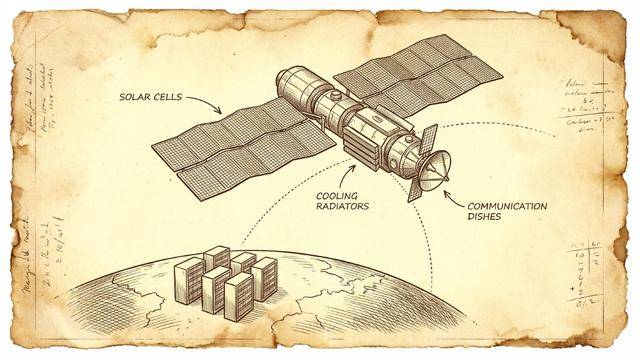
Core Viewpoint - SpaceX is serious about its plan to establish a network of satellite data centers in orbit, combining its space and AI operations through the merger with xAI, which could lead to a significant shift in AI computing infrastructure [2][4]. Group 1: SpaceX and xAI Merger - The merger between SpaceX and xAI was officially announced, indicating a strategic alignment of space and AI initiatives [2]. - This merger is seen as a precursor to a potential joint infrastructure project, enhancing the feasibility of the orbital data center concept [2]. Group 2: FCC Application and Public Opinion - SpaceX's application for the satellite data center network was accepted by the FCC, which has set a timeline for public comments, suggesting a smooth approval process may be anticipated [2]. - FCC Chairman Brendan Carr's unusual step of sharing the application on social media indicates a favorable environment for the proposal, especially given Musk's political affiliations [2]. Group 3: Economic Viability of Orbital Data Centers - Elon Musk argues that solar panels in space can generate approximately five times the power compared to those on Earth, potentially reducing operational costs for data centers significantly [3]. - Despite the advantages, there are concerns regarding the overall cost-effectiveness of operating data centers in space, as highlighted by guest Patel during a podcast discussion [3]. Group 4: Future Predictions - Musk predicts that 2028 will be a pivotal year for orbital data centers, asserting that within 30-36 months, space will become the most economically viable location for AI deployment [3]. - He further forecasts that in five years, the amount of AI launched and operated in space will surpass the cumulative total on Earth [3]. Group 5: Market Implications - SpaceX stands to benefit financially from launching objects into orbit, especially with the integration of an AI company, positioning itself for a potential IPO in the coming months [4]. - The ongoing investment by tech companies into data centers, amounting to billions annually, suggests that a portion of this funding may shift towards space-based solutions [4].
微醺的马斯克聊嗨了:盛赞中国、预言天上的AI
Sou Hu Cai Jing· 2026-02-06 13:55
Core Insights - Elon Musk discussed the future of AI infrastructure in space, emphasizing that space will become the preferred location for AI data centers due to energy supply issues on Earth. He predicts that within 30 to 36 months, space will be the most economically attractive place for deploying AI capabilities [4][10][12]. Group 1: Space and Energy - Musk highlighted that energy supply is a critical issue, with global electricity production stagnating outside of China, which is rapidly increasing its output. He believes that the energy needed for AI chip production will necessitate moving operations to space [4][12]. - The efficiency of solar panels in space is five times greater than on Earth, as they do not face atmospheric losses. This makes space a more cost-effective location for energy generation and AI deployment [9][21]. Group 2: AI and Computing Power - Musk predicts that in five years, the annual AI computing power launched and operated in space will exceed the cumulative total on Earth, potentially reaching 1 terawatt of power [28][50]. - He stated that companies entirely composed of AI and robots will outperform those with human involvement, suggesting a significant shift in business dynamics [59][67]. Group 3: Manufacturing and Supply Chain - Musk discussed the challenges of building power plants and the need for significant infrastructure to support AI data centers. He noted that the utility industry is slow-moving, complicating the scaling of energy production [12][26]. - He emphasized the importance of controlling the entire supply chain for solar panel production, from raw materials to finished products, especially for space applications [20][21]. Group 4: Competitive Landscape - Musk expressed concerns that without breakthrough innovations in the U.S., China could dominate the AI and manufacturing sectors due to its advanced capabilities and larger workforce [78][79]. - He pointed out that China's electricity production is projected to be three times that of the U.S., indicating a significant industrial capacity advantage [78].

Voyager Technologies CEO says space data center cooling problem still needs to be solved
CNBC· 2026-02-06 13:20
Core Insights - Voyager Technologies' CEO Dylan Taylor indicated that achieving operational space data centers within two years is an "aggressive" timeline, with cooling technology posing significant challenges [1] - The difficulty in cooling components in space arises from the absence of a medium to transfer heat, necessitating the use of radiation for heat dissipation [2] - Tesla CEO Elon Musk has emphasized the potential of space data centers, linking this vision to the recent merger of SpaceX and his AI startup xAI, valued at $1.25 trillion [2] - Voyager Technologies is recognized for its Starlab project, which aims to succeed the International Space Station, scheduled for retirement in 2030 [3] Company Insights - Voyager Technologies went public in June and is focused on developing space infrastructure, particularly through its Starlab initiative [3] - The company faces technological hurdles, particularly in cooling solutions, which are critical for the success of space data centers [1][2] Industry Insights - The space industry is exploring innovative solutions for data centers, with significant investments and partnerships, as exemplified by the merger of SpaceX and xAI [2] - The retirement of the International Space Station in 2030 presents an opportunity for new projects like Starlab to fill the gap in space research and data processing [3]
微醺的马斯克聊嗨了:盛赞中国、预言天上的AI
量子位· 2026-02-06 12:00
Core Viewpoint - The discussion highlights Elon Musk's vision for the future of AI and space, emphasizing the potential of space as a hub for AI infrastructure and energy production, which could surpass Earth's capabilities within the next five years [5][36][96]. Group 1: Space as AI Infrastructure - Musk predicts that within 30 to 36 months, space will become the preferred location for AI infrastructure due to its advantages in energy efficiency and scalability [5][12][16]. - The anticipated annual AI computing power in space is expected to exceed the cumulative total on Earth within five years, with projections of reaching around 1 terawatt (TW) of power generation [36][58]. - Space solar panels are estimated to be five times more efficient than those on Earth, eliminating the need for batteries and significantly reducing costs [12][28][30]. Group 2: Energy Supply Challenges - Musk identifies energy supply as a critical issue, noting that while chip production is rapidly increasing, energy production is stagnating outside of China [6][7]. - The construction of data centers on Earth faces significant regulatory and logistical challenges, making space a more viable option for expansion [11][12][19]. - The average power consumption in the U.S. is around 500 gigawatts (GW), and Musk emphasizes the difficulty of scaling energy production to meet the demands of large data centers [17][58]. Group 3: Chip Production and Supply Chain - Musk discusses the need for large-scale chip manufacturing facilities, suggesting a project akin to "TeraFab" to meet future demands for AI chips [48]. - The current chip supply chain is constrained, with existing foundries unable to meet the anticipated demand, leading to potential bottlenecks in AI deployment [56][57]. - Musk expresses concerns about memory production, indicating that the path to producing sufficient memory for logic chips is less clear than that for logic chip manufacturing [52]. Group 4: Competitive Landscape and Innovation - Musk warns that without breakthrough innovations, the U.S. risks losing its competitive edge to China, which is rapidly advancing in manufacturing and energy production [96]. - The discussion touches on the importance of maintaining a skilled workforce and the challenges posed by China's larger population and manufacturing capabilities [92][95]. - Musk believes that the future of companies will increasingly rely on AI and robotics, which will outperform human-involved companies in efficiency and productivity [80].