
Calpine

Search documents
AI引爆美国电力需求,燃气轮机成“关键瓶颈”,GE Vernova、西门子能源和三菱重工“三巨头”面临抉择
美股IPO· 2025-10-11 12:52
Core Viewpoint - The three major gas turbine manufacturers are exercising caution in their expansion plans due to a deep understanding of industry cyclicality and the painful memories of the early 2000s industry disaster [1][5]. Group 1: Market Demand and Policy Support - The demand for gas turbines is surging due to the AI data center-driven "electricity competition," as stable and large-scale power supply is essential for AI operations [6]. - Gas turbines have replaced coal-fired units as the mainstay of the U.S. power grid due to their efficiency, flexibility, and lower pollution levels compared to coal [6]. - Since mid-2023, the cost of new gas power plants has roughly doubled, primarily driven by rising gas turbine prices, as utility companies and tech giants secure orders through the end of the decade [6]. - U.S. energy policies are favoring natural gas power, with the Trump administration prioritizing gas turbines as a key transitional solution before new nuclear plants are built [6]. Group 2: Historical Lessons and Caution - The cautious approach of the gas turbine manufacturers is influenced by the memory of the 2000s internet bubble, which led to over-optimistic power demand forecasts and subsequent industry collapse [7]. - Siemens Energy's CEO emphasized the cyclical nature of the industry, acknowledging that gas turbine demand will eventually decline [7]. - The challenge for companies lies in distinguishing between genuine demand and speculative demand [8]. Group 3: Limited Expansion Plans - In light of historical lessons and current market realities, the three major manufacturers are opting for limited capacity expansions [9]. - GE Vernova plans to invest over $300 million to increase its heavy gas turbine annual delivery capacity from an average of 55 units to 80 units [10]. - Siemens Energy aims to increase its capacity by 30% to 40% while avoiding high-risk bets on the market outlook for the 2030s [11]. - Mitsubishi Heavy Industries is expected to invest hundreds of millions to expand its production scale in the U.S. [12]. - Analysts note that these expansion plans are not commensurate with the growth in demand over the past two years, indicating a reluctance to overcommit [13]. - Supply chain bottlenecks are shifting from assembly plants to upstream suppliers, with critical materials like specialty alloys facing shortages [13].

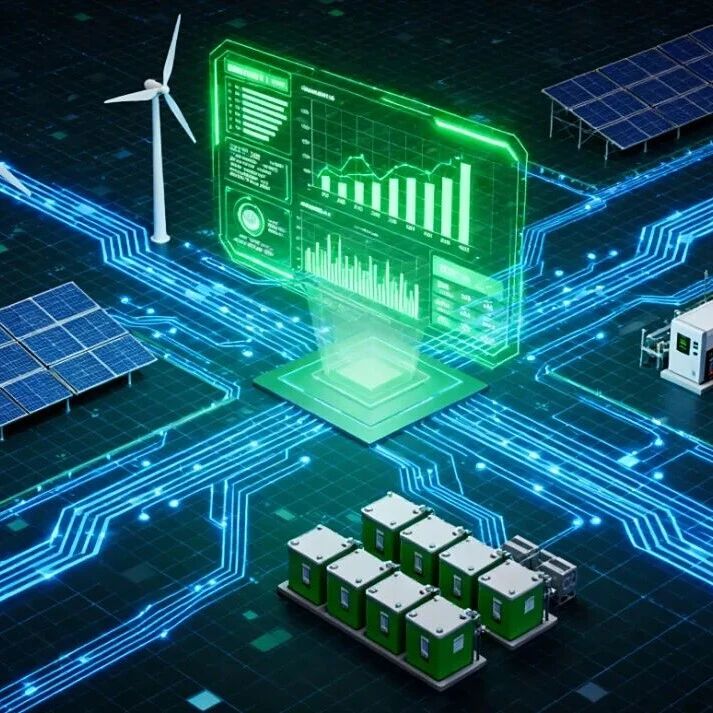
AI引爆美国电力需求,燃气轮机成“关键瓶颈”,GE Vernova、西门子能源和三菱重工“三巨头”面临抉择
Hua Er Jie Jian Wen· 2025-10-11 07:19
Group 1 - The demand for gas turbines is surging due to the need for stable and large-scale electricity supply for AI data centers, making gas turbines the primary support for the U.S. power grid [2][4] - The cost of new gas power plants has roughly doubled since mid-2023, driven by rising gas turbine prices, as utility companies and tech giants secure orders through the end of the decade [2][3] - U.S. energy policies are favoring natural gas power, with the previous administration prioritizing gas turbines as a key transitional solution before new nuclear power plants are completed [2][3] Group 2 - The three major gas turbine manufacturers, GE Vernova, Siemens Energy, and Mitsubishi Heavy Industries, are exercising caution in expanding production due to the cyclical nature of the industry and memories of the 2000 internet bubble [4][6] - There is a significant challenge in distinguishing between real and inflated demand, as highlighted by industry executives [4][6] - Current expansion plans by these companies are not commensurate with the growth in demand over the past two years, indicating a reluctance to overcommit [7] Group 3 - GE Vernova plans to invest over $300 million to increase its heavy gas turbine annual delivery capacity from an average of 55 units to 80 units [8] - Siemens Energy aims to boost its production capacity by 30% to 40%, while avoiding high-risk bets on the market outlook for the 2030s [8] - Mitsubishi Heavy Industries is expected to invest hundreds of millions to expand its production scale in the U.S. [8]
What Is One of the Best Energy Stocks to Buy Right Now?
The Motley Fool· 2025-10-09 00:15
Constellation Energy offers exactly what data centers and artificial intelligence players need: reliable 24/7 power.Big tech has a big issue: Its data centers consume colossal amounts of power, and not all of it is clean.Electricity demand in the U.S. is expected to grow about 25% by 2030, from 2023 levels, and 78% by 2050. Enter Constellation Energy (CEG 3.96%). As the country's largest producer of carbon-free electricity, as well as its biggest provider of nuclear power, Constellation is at the center of ...


Constellation Energy Elects Williams Executive Chairman Alan S. Armstrong to Board
Yahoo Finance· 2025-10-01 06:16
Constellation Energy Corporation (NASDAQ:CEG) is one of the best NASDAQ stocks to buy according to hedge funds. On September 29, Constellation announced the election of Alan S. Armstrong to its board of directors, with his appointment becoming effective on January 1, 2026. Armstrong is currently the executive chairman of the board of directors for Williams, a major US energy infrastructure company primarily focused on natural gas. Prior to this role, he served as Williams’ president and CEO for 14 years b ...
Constellation Energy Corporation (CEG): A Bull Case Theory
Yahoo Finance· 2025-09-28 15:40
Group 1: Company Overview - Constellation Energy Corporation (CEG) is the largest producer of carbon-free electricity in the U.S., with a capacity of 32 GW, primarily from nuclear energy [2] - The company provides approximately 20% of all U.S. nuclear generation and has key customers including Microsoft, Amazon, and Google, with a new 20-year deal with Meta starting in 2027 [2] Group 2: Financial Performance - In Q2, CEG's revenue increased by 11.3% to $6.1 billion, and GAAP EPS rose by 3.5% to $2.67 [3] - The company has authorized a $400 million share repurchase program, indicating strong capital allocation discipline [3] Group 3: Growth Prospects - CEG's growth is supported by increasing demand from AI, electrification, and reshoring, along with favorable policies from the Inflation Reduction Act [4] - The forecast for EPS growth is 9.1% in FY25 and 18% in FY26, suggesting a strong growth trajectory despite a higher P/E multiple compared to peers [4] Group 4: Market Position and Valuation - CEG's trailing and forward P/E ratios are 33.67 and 28.74, respectively, indicating a premium valuation justified by its scale and focus on carbon-free energy [1][4] - The stock price has appreciated approximately 47% since previous coverage, driven by rising demand and higher pricing [5]
Where Will Constellation Energy Be in 5 Years?
The Motley Fool· 2025-09-06 16:50
Group 1: Company Overview - Constellation Energy is the largest operator of nuclear power plants in the U.S., with a nuclear capacity of approximately 22.1 gigawatts, significantly ahead of its nearest competitor at 6.3 gigawatts [5] - The company is not a regulated utility, allowing it greater flexibility to invest in the power grid and pursue growth opportunities [2][4] - Constellation primarily generates and sells electricity under contracts to various customers, including utilities and corporations, without the constraints of government regulation [4] Group 2: Future Growth and Strategy - The company plans to focus on growth in its nuclear business over the next five years, including potential investments in extending the life of existing reactors and reopening shut-down reactors [8] - Constellation has signed significant contracts, including a 20-year deal with Meta Platforms and a 10-year contract with the U.S. government, indicating strong demand for nuclear power [9] - The company is also diversifying its portfolio through the acquisition of Calpine, a large producer of electricity from natural gas and hydroelectric sources, while maintaining its leadership in nuclear power [7][8] Group 3: Market Dynamics and Financial Outlook - State-backed programs currently consume a portion of Constellation's nuclear capacity, but these programs are expected to end in the next five years, allowing the company to sell more nuclear energy at market prices [10] - Management anticipates that this shift will lead to increased earnings as the company can charge higher market-based rates for its nuclear power [10] - The stock has appreciated over 600% in the past five years, reflecting investor interest in the company's growth potential, although caution is advised as the stock may experience volatility [12]
A Nuclear Showdown: OKLO's Bold Vision vs. CEG's Proven Power
ZACKS· 2025-08-20 13:36
Core Viewpoint - The nuclear energy sector is gaining attention amid the AI revolution, with significant backing from the U.S. government, tech giants, and Wall Street, presenting investment opportunities in both established companies like Constellation Energy (CEG) and speculative newcomers like Oklo Inc. (OKLO) [1][2] Group 1: Company Profiles - Constellation Energy is the largest U.S. nuclear power plant operator, characterized as a mature and dominant force in the industry [2] - Oklo is a next-generation fission company focused on developing micro nuclear reactors and is currently a pre-revenue firm [3][4] Group 2: Business Models - Oklo plans to sell power directly to customers through long-term contracts, aiming to create recurring revenue streams [3] - Constellation has secured long-term power purchase agreements with major companies like Microsoft and Meta, ensuring revenue stability [6] Group 3: Financial Health - Oklo has raised over $400 million to fund its plans, projecting $5 billion in annual revenues by 2028 from a 14 GW order pipeline [4] - Constellation's free cash flow is approximately $2 billion negative due to capital expenditures and acquisitions, but it has a strong dividend growth outlook [8] Group 4: Market Performance - Oklo's stock has surged over 822% in the past year, reflecting speculative interest, while CEG has seen a more modest gain of 61% [9] Group 5: Valuation Metrics - Oklo trades at a high price-to-book (P/B) ratio of 13.11, indicating heavy investor optimism despite being pre-revenue [10] - Constellation trades at a more reasonable P/B ratio of 7.2, reflecting its established business model and earnings track record [10] Group 6: Earnings Outlook - Oklo is projected to have a loss of 50 cents per share in 2025, with further declines expected in 2026 [11] - Constellation is expected to see a 9% year-over-year gain in EPS for 2025, with estimates of $9.41 and $11.86 for 2025 and 2026, respectively [14] Conclusion - Constellation Energy is viewed as a more prudent investment due to its stable business, strong earnings profile, and strategic partnerships, while Oklo presents a high-risk, high-reward opportunity [15]
Constellation Energy's Earnings Beat Signals a New Era
MarketBeat· 2025-08-07 19:50
Core Viewpoint - Constellation Energy has demonstrated strong performance in its second-quarter earnings, beating analyst estimates and highlighting its essential role in the digital economy, with its stock price increasing over 87% in the past year [1][2]. Group 1: Company Strategy and Market Position - The company aims to leverage its extensive carbon-free nuclear fleet to meet the growing energy demands of the AI and data center sectors [2][3]. - Constellation's nuclear fleet, the largest in the U.S., is well-positioned to provide the reliable, clean energy required by technology companies facing sustainability pressures [3]. Group 2: Recent Achievements - A significant 20-year power agreement with Meta Platforms Inc. secures predictable revenue and finances a 30-megawatt capacity upgrade at the Clinton Clean Energy Center, demonstrating how corporate demand drives organic growth [4]. - The planned acquisition of Calpine is expected to add over $2 billion in annual free cash flow and diversify Constellation's energy portfolio, combining gas power with carbon-free nuclear energy [4][5]. Group 3: Financial and Policy Support - The federal nuclear Production Tax Credit (PTC) provides a revenue floor for Constellation's nuclear fleet through 2032, enhancing earnings stability and insulating the company from commodity market volatility [6]. - Constellation maintains a strong investment-grade balance sheet with a debt-to-equity ratio of 0.79, and has initiated a $400 million accelerated share repurchase program alongside a commitment to a 10% dividend increase for 2025 [7][8]. Group 4: Valuation and Market Perception - Constellation's stock trades at a price-to-earnings ratio of approximately 35x, significantly higher than typical utility sector valuations, reflecting its perception as a critical AI infrastructure provider [9][10]. - Analysts have set a 12-month price target of $309.29, with some high-end forecasts reaching $390, indicating potential upside as the company executes its AI-driven strategy [10][13]. Group 5: Future Outlook - The company anticipates a boost in future earnings from the recent PJM capacity auction, projecting an uplift of approximately $0.50 per share in 2026, growing to $1.50 per share in 2027 [12]. - Constellation is accelerating the restart of its Crane Clean Energy Center, expected to come online in 2027, a year ahead of schedule, showcasing operational excellence [12]. Group 6: Challenges Ahead - The primary challenge for investors is the stock's high valuation, which has already factored in significant future success, necessitating flawless execution in upcoming milestones such as the Calpine acquisition and new data center contracts [15].

stellation Energy (CEG) - 2025 Q2 - Earnings Call Transcript
2025-08-07 15:02
Financial Data and Key Metrics Changes - The company reported second quarter GAAP earnings of $2.67 per share and adjusted operating earnings of $1.91 per share, an improvement of $0.23 per share compared to the previous year [6][37] - The fleet performed exceptionally well, achieving a capacity factor of 94.8% and producing over 41 million megawatt hours of emissions-free power [40] Business Line Data and Key Metrics Changes - The nuclear team achieved its second-best fleet production ever, completing three refueling outages with an average duration of nineteen days, outperforming the industry average by over two weeks [40] - Renewable energy capture was at 96.1%, and power dispatch matched 98.3%, indicating strong performance across the renewable and natural gas fleets [40] Market Data and Key Metrics Changes - The company recognized $2 million from the Illinois ZEC program for bank credits, similar to the previous year, which reflects the effectiveness of the program [38] - The latest PJM capacity auction cleared 2,700 megawatts of new and uprated generation capacity, with expectations for more than nine gigawatts of new firm reliable supply to come online by 2025 [28] Company Strategy and Development Direction - The company is focused on long-term contracts, such as the recently announced twenty-year power purchase agreement with Meta, which ensures over 1,100 megawatts of emissions-free nuclear energy [10][9] - The company is also pursuing the Calpine acquisition, which is expected to close by the end of the year, enhancing its competitive advantage by combining gas and nuclear capabilities [36][14] Management's Comments on Operating Environment and Future Outlook - Management expressed confidence in the continued bipartisan support for nuclear energy, highlighting the passage of significant legislation that preserves and expands nuclear credits [20][21] - The company anticipates earnings growth of 13% through the decade, supported by robust cash flow and base earnings protected by the nuclear PTC [51][52] Other Important Information - The company has executed $400 million in accelerated share repurchases, totaling $2.4 billion since the beginning of the buyback program, with $600 million remaining under the current Board authorization [47] - The "One Big Beautiful Bill" includes provisions for a 10% bonus on nuclear energy community credits, which will benefit the company's capital plans [48] Q&A Session Summary Question: Timeline for interconnection on late inning data center deal - Management hopes to complete the interconnection this year, acknowledging that the timeline depends on utility processes [56][58] Question: Changes in strategy for new nuclear investments - Management indicated that the strategy is evolving rather than undergoing a major shift, with growing confidence in understanding cost structures and timelines for new nuclear projects [64][66] Question: Pricing trends in data center deals - Management noted that the market is becoming more scarce, leading to expectations of rising prices for capacity and resources [82][84]
stellation Energy (CEG) - 2025 Q2 - Earnings Call Transcript
2025-08-07 15:00
Financial Data and Key Metrics Changes - The company reported second quarter GAAP earnings of $2.67 per share and adjusted operating earnings of $1.91 per share, an increase of $0.23 per share compared to the previous year [7][39]. - The nuclear fleet achieved a capacity factor of 94.8%, producing over 41 million megawatt hours of emissions-free power, marking the second-best fleet production ever [42]. Business Line Data and Key Metrics Changes - The commercial team successfully managed extreme market volatility, achieving higher than average margins on retail sales and selling value-added products around the clean attributes of nuclear plants [43]. - The renewables and natural gas fleets also performed well, with renewable energy capture at 96.1% and power dispatch at 98.3% [42]. Market Data and Key Metrics Changes - The company recognized $200 million from the Illinois ZEC program for bank credits, similar to the previous year, indicating effective management of the program [40]. - The latest PJM capacity auction cleared 2,700 megawatts of new and uprated generation capacity, with expectations for more than nine gigawatts of new firm reliable supply to come online by 2026 [31]. Company Strategy and Development Direction - The company is focused on closing the Calpine acquisition and integrating the two businesses, which is expected to add $2 to EPS and $2 billion of free cash flow before growth starting next year [55][38]. - The passage of the "One Big Beautiful Bill" is seen as a significant win for nuclear power, preserving and expanding nuclear credits, which will support the company's growth strategy [22][51]. Management's Comments on Operating Environment and Future Outlook - Management expressed confidence in the continued bipartisan support for nuclear energy and the importance of reliable natural gas in the data economy [25][16]. - The company anticipates earnings growth of 13% through the decade, supported by robust cash flow and base earnings protected by the nuclear PTC [54][56]. Other Important Information - The company has executed $400 million in accelerated share repurchases, totaling $2.4 billion since the start of the buyback program, with $600 million remaining under the current Board authorization [50]. - The company is optimistic about the potential for new nuclear investments, with ongoing evaluations of designs and cost structures [66][68]. Q&A Session Summary Question: Can you discuss the timeline for the potential late inning data center deal and interconnection timelines from utilities? - Management hopes to finalize the deal this year, noting that utilities have become more responsive in expediting interconnection processes [59][60]. Question: Has the strategy for new nuclear investments changed? - The strategy is evolving rather than undergoing a major shift, with growing confidence in understanding cost structures and timelines for new nuclear projects [66][68]. Question: What are the expectations for state-level action on PJM changes? - Management anticipates that state actions, like New York's RFP for nuclear, could transpire in other states, potentially leading to new nuclear opportunities [77].