拜耳

Search documents
(活力中国调研行)北京正成为吸引全球医药创新资源“强磁场”
Zhong Guo Xin Wen Wang· 2025-06-18 14:01
Core Insights - The overall scale of Beijing's pharmaceutical and health industry is projected to exceed 1 trillion yuan in 2024, reaching 1.06 trillion yuan, with a year-on-year growth of 8.7% [1] - Beijing is becoming a global hub for pharmaceutical innovation, attracting significant foreign investment and establishing new research and innovation centers [1][2] Industry Development - The city has implemented measures to enhance the efficiency of drug approval processes, reducing review times significantly [1] - Beijing is developing an international pharmaceutical innovation park in the south and leveraging the Zhongguancun Life Science Park in the north to foster innovation [2] Medical Device Sector - Beijing leads the nation in the number of approved innovative medical devices, with 58 new approvals in the past five years, accounting for one-fourth of the national total [3] - The city has notable strengths in specialized fields such as surgical robots and AI-assisted diagnostic products, contributing to the domestic high-end medical equipment market [3] Support Services for Enterprises - A comprehensive service system for innovative medical devices has been established, providing tailored consulting and support throughout the product lifecycle [4] - The city has created a mechanism for collaboration between enterprises and medical institutions to facilitate the application of innovative medical devices [5] Collaborative Efforts - Various departments are working together to enhance the application of innovative medical devices, creating a strong synergy between platforms and departmental initiatives [6]
Incyte Stock Rises on QIAGEN Deal to Advance Blood Cancer Diagnostics
ZACKS· 2025-06-17 17:10
Core Insights - Incyte (INCY) shares increased by 5.1% following a global partnership with QIAGEN N.V. to develop a diagnostic panel for myeloproliferative neoplasms (MPNs), which account for approximately 40% of hematological malignancies [1][4] Partnership Details - The collaboration focuses on INCA033989, Incyte's investigational monoclonal antibody targeting mutant calreticulin (mutCALR), currently in early-stage development for myelofibrosis (MF) and essential thrombocythemia (ET) [2] - QIAGEN will create a multimodal panel using next-generation sequencing (NGS) technology to identify key gene alterations in MPNs, initially concentrating on mutCALR, the second most common driver of MPNs [2][5] - The panel will be validated on the Illumina NextSeq 550Dx platform for whole blood samples, with QIAGEN assisting in regulatory submissions and market access in the U.S., EU, and certain Asia-Pacific regions [3][6] Benefits of the Collaboration - The partnership enhances Incyte's precision medicine efforts by facilitating the identification of genetic mutations like CALR, which is crucial for treatment decisions in rare blood cancers [5] - It allows for widespread CALR testing, improving patient selection for Incyte's therapies and increasing the likelihood of better treatment outcomes [6] - The collaboration strengthens Incyte's position in personalized medicine and accelerates regulatory and market access for its mutCALR-targeted treatment [6][7] Clinical Data and Future Prospects - Incyte reported positive data from two Phase I studies of INCA033989, showing rapid and lasting platelet normalization in ET patients, with 86% achieving a complete/partial hematologic response at doses above 400 mg [11][12] - The candidate demonstrated selective targeting of mutCALR cells while sparing healthy cells, indicating potential for disease modification [12] - Incyte plans to advance INCA033989 into late-stage development for MPN indications in 2026 after discussions with regulatory authorities [13]



商业健康保险与医药产业高质量协同发展的空间与方向探讨 | 团体补充医疗险课题分报告(三)
Xin Lang Cai Jing· 2025-06-17 00:54
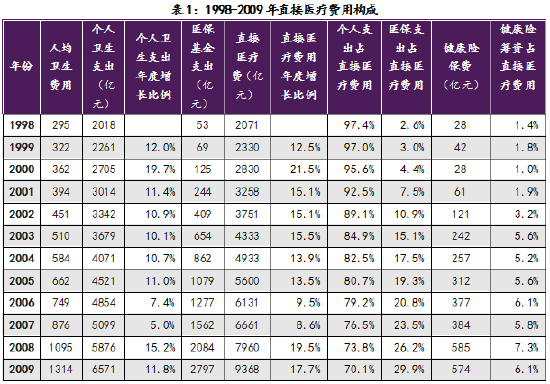
Group 1 - The core viewpoint of the article emphasizes the high-quality collaborative development between commercial health insurance and the pharmaceutical industry, highlighting the interdependent relationship between medical service providers and insurance payment entities [1] - The historical development of the medical service system and the pharmaceutical industry reveals a complex interplay with insurance payment mechanisms, indicating potential areas for collaboration and growth [1][2] - The transition from a government-subsidized healthcare model to a market-driven approach has led to significant changes in the operational dynamics of public hospitals and the pharmaceutical sector [3][4] Group 2 - The period from 2009 to 2017 marked a significant phase in the reform of public hospital compensation mechanisms, with a focus on balancing the roles of medical service providers and insurance payers [9][10] - The introduction of the "New Medical Reform" in 2009 aimed to establish a public health service system that covers urban and rural residents, although challenges in implementation persisted [9][14] - The commercial health insurance market experienced substantial growth during this period, with premiums increasing tenfold, reflecting a rising demand for supplementary health coverage [6][15] Group 3 - The establishment of the National Healthcare Security Administration in 2018 initiated a new phase of medical reform, introducing diverse payment methods and enhancing regulatory oversight of healthcare expenditures [20][21] - The shift towards a more refined management approach in healthcare institutions is driven by the need to control costs and improve service quality, influenced by changes in insurance payment structures [23][24] - The integration of commercial health insurance with the healthcare system is expected to accelerate, particularly in the high-end medical service sector, as consumer demand for quality healthcare rises [26][27] Group 4 - The pharmaceutical industry in China has undergone significant transformations, with a notable shift towards biopharmaceuticals and innovative drug development, supported by government policies [30][31] - The rapid growth of the Chinese pharmaceutical market has positioned it as the second-largest globally, with a compound annual growth rate of 7.8% from 2010 to 2020 [31][33] - Despite the overall market expansion, challenges such as structural oversupply and the need for higher-quality products remain prevalent, necessitating ongoing industry adjustments [33][34]
RHHBY to Advance Parkinson's Disease Drug to Late-Stage Development
ZACKS· 2025-06-16 14:50
Core Insights - Roche (RHHBY) is advancing its pipeline candidate prasinezumab into phase III development for early-stage Parkinson's disease based on data from phase IIb PADOVA study and ongoing open-label extensions [1][7] - The candidate is a potential first-in-class anti-alpha-synuclein antibody targeting a known biological driver of Parkinson's disease progression [3] - Year-to-date, Roche's shares have increased by 20.9%, outperforming the industry growth of 4% [1] Development Details - The PADOVA study evaluated prasinezumab's safety and efficacy in 586 randomized patients, although it missed its primary endpoint of time to confirmed motor progression [4][5] - Despite missing statistical significance, positive trends toward reduced motor progression were observed at 104 weeks, with expectations of sustained effects based on additional open-label extension data [5][6] - The ongoing PASADENA and PADOVA open-label studies are assessing the long-term safety and efficacy of prasinezumab in over 750 individuals with early-stage Parkinson's disease [3] Licensing and Financials - Roche holds exclusive rights to prasinezumab under a licensing agreement with Prothena (PRTA) established in December 2013, which includes paying double-digit teen royalties on net sales [7][9] - Prothena has earned $135 million to date, with potential for up to $620 million in additional milestone payments [9] Industry Context - Developing treatments for Parkinson's disease is challenging due to its chronic and progressive nature, with both motor and non-motor symptoms [10] - Other companies, such as UCB and Novartis, are also working on treatments, with UCB's recent investigational drug failing to meet clinical endpoints [11]


5 Large Drug Stocks That Are Poised to Ride on Sector Recovery
ZACKS· 2025-06-16 14:11
Industry Overview - The Zacks Large Cap Pharmaceuticals industry includes major global companies developing multi-million-dollar drugs across various therapeutic areas such as neuroscience, cardiovascular, metabolism, rare diseases, immunology, and oncology [4] - Continuous innovation and significant investment in R&D are defining characteristics of these companies, with regular mergers and acquisitions being common [4][5] Current Market Conditions - The industry has shown resilience amid broader macroeconomic uncertainties, with a year-to-date performance increase of 3.9%, outperforming the Zacks Medical Sector's decline of 1.5% and the S&P 500's rise of 1.7% [14] - The current forward 12-month price-to-earnings (P/E) ratio for the industry is 15.65X, lower than the S&P 500's 21.89X and the Zacks Medical Sector's 19.31X, indicating potential value [17] Key Players and Performance - **Bayer**: Key drugs like Nubeqa and Kerendia are driving growth, with plans for new drug launches in 2025. The stock has risen 61.9% year-to-date, with 2025 EPS estimates increasing from $1.19 to $1.25 [20][22] - **Pfizer**: Strengthened its oncology position with the acquisition of Seagen. Despite challenges from declining COVID-19 product sales and patent expirations, non-COVID operational revenues are improving. The stock has lost 4.2% year-to-date, but 2025 EPS estimates have risen from $2.98 to $3.06 [25][26][28] - **Novartis**: Following the separation of Sandoz, it has a strong portfolio with drugs like Kisqali and Leqvio. The stock has risen 25.6% year-to-date, with 2025 EPS estimates increasing from $8.46 to $8.74 [31][32] - **AbbVie**: Successfully transitioned from the loss of exclusivity of Humira with new drugs like Skyrizi and Rinvoq. The stock has risen 9.5% year-to-date, with stable 2025 EPS estimates at $12.28 [35][37] - **Sanofi**: Dupixent is a key growth driver, supported by a strong vaccine portfolio. The stock has risen 6.3% year-to-date, with 2025 EPS estimates increasing from $4.43 to $4.56 [40][42] M&A and Innovation Trends - The industry is characterized by aggressive M&A activity, with large pharmaceutical companies acquiring innovative small and mid-cap biotech firms to enhance their pipelines [6][7] - Recent notable M&A activity includes Sanofi's offer to acquire Blueprint Medicines for approximately $9.5 billion, indicating continued robust M&A activity expected throughout the year [8]



巴克莱:中国行_加速生物制药创新及业务发展机遇
2025-06-16 03:16
Summary of Key Points from the Conference Call Industry Overview - The report focuses on the **biopharmaceutical sector in China**, highlighting its resurgence driven by innovation and increased deal activity with multinational corporations (MNCs) [1][2]. Core Insights - **Global Competitiveness**: China's pharma sector is confirmed to be globally competitive, with significant partnerships such as Summit Therapeutics' licensing agreement with Akeso for ivonescimab (up to $5 billion) and Pfizer's deal with 3SBio for SSGJ-707 (up to $6 billion) [2]. - **Investment in Obesity Treatments**: Companies are investing in the obesity treatment space, with notable deals including Merck's $1.9 billion agreement with Hansoh Pharma and Novo's $2 billion deal with United Bio-Technology [2]. - **Long-Term Winners**: AstraZeneca (AZN) and Sanofi (SAN) are identified as long-term winners in the region, with both companies actively investing and expanding their R&D presence in China [7][11]. R&D and Business Development Opportunities - **Rapid R&D Advancement**: China's biopharma industry is shifting from generics to genuine innovation, with improved R&D efficiency and lower costs [8][41]. - **Rich Pipeline of Assets**: MNCs are increasingly seeking business development (BD) deals in China, with a wealth of attractive pipeline assets available for international partnerships [9]. - **Key Asset Types**: Bispecific antibodies, GLP-1 therapies, and antibody-drug conjugates (ADCs) are highlighted as prominent areas for BD opportunities [10][65]. Market Dynamics - **Market Share Growth**: The share of innovative drugs in China's core hospital pharmaceutical market increased from 21% in 2015 to 29% in 2024, with local companies' share rising from 18.7% to 27.8% [24][25]. - **Declining Contribution**: There is a modest decline in China sales as a percentage of global sales among large-cap EU pharma companies, with AstraZeneca's share dropping from 20% in 2020 to an estimated 12% in 2024 [29][31]. Strategic Collaborations - **M&A Activity**: The report notes a boom in M&A activity as companies seek to acquire innovative pipeline assets amid global pricing pressures and patent expirations [40]. - **Emerging Global Innovation Hub**: China is becoming a global hub for innovative drug R&D, with a significant increase in out-licensing deals, reaching a total value of $50.8 billion in 2024 [40][48]. Specific Therapeutic Areas - **Bispecific Antibodies**: The report emphasizes the growing interest in bispecific antibodies, particularly those targeting PD-1/VEGF pathways, with significant licensing deals indicating global confidence in these assets [66][68]. - **GLP-1 Therapies**: The report outlines the evolution of GLP-1 therapies, with a focus on long-acting formulations and oral small molecules, highlighting numerous ongoing clinical trials and licensing deals [70][72]. - **Antibody-Drug Conjugates (ADCs)**: China is emerging as a leader in ADC innovation, with approximately 40% of the global ADC pipeline originating from China and a significant increase in international licensing transactions [77][78]. Conclusion - The biopharmaceutical sector in China is positioned for growth, with strong R&D capabilities, a rich pipeline of innovative assets, and increasing global interest from MNCs. Companies like AstraZeneca and Sanofi are well-positioned to capitalize on these opportunities, while the landscape for innovative therapies continues to evolve rapidly.
NVO Stock Gains After Parvus Asset Management Builds Stake
ZACKS· 2025-06-11 15:00
Core Insights - Shares of Novo Nordisk (NVO) increased by 5% on June 10 due to news that activist hedge fund Parvus Asset Management is building a stake in the company to influence the appointment of a new CEO [1][9] - The company's previous CEO, Lars Fruergaard Jørgensen, stepped down following a mutual agreement with the board amid market challenges and a decline in share price [2][3] - Year-to-date, Novo Nordisk's shares have decreased by 6.7%, contrasting with the industry's growth of 3.1% [4] Company Developments - Novo Nordisk's semaglutide products, including Ozempic and Wegovy, have gained significant market traction, with Wegovy recently receiving FDA approval to reduce heart disease risk [6] - Upcoming presentations at the American Diabetes Association (ADA) 85th Scientific Sessions will include data from the STEP UP trial for a higher dose of Wegovy and full results from phase III REDEFINE studies on CagriSema [7][8] - The company is also set to present data on the pipeline candidate amycretin, showcasing its commitment to obesity innovation [10] Competitive Landscape - Novo Nordisk faces intense competition in the obesity market from Eli Lilly (LLY), which has seen success with its obesity drugs [11] - To address competitive pressures, Novo Nordisk is developing new obesity treatments and has submitted a regulatory application for oral semaglutide 25 mg for obesity, with a decision expected around year-end [12]

FDA Places Clinical Hold on Gilead's HIV Studies, Stock Down
ZACKS· 2025-06-11 14:50
Core Insights - Gilead Sciences, Inc. (GILD) has announced that the FDA has placed a clinical hold on studies for pipeline candidates GS-1720 and GS-4182 for HIV treatment due to safety concerns regarding CD4+ T-cell and lymphocyte counts [1][3][4] - Following the announcement, GILD shares fell by 2.6%, although the stock has gained 20% year-to-date, contrasting with a 0.5% decline in the industry [1] Gilead's HIV Treatment Pipeline - The clinical hold affects two phase II/III studies comparing the combination of GS-1720 and GS-4182 with Biktarvy in both virologically suppressed and treatment-naive HIV-1 patients, as well as three additional phase I studies [4][7] - Despite the setback, Gilead remains a market leader in HIV treatments, with Biktarvy accounting for over 51% of the U.S. treatment market [5][6] Market Performance and Future Prospects - Biktarvy continues to be the leading prescribed regimen for HIV-1 infection, while Descovy maintains over 40% market share in the PrEP market [6][7] - Gilead's late-stage studies for lenacapavir, which is under priority review for HIV prevention, could further solidify its position in the market [8] - However, Biktarvy sales may face pressure due to changes in Medicare Part D, impacting overall HIV growth [9] Competitive Landscape - Gilead faces competition from GSK plc, which is seeing strong demand for its HIV portfolio, including Cabenuva and Apretude [9][10]


Oric Pharmaceuticals (ORIC) FY Conference Transcript
2025-06-10 15:00
Summary of Oric Pharmaceuticals (ORIC) FY Conference Call Company Overview - **Company**: Oric Pharmaceuticals (ORIC) - **Industry**: Clinical stage oncology, focusing on small molecule treatments for solid tumors, specifically prostate cancer, lung cancer, and breast cancer [2][3] Key Programs and Pipeline - **ORIC-944**: An allosteric PRC2 inhibitor in combination with AR inhibitors for prostate cancer [3][4] - **ORC-114**: A brain-penetrant EGFR HER2 exon 20 inhibitor for non-small cell lung cancer mutations [4][63] Clinical Development and Data - **Upcoming Studies**: Plans to initiate two Phase III studies in 2026 for ORIC-944 and ORC-114 [4][88] - **Recent Data**: Initial data from a Phase 1b study showed a PSA 50 response of 47% and a PSA 90 response of 24% in combination with AR inhibitors, which is favorable compared to Pfizer's data [18][20] - **Safety Profile**: ORIC-944 demonstrated a lower incidence of treatment-related adverse events compared to Pfizer's PRC2 inhibitor, with a diarrhea rate of 53% and only one grade three event [19][20] Competitive Landscape - **Market Opportunity**: Prostate cancer represents a significant market with approximately 40,000 to 50,000 patients in metastatic CRPC annually [34] - **Comparison with Competitors**: ORIC-944 aims to differentiate itself from Pfizer's mebrometostat by having a longer half-life (20 hours vs. 2 hours) and a potentially better safety profile [12][33][34] - **Other Competitors**: Awareness of several other PRC2 inhibitors in development, including those from Novartis and various companies in China, which may not be optimized for prostate cancer [40][41] Future Expectations and Updates - **Next Updates**: Anticipated updates on ORIC-944 in the second half of 2025, with a focus on PSA response and safety [51][56] - **Phase III Study Timeline**: Expected to start the Phase III study for ORIC-944 in the first half of 2026 [57][88] Financial Position - **Recent Financing**: Raised $125 million in a PIPE financing, extending cash runway into the second half of 2027 [88] - **Cash Management**: The cash runway includes funding for both assets and assumes no strategic partnerships, covering all costs associated with the upcoming Phase III studies [88] Additional Insights - **Combination Studies**: ORIC-114 is being studied in combination with amivantamab, which may provide synergistic effects due to its unique mechanism of action [80][84] - **Patient Population**: ORIC's studies allow for patients with active metastases, which is a differentiating factor compared to other trials that have stringent inclusion criteria [67][72] This summary encapsulates the key points discussed during the conference call, highlighting Oric Pharmaceuticals' strategic focus, clinical advancements, competitive positioning, and financial outlook.
Alnylam Wins EC Nod for Label Expansion of Amvuttra for ATTR-CM
ZACKS· 2025-06-10 14:11
Core Insights - Alnylam Pharmaceuticals has received European Commission approval for the label expansion of its RNAi therapeutic Amvuttra to treat wild-type or hereditary transthyretin amyloidosis in adult patients with cardiomyopathy [1][9] - Year-to-date, Alnylam's stock has increased by 29.1%, significantly outperforming the industry, which has seen a decline of 0.9% [2] Approval Details - The European Commission's approval was based on positive results from the late-stage HELIOS-B study, where Amvuttra met all 10 pre-specified primary and secondary endpoints [3][9] - The HELIOS-B trial demonstrated statistically significant reductions in all-cause mortality and recurrent cardiovascular events, along with major improvements in functional capacity, health status, and heart failure symptoms [4][9] Competitive Advantage - Amvuttra is administered quarterly via subcutaneous injection, providing an advantage over existing therapies that require daily oral dosing [5] - The drug's novel RNAi mechanism allows for rapid knockdown of transthyretin (TTR), addressing the disease at its source [6] Market Impact - The approval in the EU follows similar approvals in the United States and Brazil, expanding Amvuttra's global footprint [6] - Alnylam reported better-than-expected first-quarter 2025 results, with revenue growth driven by increasing Amvuttra sales due to heightened patient demand [10][11]