Huawei

Search documents
Hardware Technology_ Datacenter Market Insights, Part 1 – Overall Servers
2025-03-19 15:50
Summary of Datacenter Market Insights Industry Overview - The report focuses on the **Datacenter Market**, specifically the **server segment** within the **Asia Pacific** region, highlighting trends and insights for 2024 and 2025 [1][8]. Key Insights 1. **Server Shipment Growth**: - Total server shipments increased by **17%** in 2024, primarily driven by cloud demand. For 2025, cloud demand is expected to grow by an additional **5-10%**, while enterprise demand is projected to rise by **0-5%** [1][6]. 2. **Quarterly Performance**: - In **4Q24**, global server shipments reached **4.0 million units**, reflecting an **8%** quarter-over-quarter (q/q) increase and a **25%** year-over-year (y/y) increase. The growth was mainly attributed to cloud demand, with a notable acceleration from **1%** q/q in **3Q24** to **8%** q/q in **4Q24** [2][12]. 3. **AI Server Shipments**: - AI server shipments continued to rise in **4Q24**, but at a slower pace compared to **3Q24** due to a transition in GPU platforms. Notably, Super Micro reported a **3%** decline in shipments q/q, while Huawei's shipments surged by **93%** q/q [3][4]. 4. **ODM Direct Shipments**: - Aggregate ODM direct shipments totaled **1,474k units** in **4Q24**, marking an **11%** q/q increase and a **45%** y/y increase. ODMs regained market share in general server markets from OEMs, with ODM direct server average selling price (ASP) rising by **15%** q/q to **US$24.9k** [4][15]. 5. **Regional Performance**: - The **USA** outperformed other regions in **4Q24**, with shipments up **42%** y/y, followed by **APxJ** at **21%** y/y, **Japan** at **7%**, **Western Europe** at **2%**, and **Rest of World (RoW)** at **1%** [12][27]. 6. **Segment Performance**: - High-end server shipments grew by **310%** y/y in **4Q24**, mid-range servers increased by **109%** y/y, and entry-level servers saw a **17%** y/y growth. This trend aligns with the ongoing ramp of AI servers and general compute server demand [13][14]. 7. **Vendor Market Share**: - ODMs captured **37.3%** of the market share in **4Q24**, up **90 basis points** q/q. Dell's market share decreased to **9.6%**, while HP's share fell to **7.8%**. Huawei's market share increased to **2.3%**, reflecting a **100 basis point** increase q/q [16][12]. Stock Implications - The report suggests a preference for **component suppliers** with content share gains over ODMs/OEMs. Notable companies mentioned include **Delta**, **AVC**, **GCE**, and **Wistron**, among others [7][8]. Additional Insights - The **GB200 server racks** began ramping production in late February 2025, with expectations to deliver **2k racks** in **1Q25** and **5-8k racks** in **2Q25**. However, significant volumes for B300/GB300 will not be delivered until September at the earliest [5][6]. This summary encapsulates the critical insights and trends from the datacenter market, providing a comprehensive overview of the current state and future expectations within the server segment.
Nvidia CEO Jensen Huang says tariff impact won't be meaningful in the near term
CNBC· 2025-03-19 14:41
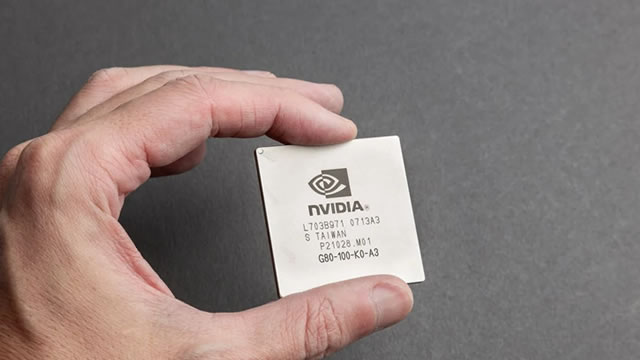
Core Viewpoint - Nvidia's CEO Jensen Huang believes that the impact of President Trump's tariffs will not significantly harm the company in the short term, emphasizing the importance of AI development and manufacturing in America [1]. Group 1: Tariffs and Trade Relations - President Trump has initiated a trade war by imposing tariffs on major trading partners, with tariffs set to take effect on April 2 [1]. - Huang expressed optimism about manufacturing partnerships in the U.S. and downplayed the immediate effects of tariffs on Nvidia [1]. Group 2: Stock Performance and Market Concerns - Nvidia's shares have declined over 20% from their peak in January, primarily due to concerns regarding competition from Chinese AI lab DeepSeek, which suggests lower infrastructure costs for AI performance [2]. - Huang countered the concerns by stating that the reasoning models popularized by DeepSeek will require more chips, indicating a continued demand for Nvidia's products [2]. Group 3: Business Operations in China - Nvidia has faced restrictions in conducting business in China due to increased export controls, which have halved the company's revenue percentage from the region [3]. - Competitive pressures in China, particularly from companies like Huawei, have also impacted Nvidia's market position [3].


iPhone shipments in China plunge 20%; Will AAPL take a hit?
Finbold· 2025-03-17 13:09
Core Viewpoint - Apple faces significant challenges in China, a crucial market, as iPhone shipments decline, impacting its stock performance and overall growth prospects [1][6]. Group 1: iPhone Shipments and Market Performance - iPhone shipments in China dropped 20.6% year-over-year to 4.4 million units in January, contributing to a broader decline in the smartphone market, which saw total shipments decrease by 14.3% to 27.2 million units [2][3]. - The decline in iPhone sales is attributed to increased competition from domestic brands like Huawei and Xiaomi, macroeconomic pressures, and a shift in consumer preferences towards more affordable options [3][4]. Group 2: Impact of U.S.-China Trade Relations - The ongoing U.S.-China trade tensions, including tariffs, are expected to further hinder iPhone shipments, as the demand for premium smartphones in China softens [4][6]. - Apple struggles in the premium segment due to a lack of AI features compared to local competitors, which have successfully introduced feature-rich devices and advanced operating systems [5][6]. Group 3: Strategic Responses and Market Outlook - In response to declining market share, Apple has partnered with Alibaba to introduce Apple Intelligence in China, aiming to enhance its presence in the competitive AI market [7][8]. - Analysts are divided on Apple's prospects; while some express skepticism about the effectiveness of the partnership, others maintain a bullish outlook, predicting significant iPhone sales and potential revenue growth from AI initiatives [9][10]. Group 4: Analyst Ratings and Price Targets - Morgan Stanley reduced its price target for Apple from $275 to $252, citing weak iPhone demand, while maintaining an 'Overweight' rating [10]. - Despite mixed sentiments, the average price target among analysts is $249.38, suggesting a potential upside of nearly 17% over the next 12 months, with the highest target set at $325 [10].


Will Trump's Latest Tariff War With China Hurt QCOM Stock?
ZACKS· 2025-03-10 13:01
Core Viewpoint - Qualcomm is facing significant challenges due to increased tariffs on imports from China, which have negatively impacted its stock performance and revenue generation, particularly as China accounts for 66% of its total revenues in fiscal 2024 [1][3]. Group 1: Market Challenges - The U.S.-China trade tensions have led to various trade restrictions, affecting Qualcomm's ability to sell high-tech equipment and components to China, which has resulted in adverse revenue impacts [3]. - Qualcomm's operations in China are becoming increasingly difficult, with the company having a significant presence in over 12 cities and being a key supplier to local smartphone manufacturers [2]. - High operating expenses and R&D costs have contributed to declining margins for Qualcomm, with expectations of continued softness in the handset market and increased competition from low-cost chip manufacturers [4]. Group 2: Growth Opportunities - Despite short-term challenges, Qualcomm is benefiting from its investments in a licensing program and solid growth in its Snapdragon portfolio, which is expected to drive long-term revenue targets [5]. - The company is expanding its AI capabilities with the launch of the Snapdragon X chip for mid-range AI desktops and laptops, aiming to diversify its revenue stream beyond the smartphone industry [9][10]. - Qualcomm's automotive business is experiencing significant growth, with automotive revenues surging 61% to a record high of $961 million in the first quarter of fiscal 2025, driven by its Snapdragon Digital Chassis platform [11]. Group 3: Financial Performance - Qualcomm shares have declined 5.6% over the past year, underperforming the industry growth of 13.7%, although it has outperformed some peers [12]. - Earnings estimates for Qualcomm for fiscal 2025 have increased by 12.4% to $11.76, indicating positive sentiment among investors [15]. - The company is focusing on operational efficiency and portfolio enhancements to drive value for customers, which is reflected in improving earnings estimates [16].


Huawei and Turkcell Sign Memorandum of Understanding for Leading Network Joint Innovations at MWC 2025
Prnewswire· 2025-03-07 12:09
Core Viewpoint - Huawei and Turkcell have signed a Memorandum of Understanding to develop sustainable networks using innovative technologies, focusing on smart cities and advanced connectivity solutions [1][2]. Group 1: Collaboration Details - The partnership aims to enhance smart city development through 5G Advanced Technology, ultra-speed broadband services, and Quantum Key Distribution technology [2]. - Key technologies to be tested include Tunnel Antenna Technology for reduced cable usage, Integrated Sensing and Communication (ISAC) Technology for improved localization, and Supersite Technology for sustainable communication [2]. Group 2: Company Statements - Turkcell emphasizes its commitment to leading next-generation network innovations, focusing on 5G-A technology to create efficient and intelligent networks [3]. - Huawei expresses its dedication to advancing 5G-A capabilities to support intelligent and sustainable networks that meet evolving user and business needs [3].

Canalys数据快闪:2024年,全球可穿戴腕带设备重点市场厂商排名
Canalys· 2025-03-07 03:10
Core Insights - The global wearable band device market is experiencing steady growth, with shipments reaching 193 million units in 2024, representing a 4% year-on-year increase. This marks two consecutive years of growth following a market adjustment in 2022, indicating a recovery trend driven primarily by strong demand in China and emerging markets, compensating for declines in mature markets like the US and India [1]. Regional Market Summaries Middle East - Xiaomi and Apple are tied for the top position with a 23% unit share each, with annual growth rates of 125% and 21% respectively. Huawei follows closely with a 19% share and a remarkable growth of 184% [2]. Central and Eastern Europe (CEE) - Xiaomi leads with a 33% unit share and a 34% annual growth rate. Huawei shows significant growth at 184%, while Apple has a 11% share but a decline of 15% [3]. Latin America - Xiaomi holds a 27% share with a 63% growth rate, indicating strong performance in this region [3]. Mainland China - Huawei dominates with a 37% unit share and a 42% growth rate, followed by Xiaomi at 24% with a 28% increase. Apple and HONOR have smaller shares of 6% and 2% respectively, with modest growth [5]. Spain - Xiaomi leads with a 39% share and a substantial growth of 117%, while Apple and Samsung follow with 19% and 8% shares, showing growth rates of 9% and 38% respectively [6]. Mexico - Xiaomi is the leader with a 24% share and a 15% growth rate, while Samsung and Apple follow with 20% and 9% shares, showing significant growth for Samsung at 162% [7]. Indonesia - Xiaomi leads with a 48% share and a remarkable growth of 129%, while Samsung also shows strong performance with a 19% share and a 213% growth rate [7]. Japan - Apple is the market leader with a 46% share and a 7% growth rate, followed by Google and Garmin, each with a 12% share and growth rates of 11% and 12% respectively [9].


Has Nvidia Stock Peaked at $153? One Telltale Metric Offers a Decisive Answer.
The Motley Fool· 2025-03-03 09:51
Core Viewpoint - The article discusses the potential decline of Nvidia's stock performance despite its significant growth driven by the AI revolution, suggesting that the best days for the company may be behind it [1][11]. Group 1: AI's Economic Impact - Analysts at PwC estimate that AI could contribute $15.7 trillion to the global economy by the end of the decade, highlighting its transformative potential across various industries [3]. - The stock market rally has been significantly fueled by the rise of artificial intelligence, which has been a major catalyst for the performance of indices like the Dow Jones, S&P 500, and Nasdaq Composite [2]. Group 2: Nvidia's Market Position - Nvidia has seen a remarkable increase in market capitalization, adding nearly $3 trillion since the beginning of 2023, with its stock reaching an all-time high of $153 per share on January 7, 2025 [4]. - The company accounted for 98% of the GPUs shipped to enterprise data centers in 2022 and 2023, with data center revenue constituting over 88% of its total sales of $130.5 billion in fiscal 2025 [6]. - Nvidia's CUDA software platform has been crucial in maintaining customer loyalty and maximizing the performance of its GPUs [8]. Group 3: Pricing Power and Competition - Nvidia's pricing power has been significant, with Hopper chips commanding prices up to $40,000 and Blackwell chips priced between $30,000 to $40,000, compared to AMD's chips priced at $10,000 to $15,000 [9]. - Despite strong sales, Nvidia's gross margin has shown a declining trend, indicating increased competition from both domestic rivals like AMD and international players such as Huawei [12][13]. - Major customers like Microsoft, Meta Platforms, Amazon, and Alphabet are developing their own AI chips, which could lead to a loss of market share for Nvidia [14]. Group 4: Future Concerns - The gross margin for Nvidia has decreased from 78.4% in Q1 2025 to an estimated 70.6% in Q1 2026, reflecting potential challenges ahead [16]. - There are concerns regarding the cost-effectiveness of AI solutions, with companies lacking clear strategies for optimizing their AI investments, which could lead to a tech bubble scenario [17].