LG Display

Search documents
LPL vs. LOGI: Which Stock Should Value Investors Buy Now?
ZACKS· 2025-10-27 16:41
Core Insights - Investors in the Computer - Peripheral Equipment sector may consider LG Display (LPL) and Logitech (LOGI) for potential value opportunities [1] Group 1: Zacks Rank and Earnings Outlook - LG Display has a Zacks Rank of 2 (Buy), indicating a positive earnings outlook, while Logitech has a Zacks Rank of 3 (Hold) [3] - The Zacks Rank emphasizes stocks with positive revisions to earnings estimates, suggesting LPL has an improving earnings outlook [3] Group 2: Valuation Metrics - LPL has a forward P/E ratio of 6.92, significantly lower than LOGI's forward P/E of 22.10 [5] - LPL's PEG ratio is 0.26, while LOGI's PEG ratio is 3.52, indicating LPL may be undervalued relative to its expected EPS growth [5] - LPL's P/B ratio is 0.93, compared to LOGI's P/B of 8.05, further highlighting LPL's relative valuation advantage [6] Group 3: Value Grades - LPL has earned a Value grade of A, while LOGI has a Value grade of C, suggesting LPL is more attractive to value investors [6]

群智咨询:Mini LED与OLED在车载显示领域的“竞合关系”将成为未来发展主线
Zhi Tong Cai Jing· 2025-10-17 12:55
Core Insights - The competitive relationship between Mini LED and OLED in the automotive display sector will be a key focus for future development, with both technologies evolving to better suit automotive applications [1][8] - Mini LED is expected to penetrate the market for vehicles priced above 200,000 yuan, with a significant increase in adoption projected for 2026 compared to 2025 [1][8] Product Technology Upgrades - The automotive display panel market is shifting towards a "differentiated breakthrough" in technology, characterized by a multi-faceted landscape of "Mini LED explosion, stable OLED, and traditional LCD maintaining the base" [2] - Mini LED technology is anticipated to experience explosive growth in 2025, with a projected increase in shipments from 800,000 units in 2023 to 3 million units in 2025, representing a year-on-year growth of 150% [3][4] Mini LED Growth Dynamics - The growth of Mini LED is driven by both technological advancements and market demand, with improved yield rates and cost reductions enabling its adoption in mainstream vehicle segments priced between 200,000 to 300,000 yuan [4] - Mini LED's technical features, such as high brightness and wide temperature tolerance, make it well-suited for automotive environments, creating a positive feedback loop of demand and supply [4] OLED Market Position - OLED technology has established a foothold in the high-end market, with applications in luxury vehicles, but its growth remains steady rather than explosive, focusing on high-end models priced above 500,000 yuan [5][6] - The shipment volume of OLED panels is expected to grow from 600,000 units in 2022 to 3.1 million units in 2025, reflecting a 25% year-on-year increase, although this growth rate is slower than that of Mini LED [5][6] Traditional LCD's Role - Despite the rise of Mini LED and OLED, traditional LCD technology continues to dominate the automotive display market, accounting for over 95% of shipments, primarily in vehicles priced below 200,000 yuan [7] - The strategy for traditional LCD in 2025 focuses on optimizing user experience and controlling costs through improved brightness and color optimization [7] Future Outlook - The competitive dynamics between Mini LED and OLED will drive rapid technological iterations, with both technologies expected to adapt to automotive needs [8][9] - Companies will need to balance current display performance and costs while anticipating future technological advancements, ensuring a diversified approach to production capacity for both Mini LED and OLED [9]
两家面板大厂遭警方搜查
Xin Lang Cai Jing· 2025-10-13 08:43
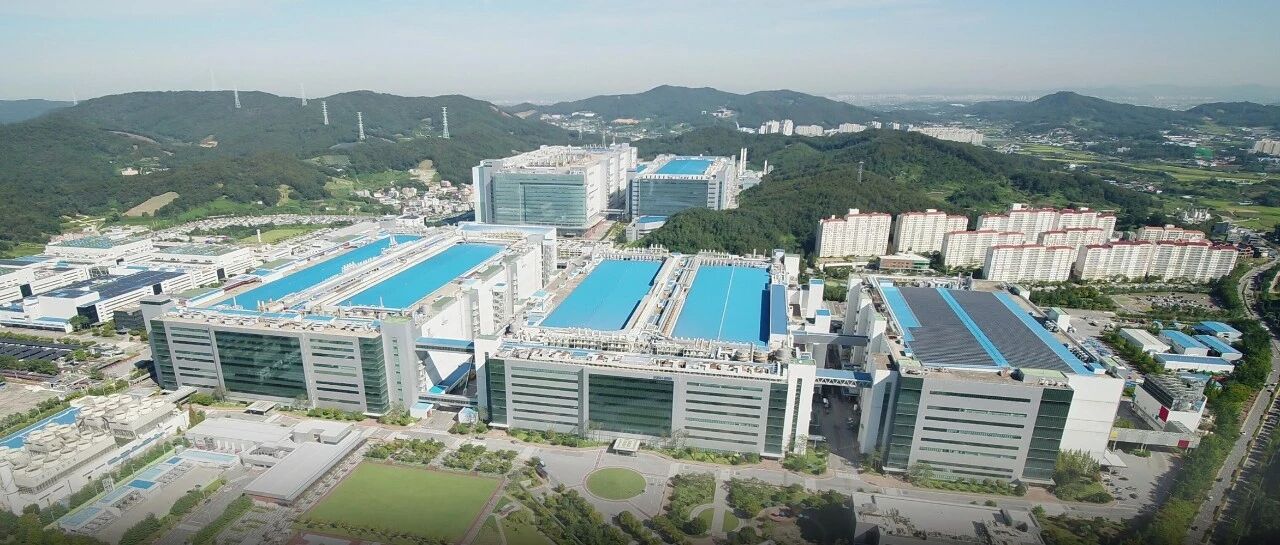
Core Points - LG Display is facing allegations of leaking technology to Chinese companies, leading to police raids and the arrest of two employees [1][2] - The incidents raise concerns about fundamental vulnerabilities in the technology security systems of the South Korean display industry [1] - Both LG Display and Samsung Display are under investigation for technology leaks related to OLED and next-generation panel technologies [2] Group 1: LG Display - The Seoul police conducted a raid on LG Display's Paju factory, arresting two employees for allegedly leaking core display technology to Chinese firms [1] - Hundreds of internal documents were found on one employee's phone and storage devices during the investigation [1] - Key technologies targeted include LG Display's OLED TV panels, LTPO technology, and optical design technology, which are highly sought after by Chinese companies [1] Group 2: Samsung Display - Simultaneously, Samsung Display was also raided, with evidence of technology leaks to different Chinese companies [2] - The investigations into both companies highlight a broader industry concern regarding the absorption of South Korean display technology by Chinese firms [2]
Omdia:预计2025年大尺寸LCD出货量达8.739亿台 同比增长2.2%
智通财经网· 2025-10-13 03:28
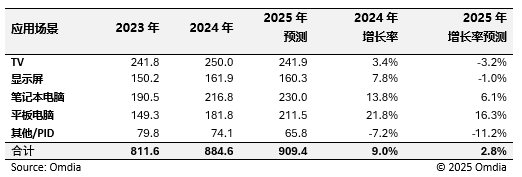
Core Insights - The large-size LCD shipment is expected to grow by 2.2% year-on-year, reaching 873.9 million units by 2025, despite declines in LCD TV and monitor shipments [1] - The large-size OLED market is projected to see a stronger growth of 19.0% year-on-year, driven by significant increases in OLED products for monitors and laptops [1] LCD Market Analysis - LCD TV shipments are forecasted to decline by 3.4% in 2025, while monitor shipments are expected to decrease by 1.8% [1] - The growth in LCD shipments for tablets and laptops is notable, with expected increases of 17.5% and 4.2% respectively, offsetting the declines in other segments [1] OLED Market Analysis - OLED shipments for monitors and laptops are anticipated to grow significantly, with year-on-year increases of 60.9% and 45.9% respectively [1] - OLED TV display shipments are expected to rise by 3.1%, while tablet OLED shipments are projected to decline by 2.3% [1] Market Share and Key Players - By 2025, China is expected to dominate the large-size LCD market with a 67.6% share, followed by Taiwan at 21.0% and South Korea at 8.1% [4] - BOE is projected to lead the large-size LCD market with a 37.1% share, followed by China Star at 16.8% and Innolux at 11.4% [4] - In the OLED market, South Korea is expected to hold an 83.7% share, with Samsung Display leading at 54.3%, followed by LG Display at 29.4% [4] Revenue Projections - China is anticipated to account for 83.7% of the total revenue in the large-size display market by 2025, with South Korea and Taiwan following at 18.0% and 14.7% respectively [4] - BOE is expected to lead in revenue share with 29.7%, followed by China Star at 20.2% and LG Display at 12.4% [4]


韩媒:LGD 65英寸OLED电视面板成本预计将快降至500美元以下
WitsView睿智显示· 2025-10-10 07:28
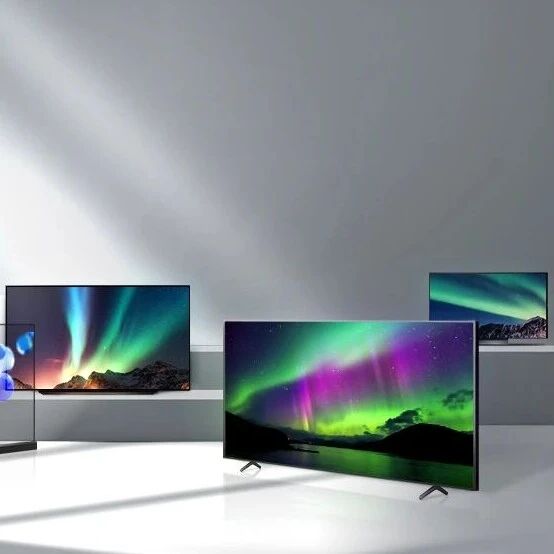
Core Viewpoint - The competition between South Korea and China in high-end television display technology is intensifying, with a focus on the development of Organic Light Emitting Diode (OLED) technology and cost optimization by LG Display [2] Summary by Relevant Sections OLED Technology Development - LG Display is expected to reduce the production cost of 65-inch OLED TV panels to below $500 (approximately 3,650 RMB) soon [2] - In 2024, LG Display aims to lower the OLED TV panel cost from $1,000 in 2020 to around $600 through improved yield rates and production line optimization [2] - By 2026, LG Display plans to further reduce costs through design innovations, including changes to the Display Driver IC (DDI) structure [2] Market Position and Profitability - LG Display has been continuously expanding its OLED production capacity and stabilizing yield rates, leading to a consistent decrease in OLED costs [2] - Industry analysts predict that this trend could enable LG Display to achieve an annual operating profit exceeding 1 trillion KRW (approximately 5.2 billion RMB) in its OLED business [2] - The cost advantage and mature supply chain of OLED TVs are expected to maintain their dominant position in the high-end television market for the next one to two years [2]
LG Display: Positive On Client's New Products And Potential Share Gains
Seeking Alpha· 2025-10-09 16:11
Core Insights - The article focuses on investment opportunities in Asia, particularly in Hong Kong, targeting value investors looking for stocks with significant discrepancies between market price and intrinsic value [1] Group 1: Investment Strategy - The research service emphasizes deep value balance sheet bargains, which include net cash stocks, net-nets, low price-to-book (P/B) stocks, and sum-of-the-parts discounts [1] - It also highlights the importance of wide moat stocks, which are characterized by strong earnings power at discounted prices, including high-quality businesses and hidden champions [1] Group 2: Research and Updates - The author provides a range of watch lists with monthly updates to assist investors in identifying potential investment opportunities [1]

TCL科技完成收购LGD在华子公司股权
Ju Chao Zi Xun· 2025-10-09 14:27
Core Viewpoint - TCL Technology has completed the acquisition of an 80% stake in LG Display (China) Co., Ltd. and a 100% stake in LG Display (Guangzhou) Co., Ltd., marking a significant step in the global display panel industry integration and layout [1][3]. Group 1: Acquisition Details - The acquisition was finalized, allowing TCL Huaxing to officially control LG Display's two main subsidiaries in China [3]. - This transaction is part of a global restructuring in the display industry, with TCL Technology aiming to enhance its market influence in OLED and LCD technology fields [3]. Group 2: Strategic Implications - The acquisition is expected to improve TCL's production capacity and technical strength in high-end display panels, facilitating collaboration with leading global display companies [3]. - By integrating LG Display's R&D, manufacturing, and sales resources in China, TCL aims to achieve synergies in new display technologies and industry ecosystems [3]. Group 3: Market Positioning - TCL Huaxing has been actively focusing on high-end display panels, Mini LED, and flexible OLED technologies in recent years [3]. - The completion of this acquisition solidifies TCL Technology's leading position in the mid-to-high-end panel market and lays a stronger foundation for its future international development [3].

面板大厂三季度出货量大幅回升
Ju Chao Zi Xun· 2025-10-03 09:02
Core Insights - The OLED display market is experiencing significant growth driven by increased shipments of flexible OLED panels from Samsung Display, particularly due to the launch of Apple's iPhone 17 and Samsung's Galaxy S25 series [2] - LG Display's panel shipments surged from 10.8 million units in Q2 to 20 million units in Q3, effectively doubling its output [2] - Chinese panel manufacturers also reported growth in Q3, with BOE's shipments increasing by approximately 5.4 million units and Visionox's shipments rising by about 6.7 million units [2] Company Highlights - LG Display is a key supplier for Apple's smartphones, accounting for about 60% of the panels used in the iPhone 17 Pro Max [2] - BOE's main clients include Chinese smartphone brands such as OPPO and Apple, while Visionox primarily supplies panels to brands like Honor, Xiaomi, and Vivo [2] Market Outlook - UBI Research's Vice President, Han Chang-wook, predicts a significant recovery in shipments from Korean panel manufacturers since Q3, with a key challenge being the stability of supply for major client Apple [2]


LG Display:公司正在布局Micro LED技术
WitsView睿智显示· 2025-09-30 07:27
Core Viewpoint - LG Display's CEO emphasized that Micro RGB backlight TVs are fundamentally still LCDs and require over 150,000 backlight zones to match OLED quality [2][3]. Group 1: Technology Insights - LG Display is actively developing Micro LED technology, with some products already in the commercialization phase, although specific product types were not disclosed [3]. - Samsung's recently released 115-inch Micro RGB backlight TV has only 15,000 backlight zones, indicating a significant gap in technology compared to LG's requirements for OLED-level quality [3]. Group 2: Financial Performance and Outlook - In the first half of 2025, LG Display reported revenues of 11.652 trillion KRW (approximately 60.94 billion RMB), a year-on-year decrease of 3% [3]. - The company experienced an operating loss of 82.6 billion KRW (approximately 432 million RMB), which is an improvement of 480.5 billion KRW compared to the same period last year [3]. - LG Display expects a significant improvement in performance in the second half of the year compared to the first half, despite not meeting market expectations for the first half [3]. Group 3: Future Investments - LG Display is evaluating the feasibility of investing in the 8.6-generation OLED production line based on various factors, including industry investment trends and its own financial status [3].
全球首条8.6代OLED面板产线量产时间公布
WitsView睿智显示· 2025-09-28 09:06
Core Viewpoint - Samsung Display plans to mass-produce the world's first 8.6-generation OLED panels by Q2 or Q3 of 2026, with significant investments in production lines [2][4][7]. Group 1: Samsung Display's Plans - Samsung Display announced an investment of 22.4 billion RMB to upgrade its LCD production line L8 and build a dedicated A6 production line for IT OLED [2]. - The A6 production line is expected to supply OLED panels for Apple's MacBook, with mass production of 14-inch and 16-inch panels anticipated by late Q2 2026 [4]. Group 2: Competitors' Developments - Other companies like BOE, Visionox, and TCL Huaxing are also advancing their 8.6-generation OLED production lines, with significant investments and timelines for mass production [6]. - BOE's Chengdu 8.6-generation AMOLED line is set to start mass production by the end of 2026, with a total investment of 63 billion RMB and a design capacity of 32,000 glass substrates per month [6]. - Visionox's 8.6-generation AMOLED line in Hefei is expected to begin mass production by August 2025, with a total investment of 55 billion RMB [6]. - TCL Huaxing plans to invest 29.5 billion RMB in its 8.6-generation OLED line, with construction expected to start in November 2025 [6]. Group 3: Market Outlook - The 8.6-generation OLED production line is seen as a key path for achieving economies of scale and cost optimization, particularly for IT products [9]. - OLED technology is expected to gain traction in mid-size displays, with a projected increase in market penetration from 2% in 2025 to 5% by 2028 [9]. - TrendForce forecasts that OLED monitor shipments will reach 2.66 million units in 2025, marking an 86% year-on-year increase, with China's market share expected to exceed 20% [9].