
Tencent

Search documents
Trump wants Nvidia to sell powerful AI chips to Beijing. Washington's China hawks are pushing back
CNBC· 2026-01-22 09:00
U.S. President Donald Trump's plan to grant Nvidia licenses to ship some of its more powerful artificial intelligence chips to China is ruffling the feathers of some of Washington's most prominent China hawks, including members of his own party. The pushback intensified this week with the U.S. House of Representatives Foreign Affairs Committee advancing a bill that seeks to expand congressional oversight of AI chip exports.The proposal, known as the AI Overwatch Act, was introduced last month by Rep. Brian ...



布局中国互联网・头部 AI 应用追踪:2026 年六大核心 AI 主题;聚焦 AI 技术、AI 助手与芯片供应-Navigating China Internet_ Top AI_apps tracker_ Laying out six key AI themes for 2026; focuses on AI adtech, AI assistants & chip supply
2026-01-22 02:44
Summary of Key Points from the Conference Call Industry Overview - The focus is on the **China Internet** sector, particularly regarding **AI applications** and **advertising technology** (adtech) as key themes for 2026 [1][2]. Core Themes for 2026 1. **AI/Adtech Evolution**: - Shift towards ROI-based advertising and new marketing strategies like Answer & Generative Engine Optimization (AEO/GEO) [1][19]. 2. **AI Model Breakthroughs**: - Focus on long-context, multi-modal models, and cost-efficient architectures [1][22]. 3. **Proliferation of To-C Assistants**: - Emergence of AI super entry-points, impacting traditional search markets and app user traffic [1][23]. 4. **Chip Supply Dynamics**: - Access to next-generation chips will determine the competitive gap between Chinese and US AI models [1][24]. 5. **Global Market Inroads**: - Increased monetization through a mix of open and closed-source models, with a focus on subscription and API revenue streams [1][26]. 6. **AI Inference Demand**: - Continued growth in AI inference demand will drive cloud revenue and data center demand [1][27]. Company Insights - **Alibaba** and **Tencent** are identified as the best-positioned mega-cap stocks in the China internet sector for the long term [2]. - **PDD** is highlighted as a Buy idea due to its valuation discount and strong user engagement [2]. Engagement Metrics - Overall time spent on the top 400 mobile apps increased by **7% YoY** in December 2025, with notable growth in **Douyin** (+19% YoY) and **eCommerce** engagement (+10% YoY) [3][8]. - **Weixin** and **Weibo** both saw a **5% YoY** increase in time spent [8]. Sector Performance - **Cloud & Data Centers** ranked as the top sub-sector, followed by **Games & Entertainment** and **AI Models** [2][14]. - **JD** and **Taobao** showed strong growth in eCommerce time spent, with increases of **38%** and **9% YoY**, respectively [8]. Notable Trends - **AI Engagement**: Domestic AIGC application engagement rose by **16% MoM**, driven by apps like **Doubao** and **Qwen** [8]. - **Recruitment Platforms**: **Boss Zhipin** maintained leadership in time spent share at **64%** in December [12]. - **Real Estate**: **Beike Zhaofang** saw a **9% YoY** increase in MAUs [12]. Challenges and Regulatory Environment - Cross-border eCommerce faces increasing regulatory pressure, with the EU imposing a **€3 customs duty** on low-value parcels starting July 2026 [8]. Conclusion - The China Internet sector is poised for significant transformation driven by AI advancements, with key players like Alibaba and Tencent leading the charge. The focus on ROI-based advertising, AI model breakthroughs, and global market expansion will shape the competitive landscape in the coming years.


中国人形机器人 - AI 机器人与电力实地调研要点:2026-2027 年通过务实垂直整合推动出货量数倍增长-China Humanoid Robot_ AI Robotics & Power Field Trip takeaways_ Driving multi-fold shipment growth through pragmatic verticalization into 2026-2027E
2026-01-22 02:44
Summary of the Conference Call on the Humanoid Robot Industry Industry Overview - The humanoid robot industry is shifting towards "dedicated-purpose" commercial deployments, focusing on specific vertical applications such as security, guest services, and logistics tasks like pick-and-place and sorting [2][8] - This strategic pivot is expected to drive significant growth in shipment volumes, with projections indicating a multi-fold increase by 2026-2027, from an estimated 15,000-20,000 units in 2025 [2][3] Shipment Volume Projections - Global humanoid robot shipments in 2025 are anticipated to be around 15,000-20,000 units, with Chinese manufacturers contributing significantly to these figures [3] - The targets for 2026 and 2027 are set in the thousands to tens of thousands, supported by a mature supply chain and optimized cost structures [3] Technological Advancements - Significant progress in motion control has been observed, with improvements in robustness and flexibility of humanoid robots, including the achievement of 'cerebellum-level' whole-body control [7] - The product iteration cycle has accelerated to approximately 6-8 months per generation, largely due to high in-house component design capabilities [7] Challenges and Limitations - The industry faces challenges such as the reliance on simulated data, which often fails to translate effectively to real-world scenarios, leading to a 'sim-to-real' gap [8] - The complexity of dexterous manipulation remains a limitation, confining the utility of humanoid robots in industrial applications to simpler logistics tasks [8] Data Strategies and AI Integration - Manufacturers are standardizing their approaches by integrating with established Large Language Models (LLM) and Vision-Language Models (VLM) to enhance robotic intelligence [9] - A 'data recipe' arms race is underway, with companies focusing on three primary data inputs: teleoperated demonstrations, simulation, and real-world video datasets [9] Market Differentiation and Profit Models - Two distinct profit models have emerged: 2C (business-to-consumer) focusing on user experience and emotional value, and 2B (business-to-business) emphasizing ROI through efficiency improvements [11][12][13] - For 2B applications, robots must achieve approximately 50% of a human worker's throughput to justify investment, with acceptable payback periods ranging from two to three years [13] Investment Recommendations - The report recommends a selective investment approach, advising to "Buy" Sanhua H and "Sell" Moon's Electric, citing high market expectations and the need for realistic volume projections [14] - The year 2026 is viewed as a critical period for validating volume expectations and market share dynamics within the humanoid robot sector [14] Conclusion - The humanoid robot industry is poised for significant growth driven by technological advancements and strategic market shifts, but faces challenges that could impact the realization of ambitious shipment targets and investment returns [2][3][14]


China's Alibaba and ByteDance Embrace Agentic Commerce
PYMNTS.com· 2026-01-21 14:59
Core Insights - Major Chinese tech companies like Alibaba and ByteDance are integrating agentic commerce into their services, indicating a shift towards AI that performs tasks on behalf of users with minimal supervision [1][2]. Group 1: Agentic AI Developments - Alibaba has enhanced its Qwen AI chatbot with features that allow users to order food, book travel, and make in-chat payments, reflecting a transition from foundational AI models to agentic AI [2]. - ByteDance has upgraded its Doubao AI chatbot to autonomously manage tasks such as ticket bookings through eCommerce features on Douyin, the Chinese version of TikTok [4]. Group 2: User Engagement and Experience - The agentic transformation of commercial services is expected to improve user engagement and retention, as noted by research analyst Shaochen Wang [3]. - Despite advancements in payment technologies, 60% of middle-market merchants report user experience issues during checkout, highlighting the potential for agentic AI to streamline these processes [5]. Group 3: Implications for Commerce - In agentic commerce, the consumer's role in the checkout process diminishes as software agents take over tasks like product selection and payment initiation, potentially reducing the reliance on traditional wallets [6]. - The application of agentic commerce in B2B payments is also being explored, with the potential for automation in managing invoices and contracts [6][7].

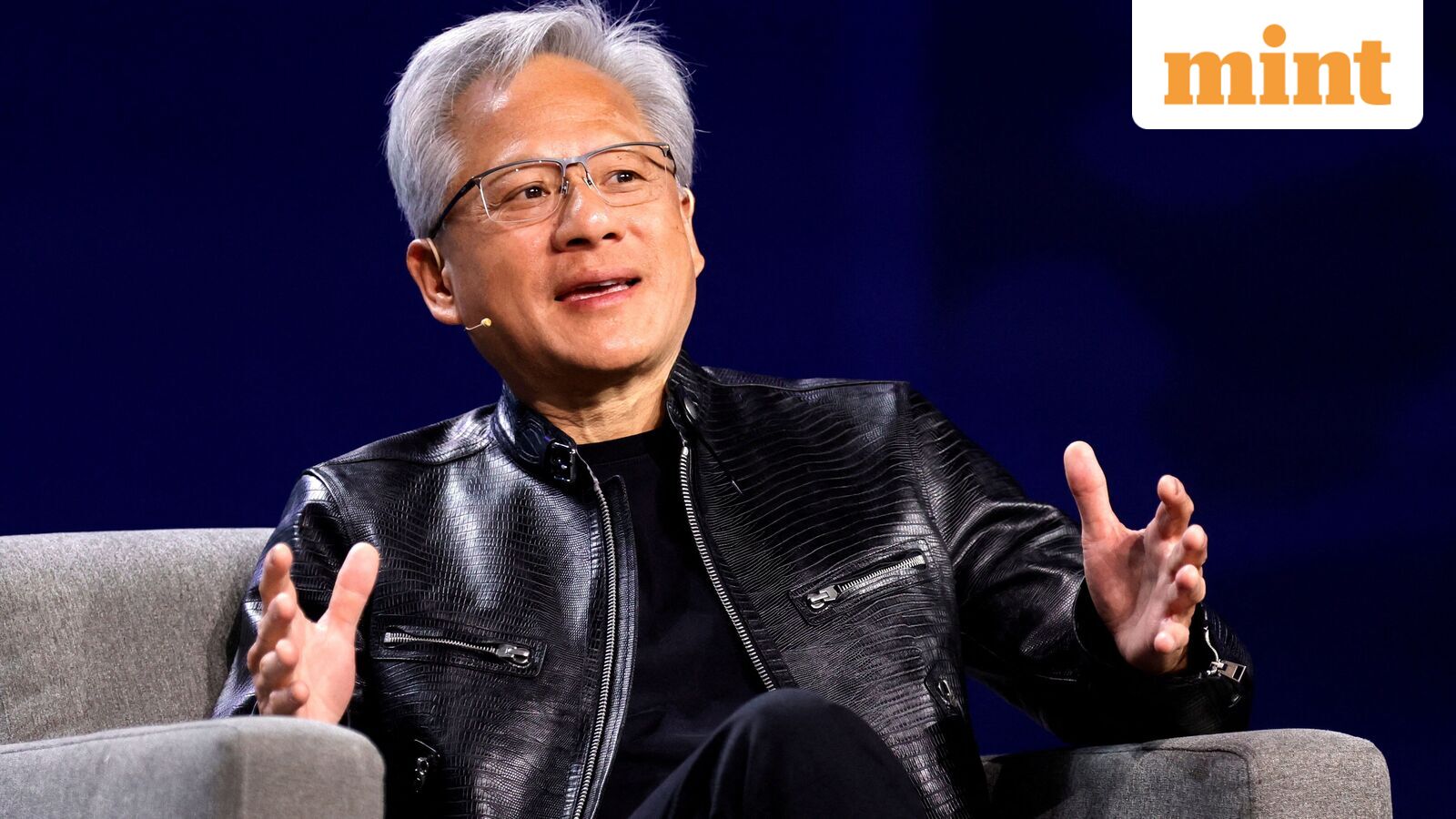
Nvidia CEO Jensen Huang plans China trip amid push to reopen key market — Check out his itinerary
MINT· 2026-01-21 05:26
Core Insights - Nvidia's CEO Jensen Huang is planning a trip to China in late January to strengthen the company's position in the AI chip market [1][2][3] - The visit coincides with the US easing export restrictions on Nvidia's H200 model, while China is deliberating on import approvals for these chips [3][4] - The geopolitical landscape is tense, with US lawmakers expressing concerns over China's access to advanced AI technology [8][10] Group 1: Nvidia's Strategic Moves - Huang's trip is aimed at reopening a crucial market for Nvidia's AI chips, particularly as the company seeks to navigate changing export regulations [1][3] - The H200 chip, although a generation behind US offerings, is still considered superior to local Chinese alternatives, highlighting Nvidia's competitive edge [4] - The visit may include meetings with Chinese officials, which could impact Nvidia's market strategy in China [2][3] Group 2: Regulatory Environment - The US has imposed a 25% tariff on certain advanced semiconductors shipped to China, reflecting ongoing trade tensions [7] - Additional licensing requirements for the H200 chip mandate that exporters ensure shipments do not create shortages in the US market [7] - Concerns from US lawmakers about the potential security risks of allowing China access to Nvidia's advanced chips are growing, with proposals for increased oversight on such sales [8][9] Group 3: Market Implications - The Chinese government is looking to bolster its domestic chip industry, which currently cannot match Nvidia's capabilities [4] - Despite restrictions, the potential for Nvidia to sell AI chips in China remains a contentious issue among US lawmakers, who fear it could enhance China's technological capabilities [8][10] - The outcome of Huang's trip and the evolving regulatory landscape will be critical for Nvidia's future market position in China [10]
中国互联网_AI 全面战争-我们对全栈竞争的看法-China Internet_ AI Total War - our thoughts on full stack competition
2026-01-20 01:50
Summary of Key Points from the Conference Call on China Internet and AI Development Industry Overview - The focus of the discussion is on the **China Internet** sector, particularly the impact of **AI-enabled services** on established platforms and competition dynamics among major players like **Tencent**, **Alibaba**, and **Bytedance** [1][8][11]. Core Insights and Arguments - **AI Competition**: Leading Chinese developers are expected to be fast followers in AI model development, leveraging unique domain data and entrenched user intent to shape competition [1][8]. - **User Engagement Trends**: AI chatbots, including **Doubao**, have shown engagement patterns similar to search engines rather than being disruptive top-funnel entrants. Doubao has reached **70 million DAUs** and **227 million MAUs**, indicating significant user traction [3][31]. - **Super App Strategy**: Companies are striving to become super apps, with **WeChat** as a global template. **Alibaba** is pivoting towards a transaction-based ecosystem around its **Qwen** app, while **Bytedance** is enhancing its offerings with music and payment features [4][51]. - **Monetization Success**: **Tencent** has seen success in AI monetization within gaming and advertising, but faces sentiment challenges due to perceived delays in chatbot development [6][9]. - **Investment Implications**: The report remains bullish on the ability of Chinese Internet companies to capture market share domestically and internationally, with a focus on the evolution of super-app ecosystems [8][9]. Important Developments - **Alibaba's Qwen App**: Recent upgrades to the Qwen app aim to enhance user transactions across various services, which could drive user engagement. However, the immediate market reaction was cautious following the announcement [5][21]. - **AI Chatbot Engagement**: Current usage of AI chatbots is limited, averaging **10-12 minutes** over **5-7 sessions** daily, which is more akin to search engine usage than a new traffic source [2][33]. - **Competitive Landscape**: The competition among AI chatbots has not significantly expanded the overall market but has redistributed engagement among existing platforms. Smaller players may struggle as larger platforms dominate [83][84]. Additional Insights - **Hardware Developments**: Companies like **Alibaba** and **Bytedance** are exploring new hardware, such as smart glasses and AI-enabled smartphones, to enhance user interaction with their ecosystems [53][54]. - **Geopolitical Risks**: Ongoing geopolitical tensions and legislative changes in the US may impact access to technology and resources for Chinese companies, but there is optimism about domestic semiconductor advancements [15][16]. - **Long-term Outlook**: The report suggests that while AI chatbots have not yet disrupted the market significantly, their evolution and integration into broader ecosystems will be crucial to watch in the coming years [34][80]. Valuation and Market Performance - **Valuation Metrics**: The report includes a valuation summary for major players, indicating **Tencent** and **Alibaba** as outperformers with significant growth potential in core earnings [7][10]. - **Market Sentiment**: Despite positive fundamentals, market sentiment remains cautious, particularly regarding **Tencent's** perceived lag in AI chatbot development [9][72]. This summary encapsulates the key points discussed in the conference call, highlighting the competitive dynamics, user engagement trends, and strategic moves within the China Internet sector as it navigates the evolving landscape of AI technology.
Alibaba-backed startup Moonshot AI's valuation is up $500 million, sources say, after its rivals IPO in Hong Kong
CNBC· 2026-01-19 13:36
Company Overview - Moonshot AI, an Alibaba-backed AI startup, is currently valued at $4.8 billion in a new funding round, up from $4.3 billion previously [1][2] - The company is known for its Kimi chatbot, which gained significant popularity in China prior to the release of DeepSeek [1] Funding Details - The latest funding round is expected to close soon due to high demand, with a valuation at least $500 million higher than the previous round in December [2] - The previous funding round, announced on December 31, included participation from IDG, Alibaba, and Tencent [4] Market Context - Interest in Chinese AI companies has surged, particularly as U.S. AI chatbots like OpenAI's ChatGPT are not available in mainland China due to government restrictions [3] - Competitors Zhipu and MiniMax have seen significant market valuations, with Zhipu valued at $13 billion and MiniMax at $15.2 billion as of the latest data [4] Future Prospects - There is potential for Moonshot AI to be valued even higher in future funding rounds due to increasing interest in Chinese AI IPO candidates [3]

中国游戏与娱乐_2026 展望:围绕竞争、海外扩张与 AI 应用的核心主题与争议-China Games & Entertainment_ 2026 Outlook_ Framing key themes_debates around competition, overseas expansion and AI applications
2026-01-19 02:32
Summary of China Games & Entertainment Sector Conference Call Industry Overview - The China Games & Entertainment sector experienced a significant rally in 2025, with large and mid-cap stocks increasing by 50-80%, compared to the HSCEI's 26% rise. The strong momentum continued into 2026, with some stocks rising by 30% against a 3-5% increase in corresponding indexes [2][21][24]. Key Themes and Debates for 2026 1. **Competition from Bytedance** - Bytedance's competition is a major concern for investors, particularly in selective growth verticals such as short drama and mini-game platforms. Music streaming remains a key debate, with TME maintaining a differentiated position in ARPU and non-subs revenue growth [3][26]. 2. **Overseas Market Expansion** - Chinese game publishers, led by Tencent and NetEase, are accelerating their overseas expansion. The current market share of Chinese game publishers in overseas markets is around 15%, with expectations to increase significantly due to capital intensity, technology capabilities, and ongoing content upgrades [4][43][78]. 3. **AI Applications** - AI is expected to disrupt and benefit existing ecosystems by reducing production costs and enhancing efficiency. The gaming and advertising sectors are particularly poised for revenue uplift and efficiency gains through AI applications. The total addressable market (TAM) for AI video generation tools is projected to expand 10X by 2028 [5][54][56]. 4. **Policy Tailwinds for Content Creation** - Favorable domestic policies are expected to support content creation, leading to faster production turnaround and increased consumer demand across the entertainment industry. The number of game approvals increased by 25% year-over-year in 2025, indicating a supportive regulatory environment [10][66][69]. Company-Specific Insights - **Kuaishou** - Revenue forecast for Kuaishou has been raised to US$280 million for 2026, with expectations of ARR reaching US$350-400 million. The company is positioned to benefit from AI narratives and has seen its share price double over the past 12 months [11][12]. - **NetEase** - NetEase is trading at a discount compared to peers due to its lower overseas revenue exposure. Upcoming titles like "Sea of Remnants" and "Ananta" are expected to drive significant growth in overseas markets [13][14]. - **Bilibili** - Bilibili is anticipated to deliver strong margin expansion, with advertising revenue growth projected at 20% year-over-year in 2026. The company is expected to benefit from a turnaround in its gaming business [12][14]. - **Tencent** - Tencent's core business is expected to see low to mid-teens growth year-over-year, driven by strong game pipelines and monetization benefits from AI in advertising [14][15]. - **Tencent Music (TME)** - TME's valuation has decreased by 30% due to competition concerns, but the company maintains a strong market position with diversified revenue streams and double-digit music revenue growth [16][12]. Additional Insights - The mini-games sector is identified as the fastest-growing segment, with a 34.39% year-over-year revenue increase in 2025, reaching US$7.7 billion [77]. - The overall Chinese video game market is projected to grow at a CAGR of 7-8% through 2028, with 2025 revenues reaching a record high of 350.8 billion yuan (US$50 billion) [76]. - The integration of AI across various processes in the entertainment industry is expected to enhance cost efficiency and revenue generation, with significant implications for advertising and content creation [54][55]. Conclusion The China Games & Entertainment sector is poised for growth driven by overseas expansion, AI integration, and supportive policies. Companies like Tencent, NetEase, Kuaishou, and Bilibili are well-positioned to capitalize on these trends, although competition from Bytedance remains a critical factor to monitor.


中国互联网 - 2026 展望:中国 AI 之路更光明-China Internet -2026 Outlook China's AI Path Is Brighter
2026-01-19 02:32
Summary of the Conference Call on China's Internet and AI Industry Outlook for 2026 Industry Overview - The focus is on the **China Internet** industry, particularly the **AI sector** and its growth prospects in 2026, influenced by both supply and demand factors [1][2]. Key Insights AI Growth Prospects - **Supply Improvements**: Anticipated import of Nvidia H200 chips for training and expansion of domestic chip production capacity for inferencing are expected to enhance AI capabilities [2][4]. - **Demand Surge**: A breakthrough in agentic capabilities is projected to drive a significant increase in consumer (2C) adoption. Positive signals from the latest China CIO Surveys indicate a first-time uptick in enterprise (2B) spending since the second half of 2021 [2][4]. Overseas Expansion - As the domestic market faces deflationary pressures and rising competition, overseas expansion is becoming crucial. Various segments such as gaming (Tencent, NetEase), cross-border e-commerce (PDD, Alibaba), and cloud services (Alibaba, Tencent) are highlighted as key areas for growth [3][4]. - It is estimated that overseas markets contributed over **10%** of revenue for Chinese internet companies in 2025, with expectations for further growth in the next 2-3 years [3][4]. Risks and Challenges - The macroeconomic climate, competition, regulatory changes, and geopolitical tensions are identified as significant risks. A decline in consumption since Q4 2025 is impacting industry revenue growth across e-commerce, local services, and advertising [4]. - Competition in food delivery and quick commerce remains intense, particularly following the State Council's anti-involution investigation. ByteDance's continued disruption across various sectors is also noted [4]. Investment Recommendations Overweight (OW) Recommendations - **Tencent**: Identified as a top pick due to resilient core businesses and strong 2C AI applications [5]. - **Alibaba (BABA)**: Considered the best AI enabler with cloud services as a key growth catalyst [5]. - **PDD**: Valued for its attractive pricing and potential breakeven of Temu in 2026 [5]. - **TME**: Noted for its resilient business model and potential upside from the proposed Ximalaya acquisition [5]. Underweight (UW) / Equal Weight (EW) Recommendations - **JD (UW)**: Facing operational de-leverage and high investments in new businesses [5]. - **BILI (EW)**: Low visibility in gaming and high valuations are concerns [5]. - **Kuaishou (EW)**: Core business performance is lukewarm, with current valuations reflecting this [5]. - **BIDU (EW)**: While Kunlunxin is a near-term catalyst, core business challenges persist [5]. Additional Insights - The report emphasizes the importance of prudent capital expenditure in AI applications to mitigate bubble risks, suggesting a focus on applications that yield better returns on invested capital (ROIC) [2][4]. - The overall industry view remains attractive, with a strong emphasis on the potential for growth in AI and overseas markets despite existing challenges [7]. This summary encapsulates the key points from the conference call, providing a comprehensive overview of the current state and future outlook of the China Internet and AI industry.
布局中国互联网:AI 投资关键年与核心定位防守战;围绕每股收益兑现、叙事转变与股东回报的个股精选-Navigating China Internet_ Pivotal year for AI investments & Defending core positioning; Stock picking around EPS delivery, Narrative changes & Shareholder returns
2026-01-19 02:32
Summary of Key Points from the Conference Call Industry Overview - The conference call focuses on the **China Internet** sector, particularly the competitive landscape involving major players like **ByteDance**, **Alibaba**, and **Tencent**. It highlights the strategic pivots expected in 2026 due to advancements in AI technologies and changing market dynamics. Core Insights and Arguments 1. **Strategic Pivot Year**: 2026 is anticipated to be a pivotal year for China internet mega-caps, driven by increased investments in AI technologies and efforts to defend core market positions. ByteDance's advancements in AI and eCommerce are significant factors prompting these changes [1][11][42]. 2. **ByteDance's Market Position**: ByteDance has achieved notable success, being the top in daily token consumption and having the most used consumer-facing app, Doubao, with over 100 million daily active users (DAU). Its Douyin eCommerce GMV is projected to grow over 30% in 2025, positioning it to surpass Pinduoduo in 2026 [11][43]. 3. **AI Investment Themes**: Six key AI themes for 2026 include: - Shift towards ROI-based advertising and new marketing strategies. - Breakthroughs in AI models focusing on multi-modal and cost-efficient architectures. - Proliferation of consumer-facing AI assistants. - Competition for next-generation chips impacting AI model performance. - Expansion into global markets with a mix of open and closed-source models. - Increased demand for AI inference driving cloud revenue growth [2][15]. 4. **Stock Recommendations**: - **Alibaba** and **Tencent** are viewed as strong long-term investments due to their AI capabilities. - **PDD** is highlighted as a key mega-cap idea for 2026, benefiting from a favorable risk-reward profile and strong user engagement [3][16][20]. 5. **Sub-sector Preferences**: The updated preference ranking includes: - **Cloud & Data Centers** (1) - **Games & Entertainment** (2) - **AI Models** (newly added) [21]. Additional Important Insights 1. **Regulatory Environment**: The call discusses the regulatory landscape, indicating that recent investigations into the food delivery sector are not indicative of a return to stringent regulatory measures but rather a push for healthy competition [32]. 2. **Market Valuations**: Current valuations for China internet stocks are noted, with the sector trading at a median 2026E P/E of 18X, which is competitive compared to US peers [13][26]. 3. **Food Delivery Competition**: The competitive landscape in food delivery is expected to normalize, with significant losses narrowing for Alibaba and JD as they adapt to new regulations and market conditions [30][32]. 4. **AI Model Competition**: The competition in AI models is expected to extend towards multi-modal capabilities, with Alibaba positioned as a leader in this space [22][43]. This summary encapsulates the key points discussed in the conference call, providing insights into the strategic direction of the China internet sector and the implications for major players.