Volkswagen

Search documents
Goldman Sachs Hits The Brakes: Auto Tariffs & Slumping Demand May Shake Up Ford, Tesla, Rivian, Lear & Visteon
Benzinga· 2025-04-10 17:59
Core Viewpoint - Goldman Sachs analyst Mark Delaney has revised down U.S. auto sales and global production forecasts due to tariff issues and declining consumer demand [1] Auto Sales and Production Forecasts - U.S. auto sales are projected to reach 15.40 million units in 2025 and 15.25 million in 2026, down from previous estimates of 16.25 million and 16.35 million respectively [4] - The proposed tariffs are expected to increase the cost of importing and manufacturing vehicles in the U.S. by a low- to mid-single-digit thousand-dollar level on average [2] Impact on Vehicle Pricing - New vehicle net prices in the U.S. are anticipated to rise by approximately $2,000 to $4,000 over the next 6–12 months due to tariff impacts [3] Company-Specific Ratings and Forecasts - Ford Motor Company: Downgraded from Buy to Neutral with a price forecast of $9, reflecting a tougher cyclical environment and rising tariff-related costs [4][5] - General Motors Company: Maintained a Buy rating with a price forecast of $63, despite a tougher cyclical outlook and increased competition [5][6] - Tesla, Inc.: Neutral rating with a price forecast of $260, acknowledging headwinds from weaker auto demand and tariff-related costs [6][7] - Rivian Automotive, Inc.: Neutral rating with a price forecast of $12, facing risks from reduced U.S. EV policy support [7] Supplier Impact - Tier 1 suppliers like Lear Corporation and Visteon Corporation are downgraded from Buy to Neutral due to high tariff exposure limiting their ability to offset lower industry volumes [8] - Visteon and Lear stocks are facing significant declines, with Visteon shares down 10.5% and Lear shares down 8.89% [9]







Autos, pharma, luxury and more: The global sectors soaring after Trump's tariffs walkback
CNBC· 2025-04-10 08:45
Market Overview - Stock markets experienced a significant surge following U.S. President Donald Trump's unexpected reversal on tariffs, with a universal 10% rate applied to all trade partners except China [1][2] Automotive Industry - Major automotive companies saw substantial gains, with Volkswagen, BMW, and Mercedes-Benz Group all increasing by over 9%, and Stellantis rising by 14% [3] - In Asia, Nissan rose by 9.5%, Honda by 8.4%, and Toyota by 7.7%, reflecting a positive market reaction to Trump's 90-day pause announcement [4] Banking Sector - The banking sector recorded sharp gains of 8.61% at market open, recovering from previous declines, with European banks like Banco Santander, Deutsche Bank, and Intesa Sanpaolo rising by 9-11% [5] - UBS also saw a rise of 9.5%, indicating a rebound in investor confidence [5][6] Pharmaceutical Sector - Pharmaceutical stocks rebounded, with Novo Nordisk gaining 10% and other major firms like Novartis and Bayer increasing by over 5% [9] - The sector had previously faced uncertainty due to potential tariffs, but the recent market movement suggests a temporary reprieve [10] Luxury Goods Sector - Luxury stocks, including LVMH and Kering, experienced gains, benefiting from their strong pricing power and ability to pass on costs to consumers [11] - However, analysts caution that a broader economic downturn could impact consumer spending even among wealthier shoppers [12][13] Mining Industry - Mining stocks in Europe performed well, with Anglo American shares jumping 11% and other companies like Antofagasta and Glencore trading up by more than 8% [14] - Despite previous warnings about the impact of trade policies on demand for metals, the sector showed resilience in the current market environment [14]


2025年全球自动驾驶行业洞察报告
亚瑟·D·利特尔咨询公司· 2025-04-08 01:50
Investment Rating - The report does not explicitly provide an investment rating for the autonomous mobility industry Core Insights - The autonomous mobility sector is experiencing a paradigm shift with increasing integration of autonomous vehicles (AVs) into daily life, driven by advancements in technology and changing consumer preferences [8][10] - Despite a challenging venture-funding environment, real-world testing and deployment of AVs are expanding globally, particularly in the US and China, with notable developments in the Gulf Cooperation Council (GCC) region [13][14][16] - The successful commercialization of AVs requires an ecosystem approach, emphasizing collaboration among public and private sectors, technology providers, and transport agents [17][24] Industry Dynamics - The autonomous driving sector is pursuing commercialization despite a sluggish venture-funding environment, with trends including the exploration of robobuses and robotaxis as part of mobility-as-a-service (MaaS) offerings [13][14] - AV companies are scaling up testing and commercial pilot efforts globally, with significant activity in the US and China, while the GCC is emerging as a hotspot for AV pilots [14][16] - Financial struggles persist in the AV industry, with a shift in investor focus towards targeted applications like trucking and last-mile delivery, as companies seek profitability through specific use cases [18][20] Use Case of the Semester - Autonomous buses, or robobuses, are being integrated into urban transportation systems, offering efficiency and safety improvements while addressing driver shortages [44][45] - Successful integration of robobuses faces challenges such as safety, connectivity, and consumer acceptance, necessitating a thorough piloting process [46][48] - The deployment of robobuses requires careful planning and execution, including regulatory approvals, infrastructure modifications, and operational testing [52][55] City of the Semester: Beijing - Beijing is recognized for its rapid advancement in AV deployment, with over 300 autonomous delivery vehicles fulfilling over 4 million orders by January 2024 [70][71] - The city has established a supportive regulatory environment, advanced testing infrastructure, and public awareness initiatives to facilitate AV integration [71][89] - Beijing's digital infrastructure, including high-speed 5G networks and smart traffic management systems, supports the growth of autonomous mobility [87][90] Interview of the Semester - The interview with Dr. Tony Han, CEO of WeRide, highlights the industry's transition from testing to commercialization, emphasizing technological advancements and regulatory developments [91][92]

Why QuantumScape's Focus on Producing Samples in 2025 Could Be a Game Changer for This Auto Market Supplier
The Motley Fool· 2025-04-07 10:15
Group 1: Company Overview - QuantumScape is focused on developing high-tech solid-state batteries primarily for the electric vehicle (EV) market, aiming to become an original equipment manufacturer (OEM) [2] - The company reported a loss of approximately $475 million in 2024, highlighting its focus on producing samples of its solid-state battery products [1] Group 2: Market Challenges - The automotive industry is highly regulated, with stringent safety requirements that necessitate thorough vetting of OEM suppliers by car manufacturers [3] - Established OEMs have a robust supply network, making it challenging for new entrants like QuantumScape to displace existing suppliers once a part is integrated into a vehicle [4] Group 3: Strategic Initiatives - QuantumScape is currently producing samples for automakers to test, which is crucial for gaining entry into the EV supply network [5][6] - The company has partnered with PowerCo, a battery maker under Volkswagen, to demonstrate the integration of its battery technology into Volkswagen's manufacturing processes, which could serve as a model for future partnerships [7] Group 4: Future Goals - The primary operational milestone for QuantumScape in 2025 is to ship Cobra-based B1 samples of the QSE-5 cell, which is essential for the company's path to sustainable profitability [6] - Achieving a successful partnership with Volkswagen could lead to a "first customer launch" in 2026, establishing a reliable income stream for the company [7][8]


Trump's 25% auto tariffs are in effect. What investors need to know
CNBC· 2025-04-03 11:54
Core Viewpoint - The implementation of President Trump's 25% tariffs on imported vehicles is expected to significantly impact the automotive industry and investor sentiment, with potential long-term effects on earnings and market dynamics [1][2][3]. Industry Impact - The tariffs apply to vehicles not assembled in the U.S., affecting 46% of the approximately 16 million vehicles sold domestically in the previous year [2]. - Analysts express concerns that prolonged tariffs could lead to a recession in the automotive sector, with significant negative implications for company earnings [2][3]. - The tariffs are anticipated to increase vehicle prices, with estimates suggesting new vehicle prices could rise by as much as $10,000 if costs are fully passed on to consumers [20]. Company-Specific Effects - Automakers such as Volvo, Mazda, Volkswagen, and Hyundai are identified as most at risk, with over 60% of their U.S. sales being imported [11]. - General Motors (GM) is projected to face the highest exposure to tariffs, with estimates indicating a potential 79% drop in earnings before interest and taxes (EBIT) and an 81% decline in earnings per share (EPS) [13]. - Ford is expected to see a 16.5% hit to EBIT and a 23% decline in EPS due to the tariffs [14]. - Tesla, Rivian Automotive, and Lucid Group are positioned more favorably as their vehicles are assembled in the U.S., insulating them from the tariffs [15][16]. Market Dynamics - U.S. auto sales in the first quarter exceeded expectations as consumers rushed to purchase vehicles before the tariffs took effect [17]. - S&P Global Mobility forecasts that U.S. light-vehicle sales could decline to between 14.5 million and 15 million units annually if tariffs remain in place, down from approximately 16 million in 2024 [18]. - Entry-level vehicles, which typically have lower profit margins, are particularly vulnerable to price increases due to the tariffs [18][19]. Supply Chain Considerations - The concept of a fully U.S.-sourced vehicle is deemed unrealistic, as even domestically assembled vehicles rely on a global supply chain for parts [7][8]. - Automakers are awaiting clarity on potential tariffs for auto parts, which could further complicate their supply chain and financial outlook [6][10].
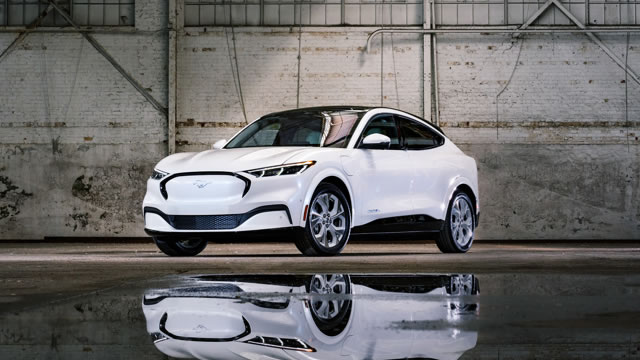
Rivian CEO Says US Needs More Under $50K EVs To Catch Up To China: 'You Have To Have The Plumbing Right'
Benzinga· 2025-04-01 22:59
Core Insights - Rivian CEO RJ Scaringe expressed concerns about the U.S. falling behind China in electric vehicle (EV) market share, with China at 45% of new car sales being EVs compared to only 8% in the U.S. [2][3] - Scaringe emphasized the need for more affordable EV options in the U.S. market, particularly models priced under $50,000, to stimulate growth [5][6] Group 1: Market Comparison - China is innovating in the EV sector at "lightning speed," advancing battery technology and continuously adding new models, while the U.S. market lacks similar technological advancements [2][3] - Rivian's current offerings, the R1S SUV and R1T electric pickup truck, are priced over $50,000, limiting their customer base [4] Group 2: Future Models and Pricing Strategy - The upcoming Rivian R2 model is expected to broaden the customer base with a starting price around $45,000, which Scaringe believes will significantly increase accessibility [4][5] - Scaringe stated that the U.S. EV market requires an additional "10, 15, 20 other options" under $50,000 to foster true growth [5] Group 3: Technological Integration - Rivian is focusing on vertical integration and has a joint venture with Volkswagen to utilize its software in future EVs, which is crucial for the company's strategy [6] - The company aims to redefine network architecture with integrated technology, which is essential for the success of its models [5][6] Group 4: Stock Performance - Rivian's stock closed up 6.67% to $13.28, with a 52-week trading range of $8.26 to $18.86, indicating positive market sentiment [7]
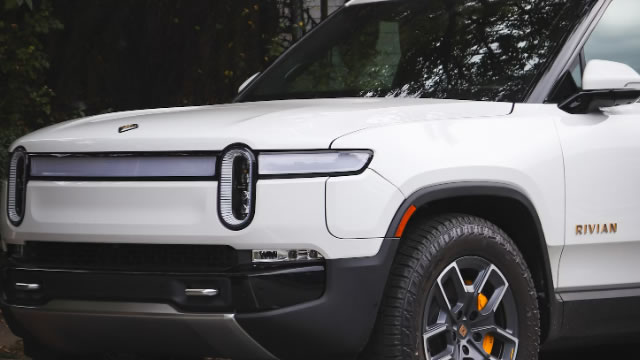
Why Elon Musk's Tesla has an advantage as Trump's 25% auto tariffs hit
New York Post· 2025-03-27 16:14
Elon Musk’s Tesla will get a major boost on key rivals in the auto sector after President Trump imposed 25% tariffs on all foreign-made cars and auto parts, according to financial analysts.Tesla manufactures all of the electric vehicles it sells in the US at plants in California and Texas – a key factor that should shield Musk’s pioneering company from the worst impacts of the tariffs.Meanwhile, competitors like GM and Ford – as well as international rivals like South Korea’s Hyundai and Germany’s Volkswage ...

Alphabet's $32 Billion Cybersecurity Play
The Motley Fool· 2025-03-21 15:23
Acquisition Overview - Alphabet is planning to acquire cloud security company Wiz for $32 billion, marking the largest acquisition in its history [3][4] - The initial offer was $22 billion last summer, indicating a significant increase in valuation due to Wiz's strong market position and potential IPO considerations [3][4] Financial Implications - The acquisition will be an all-cash deal, utilizing part of Alphabet's substantial cash reserves, which are approximately $100 billion [5][10] - Wiz generated $350 million in recurring revenue in 2023 and is projected to reach $1 billion in 2025, resulting in a valuation of 32 times its sales [10] Strategic Rationale - The acquisition aligns with Alphabet's strategy to enhance its cloud business, an area where it has lagged behind competitors like Amazon and Microsoft [8][9] - Wiz's technology will support Alphabet's multi-cloud strategy, providing enhanced security for cloud data and mitigating risks associated with AI and large language models [5][6] Market Position - Alphabet's cloud revenue has grown from $9 billion in 2019 to $43 billion in 2024, indicating a strong upward trajectory despite previous lagging performance [9] - The acquisition is expected to bolster Alphabet's competitive position in the cloud computing market, which is increasingly important for its overall business strategy [8][9] Industry Context - The cybersecurity sector is experiencing rapid growth, with companies like Wiz at the forefront of providing essential services for cloud security [11] - The increasing importance of cybersecurity solutions is reflected in the market's willingness to pay premium valuations for companies that can offer innovative protection against evolving threats [11]


Tesla owners are trading in their EVs at record levels, Edmunds says
CNBC· 2025-03-20 23:38
Core Insights - Tesla owners are trading in their electric vehicles at record levels, with March marking the highest share of trade-ins for Tesla vehicles toward new or used cars from other brands [1] - Tesla's brand value has declined by 26%, approximately $15 billion, in 2024, marking a second consecutive annual decline [6] Market Performance - Tesla's stock price has decreased by 42% this year, with investors moving away from the stock following initial enthusiasm after Trump's victory [3] - Tesla's sales in the U.S. have declined by about 11% year-over-year, while competitors like Ford, Chevrolet, and Volkswagen have increased their EV sales and market share [4] Consumer Sentiment - Shifts in consumer sentiment towards Tesla may provide opportunities for legacy automakers and EV startups to attract defecting Tesla owners and first-time EV buyers [5] - Interest in shopping for new Tesla models has dropped to its lowest level since October 2022, following a peak in November [6]
每日债市速递 | 现券期货震荡偏暖,利率债收益率普遍下行
Wind万得· 2025-03-19 22:29
Group 1: Market Operations - The central bank conducted a reverse repurchase operation of 295.9 billion yuan for 7-day terms at a fixed rate of 1.5%, resulting in a net injection of 120.5 billion yuan after accounting for 175.4 billion yuan maturing on the same day [2][3]. Group 2: Funding Conditions - The weighted average interest rate for major deposit institutions in the interbank market remained high, with overnight borrowing rates for credit bonds between 1.9% and 2%, and 7-day funds slightly increased to 2.3%-2.4% [3]. Group 3: Interest Rates and Yields - The yields on major interbank bonds mostly declined, with 1-year government bonds at 1.6200% (down 0.50 basis points) and 10-year government bonds at 1.8675% (down 1.75 basis points) [7]. Group 4: Bond Market Developments - The Ministry of Finance plans to issue RMB green sovereign bonds in London, while the Shenzhen Stock Exchange aims to promote long-term capital into the bond market [18].