
Stripe

Search documents
X @Messari
Messari· 2025-09-12 14:25
exotic RWAs, DATs, PumpFun buybacks, Stripe’s Tempo, USDH, & more with our Enterprise team.00:00 exotic RWAs primer02:00 Macro & Fed odds (25 vs 50 bps)06:00 Solana DATs12:40 PumpFun buybacks debate23:00 Stripe Tempo L140:20 Hyperliquid USDH56:00 exotic RWA momentum & UX ...
经手1.4万亿美元的公司,将透露AI时代的出海增长机密 | 出海参考
Tai Mei Ti A P P· 2025-09-12 11:00
Group 1 - The global business evolution has shifted from "brand going global" to "AI-driven globalization," amidst ongoing economic uncertainty and challenges in cross-border e-commerce growth [1][5] - AI has emerged as a critical factor for cross-border enterprises to accelerate their overseas expansion and seek growth opportunities [2][5] - Companies like PatPat and Plaud.ai are leveraging AI technologies to enhance user experience, optimize marketing strategies, and significantly increase sales [3][4] Group 2 - PatPat's net sales for 2024 are projected to reach $36.3 million (approximately 260 million RMB), driven by AI's support in marketing and payment localization [3][4] - Plaud.ai's annual revenue is expected to hit $250 million (around 1.78 billion RMB), marking a doubling of revenue compared to the previous year [4] - Stripe plays a crucial role in facilitating the global expansion of various companies, with 78% of the firms on the Forbes AI 50 list choosing to collaborate with Stripe [6][7] Group 3 - Stripe is projected to handle a staggering $1.4 trillion (approximately 10 trillion RMB) in global transaction volume in 2024, nearly equivalent to Australia's annual GDP [7] - A forum hosted by Stripe in Shenzhen will focus on discussing global business transformation and growth strategies in the AI era, emphasizing cross-border opportunities [7]
喝点VC|YC对谈Anthropic联创:MCP和Claude Code的成功有相似之处,都在于以模型为核心的研发思路
Z Potentials· 2025-09-12 05:55
Core Insights - The article discusses the journey of Tom Brown, co-founder of Anthropic, highlighting his transition from a self-taught engineer to a key player in AI infrastructure development, particularly with Claude, Anthropic's AI model [4][28]. Group 1: Career Journey - Tom Brown's career began in a startup environment, where he learned the importance of self-initiative and adaptability, contrasting this with the structured learning in larger companies [5][6]. - His transition to AI research was marked by a period of self-study, where he focused on machine learning and foundational mathematics to prepare for a role in AI [17][19]. - Brown's initial hesitations about entering the AI field were influenced by skepticism from peers regarding the feasibility of AI safety and research [14][18]. Group 2: Anthropic's Formation and Mission - Anthropic was founded with a mission to ensure that powerful AI systems align with human values, recognizing the high risks associated with advanced AI [28][29]. - The company started with a small team during the pandemic, driven by a shared commitment to its mission rather than financial incentives [29][31]. - The culture at Anthropic emphasizes transparency and open communication, which has been crucial for maintaining direction as the company scales [31][32]. Group 3: AI Development and Scaling Laws - The concept of "Scaling Laws" was pivotal in the development of AI models, demonstrating that increasing computational resources leads to significant improvements in model performance [8][25]. - Brown noted that the approach of simply increasing computational power, while criticized as simplistic, proved effective in achieving breakthroughs in AI capabilities [27][28]. - The transition from TPU to GPU for training models like GPT-3 was driven by the superior software ecosystem available for GPU, which facilitated rapid iteration and development [59]. Group 4: Claude's Evolution and Market Impact - Claude, Anthropic's AI model, was designed with a focus on coding capabilities, which has led to its adoption as a preferred tool in programming tasks [37][38]. - The release of Claude 3.5 Sonnet marked a significant turning point, with its capabilities leading to increased market share and preference among developers [37][39]. - The success of Claude Code, initially an internal tool, highlights the importance of understanding user needs and the potential for AI models to serve as effective assistants in various tasks [45][46]. Group 5: Infrastructure and Future Outlook - The current scale of AI infrastructure development is unprecedented, with projections indicating that investments in AGI computing power will triple annually [54]. - Key challenges include securing sufficient electrical power and optimizing the use of diverse GPU technologies to enhance performance and flexibility [56][58]. - The future of AI development is seen as a collaborative effort, where models like Claude can become integral members of economic activities, enhancing productivity [50].


5年狂奔225亿美元估值,AI财务独角兽Ramp如何实现飞跃?
深思SenseAI· 2025-09-12 02:03
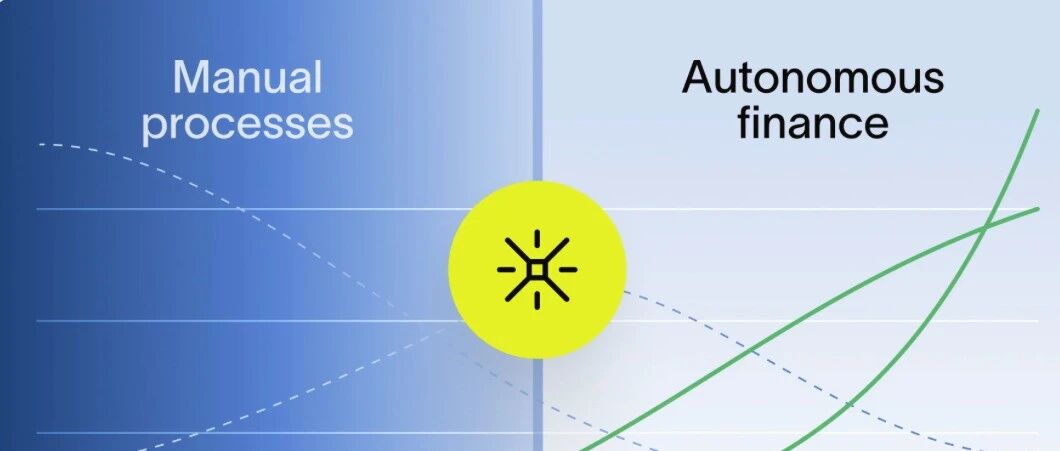
Core Viewpoint - Ramp has achieved significant milestones, including an annual revenue exceeding $1 billion and a recent funding round of $500 million led by Stripe and NVentures, raising its valuation to $22.5 billion. The company has redefined financial operations through an AI-driven platform that integrates various financial processes, creating a closed-loop system for financial management [1][3][16]. Group 1: Company Overview - Ramp was founded in 2019 by Eric Glyman and Karim Atiyeh, focusing on automating financial operations for businesses by integrating corporate cards, expense management, invoicing, procurement, travel, and treasury management into a unified financial operating system [3][4]. - As of August 2025, Ramp has over 45,000 customers, including more than 1,700 large enterprises, and has processed over $100 billion in annual procurement, saving clients $10 billion and reducing 27.5 million hours of manual work [3][16]. Group 2: Market Position and Differentiation - Ramp differentiates itself by not being a collection of standalone financial tools but rather a self-driving pipeline that integrates policy, transaction, accounting, and budgeting into a cohesive system [7][8]. - The company’s approach allows for real-time decision-making at the moment of transaction, contrasting with traditional methods that often involve lengthy approval processes [6][8]. Group 3: Technological Innovations - Ramp employs AI to automate invoice processing, achieving over 90% accuracy in key field recognition, which significantly reduces manual data entry for finance teams [9][13]. - The introduction of AI Agents aims to transition financial management from manual oversight to autonomous operations, enhancing efficiency and decision-making capabilities [12][25]. Group 4: Revenue Model - Ramp operates on a dual revenue model: interchange fees from card transactions and subscription fees for advanced features, creating a symbiotic relationship where increased customer spending leads to higher revenue for Ramp [14][16]. - This model contrasts with traditional software pricing, aligning Ramp's success with its customers' growth [14]. Group 5: Competitive Advantages - Ramp's data-driven approach creates a robust database of financial behaviors, enabling predictive analytics and anomaly detection that are difficult for competitors to replicate [18][19]. - The company has established deep integrations with various ERP, HR, and CRM systems, enhancing its operational capabilities and security standards [19][20]. Group 6: Future Vision - Ramp envisions a transition from parallel finance to autonomous finance by 2028, where financial systems will execute rules automatically, allowing finance professionals to focus on strategic roles rather than routine tasks [27][29]. - The company’s roadmap emphasizes the importance of creating a self-verifying, data-closed system that enhances operational efficiency and decision-making [30][31].
X @Bloomberg
Bloomberg· 2025-09-11 21:02
Stripe's launch of a blockchain effort called Tempo sparked fierce debate over the future of digital payments https://t.co/TXIrIQWG3L ...
X @Bankless
Bankless· 2025-09-11 19:48
The core issue with corporate chains:They can't be credibly neutral.But Stripe, Circle, and Tether are building them anyways.Will they follow the Libra roadmap and fizzle?...or is there a real place in crypto for corpochains?Full breakdown w/ @sassal0x @TrustlessState https://t.co/FqL3iNnA23 ...
Asia Morning Briefing: Native Markets Leads Early Voting for Hyperliquid’s USDH Stablecoin Contract
Yahoo Finance· 2025-09-11 01:48
Good Morning, Asia. Here's what's making news in the markets: Welcome to Asia Morning Briefing, a daily summary of top stories during U.S. hours and an overview of market moves and analysis. For a detailed overview of U.S. markets, see CoinDesk's Crypto Daybook Americas. The first signs of how validators are leaning in Hyperliquid’s hotly contested stablecoin vote are in, and the Stripe-aligned Native Markets team has an early lead. (https://www.usdhtracker.xyz/) As of Thursday morning Hong Kong time, N ...
Hyperliquid: The Biggest Crypto Projects Battling for the USDH Stablecoin
Yahoo Finance· 2025-09-10 19:28
Core Insights - Hyperliquid is experiencing significant interest from major crypto companies competing to launch the USDH stablecoin, leading to an on-chain vote by stakeholders [1][6] - Major contenders include Paxos, Sky, Frax Finance, and Ethena, with Native Markets currently positioned as the frontrunner [2] - Hyperliquid operates as a decentralized exchange on its own layer-1 network, holding approximately $5.84 billion in stablecoins, with USDC making up 94.9% of this total [3] Company and Industry Overview - Hyperliquid aims to create its own stablecoin to compete with established players like Circle's USDC and Tether's USDT, seeking to capture the lucrative yields generated by these stablecoins [4] - The Hyperliquid Foundation emphasizes that the USDH stablecoin must align with Hyperliquid's ecosystem, with proposals focusing on revenue reinvestment [5] - The eventual issuer of the USDH stablecoin is expected to gain substantial support from the Hyperliquid community, which is crucial for the token's adoption [6] Contenders for USDH Stablecoin - Native Markets is specifically established to develop the USDH stablecoin, having communicated its intentions to Hyperliquid Labs months in advance [7] - Native Markets plans to ensure compliance with the GENIUS Act, a recent U.S. legislation on stablecoins, and intends to utilize Bridge, a platform acquired by Stripe, for managing reserves [8]
Morningstar Launches Index Tracking Both Public and Private Equity Performance
Yahoo Finance· 2025-09-10 19:22
Core Insights - Morningstar has launched the Morningstar PitchBook U.S. Modern Market Index (Modern Market 100), which tracks the performance of 100 of the largest U.S. companies across public and private markets [2] - The index includes 90 publicly listed firms and 10 large venture capital-backed firms, reflecting the increasing ownership of major companies by private equity [2][4] - Over the past year, the Modern Market Index achieved returns of 28.2%, significantly outperforming the Morningstar U.S. Market Index's 16% return [3] - The index has a substantial technology sector exposure, nearly 50%, compared to about 30% in the U.S. Market Index [3] Index Structure and Methodology - The Modern Market Index allocates 90% of its weighting to the largest public companies by market capitalization and 10% to private firms, mirroring the size of public and private equity markets [4] - The index will be calculated daily, using verified transactions in the secondary market to estimate valuations of venture-backed firms, with data sourced from CapLight and Zanbato [4] - The index will undergo quarterly rebalancing and semi-annual reconstitution, with specific measures in place to account for mergers and acquisitions [6] Exclusions and Limitations - Some large venture-backed firms, such as Waymo, were excluded from the index due to limited trading activity on the secondary market, affecting their liquidity [5]

Crypto companies are fighting in a ‘Bachelor’-style frenzy to launch a stablecoin that will power DeFi’s hottest exchange
Yahoo Finance· 2025-09-10 19:16
Crypto bros are fighting over the industry’s version of The Bachelor’s final rose. Over the past week, a handful of companies, including Stripe’s Bridge and a startup connected to Paxos, have submitted proposals to launch a stablecoin on the blockchain Hyperliquid. Every suitor is eyeing the almost $6 billion in stablecoins traded on the blockchain’s biggest exchange. “Hyperliquid has grown men writing public love letters to their protocol so that they may be picked as a partner,” wrote Mert Mumtaz, CEO o ...