Prada

Search documents
千元童鞋背后的中产焦虑:泰兰尼斯的高价博弈
Xin Lang Zheng Quan· 2025-10-24 09:57
Core Insights - The article discusses the high-priced children's shoes from the brand 泰兰尼斯, which are marketed using technology narratives and anxiety marketing to appeal to a new generation of parents [1] - 泰兰尼斯 has sold over 6 million pairs of children's shoes in 2024, achieving an annual revenue exceeding 3 billion yuan, with a year-on-year growth of over 50% [1] Pricing Strategy - 泰兰尼斯's main product line, the "稳稳鞋" series, is priced between 500-1500 yuan, with popular models concentrated in the 600-800 yuan range, while the newly launched "稳跑鞋" is priced at 1499 yuan, double that of similar Nike children's shoes [2] - The pricing strategy is notably higher than mainstream brands like 基诺浦 and 江博士, which typically range from 150-300 yuan [2] - Founder 丁飞 revealed that over 80% of transactions occur within the 300-600 yuan range, still significantly above the market average [2] Marketing Strategy - 泰兰尼斯 has invested heavily in marketing since 2022, partnering with 分众传媒 for extensive advertising across over 100 cities, resulting in over 9.33 billion exposures through elevator media [3][4] - The brand's marketing strategy has effectively increased brand recognition, even among those without children [4] Technology Narrative - To justify its high prices, 泰兰尼斯 has developed a comprehensive technology narrative, featuring imported materials and specialized designs for its shoes [5] - The "稳稳鞋" incorporates an Italian Vibram anti-slip sole and a multi-density support sole tailored for toddlers, while the "稳跑鞋" includes advanced protective technologies [5] Quality Concerns - The application of carbon plate technology in children's shoes has raised concerns among medical experts regarding potential impacts on children's foot development [6] - Consumer feedback on social media indicates dissatisfaction with the anti-slip performance of 泰兰尼斯 shoes, leading to over 500 complaints regarding product quality and after-sales service [7] Business Model - 泰兰尼斯 employs a "six-stage system" to categorize children aged 0-16, offering products tailored to each developmental stage, achieving a high repurchase rate of 80-90% [8] - The company maintains a consistent pricing strategy across online and offline channels, with over 1000 stores globally, 80% of which are self-operated [9] Market Dynamics - 泰兰尼斯's high pricing strategy is being tested in a declining birth rate environment, with newborn numbers in China dropping from 18.83 million in 2016 to 9.54 million in 2024 [10] - Market trends indicate a shift towards more affordable children's shoe brands, with a noticeable increase in market share for brands priced between 100-200 yuan [10] - Sales data from platforms like 天猫 and 淘宝 show a decline in 泰兰尼斯's sales, while competitors with better cost-performance ratios are experiencing growth [10]
始祖鸟增长变难
2 1 Shi Ji Jing Ji Bao Dao· 2025-10-21 03:42
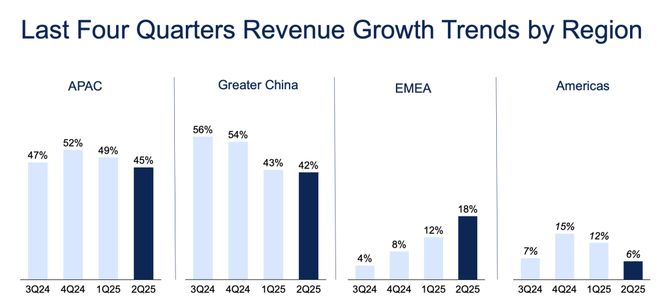
Core Viewpoint - The leadership change at Arc'teryx China reflects the company's strategic adjustments in a competitive market, with significant implications for its operations and growth in the region [1][5]. Group 1: Leadership Changes - Ivan She, the General Manager of Arc'teryx Greater China, has left the company, with Jeffery Ma temporarily taking over the role [1]. - Jeffery Ma, previously the General Manager of Zhongqiao Sports, joined Amer Sports as the Greater China President in July 2023 [1]. - This marks the second executive change in the Greater China region within a year, indicating potential instability in leadership [1]. Group 2: Market Performance - The Greater China region has become Amer Sports' largest market, with a 42% year-on-year revenue increase to $410 million (approximately 2.92 billion RMB) in Q2 [5]. - Arc'teryx is a key growth driver for Amer Sports, with its Technical Apparel segment seeing a 23% revenue increase to $510 million [5]. - The Outdoor Performance segment, primarily driven by Arc'teryx, grew by 35% to $410 million, highlighting the brand's importance in the company's overall performance [5]. Group 3: Competitive Landscape - The Chinese sports market is becoming increasingly competitive, with domestic brands like Anta and Li Ning rapidly gaining market share [10]. - The outdoor sports market in China is a focal point for competition, with Nike also expanding its presence in this segment [12]. - Arc'teryx's performance in the Chinese market is under scrutiny, especially after it did not appear on the Tmall Double 11 outdoor sales leaderboard, contrasting sharply with its previous year's performance [13]. Group 4: Strategic Adjustments - Following the acquisition by Anta, Arc'teryx has significantly expanded its market presence in China, with a focus on high-end outdoor branding [6]. - The brand has increased its store sizes and improved its retail strategy, with average store sizes growing from 217 m² to 313 m² from Q4 2020 to Q4 2023 [6]. - Despite these efforts, the company faces challenges in maintaining its market position amid rising competition and changing consumer preferences [12].

始祖鸟增长变难
21世纪经济报道· 2025-10-21 03:32
Core Viewpoint - The leadership change at Arc'teryx China reflects the company's strategic adjustments in a competitive market, with significant implications for its growth trajectory in the region [1][4]. Group 1: Leadership Changes - Ivan She, the General Manager of Arc'teryx China, has left the company, with Jeffery Ma temporarily taking over the role [1]. - Jeffery Ma, previously the General Manager of Zhongqiao Sports, joined Amer Sports in July and has a background in major brands like Belle and Adidas [1]. - This marks the second executive change in the Greater China region within a year, indicating potential instability in leadership [1]. Group 2: Market Performance - The Greater China region has become Amer Sports' largest market, with a 42% year-on-year revenue increase to $410 million (approximately 2.92 billion RMB) in Q2 [4]. - Arc'teryx is a key growth driver for Amer Sports, with its Technical Apparel segment seeing a 23% revenue increase to $510 million [4]. - The Outdoor Performance segment, primarily driven by Arc'teryx, grew by 35% to $410 million, highlighting the brand's importance in the company's portfolio [4]. Group 3: Competitive Landscape - The Chinese sports market is becoming increasingly competitive, with domestic brands like Anta and Li Ning rapidly gaining market share [8]. - In 2024, the top four brands in the Chinese sports footwear and apparel market are Nike, Anta, Li Ning, and Adidas, indicating a shift in market dynamics [8]. - The market growth is becoming more challenging, as evidenced by the financial struggles of brands like Peak, which reported significant losses in its domestic sales [9]. Group 4: Challenges Ahead - Arc'teryx is expected to close stores in China by 2025, reflecting the need for strategic repositioning amid fierce competition [10]. - The brand's absence from the Tmall Double 11 outdoor sales ranking contrasts sharply with its previous performance, suggesting a decline in market presence [10]. - The competitive environment and recent controversies may necessitate a thorough review of Arc'teryx's strategies in the Chinese market [10].

高管离职背后:始祖鸟,增长变难
2 1 Shi Ji Jing Ji Bao Dao· 2025-10-21 00:36
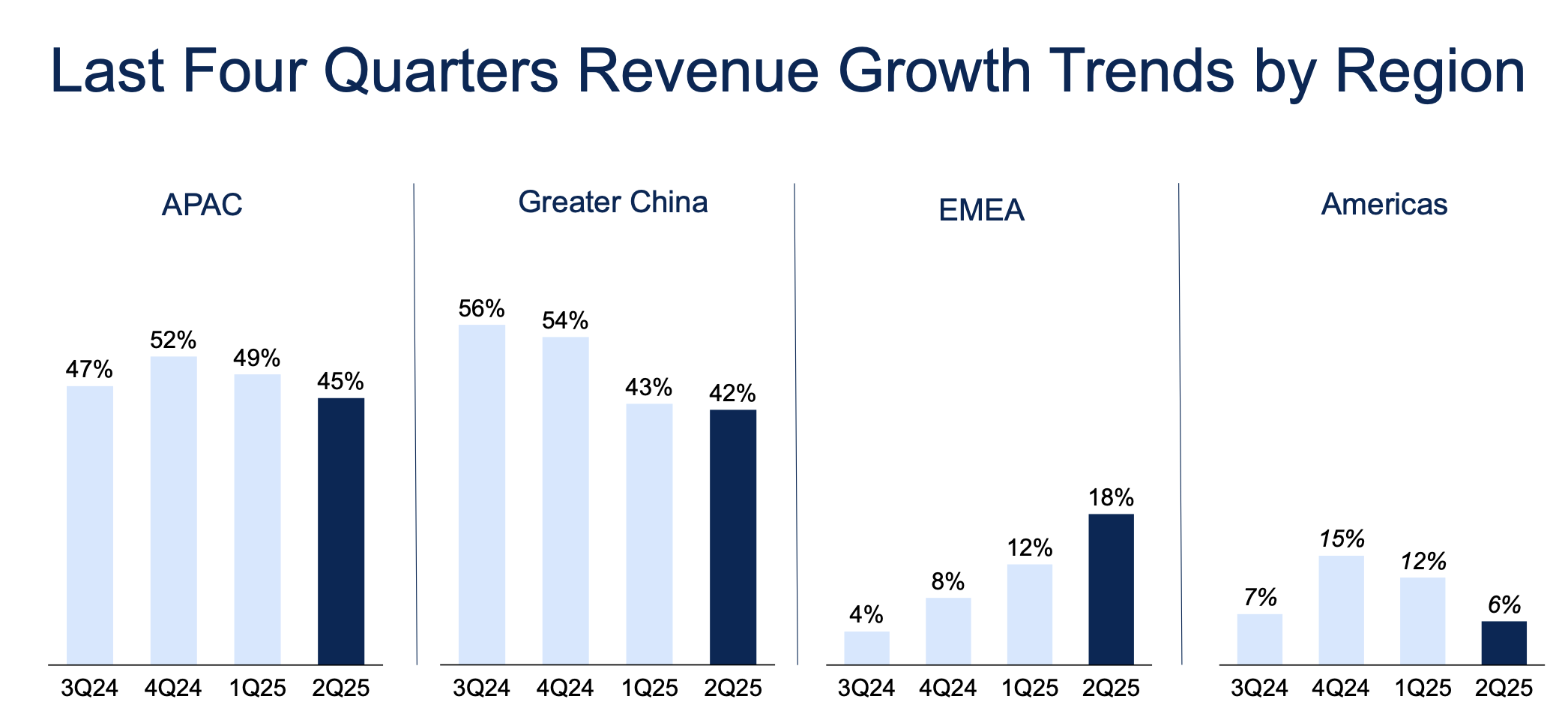
Core Insights - The Greater China region has become the largest market for Amer Sports, with a significant revenue increase of 42% year-on-year in Q2, reaching $410 million (approximately 2.92 billion RMB) [5][9] - The brand Arc'teryx is identified as a key growth driver for Amer Sports, contributing to the overall performance of the company [5][9] Financial Performance - In Q2, Amer Sports' revenue from the Greater China region grew to $410 million, while EMEA and North America saw growth rates of 18.5% and 6.3%, respectively [5] - The Technical Apparel segment, which includes Arc'teryx, reported a 23% increase in revenue to $510 million, while Outdoor Performance and Ball & Racquet segments also showed positive growth [5][6] Market Dynamics - The competitive landscape in the Chinese sports market is intensifying, with local brands like Anta and Li-Ning rapidly gaining market share [10][12] - The outdoor sports market in China is becoming a focal point for competition, with major brands like Nike increasing their focus on this segment [14] Management Changes - Ivan She, the General Manager of Arc'teryx Greater China, has left the company, and Jeffery Ma is currently acting in this role [2][3] - This marks the second executive change in the Greater China region within a year, indicating potential instability in leadership [2][3] Strategic Challenges - The high-end market, where Arc'teryx operates, is facing challenges, with luxury brands reporting mixed performance in China [13] - Amer Sports anticipates a net store closure for Arc'teryx in China by 2025, reflecting the need for strategic adjustments in response to market conditions [15][16] Consumer Behavior - Recent sales data indicates a decline in Arc'teryx's visibility in the Chinese market, as it did not appear on the Tmall Double 11 outdoor sales leaderboard, contrasting sharply with its previous performance [17][18]
高管离职背后:始祖鸟,增长变难丨消费快评
2 1 Shi Ji Jing Ji Bao Dao· 2025-10-21 00:33
Core Insights - The leadership change at Arc'teryx China, with Ivan She leaving and Jeffery Ma stepping in as interim manager, reflects ongoing adjustments within Amer Sports' management structure in the Greater China region [1][4] - The Greater China market has become the largest for Amer Sports, with a significant revenue increase of 42% year-on-year in Q2, reaching $410 million (approximately 2.92 billion RMB) [4][6] - Arc'teryx has been a key growth driver for Amer Sports, with its Technical Apparel segment seeing a 23% revenue increase to $510 million [4][6] Company Performance - Arc'teryx's revenue in China has shown remarkable growth, with a compound annual growth rate (CAGR) of 58% from 2019 to 2022 [6] - The brand's global revenue CAGR exceeded 30% from 2020 to 2022, indicating strong overall performance [6][7] - The average store size for Arc'teryx in China increased from 217 m² to 313 m² between Q4 2020 and Q4 2023, reflecting a strategic focus on premium retail locations [5] Market Dynamics - The competitive landscape in China's sports market is intensifying, with domestic brands like Anta and Li Ning rapidly gaining market share [8][9] - The outdoor sports market is becoming a focal point for competition, with major brands like Nike increasing their presence [10][11] - Recent sales data indicates a decline in Arc'teryx's visibility in the market, as it did not appear on the Tmall Double 11 outdoor sales leaderboard, contrasting sharply with its previous performance [15][16] Strategic Challenges - Amer Sports is expected to close stores in China by 2025, indicating a need for strategic repositioning in response to market pressures [13][14] - The high-end market, where Arc'teryx operates, is facing challenges, with luxury brands reporting mixed performance in China [10][11] - The company must reassess its strategies in the Chinese market to address competitive pressures and changing consumer preferences [16]
LVMH集团财报发布后,全球奢侈品上市公司市值一日增加700亿美元以上!
Sou Hu Cai Jing· 2025-10-16 14:40
Core Insights - LVMH reported a resilient performance in Q3, with organic revenue growth of 1% year-on-year, reversing the decline seen in the first half of the year, particularly in the fashion and leather goods segment, which saw a reduced decline of 2% [1] - The Chinese market returned to positive growth, exceeding market expectations, as analysts had predicted flat overall sales and a 4% decline in the fashion and leather goods segment [1] - Following the earnings report, LVMH's stock surged by 12.22% to €597.9 per share, boosting its market capitalization to nearly €300 billion, reaffirming its position as the world's most valuable luxury goods company [1] Industry Performance - The stock prices of luxury goods companies rose significantly, with 25 out of 27 luxury stocks tracked by the "Huazhi Luxury Goods Index" increasing on October 15, 2023, and a total market value increase of nearly $70 billion [3][4] - Notable stock price increases included LVMH at 12.2%, Hermès at 7.4%, and Richemont at 6.3% [4] Analyst Perspectives - Analysts noted that the luxury goods sector has seen renewed interest from capital markets, with the sector experiencing a recovery for three consecutive months [5] - Bernstein analysts indicated that LVMH's performance reflects a combination of self-rescue measures and slightly positive demand from China, suggesting a potential U-shaped recovery [7] - RBC Capital Markets analysts rated LVMH stock as outperforming the market, highlighting stronger-than-expected organic revenue growth for Q3 2025 and a constructive outlook for the soft luxury segment in 2026 [7] - DWS's portfolio manager remarked that the sales data provided positive surprises for investors, likely sustaining upward momentum in the sector [7] Cautionary Notes - Some analysts cautioned against prematurely declaring a full industry rebound, with Jefferies questioning whether LVMH's early signs of recovery could be misinterpreted as a broader industry revival [8] - UBS projected a 4% organic growth in global luxury goods sales for the following year, with acceleration expected only in the second half of 2026 as new creative directors' collections begin to hit stores [8] Wealth Impact - Bernard Arnault's family wealth increased significantly, rising by $19.1 billion to $179.9 billion, making him the seventh richest person globally and the wealthiest non-American [8]
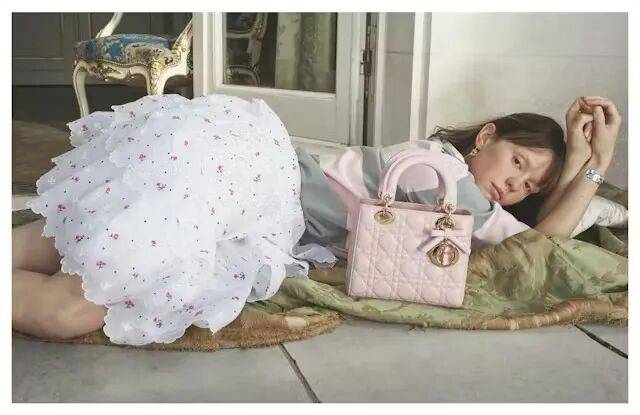
Following LVMH, Luxury Sector Shares Move Higher
Yahoo Finance· 2025-10-15 20:43
Core Insights - LVMH's organic sales returned to growth with a 1% increase in the third quarter, signaling a potential recovery in the luxury market [1] - LVMH's stock surged by 12.2% to 597.90 euros, resulting in a market capitalization exceeding 300 billion euros [2] - Analysts view LVMH's performance as a positive turning point, addressing structural issues while managing costs [3] Sales and Market Performance - The luxury sector saw a collective rise in stock prices, with notable gains from Salvatore Ferragamo (up 7.8%), Moncler (up 7.8%), Prada (up 7.7%), Hermès International (up 7.4%), Compagnie Financière Richemont (up 6.3%), and Kering (up 4.8%) [4] - The overall investor sentiment improved, although one day of positive performance does not guarantee a sector-wide recovery [4] Consumer Trends and Regional Insights - LVMH's fashion and luxury goods division benefited from improved local spending in China (growing mid-single to high-single digits), as well as from American, Southeast Asian, and Middle Eastern consumers [5] - The turnaround at Tiffany is showing positive results, alongside improvements in traffic and basket size at Sephora [5] Leadership and Creative Direction - LVMH is experiencing a shift in creative leadership, with new appointments at key brands such as Dior, Fendi, and Loewe [5]
LVMH Sees Sales Turnaround in China as French Luxury Group Returns to Growth
Bloomberg Television· 2025-10-15 05:56
LVMH has unexpectedly returned to growth in the third quarter. For more, let's bring in Bloomberg's Angelina Katz, joining us from Paris with the details on what then has fueled the growth of LVMH this quarter. Is it likely to be sustained.Hi there, Tom. Indeed. What was interesting is that all the divisions beads, including the key fashion, the leather goods one I mean, that one was still negative.But what was interesting, as explained by the CFO of LVMH, was that it was driven by it's improving things to ...

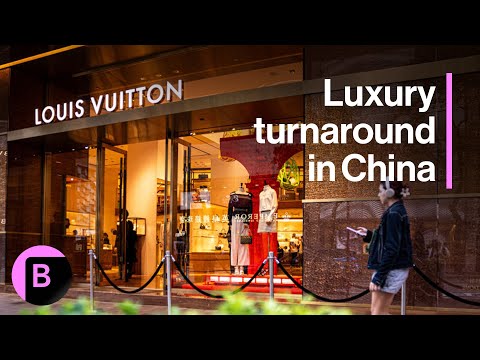
LVMH Sees Sales Turnaround in China as French Luxury Group Returns to Growth
Youtube· 2025-10-15 05:56
Core Insights - LVMH has unexpectedly returned to growth in the third quarter, driven by increased traffic and volume rather than price effects [1][2] - The Wines and Spirits division, which had been declining for two and a half years, is now experiencing growth due to champagne restocking in the US and solid demand for rosé wine [2] - The luxury sector may benefit from LVMH's turnaround, with competitors like Zenyatta and Prada also showing positive movements in the market [4][5] Company Performance - All divisions of LVMH showed improvement, although the key fashion and leather goods division remained negative [1] - The CFO noted that the growth was not influenced by price increases, indicating a focus on volume and customer traffic [2] - The Wines and Spirits division's recovery is notable, particularly in the US market, despite ongoing struggles in the cognac segment [2] Regional Insights - The European market has seen a decline in tourism spending, attributed to a weaker dollar against a stronger euro, impacting sales negatively [3] - Conversely, the mainland China market has returned to growth, which could have significant implications for the broader luxury sector [3][4] - Hong Kong and Macao are still down but showing signs of improvement, indicating a potential recovery in these regions [3] Market Implications - The positive performance of LVMH could uplift the entire luxury market, as indicated by the rising stock prices of competitors [4][5] - Upcoming results from other luxury brands, including Kering and Gucci, are anticipated, which may further reflect the industry's recovery [5] - The market sentiment appears encouraging, suggesting a potential turnaround for the luxury sector as a whole [5]