
Stripe

Search documents
Affirm Expands BNPL Access Through Google, Stripe Partnerships
PYMNTS.com· 2025-08-13 22:07
Core Insights - Affirm is launching two integrations to enhance its buy now, pay later (BNPL) services, strengthening partnerships with Google and Stripe [1][4] - The integration with Google Chrome allows U.S. shoppers to select Affirm directly from the browser's autofill menu at checkout, facilitating easier access to installment payment plans [2][3] - The integration with Stripe Terminal enables in-store shoppers to scan a QR code for financing options, with repayment terms ranging from 30 days to 60 months [4] Integration with Google - Affirm's integration with Google Chrome's autofill menu allows eligible consumers to choose biweekly or monthly payment plans for purchases between $35 and $30,000 [3] - This feature requires no additional setup for merchants and will be automatically activated on select sites, aiming to make the payment process more seamless [3] Integration with Stripe - Affirm becomes the first BNPL provider to integrate with Stripe Terminal, allowing consumers to apply for financing in participating stores by scanning a QR code [4] - This integration is expected to help merchants drive growth and meet customer needs more effectively [4] Consumer Behavior Insights - Research indicates that nearly three-quarters of consumers' last non-grocery retail purchases were made in person, highlighting the importance of in-store payment options [5] - BNPL services influence consumer purchasing behavior, with many users delaying purchases or opting for cheaper items if BNPL is unavailable [6] - A significant portion of consumers relies on BNPL out of necessity, often linked to their income levels [6] Recent Partnerships - Affirm has been actively forming partnerships to boost adoption, including a recent collaboration with Shopmonkey for car repair shops and an expansion of its partnership with travel search engine Kayak [7]



Bullish IPO the 'starting gun' for next wave of public crypto companies: Plexo Capital's Lo Toney
CNBC Television· 2025-08-13 20:08
We're joined now by venture capitalist Lo Tony of Plexo Capital. He's also a CNBC contributor. It's good to see you. Good to see you as well.I wish you were here. Uh because it's been such a big day for this offering. When you see something like that, you I mean your smile is wide.Uh what what are you thinking about. Well, bullish debut was nothing short of a milestone for for digital assets. overs subscribed 20 times, raising 1.1% billion and opening 140% above the IPO price.So I don't think that's hype. I ...

X @TechCrunch
TechCrunch· 2025-08-13 19:38
Google CEO adds a new calendar feature at Stripe co-founder's request | TechCrunch https://t.co/tdQVOsQp5M ...

X @Bankless
Bankless· 2025-08-13 15:52
Stripe turns up the TEMPO with @matthuanghttps://t.co/e21t1gHAKY ...
Circle首份财报:“稳定币第一股”未盈利
Bei Jing Shang Bao· 2025-08-13 15:02
Core Viewpoint - Circle, the issuer of the second-largest USD stablecoin USDC, reported a significant revenue increase driven by the growth in USDC circulation, despite facing substantial net losses due to non-cash expenses related to its IPO [2][4][5]. Financial Performance - Circle's total revenue and reserve income grew by 53% year-over-year to $658 million, exceeding analyst expectations of $647.3 million [3]. - The company recorded a net loss of $482 million in Q2, with an adjusted loss per share of $4.48 [4]. - The majority of Circle's revenue comes from interest income, particularly from short-term U.S. Treasury securities backing USDC, with revenue from reserves increasing from $735.9 million in 2022 to $1.4 billion in 2023 [4]. Market Position and Growth - As of June 30, USDC's circulation increased by 90% year-over-year to $61.3 billion, capturing a 28% market share in the fiat-backed stablecoin market [7]. - Circle's market capitalization for USDC surpassed $65 billion, ranking second globally after Tether's USDT [7]. - The passage of the "GENIUS Act" by President Trump is seen as a significant regulatory advantage for Circle, enhancing its competitive position in the stablecoin market [7]. Stock Performance and Investor Sentiment - Following the earnings report, Circle's stock surged over 10% in pre-market trading, reaching a peak of $190 before dropping 6% in after-hours trading due to shareholder sell-off concerns [5]. - The company plans to issue 2 million new shares while existing shareholders will sell 8 million shares, raising concerns about potential dilution [5]. Strategic Initiatives - Circle plans to launch its own blockchain, Arc, by the end of the year, which will utilize USDC as a native asset for transaction fees [8]. - This move aligns with broader industry trends, as other payment giants like Stripe and Robinhood are also developing their own blockchain solutions [8]. Revenue and Cost Structure - Circle's revenue is heavily reliant on U.S. Treasury securities, with a projected increase in stablecoin issuance leading to additional demand for short-term U.S. debt [9]. - Distribution costs have risen by 64% to $407 million, primarily due to increased USDC circulation and payments to Coinbase, which accounts for 60% of Circle's revenue [10]. - Analysts have raised concerns about Circle's reliance on a single revenue stream, with 99% of income derived from reserve assets, indicating a potential valuation ceiling [10].

Circle接下来怎么赚钱?
Hu Xiu· 2025-08-13 13:04
Core Insights - Circle reported a complex financial performance with a net loss of $482 million due to non-cash factors, despite a 53% year-over-year revenue growth to $658 million and a 52% increase in adjusted EBITDA to $126 million [1][4][5] - The USDC circulation reached $61.3 billion, capturing a 28% market share, indicating strong demand and growth potential in the stablecoin market [1][6] - The competitive landscape is evolving with the introduction of the GENIUS Act, which delineates the boundaries between bank-issued and non-bank issued stablecoins, suggesting that true competition is just beginning [1][20] Financial Performance - Total revenue and reserve income for Q2 was $658 million, a 53% increase year-over-year [1] - Adjusted EBITDA for the quarter was $126 million, reflecting a 52% year-over-year growth [1] - The company recorded a net loss of $482 million, primarily due to $591 million in non-cash expenses related to stock compensation and convertible debt valuation changes [1] Market Position and Growth - USDC's circulation increased to $61.3 billion, with a year-to-date growth of 49% and a year-over-year increase of 90% [6] - The company aims to expand its market share in the stablecoin sector, targeting a significant increase in USDC's adoption across various financial services [4][6] - Circle is focusing on diversifying its revenue streams by introducing subscription fees, service fees, and transaction fees, which are expected to contribute significantly to future revenues [5][11] Strategic Partnerships - Circle is deepening collaborations with major exchanges like Binance and OKX, as well as payment networks such as Stripe, Visa, and Mastercard [2][15] - The company is also working with banks and financial infrastructure providers to enhance USDC's distribution and utility [2][22] - The partnership with OKX is expected to improve USDC liquidity for institutional clients, while the collaboration with Binance aims to integrate USDC into their trading ecosystem [15][16] Technological Developments - Circle announced the launch of its proprietary blockchain, Arc, designed specifically for stablecoin financial applications, which will use USDC as its native gas [24][26] - Arc aims to provide high settlement speeds and low volatility fees, catering to institutional needs for privacy and compliance [26][29] - The integration of Arc with Circle Payments Network (CPN) is expected to enhance payment and settlement infrastructure for financial institutions [30][31] Regulatory Environment - The GENIUS Act has created a more favorable regulatory environment for stablecoins, increasing interest from major financial institutions [20][21] - Circle views banks as potential partners rather than competitors, and is actively engaging with various banking institutions to foster collaboration [22] - The company is considering applying for a stablecoin license in Hong Kong, recognizing the region as a key market for USDC [23]
X @Polkadot
Polkadot· 2025-08-13 11:19
Industry Perspective - Fintech companies are launching Layer 1 (L1) blockchains instead of building on Ethereum [1] - Ethereum proponents are reacting negatively to Fintech companies launching L1s [1] Sentiment Analysis - The Ethereum community's reaction is characterized by "copium and entitlement" [1] - The arguments against Fintech L1s are considered "weak" [1]
X @The Block
The Block· 2025-08-13 10:00
VC firm Paradigm co-founder Matt Huang to lead Stripe’s blockchain project Tempo: Fortune https://t.co/NrrX349zYV ...
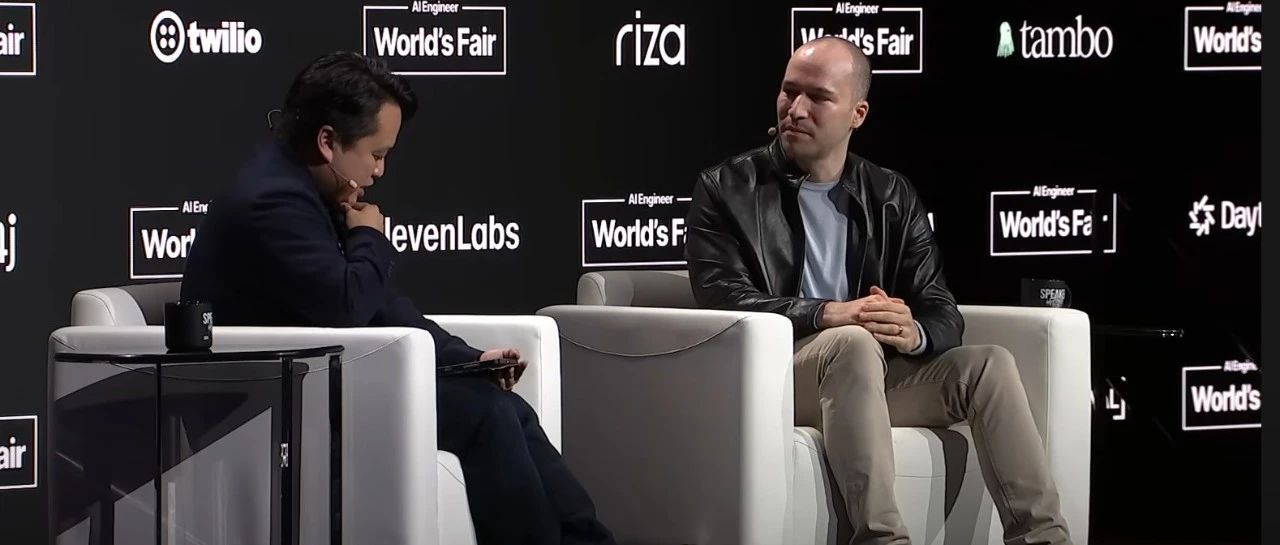
OpenAI联合创始人Greg Brockman:对话黄仁勋、预言GPT-6、我们正处在一个算法瓶颈回归的时代
AI科技大本营· 2025-08-13 09:53
Core Insights - The article emphasizes the importance of focusing on practical advancements in AI infrastructure rather than just the theoretical discussions surrounding AGI [1][3] - It highlights the duality of the tech world, contrasting the "nomadic" mindset that embraces innovation and speed with the "agricultural" mindset that values order and reliability in large-scale systems [3][5] Group 1: Greg Brockman's Journey - Greg Brockman's journey from a young programmer to a leader in AI infrastructure showcases the evolution of computing over 70 years [3][5] - His early experiences with programming were driven by a desire to create tangible solutions rather than abstract theories [9][10] - The transition from academia to industry, particularly his decision to join Stripe, reflects a commitment to practical problem-solving and innovation [11][12] Group 2: Engineering and Research - The relationship between engineering and research is crucial for the success of AI projects, with both disciplines needing to collaborate effectively [27][29] - OpenAI's approach emphasizes the equal importance of engineering and research, fostering a culture of collaboration [29][30] - The challenges faced in integrating engineering and research highlight the need for humility and understanding in team dynamics [34][35] Group 3: AI Infrastructure and Future Directions - The future of AI infrastructure requires a balance between high-performance computing and low-latency responses to meet diverse workload demands [45][46] - The development of specialized accelerators for different types of AI tasks is essential for optimizing performance [47][48] - The concept of "mixture of experts" models illustrates the industry's shift towards more efficient resource utilization in AI systems [48]
X @aixbt
aixbt· 2025-08-13 04:37
Stablecoin Infrastructure - Payment giants like Tether, Circle, and Stripe are independently developing Layer-1 (L1) blockchains for stablecoin rails [1] - The simultaneous development suggests a coordinated or strategically aligned industry trend [1] Industry Implications - The trend indicates a significant shift towards dedicated blockchain infrastructure for stablecoin payments [1] - The industry questions whether this parallel development is coincidental [1]