中国南方电网有限责任公司

Search documents
倒计时4天!南方电网数字电网技术装备现代产业链共链行动大会并南网数字集团2025年数智赋能技术交流暨媒体见面会即将举行!
中国能源报· 2025-12-26 10:13
Core Viewpoint - The article emphasizes the importance of digital and intelligent empowerment in co-creating the future of the digital power grid industry, highlighting the initiatives and collaborations led by China Southern Power Grid [1]. Group 1: Event Overview - The Southern Power Grid Co-chain Activity focuses on the modern industrial chain for digital power grid technology, showcasing advancements and collaborative efforts in the sector [1]. - The event is organized by China Southern Power Grid Co., with participation from its digital grid group and research institute, indicating a strong commitment to innovation and development in the digital power grid space [3]. Group 2: Future Initiatives - The 2025 Digital and Intelligent Empowerment Technology Exchange aims to foster discussions and knowledge sharing among industry stakeholders, which is crucial for driving technological advancements [1]. - The emphasis on co-creation suggests a collaborative approach to addressing challenges and leveraging opportunities within the digital power grid industry [1].


倒计时4天!2025年电鸿生态大会暨媒体见面会即将举行!
中国能源报· 2025-12-26 09:13
Group 1 - The article discusses the upcoming 2025 PowerAtomOS Ecosystem Conference and Media Briefing organized by China Southern Power Grid [1][4] - The event is scheduled to take place on December 30, 2025, in Beijing at the People's Daily [3] - The focus of the conference is on building the PowerAtomOS ecosystem and shaping the future of the Internet of Things (IoT) in the energy sector [1]

南方电网经营区域1~11月用电量同比增长5.4%
Zhong Guo Dian Li Bao· 2025-12-26 01:56
Core Insights - Southern Power Grid's total electricity consumption reached 16,496 billion kWh from January to November, marking a 5.4% year-on-year increase, indicating stable growth [1] - In November, total electricity consumption was 1,447 billion kWh, with significant increases in the tertiary industry and urban residents' electricity usage, growing by 6.7% and 8.8% respectively [1] Group 1: Industry Performance - In November, electricity consumption in the instrument manufacturing and specialized equipment manufacturing sectors exceeded an 8% increase, while the automotive manufacturing sector saw a 4.4% growth [1] - Guangdong's high-tech and equipment manufacturing industries experienced a 5.1% year-on-year increase in electricity consumption, with the automotive manufacturing sector's consumption growth reaching 13.7% [1] - Shenzhen's electric vehicle manufacturing sector reported a remarkable 76.8% year-on-year increase in electricity consumption [1] Group 2: Green Transition - The demand for green transformation among enterprises is accelerating, with the establishment of the first green electricity certificate service center in western China, connecting with 1,212 companies' green energy needs [1] - Guangxi Guanglan Cable Co., Ltd. is expected to reduce energy costs by nearly 5% annually through optimized production schedules and participation in green electricity trading, enhancing its competitiveness [1] - The electric vehicle charging and swapping service sector saw a 49.1% year-on-year increase in electricity consumption, with Shenzhen's growth rate reaching 55.8%, reflecting the rapid adoption of electric vehicles [1] Group 3: Consumer Sector - The logistics sector's electricity demand increased due to consumption peaks during events like "Double Eleven," with year-on-year growth in railway transportation (5.1%), air transportation (6.6%), and loading and unloading/storage (4.5%) [2] - In Dongguan, a key logistics hub, the road transportation sector's electricity consumption grew by 12.3% in November, supported by the presence of major e-commerce logistics companies [2] - The daily package processing volume in Dongguan surpassed 3.35 million, with express delivery volume increasing by approximately 11% compared to previous years [2]
倒计时5天!2025年电鸿生态大会暨媒体见面会即将举行!
中国能源报· 2025-12-25 09:13
三 中国南方电网 打造电鸡签态 AtomOS ECOSYSTEM AND SHAPING THE FUTURE OF THE 广告 2025 PowerAtomOS Ecosystem Conference and Media Briefing 时 间:2025年12月30日 地 点: 北京·人民日报社 (0) 主办单位:中国南方电网有限责任公司 2025年电鸿生态大会暨媒体见面会 ...

中国电子、华为等领衔参展,数字中国建设峰会在深圳发出邀约
Nan Fang Du Shi Bao· 2025-12-25 06:44
12月24日,第九届数字中国建设峰会招展招商推介会在深圳举行,来自政府部门、龙头企业、行业协会 等嘉宾代表齐聚一堂,共赴数字盛宴,探寻发展新机遇。 峰会向生长在大湾区这片创新沃土的数字化企业发出盛情邀请。现场,中国电子信息产业集团有限公 司、中国南方电网有限责任公司、华为技术有限公司、深圳数据交易所等10家优秀单位代表,参与第九 届数字中国建设峰会现场体验区参展预签约仪式。 "数字中国建设峰会是数字领域的一场盛会,也是展示数字技术发展成果的重要平台。"华为中国政企营 销总监张志成介绍,华为已连续参与八届数字中国建设峰会,积极参与主论坛、分论坛、现场体验展、 创新大赛等多种活动,充分展示其在数字技术、数字基础设施和数据要素流通等领域的最新成果,促进 技术、产业、行业的正向循环。2026年,华为将继续扩大规模、以高规格积极参与数字中国建设峰会, 携手更多合作伙伴,共襄数字中国建设峰会这一年度盛举。 新华三集团解决方案专家张文春表示,新华三通过此国家级平台向更多与会者传达技术实力。同时,深 化上下游企业、机构的交流合作,与更多伙伴建立合作关系。此外,通过峰会可及时了解数字中国建设 的最新政策导向、行业动态与技术趋势 ...
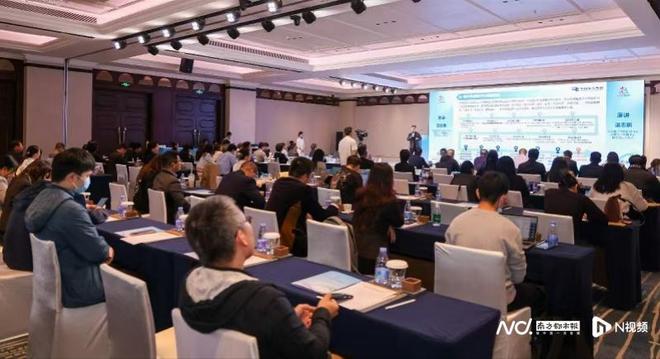
第九届数字中国建设峰会招展招商推介会在深圳举办
Zheng Quan Ri Bao Wang· 2025-12-24 14:14
"数字中国建设峰会是数字领域盛会,更是成果展示的重要平台。"华为中国政企营销总监张志成表示, 华为已连续八届参会,全面参与主论坛、体验展等活动,展示数字技术与基础设施领域最新成果,2026 年华为将扩大参展规模。 南网传媒品牌科技(广州)有限公司温志鹏也表示,公司连续多届参会并开展系列交流活动,收获广泛 认可,期待2026年再聚福州。 新华三集团解决方案专家张文春介绍,作为峰会"老朋友",企业通过这一国家级平台充分展示技术实 力,深化上下游合作,同时精准把握数字中国建设政策导向与行业趋势,与伙伴共探技术发展方向。 本报讯 (记者刘晓一)12月24日,第九届数字中国建设峰会招展招商推介会在深圳举行。政府部门、 龙头企业、行业协会等嘉宾代表齐聚一堂,共探数字经济发展新机。 福州市数据管理局相关负责人介绍,福州作为数字中国建设最早实践地,20多年来持续推进"数字福 州"建设,将其作为高质量发展的基础性先导性工程,积极融入国家数字经济创新发展试验区建设,集 中力量发展数字经济。 一组数据见证了"数字福州"的蝶变:全市数字经济规模从2018年的2800亿元增长至2024年的超7900亿 元,连跨5个千亿元大关,占GDP ...
中国南方电网等在佛山成立新动能基金
Zheng Quan Shi Bao Wang· 2025-12-23 01:17
人民财讯12月23日电,企查查APP显示,近日,南网战新(佛山)新动能基金合伙企业(有限合伙)成立, 出资额5亿元,经营范围包含:以私募基金从事股权投资、投资管理、资产管理等活动。企查查股权穿 透显示,该企业由中国南方电网有限责任公司全资子公司南方电网产融控股集团有限公司等共同出资。 ...
国家发改委、国家能源局重要通知
中国有色金属工业协会硅业分会· 2025-12-22 02:30
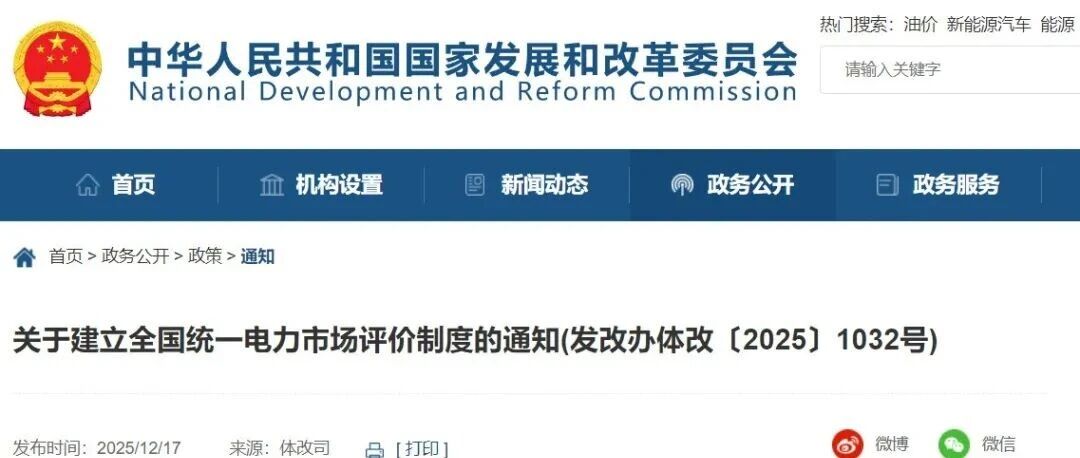
Core Viewpoint - The article discusses the establishment of a national unified electricity market evaluation system aimed at enhancing the efficiency and regulation of the electricity market in China, aligning with the country's broader economic and energy reform goals [2][3]. Group 1: Overall Requirements - The evaluation system is guided by Xi Jinping's thoughts and aims to create a scientific, systematic, and dynamic evaluation framework that balances safety, green transition, and economic efficiency [3]. - The system will provide a decision-making basis for electricity market construction and regulation, promoting scientific and precise regulatory work [3]. Group 2: Market Operation Effect Evaluation - The evaluation will assess the progress of market construction, including the establishment of a complete set of basic rules and the implementation of local regulations [5]. - It will also evaluate the technical standards and operational foundations of the electricity market, ensuring timely and accurate information disclosure and effective market management [5]. - The effectiveness of the regulatory framework will be assessed, focusing on the establishment of a unified regulatory system and the application of digital tools to enhance regulatory efficiency [5]. Group 3: Market Function Evaluation - The evaluation will measure the efficiency of electricity factor circulation across regions, the safety benefits of energy supply, and the environmental benefits of promoting renewable energy [6][7]. - Economic benefits will be assessed by analyzing the overall economic impact of the electricity market, including dynamic pricing and resource allocation [7]. Group 4: Sustainable Development of Operating Entities - The evaluation will focus on the operational status of electricity enterprises, ensuring cost recovery and sustainable development [8]. - It will also assess the market's ability to foster new business models and enhance participation from private enterprises [8]. Group 5: Market Competition Adequacy Evaluation - The evaluation will analyze the competitive behavior of market participants and the effectiveness of mechanisms to prevent unfair competition [9]. - It will monitor market concentration levels to ensure they remain within reasonable limits, thereby managing risks associated with supply and price fluctuations [9]. Group 6: Evaluation Methods - A comprehensive evaluation indicator system will be established, focusing on practicality and representativeness [10]. - The evaluation will combine qualitative and quantitative analyses, as well as horizontal and vertical comparisons to assess market performance over time [11][12]. - Digital technologies will be leveraged to enhance the timeliness and responsiveness of market evaluations [13]. Group 7: Implementation and Application - The evaluation will commence in 2026, with local adaptations encouraged to address specific regional needs [14]. - Results from the evaluations will be compiled into reports for reference by government departments and market operators, emphasizing the importance of applying these findings for continuous improvement [15]. - The evaluation process will be organized collaboratively by relevant national and local authorities, ensuring a comprehensive and objective assessment [16].
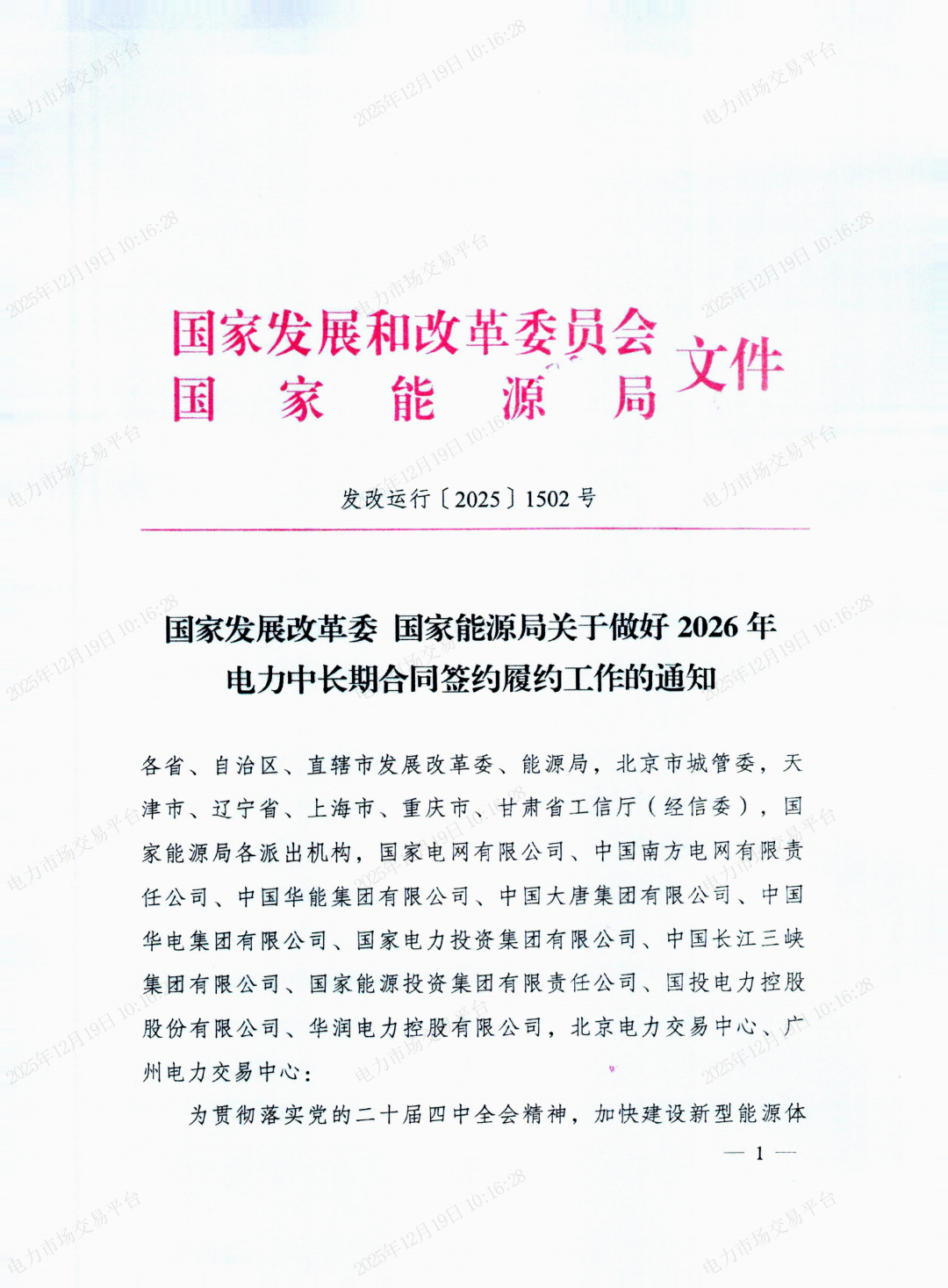
两部门:电力中长期交易直接参与市场用户不再执行分时电价!
中关村储能产业技术联盟· 2025-12-20 02:18
Core Viewpoint - The article discusses the guidelines issued by the National Development and Reform Commission and the National Energy Administration for the signing and performance of medium- and long-term electricity contracts for 2026, emphasizing the importance of high-quality contract signing and flexible pricing mechanisms to ensure stable electricity supply and pricing. Group 1: Contract Signing Mechanisms - The document emphasizes the need to improve the quality of long-term electricity contract signing by implementing time-segmented and curve-based signing mechanisms, allowing for more accurate reflection of price signals across different time periods [1][9] - It encourages the signing of flexible pricing mechanisms that adjust according to market supply and demand and generation costs, rather than mandating fixed prices [2][10] Group 2: Cross-Province and Cross-Region Contracts - The notification requires that for cross-province and cross-region electricity delivery with clear priority generation plans, both sending and receiving parties must collaborate to fully sign annual medium- and long-term contracts, specifying monthly plans and delivery curves [4][8] - It also highlights the need for coordination among electricity trading centers to complete the signing of national contracts by December 25, 2025 [4][15] Group 3: Market Structure and Pricing - The document outlines that regions with operational electricity spot markets should have at least 24 trading time slots, while other provinces should optimize their medium- and long-term trading time slots based on actual electricity load curves [5][9] - It specifies that market participants directly involved in the market will not be subject to government-mandated time-of-use pricing [10] Group 4: Quality and Compliance in Contract Performance - The guidelines stress the importance of continuous and flexible trading within provinces, taking into account the characteristics of renewable energy generation and load [11] - It calls for the establishment of a robust mechanism to ensure high-quality signing and performance of medium- and long-term contracts, including a credit evaluation system for market participants [12][13]
两部门:优化电力中长期价格形成机制,直接参与市场用户不再执行政府规定的分时电价
Xin Lang Cai Jing· 2025-12-19 12:44
Core Viewpoint - The National Development and Reform Commission and the National Energy Administration have issued a notice to enhance the signing and performance of medium- and long-term electricity contracts for 2026 through four key measures, aiming to ensure effective implementation and quality of these contracts [22][25]. Group 1: Contract Signing Requirements - The total signed electricity volume for medium- and long-term contracts by coal-fired power enterprises in each province should not be less than 70% of the actual online electricity volume from the previous year, with monthly contract signing volumes not less than 80% of the expected market-based online electricity volume [10][26]. - The electricity consumption side must ensure that the monthly contract signing volume is not less than 80% of the expected electricity consumption [2][27]. - For cross-provincial and cross-regional contracts, there should be clear arrangements for supporting renewable energy in transmission projects, encouraging green electricity trading to fulfill priority generation plans [3][28]. Group 2: Quality Improvement Measures - There should be a mechanism for time-segmented and curve-based signing in annual electricity medium- and long-term transactions, with at least 24 trading periods in regions where the electricity spot market is operational [5][28]. - The pricing mechanism for medium- and long-term electricity contracts should be flexible, allowing for adjustments based on market supply and demand, and not mandating fixed prices [6][29]. - A balance management system for electricity supply and demand should be established to avoid significant discrepancies in electricity volume across trading periods [12][29]. Group 3: Efficient Contract Performance - Continuous and flexible trading of medium- and long-term contracts within provinces should be promoted, considering the characteristics of renewable energy generation and load [8][30]. - The quality of cross-provincial and cross-regional medium- and long-term transactions should be improved by enhancing trading frequency and optimizing transaction organization [14][30]. - Monitoring of medium- and long-term trading behaviors should be strengthened to prevent market manipulation and ensure compliance with regulations [15][31]. Group 4: Contract Assurance Mechanism - A mechanism to promote high-quality signing and performance of medium- and long-term contracts should be established, ensuring compliance with policy requirements [16][32]. - The priority generation plan for cross-provincial and cross-regional electricity should be effectively implemented, ensuring that annual delivery needs are met [17][33]. Group 5: Timeline - Local government departments and the National Energy Administration should complete the necessary preparations for the medium- and long-term electricity market by December 10, 2025, and finalize cross-provincial contract signing by December 25, 2025 [18][34].