Geely

Search documents
中国电动汽车落后者正迎头赶上,供应链受关注-China EV Tracker EV laggards playing catch up, supply chain in focus
2025-09-22 01:00
Summary of the Conference Call Transcript Industry Overview - The focus is on the Electric Vehicle (EV) industry in China, highlighting the competitive landscape and supply chain dynamics [1][7]. Key Points and Arguments Market Dynamics - **Consolidation Pause**: The top 10 players in the EV market have seen their market share decrease to 76% in the first eight months of 2025, down from 78% in 2024, indicating a pause in industry consolidation [2][10]. - **Emerging Competitors**: EV laggards are gaining traction with new car launches and aggressive pricing strategies. For instance, SAIC's H5 model, priced at RMB169.8k, received over 50,000 orders within 18 hours of its launch [2][7]. Supply Chain Focus - **Battery Pricing Trends**: A potential turning point in battery pricing is anticipated between the second half of 2025 and the first half of 2026, with some energy storage system (ESS) battery products already showing price improvements [3][7]. - **Demand Surge**: Strong domestic demand for ESS batteries, following the cancellation of a mandatory storage policy, along with increasing orders from international markets, is expected to support both volume and pricing in the upcoming quarters [3][7]. Autonomous Driving Development - The development of autonomous driving technology is accelerating, with more Level 3 (L3) functions being rolled out and Level 4 (L4) Robotaxi commercialization becoming feasible due to technological advancements and supportive policies [3][7]. Stock Highlights - **Preferred Suppliers**: In light of weak auto demand and intense competition, the preference is for resilient suppliers over original equipment manufacturers (OEMs). Key stocks include: - **CATL A/H**: Strong earnings and overseas expansion outlook [4][7]. - **REPT**: Expected profitability turnaround in FY25 due to rising shipments and utilization [4][7]. - **Horizon Robotics**: Benefiting from the acceleration of autonomous driving among OEMs [4][7]. - **Geely**: Gaining market share in EVs with a strong product pipeline [4][7]. Market Share Insights - The EV market is characterized by a long tail of competition, with 50 brands vying for the remaining 24% of the market share [9][10]. Additional Insights - **Discount Levels**: The discount level for EVs in China slightly increased to 10.7% in August 2025, while ICE vehicles saw a decrease to 22.9% [27][29]. - **Battery Installations**: China's EV battery installations increased by 33% year-on-year in August 2025, indicating robust growth in the sector [47][49]. - **LFP Market Share**: Lithium Iron Phosphate (LFP) batteries accounted for 82% of China's EV battery market in the first eight months of 2025 [49][52]. Conclusion - The Chinese EV market is experiencing significant shifts with emerging competitors gaining ground, a focus on supply chain improvements, and advancements in autonomous driving technology. The preference for resilient suppliers over OEMs reflects the current competitive landscape, with specific stocks highlighted for their growth potential.
中国智能驾驶芯片_自我们首次覆盖以来的常见问题与投资者反馈-China Smart Driving Chips_ FAQs and investor feedback since our initiation
2025-09-22 01:00
Summary of China Smart Driving Chips Conference Call Industry Overview - **Industry**: China Smart Driving Chips - **Key Companies**: Horizon Robotics (Outperform), Black Sesame (Underperform) [1][2] Core Insights and Arguments Market Potential - **Total Addressable Market (TAM)**: Expected to reach USD 15.4 billion by 2030, with a 40% CAGR from 2025 to 2030 [2] - **Penetration Rates**: Anticipated that L2++ (Urban NOA) penetration will reach 65% by 2030, while L2+ (Highway NOA) will plateau in the low 20s [2][18] OEM In-House Development - **Market Share**: Third-party vendors expected to retain over 60% market share by 2030 due to economies of scale [3][26] - **In-House Viability**: In-house solutions become cost-effective only when annual shipments exceed 1.5 million units; few OEMs can achieve this [3][30] Competition Landscape - **Horizon Robotics**: Stands out with a hardware-software integrated model, delivering performance comparable to NVIDIA at lower costs [4][38] - **Momenta**: Potential challenger but 2-3 years behind Horizon in chip development [4][43] - **Qualcomm**: Slow commercialization progress and limited mass production capabilities hinder its competitiveness [42] Financial Projections - **Horizon Robotics Valuation**: Projected annual shipment of J6P to reach 7.1 million units by 2030, corresponding to a 38% market share in outsourced L2+ & Above segment [5][52] - **Gross Margin**: Expected to decline from 77% in 2024 to 57% in 2030 due to changes in revenue mix [57] Additional Important Insights Consumer Preferences - **Smart Driving Features**: Over 70% of Chinese consumers consider smart driving functions important in vehicle purchasing decisions [12][14] - **Importance Increase**: From 2023 to 2024, smart driving features gained the most importance among factors influencing EV purchases [14] Risks and Catalysts - **Geopolitical Risks**: Concerns about the stability of partnerships with foundries like TSMC; however, short-term production is not expected to be affected [60] - **Investment Implications**: Horizon Robotics is positioned for growth due to its integrated solutions and strong R&D capabilities [7][8] OEM Strategies - **BYD's Position**: Struggling with L2+ promotion but expected to invest more in L2++ solutions to enhance user experience [22] - **In-House vs. Outsourcing**: OEMs like NIO, Xpeng, and Li Auto may focus on in-house development for strategic goals, but economic viability remains a concern [30][37] Conclusion The China Smart Driving Chip sector presents significant growth opportunities, particularly for Horizon Robotics, which is well-positioned to capitalize on the increasing demand for advanced driving features. The competitive landscape is evolving, with both in-house and third-party solutions coexisting, but the latter is expected to dominate the market due to scalability and cost advantages.
Faraday Future Intelligent Electric (NasdaqCM:FFAI) Conference Transcript
2025-09-18 21:02
Summary of Faraday Future Intelligent Electric Conference Call Company Overview - **Company Name**: Faraday Future Intelligent Electric Inc. - **Ticker**: FFIE - **Founded**: 2014 by YT Jia - **Headquarters**: California - **Investment**: Approximately $3.5 billion invested, primarily in R&D and CapEx [3][2] - **Patents**: Over 600 patent files globally [3] - **Manufacturing Facility**: Located in Hanford, California, covering 1.1 million square feet with an investment of $300 million, capable of producing over 10,000 vehicles annually [3] Product Strategy - **Dual-Brand Strategy**: - **First Brand**: Faraday Future, targeting high-end premium market ($100,000 to $300,000), competing with brands like Ferrari and Rolls-Royce [3][4] - **Second Brand**: Faraday X, aimed at mass-market with price range of $20,000 to $80,000 [4][10] - **Current Products**: - **FF 91**: Launched, features include 0 to 60 mph in 2.3 seconds, 400 miles range, 1,050 horsepower, and advanced user experience with a 27-inch ultra-wide screen [5][6] - **FX Super One**: Upcoming product, positioned as a full-size SUV, expected to be priced around half of the Cadillac Escalade [5][25] Market Positioning - **Market Opportunity**: - The luxury electric vehicle market is seen as a "blue ocean" with limited competition for high-end electric vehicles [4] - The mass-market segment is expected to capture significant market share, with a potential of selling 150,000 vehicles annually [12] - **Competitive Landscape**: - Tesla dominates the U.S. electric vehicle market with a 90% share, while local Chinese brands are gaining traction in their home market [11][12] Strategic Advantages - **Cost Efficiency**: - By partnering with Chinese OEMs, Faraday Future can avoid high tariffs on complete vehicles (200% vs. 25% for parts) [13] - Established software and operational capabilities reduce development time and costs [14][20] - **Brand Recognition**: - Faraday Future has an established brand presence, unlike many Chinese competitors [14][15] Financial Performance - **Market Capitalization**: Approximately $250 million, with significant upside potential compared to competitors like Lucid Motors [19] - **Cash Burn**: Less than $80 million last year, with expectations for a slight increase this year due to efficient business model [20] Future Plans - **Production and Launch**: - FX Super One is expected to ramp up production with over 10,000 paid reservations already received [16][18] - Initial launch in the UAE planned for November, serving as a test market before U.S. launch [31][32] - **Marketing Strategy**: - Active promotional events in major U.S. cities to build brand awareness and customer engagement [29][30] Investor Value Proposition - **Unique Positioning**: Established brand, significant prior investment, and a smart, efficient business model [35] - **Market Potential**: Low valuation compared to peers, presenting an attractive investment opportunity in the EV sector [35]

优必选:首次评级为持有-从智能猫砂盆到人形机器人
2025-09-15 01:49
Summary of UBTech (9880 HK) Conference Call Company Overview - **Company**: UBTech - **Industry**: Humanoid Robotics - **Market Position**: Largest humanoid robot maker in China with 2,790 patents, and the only listed humanoid robot manufacturer in the country [3][43] Key Insights Advantages - **Scarcity**: UBTech is the only listed humanoid robot maker in China [3][43] - **Client Relationships**: Established connections with major auto OEMs, which are expected to be significant clients for future sales [3][44] - **Product Diversity**: Other products, including smart cat litter boxes, education, and logistics robots, accounted for 97% of FY24 sales, providing cash flow before humanoid mass production [3][46] Humanoid Robot Production - **Launch Timeline**: The first humanoid robot, "Walker," was launched in 2018 [4] - **Projected Shipments**: Estimated humanoid robot shipments of 750 units in 2025, including 500 industrial robots, 50 service robots, and 200 research robots [4][39] - **Revenue Growth**: Humanoid revenue is projected to grow at a CAGR of 313% from 2024 to 2027, reaching RMB2.5 billion by FY27, contributing 48% of total sales [4][32] Client Concentration Risks - **Customer Dependency**: Miracle Automation was UBTech's largest customer, accounting for 30% of equity in a subsidiary and significant sales in 2021-2024. The top five clients represented 71%, 53%, and 34% of sales in 2022, 2023, and 2024, respectively [5][55] - **Order Delays**: Potential delays in orders from EasyHome for 500 "Una" robots due to a sluggish renovation market [5] Financial Performance - **Equity Dilution**: Five equity placements since IPO have diluted equity holders by over 10% [5][50] - **Operating Cash Flow**: Forecasted cash outflow of RMB1.3-1.5 billion over FY25-27, with RMB3 billion cash as of 2025 [5][50] - **Target Price**: Initiated at Hold with a target price of HKD124, reflecting a valuation premium due to its unique market position [6] Financial Projections - **Revenue Forecast**: Expected revenue growth from RMB1.3 billion in 2024 to RMB5.2 billion in 2027, with a CAGR of 58% [37][38] - **Earnings Estimates**: Projected EPS to improve from -2.67 in 2024 to -0.77 in 2027 [9][14] Risks and Concerns - **Slower Humanoid Production**: Earnings could fall below estimates if mass production of humanoid robots is delayed [48] - **Competition in Non-Humanoid Sector**: Strong competition in consumer and logistics robots could impact revenue [49] - **Further Equity Dilution**: Anticipated additional equity placements could dilute existing shareholders further [50] Conclusion - **Investment Outlook**: While UBTech is well-positioned to capture future humanoid opportunities, the pace of commercialization remains uncertain due to limited customer base and potential delays in orders. The company’s diversified product range and established relationships with auto OEMs provide a buffer before humanoid robots can significantly contribute to revenue [6][37][46]

Elon Musk's $1 Trillion Pay Package Is 'A Little Bit Weird' To Compare Monetarily, Says Tesla Board Chair: It's About 'Voting Influence' - BYD (OTC:BYDDF), BYD (OTC:BYDDY)
Benzinga· 2025-09-13 02:48
Group 1 - Tesla's Board Chair Robyn Denholm defended CEO Elon Musk's $1 trillion compensation package, emphasizing its role in motivating unique performance despite declining sales and profits [1][2] - The compensation package is tied to ambitious performance targets, including deploying one million autonomous taxis and robots, and increasing Tesla's market value to $8.5 trillion [2][3] - Denholm highlighted that the focus should be on Musk's voting influence for future growth rather than the monetary aspect of the compensation [3] Group 2 - Tesla faces significant performance challenges, needing to increase profits by 24 times and maintain annual vehicle sales of 1.2 million until 2035, while currently lagging behind competitors like BYD and Geely [3] - Political opposition to Musk's compensation has emerged, with figures like Senator Bernie Sanders and New Mexico State Treasurer Laura Montoya criticizing the package as excessive [4] - Despite concerns over board independence, Denholm asserted that the special committee overseeing the compensation included independent members, and Morgan Stanley analyst Adam Jonas viewed the deal favorably for Tesla shareholders [5] Group 3 - Tesla's stock closed at $395.94, reflecting a 7.36% increase for the day, with strong momentum and growth scores indicating a positive price trend [6]



拓普集团_新能源汽车市场增长放缓,汽车业务处于转型期;评级下调至中性
2025-09-12 07:28
Summary of Ningbo Tuopu Group (601689.SS) Conference Call Company Overview - **Company**: Ningbo Tuopu Group - **Industry**: Automotive components supplier - **Current Rating**: Downgraded to Neutral - **12-Month Price Target**: Rmb68, implying a 2% downside from current price of Rmb69.14 Key Financial Highlights - **2Q25 Results**: Revenue and net profit were 14% and 13% below expectations, respectively, primarily due to a 13% year-over-year decline in global sales volume from Tesla, a key customer [1][30] - **Revenue Growth**: Revenue growth in 1H25 was +6% year-over-year, down from +33% in 1H24 [4] - **Net Income Estimates**: Adjusted net income estimates for 2H25E-2027E were cut by 4%-13% due to expected continued decline in Tesla sales [1][30] - **Market Performance**: Tuopu's share price increased by 50% from August 15 to September 10, driven by auto subsidy resumption and Tesla humanoid robot updates [2] Industry Dynamics - **NEV Market**: The growth in the New Energy Vehicle (NEV) market is slowing, with expectations of a decline in wholesale/retail growth from over 30% in 2023-2024 to 20%+ in 2025E-2026E [11][30] - **Tesla's Sales Volume**: Tesla's global sales volume is projected to decline by 9% year-over-year in 2H25E, impacting Tuopu's revenue significantly [1][30] Customer Insights - **Key Customers**: Despite Tesla's decline, Tuopu reported resilient growth from other domestic customers like Geely, BYD, and Li Auto, with wholesale volumes growing by +47%, +31%, and +8% year-over-year in 1H25 [11] - **Revenue Contribution**: Tesla's revenue contribution to Tuopu is expected to decrease from 35% in 2024 to 27% in 2025E [6] Risks and Opportunities - **Key Risks**: - Sales volume from key customers may be better or worse than expected [3][26] - Pricing pressure from OEM customers could impact revenue and margins [3][28] - Adoption pace of new products may vary, affecting long-term revenue growth [3][27] - **Opportunities**: - Expansion to overseas customers, including partnerships with European and US automakers, is seen as a potential growth area, although it may take time to realize [12][30] Valuation and Market Sentiment - **Current Valuation**: Trading at 30x 12-month forward P/E, in line with historical averages, but further re-rating is considered difficult due to slowing NEV growth [15][30] - **Market Expectations**: Post-results, Bloomberg's consensus for 2025E and 2026E revenue and EPS was revised down by 3%-7% and 4%-6%, indicating that market expectations may be peaking [15][30] Conclusion - **Investment Thesis**: The company is facing challenges due to declining sales from its key customer, Tesla, and a slowing NEV market. While there are stable revenue streams from domestic customers and potential overseas expansion, the overall outlook remains cautious with a Neutral rating [30][32]

Lear (NYSE:LEA) FY Conference Transcript
2025-09-11 18:02
Lear (NYSE:LEA) FY Conference Summary Company Overview - **Company**: Lear Corporation - **Industry**: Automotive Seating and E-Systems Key Points and Arguments Market Update and Financial Performance - Lear is optimistic about the second half of the year, expecting full-year revenue to track towards the high end of guidance, with second half revenues projected just below $11.5 billion, including $5.7 billion in Q3 and $5.8 billion in Q4 [9][10] - Operating income for Q3 is expected to be in the range of $230 to $240 million, influenced by production downtimes at JLR and GM [10][11] - The company has increased its net performance target from $125 million to $150 million for earnings expansion through operational improvements [7][22] Automation and AI Integration - Lear has been on a decade-long journey to establish itself as a leader in integrated automation and digital manufacturing, differentiating itself through strategic acquisitions and partnerships, notably with Palantir [13][14] - The company has acquired eight companies in seven years to enhance product and process innovation in automation [13] - Lear's automation strategy includes building 80% of its capital at a 20% to 30% cost advantage, focusing on purpose-built capital for specific automation needs [15][16] - An advanced manufacturing and integration center is being established in Michigan to showcase "lights out" manufacturing capabilities [16][17] - AI is being integrated across all business aspects, including product engineering, material purchasing, and manufacturing processes, with proprietary algorithms like LearView and Thagora enhancing operational efficiency [18][19][20] Growth Opportunities - Lear is focusing on conquest opportunities, particularly in the Chinese market, where it aims to increase revenue from domestic automakers from 40% to 50% by 2027 [51][52] - The company has successfully launched new seating facilities for BMW and is pursuing additional contracts with other automakers, leveraging its cost and quality advantages [48][50] - Lear's vertical integration and strong relationships with local suppliers in China position it well against competition [59][60] Financial Outlook and Shareholder Returns - Free cash flow is projected to exceed $500 million for the year, enabling accelerated share buyback programs, with $100 million planned for Q3 and a similar amount for Q4 [24][25] - The company anticipates a modest annual savings of $65 million from automation efforts, expected to ramp up to $75 million in subsequent years [22][24] Competitive Landscape - Lear competes with companies like Autoliv and has studied their automation practices as benchmarks [40] - The company holds approximately 18% market share in China, competing effectively against local suppliers [60] Strategic Focus - Lear emphasizes the importance of speed and cost in competing with Chinese domestic OEMs, highlighting its innovative product portfolio and vertical integration as key competitive advantages [58][59] - The company is also exploring opportunities in urban air mobility and eVTOLs, indicating a forward-looking approach to emerging technologies [76] Additional Important Insights - The partnership with Palantir has been transformative, allowing Lear to leverage live data for operational efficiencies and rapid decision-making [34][36] - Lear's focus on automation not only reduces costs but also enhances revenue potential by improving reliability and scalability for customers [47][48] This summary encapsulates the key insights from Lear's FY conference, highlighting the company's strategic initiatives, financial outlook, and competitive positioning within the automotive industry.

中国智能驾驶芯片:助力汽车智能化 -对地平线和黑芝麻智能的首次覆盖--China Smart Driving Chip_ Powering Auto Intelligence - Initiation with OP on Horizon Robotics and UP on Black Sesame
2025-09-04 15:08
Summary of the Conference Call on China Smart Driving Chip Sector Industry Overview - The smart driving chip market in China is projected to reach USD 15.4 billion by 2030, growing at a CAGR of 40% from 2025 to 2030, driven by the increasing adoption of Advanced Driver Assistance Systems (ADAS) features [2][34] - The penetration of Navigate on Autopilot (NOA) features is expected to reach 88% by 2030, creating a significant market opportunity for smart driving chips [2][12] Key Companies Discussed Horizon Robotics - Horizon Robotics is positioned as the domestic leader in smart driving System on Chip (SoC), with a projected 23% vehicle share for L1-L2 SoC and 30% for L2+ SoC in 2024 [3] - The company is expected to capture 29% of the outsourced L2+ & above SoC TAM by value by 2030, supported by its unique hardware-software integrated model [3][14] - Horizon's SoC design is co-optimized with smart driving algorithms, allowing for lower costs and faster iterations, potentially increasing OEM net income by 10-20% on a RMB 150K vehicle [3] - Horizon Robotics is rated Outperform with a price target of HKD 15, indicating a 56% upside potential [3][8] Black Sesame - Black Sesame is the second-largest domestic vendor but faces challenges due to a lack of scale and heavy R&D burdens, which could pressure its financials [4][9] - The company focuses on L2+ SoC, capturing a 9% vehicle share in 2024, but lacks software expertise, slowing customer acquisition compared to Horizon [5] - Black Sesame's current balance sheet can only support R&D investments for 1-2 years, suggesting a need for frequent capital raises, which could dilute shareholder value [5] - Black Sesame is rated Underperform with a price target of HKD 16, indicating a 15% downside potential [5][9] Market Dynamics - Concerns exist regarding OEMs' in-house development of smart driving chips potentially disrupting the outsourcing market; however, it is expected that around 60% of the market will remain open to third-party vendors by 2030 [2][13] - The competitive landscape is evolving, with Horizon Robotics and Black Sesame primarily competing against Nvidia in the L2+ & above market [14] - The increasing consumer preference for smart driving features is a critical differentiator among OEMs, with over 70% of consumers considering ADAS functionalities important in vehicle purchasing decisions [18][21] Financial Metrics - Horizon Robotics has a market cap of HKD 133.3 billion and an enterprise value of HKD 116.3 billion, with a reported EPS of RMB 0.51 for 2024 [6] - Black Sesame has a market cap of HKD 12 billion and an enterprise value of HKD 10.4 billion, with a reported EPS of RMB 1.20 for 2024 [6] Investment Implications - Horizon Robotics is expected to maintain its technological leadership through significant R&D investments, which will also allow for future expansion into robotics and global markets through joint ventures [8] - Black Sesame's lack of software capabilities and scale may hinder its long-term success, necessitating a strategic shift or additional funding to remain competitive [9] Conclusion - The smart driving chip sector in China is poised for rapid growth, with Horizon Robotics positioned as a leader due to its integrated hardware-software solutions, while Black Sesame faces significant challenges that could impact its market position and financial health [8][9]

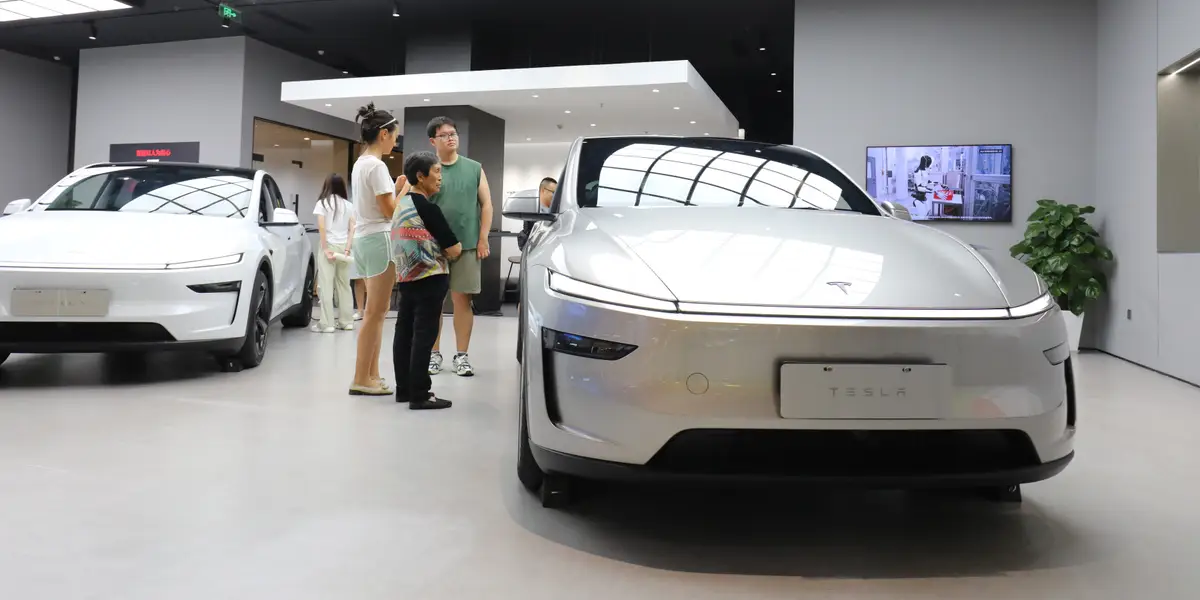
Tesla is stalling in China just as its rivals pick up speed
Business Insider· 2025-09-03 11:02
Core Insights - Tesla's sales in China have declined, with 83,200 cars sold in August, representing a 4% decrease year-over-year [1] - Local EV startups such as Nio, Leapmotor, and Xpeng are experiencing significant growth, with record monthly sales reported in August [2] - Geely's sales surged by 38% in August, reaching nearly 150,000 vehicles, highlighting the competitive nature of China's EV market [2] Company Performance - Xpeng launched the G7 SUV priced at $27,320, while Nio introduced the L90 six-seater at $36,940, both undercutting Tesla's Model Y [3] - Xiaomi's YU7 electric car received over 240,000 preorders within 24 hours of its launch, indicating strong demand for new entrants in the market [3] - Xiaomi sold over 30,000 cars in August and is working to increase production to meet high demand, with waiting times for the YU7 exceeding a year [8] Market Dynamics - Tesla's sales challenges are attributed to a stale product lineup, prompting the introduction of an extended six-seater version of the Model Y [9] - BYD, another major player in the EV market, reported flat sales in August, indicating that the competitive pressure is affecting multiple companies [9]
ECARX(ECX) - 2025 Q2 - Earnings Call Transcript
2025-08-26 13:00
Financial Data and Key Metrics Changes - Total revenue for Q2 was $156 million, with sales of goods revenue at $131 million, reflecting a 1% year-over-year increase driven by double-digit customer demand despite strategic price reductions [24][25] - Gross profit for the quarter was $70 million, a decline of 58% year-over-year, resulting in a gross margin of 11%, down 12% compared to the previous year [25] - Operating expenses were reduced by 20% year-over-year to $57 million, contributing to a slight decline in adjusted EBITDA loss to $30 million from $29 million in the same period last year [26][27] Business Line Data and Key Metrics Changes - The Antora, Vanado, and Skyland platforms contributed 56% to total sales of goods revenue, more than doubling from 28% in the prior year [24] - Service revenue decreased by 34% year-over-year to $23 million, primarily due to lower revenue from non-recurring engineering services [25] Market Data and Key Metrics Changes - Shipments of the Antora series solution surged 112% year-over-year to 135,000 units during the quarter, supporting growth momentum [6] - The company serves 18 OEMs across 28 brands globally, with a significant presence in both the Chinese and international markets [10][17] Company Strategy and Development Direction - The company is focused on achieving EBITDA breakeven in each of the remaining quarters of 2025, with a target of close to 20% revenue growth for the full year [5][27] - A new global headquarters in Singapore is set to open in 2025 to enhance global IP management, R&D collaboration, and supply chain optimizations [9][21] - The company is diversifying its customer base, with Geely accounting for 40-50% of total business and ongoing efforts to expand into international markets [58] Management's Comments on Operating Environment and Future Outlook - Management acknowledged the impact of seasonal headwinds and macroeconomic uncertainties but emphasized solid progress in securing new projects and partnerships [4][24] - The company remains confident in achieving adjusted EBITDA breakeven and expects full-year revenue to recover strongly, driven by volume growth and improved product mix [27] Other Important Information - The company has secured over $1 billion in lifetime revenue from overseas contracts and has 14 active projects with eight different carmakers [6][38] - The company received three ISO certifications for quality management, environmental stewardship, and occupational health and safety, which are prerequisites for collaboration with leading automakers [21] Q&A Session Summary Question: Update on non-automotive business layout and future development - Management expressed optimism about the potential for non-automotive applications, particularly in robotics, leveraging LiDAR technology [33][36] Question: Progress in overseas expansion and international clients - Management highlighted ongoing efforts in Europe and other markets, with 14 active programs and recognition from Volkswagen for innovation capabilities [38][39] Question: Update on in-house chip development - Management confirmed continued growth of the Antora platform and plans to launch Qualcomm A295 products, indicating a robust roadmap for SoC development [40] Question: Volume guidance for the second half of the year - Management projected shipment volumes of 1.4 to 1.5 million vehicles in the second half, aiming for a total of 2.5 to 2.6 million vehicles for the year, reflecting a 30% year-over-year growth [45] Question: Pricing pressures and content per car improvements - Management acknowledged pricing pressures but noted improvements in content per car due to strategic pricing and cost optimization efforts [46][48] Question: Update on ADCU business and collaboration with Qualcomm - Management confirmed plans to work with Qualcomm's SoCs, including the 8,775, and highlighted the development of a Fusion platform for enhanced vehicle features [51][53]