Taiwan Semiconductor Manufacturing

Search documents
Dan Ives Calls Import Tariffs "Armageddon." Should You Really Buy Tech Stocks Now?
The Motley Fool· 2025-04-07 08:12
Core Viewpoint - The recent announcement of import taxes by President Trump poses significant challenges for U.S. tech companies, potentially leading to increased costs and reduced competitiveness against foreign rivals [2][3][6]. Group 1: Impact of Tariffs on Tech Companies - Trump has implemented a general 10% import tax on all goods, with specific higher rates for key countries where tech companies manufacture products, such as a 32% duty on goods from Taiwan, affecting companies like Nvidia [3][4]. - Apple faces import tariffs of 54%, 27%, and 46% on products from China, India, and Vietnam, respectively, which will increase its costs when importing products into the U.S. [5]. - The tariffs could force tech companies to raise product prices, making them less competitive compared to non-U.S. rivals, which could negatively impact earnings [7]. Group 2: Market Reaction and Future Outlook - Concerns over the tariffs have led to a significant decline in tech stocks, with the Nasdaq entering a bear market, down over 20% from its peak [8]. - Despite the challenges, there is an expectation that negotiations may occur to mitigate the worst impacts of the tariffs, as major tech companies have been preparing for such scenarios [8][9]. - Long-term investors may still find opportunities in tech stocks, as many companies possess strong fundamentals and could yield significant gains over time [12]. Group 3: Investment Strategies - Investors with a cautious approach may consider diversifying their portfolios by including safer stocks alongside leading tech companies [10]. - Aggressive growth investors might view the current low valuations of tech stocks as a buying opportunity, particularly for companies like Nvidia, which is trading at 20 times forward earnings estimates, down from 50 times earlier this year [11]. - Regardless of investment style, a long-term holding strategy of at least five years is recommended to weather the current market volatility [12].



1 Artificial Intelligence (AI) Stock That I Just Bought on the Dip
The Motley Fool· 2025-04-06 11:15
The artificial intelligence (AI) investment wave has taken a downturn over the past few weeks. The stock market has sold off across the board, and AI stocks have taken a bit more of a beating.This opened up a few investment opportunities and allowed me to add another stock to my portfolio: Broadcom (AVGO -4.97%). It's a very wide business and has its fingers in many industries, but there's one that I'm most excited about: custom AI accelerators. This business unit has the potential to grow massively over th ...


3 Unstoppable Stocks That Are Too Cheap to Ignore Right Now
The Motley Fool· 2025-03-29 12:15
Core Viewpoint - The article discusses three stocks—Taiwan Semiconductor Manufacturing (TSM), Alphabet, and Adobe—that are currently undervalued compared to the broader market, suggesting they present strong buying opportunities despite recent sell-offs [2][5][11]. Valuation Comparison - All three stocks have lower forward price-to-earnings (P/E) ratios than the S&P 500, which is currently trading at 21 times forward earnings, while none of the three exceeds 20 [3][4]. - The market's slight premium on the S&P 500 indicates expectations of slower growth for these companies, which the article argues is a misconception [5]. Company-Specific Insights - **Taiwan Semiconductor Manufacturing (TSM)**: Expected to grow revenue at nearly 20% compound annual growth rate over the next five years, significantly outpacing the market's typical 10% growth [6][7]. - **Alphabet**: Anticipated to achieve 11% revenue growth in 2025 and 2026, with earnings per share (EPS) growth projected at 12% and 14% for the same years, respectively [8]. - **Adobe**: Despite being perceived as vulnerable to AI disruption, it reported a 10% year-over-year revenue increase in its fiscal 2025's first quarter. The company is also executing an aggressive buyback program, repurchasing 7 million shares, which could enhance EPS growth [9][10]. Investment Opportunity - The article concludes that while these companies may not be the fastest-growing stocks, they have strong potential to outperform the market, making them attractive value plays at their current prices [11].




Prediction: This Artificial Intelligence (AI) Stock Will Join Nvidia, Meta Platforms, Apple, Microsoft, Amazon, and Alphabet in the Trillion-Dollar Club By The End of The Decade
The Motley Fool· 2025-03-28 11:30
Core Viewpoint - Oracle is positioned to potentially join the trillion-dollar club by the end of the decade, driven by its growth in cloud infrastructure and artificial intelligence [3][11]. Company Growth Drivers - Oracle's revenue is categorized into four segments: cloud services and license support, cloud license and on-premise license, hardware, and services, with cloud services and license support accounting for approximately 75% of total sales [4]. - The fastest-growing segment is the cloud infrastructure unit (IaaS), which saw a 51% year-over-year increase in sales, reaching $2.7 billion, although it only represented about 20% of total revenue for the quarter [6]. - The company collaborates with GPU leaders like Nvidia and AMD to build GPU clusters in data centers, which is a core service driving growth [7]. Market Trends and Opportunities - Major cloud hyperscalers, including Microsoft, Amazon, and Alphabet, are projected to spend over $300 billion on AI infrastructure in 2023, with significant investments in chipsets and data center buildouts [8]. - Oracle's existing partnerships with major tech firms and its involvement in initiatives like Project Stargate position it to capture a share of the increasing capital expenditure in AI infrastructure [9]. Financial Projections - Analysts expect Oracle's revenue to reach $77 billion by 2027, with an anticipated growth rate of 18% from 2025 to 2026 [12]. - If Oracle maintains an annual sales growth of 18%, projected revenue could reach approximately $108 billion by 2029, leading to a market cap of $864 billion based on a current price-to-sales multiple of 8 [13]. - Achieving a market cap of $1 trillion would require Oracle to increase its revenue growth to 20% and raise its price-to-sales multiple to 9 by 2029 [13]. Long-term Outlook - The increasing investment in AI infrastructure is expected to accelerate Oracle's sales growth, particularly as new GPU architectures are introduced [14]. - As the IaaS segment becomes more central to Oracle's business, it is anticipated that investors will apply a premium multiple, potentially expanding the company's valuation to $1 trillion [15].


Looking for a Bargain? 1 Artificial Intelligence (AI) Chip Stock to Buy the Dip Hand Over Fist.
The Motley Fool· 2025-03-26 14:00
Core Viewpoint - The semiconductor industry has faced significant sell-offs in 2025, but Micron Technology has outperformed its peers with a gain of approximately 12% [2][6]. Group 1: Industry Performance - Leading chip companies, including Nvidia, Taiwan Semiconductor Manufacturing, and Broadcom, have seen declines of 12%, 10%, and 17% respectively as of March 21, 2025 [1]. - The semiconductor sector is experiencing a challenging year, particularly for technology stocks [1]. Group 2: Micron's Position and Growth - Micron Technology is emerging as a key player in the AI chip market, leveraging high-bandwidth memory (HBM) to enhance data processing speeds for AI applications [3][4]. - The demand for HBM is expected to rise significantly as AI applications become more complex, such as in autonomous driving and robotics [4]. - Micron has transitioned from a cash-burning business to a consistently profitable one, driven by strong demand and widespread AI adoption [5][6]. Group 3: Financial Performance and Valuation - Micron reported encouraging earnings for Q2 of fiscal 2025, with expectations for record revenue in the next quarter and significantly improved profitability for the full year [6]. - The stock is currently trading at $94 per share, close to a 52-week low, and is considered the cheapest among its peers based on forward price-to-earnings (P/E) ratio [8][9]. - Despite generating record sales and profitability, Micron's valuation appears disconnected from its strong fundamentals, presenting a compelling opportunity for long-term investors [9][10].


Cadence Stock Plunges 10% YTD: How Should You Play the Stock?
ZACKS· 2025-03-26 12:40
Core Viewpoint - Cadence Design Systems (CDNS) has experienced a challenging start to 2025, with a 10.4% decline in share price year to date, underperforming compared to the Computer Software industry, broader technology sector, and S&P 500 composite [1] Price Performance - The stock is currently trading at $269.11, which is 18.2% lower than its 52-week high of $328.99, and is below its 50-day moving average, indicating bearish sentiment among investors [3] Growth Concerns - CDNS provided soft guidance for 2025, projecting revenue growth of 11-12% and non-GAAP EPS growth of 12%, following a 13.5% revenue and 15.9% EPS growth in 2024 [4] - Global macroeconomic conditions and significant exposure to the semiconductor sector raise concerns, as any reduction in R&D spending in this sector could negatively impact CDNS's topline performance [5] Competitive Landscape - Increased operating costs and competition in the EDA/AI space from companies like Keysight Technologies, Synopsys, and ANSYS are additional challenges, with Synopsys's pending acquisition of ANSYS likely intensifying competition [6] Analyst Sentiment - Analysts have shown bearish sentiment, with a 5.1% downward revision in earnings estimates for the current quarter to $1.49 over the past 60 days [8] Valuation Metrics - CDNS's stock is trading at a forward 12-month Price/Earnings ratio of 38.87X, compared to the industry average of 28.5X, reflecting high expectations for future growth despite uncertain near-term prospects [9] Business Fundamentals - The company benefits from broad-based demand for its solutions amid robust design activity, particularly in advanced technologies like AI, 5G, and autonomous vehicles [10] - CDNS is collaborating with major tech companies such as Qualcomm and NVIDIA on next-generation AI designs and is exploring new markets like Life Sciences through its OpenEye drug discovery software [11] Product Development - The verification business is gaining traction due to increasing complexity in system verification, with the launch of advanced systems like Palladium Z3 Emulation and Protium X3 FPGA Prototyping aimed at addressing these challenges [12] Customer Engagement - In 2024, CDNS added over 30 new customers and nearly 200 repeat customers, particularly among AI and hyperscale clients [14] Future Outlook - While CDNS is positioned to benefit from high-growth areas like AI and machine learning, potential risks include macroeconomic uncertainties, competitive pressures, and significant exposure to the semiconductor sector [15] - Concerns about margin compression due to high investments in AI and R&D are present, with estimated non-GAAP operating margins for Q1 2025 between 40% and 41%, down from 46% in Q4 2024 [16]


Meet One of the Only Billionaire Money Managers Who Isn't Selling Nvidia Stock
The Motley Fool· 2025-03-26 08:51
Core Insights - A prominent billionaire fund manager, Chase Coleman of Tiger Global Management, oversees $26.5 billion in assets and has not sold any shares of Nvidia, indicating strong confidence in the company's future [1][6] - The quarterly Form 13F filings from billionaire money managers provide valuable insights into stock trends and investment strategies, highlighting the contrasting approaches towards Nvidia among these investors [2][3] Investment Trends - Many billionaire fund managers with concentrated portfolios have been selling Nvidia shares, while Coleman remains a steadfast holder, maintaining a significant position of 9,683,550 split-adjusted shares [4][5][6] - The only other focused billionaire buyer of Nvidia is Ole Andreas Halvorsen of Viking Global Investors, who holds a smaller position of 2,031,985 shares [7] Market Position and Competitive Advantage - Nvidia dominates the GPU market in high-compute data centers, with its Hopper and Blackwell architectures leading in AI applications, allowing the company to exceed Wall Street's expectations [8] - The scarcity of high-powered AI GPUs has enabled Nvidia to command a premium price, ranging from 100% to 300% above competitors [9] Selling Pressure and Concerns - Notable billionaires, including Philippe Laffont and David Tepper, have sold significant portions of their Nvidia holdings, indicating a cautious outlook despite the company's competitive advantages [10] - Concerns about increasing competition and potential market share erosion from both direct competitors and Nvidia's own customers developing in-house AI chips are prevalent among investors [12][13] Potential Risks - The possibility of an AI bubble forming raises concerns, as historical trends show that transformative technologies often experience bubble-bursting events, which could negatively impact Nvidia's stock [14][15] - Nvidia's reliance on its data center segment for over 88% of net sales in fiscal 2025 makes it vulnerable to market fluctuations and competitive pressures [15]

Prediction: These 2 Artificial Intelligence (AI) Semiconductor Stocks Will Reclaim Their Spots in the Trillion-Dollar Club by Year's End
The Motley Fool· 2025-03-25 01:06
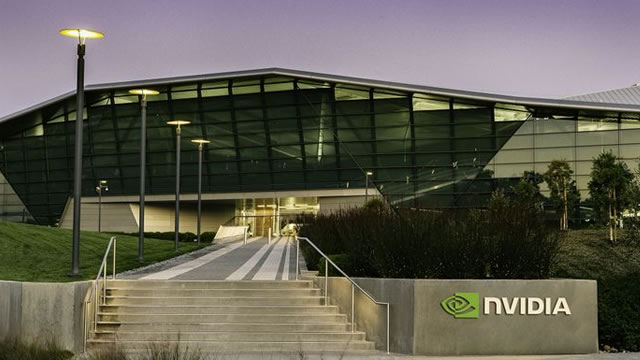
Core Viewpoint - Two major chipmakers have recently fallen out of the trillion-dollar club, but they are seen as potential investment opportunities to regain this status by 2025 [2]. Company Summaries Taiwan Semiconductor Manufacturing (TSMC) - TSMC specializes in advanced chipmaking processes and has seen revenue and profit acceleration due to high demand for GPUs in data centers [3]. - Apple plans to invest $500 billion in U.S. manufacturing and silicon engineering over the next four years, significantly benefiting TSMC as it utilizes a large share of TSMC's fabrication capacity [5]. - TSMC is also expanding its U.S. operations with an additional $100 billion investment in chipmaking infrastructure, building on a previous $65 billion commitment [6]. - Wall Street analysts are optimistic about TSMC's prospects, driven by increasing AI infrastructure investments from major tech companies [7][8]. - TSMC's current market cap is $916 billion, approximately 9% away from a trillion-dollar valuation, with no significant financial issues indicated [9]. - The company's forward P/E ratio of 19.5 is in line with its three-year average, presenting a buying opportunity before it potentially reclaims its trillion-dollar valuation [10]. Broadcom - Broadcom specializes in AI-powered products and network equipment for data centers, benefiting from the rising demand for custom silicon solutions [11]. - The recent stock sell-off is attributed to macroeconomic concerns rather than specific business issues, with historical trends showing quick rebounds after dips [12]. - Major tech companies are expected to spend over $320 billion on AI infrastructure this year, which will positively impact Broadcom's business [13]. - Broadcom has been selected by additional hyperscalers to develop custom accelerators for next-generation models, indicating its growing importance in the AI space [14]. - Investor confidence in Broadcom is expected to rise as the company continues to support big tech in building AI infrastructure, positioning it to return to the trillion-dollar club soon [15].

Forget the Correction: AI's Unstoppable Momentum Creates Buying Opportunities
The Motley Fool· 2025-03-25 01:00
Core Viewpoint - The current stock market correction, particularly affecting big tech stocks, presents a significant buying opportunity despite ongoing selling activity and market fears [1][3][12] Group 1: Market Dynamics - The S&P 500 and Nasdaq Composite have entered correction territory due to multiple sell-offs in megacap tech stocks [1] - Emotional responses from investors often lead to cash hoarding during market downturns, contrasting with the tendency to buy at high valuations [2] - The recent panic selling is viewed as overblown, suggesting that the current market conditions are favorable for investment [3] Group 2: AI and Technology Spending - The generative AI market is projected to grow from $45 billion last year to $1.1 trillion by 2028, with enterprise software contributing approximately $400 billion [5] - Significant investments in AI infrastructure are being made by major tech companies, with Amazon, Alphabet, and Microsoft planning to spend over $250 billion this year [6] - Apple has announced a $500 billion investment in the U.S. for AI-related initiatives over the next four years [6] Group 3: Semiconductor and Data Center Opportunities - Morgan Stanley forecasts $280 billion in semiconductor spending and $276 billion for high-bandwidth memory storage and networking equipment by 2028 [6] - Nvidia and AMD are expanding their data center chip businesses, indicating a sustained demand for chips and infrastructure investment [6] Group 4: Valuation and Investment Opportunities - Many tech stocks have experienced declines greater than the S&P 500 and Nasdaq, presenting potential buying opportunities [7] - Companies such as Nvidia, AMD, Taiwan Semiconductor, Amazon, and Alphabet are highlighted as top investment opportunities based on valuation [8] - The normalization of prices and contraction in valuation multiples suggest a favorable environment for investment [9] Group 5: Long-term Outlook - Continued investment in research, development, and infrastructure by major tech companies indicates a strong secular tailwind for AI software and hardware [10] - Stock market corrections can be healthy, providing opportunities to acquire in-demand stocks at discounted prices [11][12]


Taiwan Semiconductor Attracts Big Money on NVIDIA Chip Growth
MarketBeat· 2025-03-24 14:04
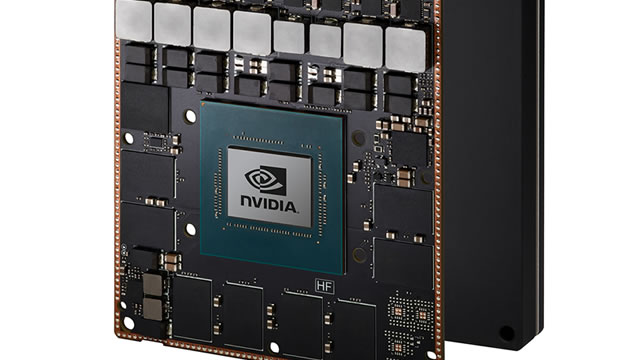
Core Viewpoint - The technology sector is showing renewed optimism for demand and growth in artificial intelligence, which is expected to drive future earnings in the semiconductor industry [1] Group 1: NVIDIA's Investment - NVIDIA announced plans to invest hundreds of billions in U.S. semiconductor infrastructure to reduce reliance on international supply chains [2] - This investment is crucial as COVID-19 disruptions highlighted the risks of depending on foreign sources for semiconductor supply [2] Group 2: Taiwan Semiconductor Manufacturing (TSM) - Taiwan Semiconductor Manufacturing (TSM) is a key player supplying materials to NVIDIA, and its investments in U.S. manufacturing indicate increased demand [2][5] - TSM's decision to expand its presence in the U.S. may enhance investor confidence amid rising geopolitical tensions between the U.S. and China [3] Group 3: Market Performance and Investment Flows - TSM's stock has seen a positive shift in investment flows, with institutional capital of $9.8 billion entering the stock over the past quarter [7] - The stock is currently trading at 78% of its 52-week high, attracting buyers and indicating a potential bottoming [6] Group 4: Stock Forecast and Valuation - Analysts have set a 12-month price target for TSM at $220.00, representing a 21.73% upside potential [9] - The stock's price-to-book (P/B) ratio is 8.1x, significantly higher than the computer sector's average of 6.2x, reflecting its premium valuation [11] Group 5: Future Outlook - The importance of TSM in the semiconductor supply chain is becoming increasingly apparent, leading to a willingness among investors to pay a premium for its stock [12] - The bullish sentiment is supported by analysts' ratings, with some projecting a high target of $255 per share [9][10]