
Ansys

Search documents
半导体IP市场,变了
3 6 Ke· 2026-01-30 03:02
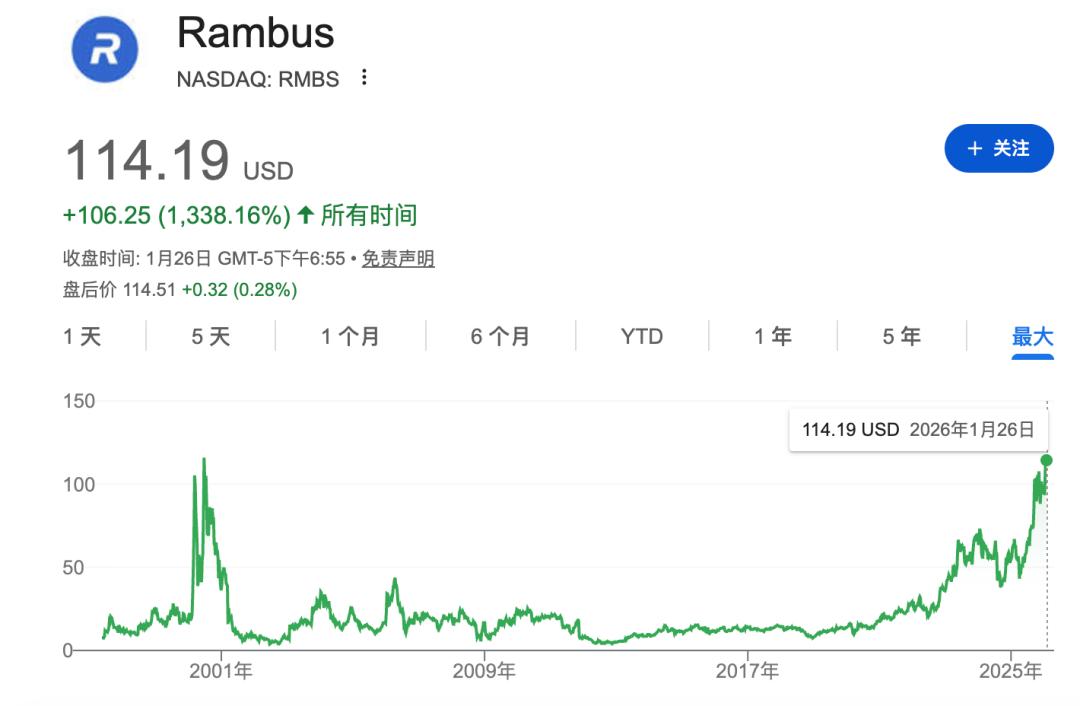
Core Insights - The semiconductor IP market is undergoing significant transformations driven by the rise of generative AI, with companies like Rambus, Synopsys, and Alphawave Semi experiencing drastic changes in their business models and market positions [1] Rambus' Transformation - Rambus has seen its stock price nearly double, reaching approximately $115–125, with a peak of $135, reflecting a nearly 100% increase over the past year due to heightened demand for its technology in the AI era [2][5] - Analysts have raised Rambus' target price to around $120–130, indicating a shift from a reliance on patent licensing to a more central role in AI and data center infrastructure [5] - Rambus has strategically adjusted its product line, selling some assets to focus on high-performance memory subsystems and security IP, which has contributed to its growth [5][6] Market Dynamics and Demand - The current challenge in AI computing is not the speed of GPUs but the data transfer capabilities, with Rambus' DDR5 RCD interface chips being essential for ensuring efficient data flow [6] - Rambus holds over 40% market share in the DDR5 RCD chip segment, which is critical as AI servers transition to DDR5 standards [6] - The company anticipates significant growth in the MRDIMM market, projecting to capture over 40% of this $600-700 million segment [7] Synopsys' Strategic Shift - Synopsys' decision to sell its ARC processor business reflects a shift towards AI-enhanced EDA tools and a focus on high-margin software solutions [8][9] - The sale allows Synopsys to concentrate on AI infrastructure, moving away from the competitive landscape of general-purpose CPU architectures [9][10] - The acquisition of Ansys strengthens Synopsys' capabilities in system-level simulation, positioning it to better serve clients like NVIDIA and Google [9] Alphawave Semi's Acquisition - Alphawave Semi, initially focused on IP supply, transitioned to a full SoC design capability and was acquired by Qualcomm, marking the end of its independent status [11][12] - The acquisition is strategic for Qualcomm as it seeks to enhance its position in high-performance computing and AI infrastructure, leveraging Alphawave's expertise in high-speed interconnect technology [12][13] - The disappearance of Alphawave as an independent entity highlights the increasing difficulty for mid-sized IP companies to survive in the competitive landscape dominated by larger players [13] Industry Trends - The semiconductor industry is witnessing a shift from a focus on CPU performance to the importance of data pathways and interconnect technologies, as AI systems require efficient data flow for optimal performance [14][15] - The market share of processor IP is declining, while interface IP is expected to grow significantly, potentially reaching over 25% of the IP market by 2026 [15][16] - The competitive focus is shifting towards interconnect and system-level capabilities, indicating a structural reorganization within the semiconductor IP market [16]

Synopsys (NasdaqGS:SNPS) FY Conference Transcript
2026-01-15 20:17
Synopsys FY Conference Summary Company Overview - **Company**: Synopsys (NasdaqGS:SNPS) - **Event**: 28th Annual Elon Growth Conference - **Date**: January 15, 2026 Key Points Industry Context - **Geopolitical Challenges**: The company faced significant headwinds in fiscal Q3 due to geopolitical tensions, particularly in China, affecting customer decision-making and contract sizes [5][7][41]. - **Market Segmentation**: The semiconductor market is characterized by a "tale of two markets," with AI-driven sectors growing rapidly while traditional sectors like automotive and industrial lag behind [31][22]. Financial Performance and Outlook - **Fiscal Q3 Challenges**: The IP business experienced delays and downsizing of contracts due to uncertainty in the Chinese market and challenges with foundry customers [5][6][7]. - **2026 Forecast**: The company anticipates persistent headwinds in China and does not expect significant changes in the business environment compared to 2025 [7][41]. - **Ansys Acquisition**: The integration of Ansys is progressing well, with expectations for significant operating margin improvements and cost synergies [14][15]. Business Segments - **Ansys Performance**: Ansys is expected to continue strong growth in 2026, driven by its leading portfolio in simulation and analysis tools, which are underpenetrated in R&D budgets [11][12]. - **IP Business Strategy**: Synopsys remains the leader in interface and essential IP, focusing on evolving business models to meet customer needs, particularly in the data center AI segment [19][20][21]. - **EDA Growth**: The company aims to drive EDA growth through joint solutions with Ansys, leveraging AI and GPU technologies to enhance design processes [33][34][36]. Strategic Initiatives - **Resource Allocation**: The company has shifted resources to high-demand areas, particularly in HPC titles, to better align with market needs [6][7]. - **Monetization Models**: Synopsys is exploring royalty-based monetization for IP, particularly in the data center AI segment, while maintaining traditional NRE and usage fee models [25][26][27]. Customer Engagement - **China Market**: The company is committed to maintaining strong customer relationships in China despite uncertainties, focusing on clarity to aid customer decision-making [41][43]. - **Investor Communication**: Synopsys emphasizes its leading position in digital design and IP, highlighting the unmatched strength of its combined portfolio with Ansys [44]. Additional Insights - **Joint Product Development**: The integration of EDA and Ansys tools aims to solve complex design problems earlier in the cycle, potentially leading to better pricing and customer satisfaction [38][39][40]. - **Long-term Vision**: The company is focused on evolving its business model to adapt to the rapid changes in the semiconductor industry, particularly in AI and smart technologies [28][44]. This summary encapsulates the key insights and strategic directions discussed during the Synopsys FY Conference, highlighting the company's resilience and forward-looking strategies in a challenging market environment.

Prediction: Synopsys Stock Will Soar Over the Next Decade. Here's 1 Nvidia-Related Reason Why.
Yahoo Finance· 2026-01-06 11:50
Group 1 - Synopsys is rapidly expanding its market presence through the acquisition of Ansys, which enhances its customer base and offerings in engineering simulation software [1][3] - The company's core competency lies in electronic design automation (EDA) and AI-powered solutions, primarily serving semiconductor companies, but now also targeting a broader range of industries including hyperscalers, automakers, and aerospace [2][3] - The partnership with Nvidia, involving a $2 billion investment, is expected to significantly enhance Synopsys' silicon-to-systems solution, which integrates chip design and engineering simulation [5][6] Group 2 - The acquisition of Ansys is pivotal for Synopsys as it allows for a comprehensive "silicon-to-systems" offering, facilitating the design and testing of semiconductors [3][6] - Nvidia's investment not only strengthens Synopsys financially but also enhances the computational capabilities of its offerings, which are crucial for the compute-intensive nature of EDA solutions [5][6] - The overall growth strategy of Synopsys, bolstered by the Nvidia deal, is anticipated to drive significant growth in the coming years [6]

Cadence's Free Cash Flow Continues to Power M&A, Buybacks
ZACKS· 2025-12-26 18:16
Core Insights - Cadence Design Systems Inc. (CDNS) is positioned to benefit from increasing demand for its AI-driven solutions amid strong design activity and customer spending on AI initiatives [1] Financial Performance - In Q3, CDNS reported revenues of $1.339 billion, reflecting a year-over-year increase of 10.2% [2][8] - The company generated operating cash flow of $311 million and free cash flow of $277 million [2] - As of September 30, 2025, CDNS had cash and cash equivalents of $2.753 billion and long-term debt of $2.479 billion [2] Growth Strategy - CDNS is pursuing a disciplined inorganic growth strategy, acquiring technologies that enhance organic growth [3] - Recent acquisitions include the Design & Engineering division of Hexagon AB, Artisan foundation IP from Arm Holdings, and Secure-IC [3] Shareholder Returns - CDNS repurchased shares worth $200 million in Q3 and plans to repurchase another $200 million in Q4 [4] - The company intends to use at least 50% of its free cash flow for share buybacks in 2025 [6][8] Future Outlook - The company expects revenues for 2025 to be between $5.262 billion and $5.292 billion, with operating cash flow projected between $1.65 billion and $1.75 billion [6][8] - Trends such as 5G, hyperscale computing, and autonomous driving are anticipated to drive design activity and sustain top-line growth [5]


Chiplet,还是软IP?
半导体行业观察· 2025-12-12 01:12
Core Viewpoint - The article discusses the differences between chiplets and soft IP, emphasizing that while both can accelerate time-to-market, they serve different needs and come with distinct challenges in design, integration, and testing [2][20]. Group 1: Chiplet vs Soft IP - Chiplets can be seen as a new type of semiconductor IP, but they differ significantly from the current IP licensing ecosystem, particularly in design integration and verification [2][20]. - Chiplets can be either custom-designed or off-the-shelf, with two camps emerging: one that designs its own chiplets and another that sources components externally [2][20]. - The market for chiplets will coexist with custom chips, with many IP modules becoming off-the-shelf chips that system vendors can mix and match [2][20]. Group 2: Customization and Functionality - The key difference between chiplets and soft IP lies in their customizability; soft IP offers high configurability, while chiplets have fixed functionalities [6][20]. - Chiplets require careful management of startup processes and debugging, which are less of a concern with soft IP [6][20]. - The physical integration of chiplets presents unique challenges, such as managing signal integrity and power distribution, which are not as critical in soft IP [24][20]. Group 3: Testing and Supply Chain - Testing chiplets is more complex than testing soft IP, as chiplets are typically tested independently by suppliers, requiring integration into the overall system testing process [20][20]. - The supply chain for chiplets is more traditional and complex, closely tied to manufacturing nodes and foundries, which increases dependency on suppliers [20][20]. - Built-in self-test (BiST) technology is expected to become more prevalent to address the transparency issues associated with chiplets [22][20]. Group 4: Security and Integration Challenges - Security considerations for chiplets are more challenging than for soft IP, as chiplets have a larger attack surface due to their interconnections and shared resources [20][20]. - Each chip in a multi-chip system must coordinate its security measures, which can lead to inefficiencies if not managed properly [20][20]. - The physical design of chiplets must account for thermal management and signal integrity, requiring advanced modeling tools that go beyond those used for soft IP [24][20].
Synopsys Beats Estimates, Lifts Fiscal 2026 Outlook on AI-Driven Demand
Financial Modeling Prep· 2025-12-11 22:31
Core Insights - Synopsys reported stronger-than-expected fourth-quarter results and provided an optimistic earnings forecast for fiscal 2026, driven by increased demand for semiconductor design software supporting AI architectures [1] Financial Performance - Fourth-quarter adjusted earnings were $2.90 per share, surpassing expectations of $2.78, while revenue reached $2.26 billion, slightly above the forecast of $2.25 billion [2] - Revenue increased by 37.8% year-over-year, with Ansys contributing $667.7 million to the total [2] - For fiscal 2025, Synopsys achieved a record revenue of $7.05 billion, reflecting a growth of approximately 15%, and ended the year with a backlog of $11.4 billion [2] Future Guidance - For fiscal 2026, Synopsys guided earnings of $14.32 to $14.40 per share, exceeding the consensus estimate of $14.05 [3] - The company anticipates revenue between $9.56 billion and $9.66 billion, with approximately $2.9 billion expected from Ansys [3] - For the fiscal first quarter, Synopsys projected adjusted earnings of $3.52 to $3.58 per share and revenue of $2.36 billion to $2.42 billion, both above analyst expectations [3]

Nvidia Loves This AI Stock — And So Does Wall Street
Yahoo Finance· 2025-12-11 13:45
Core Insights - Nvidia has purchased $2 billion of Synopsys stock and plans to enhance their existing partnership to improve product upgrades and cloud utilization [1][2] - The partnership aims to revolutionize the design and engineering industry, which is highly compute-intensive [3] Company Performance - Synopsys shares rose 2.01% in the five days ending December 10, but have dropped 1.96% year-to-date [4] - Synopsys has a market capitalization of $86.5 billion, with a trailing price-to-sales ratio of 48.3x and a price-to-book ratio of 2.6x [5] Financial Results - For the year ending in July, Synopsys reported earnings per share (EPS) of $9.60 [6] - In the fiscal third quarter, revenue was $892.36 million, an increase from $803.15 million year-over-year, but operating income fell to $165.27 million from $360.2 million due to rising costs [6] - The weaker performance of Synopsys's IP business was attributed to new export restrictions in China and challenges with a major foundry customer [7] - Despite these challenges, the company anticipates record revenue for the current fiscal year, partly due to the acquisition of Ansys, which closed in July [7][8]
Synopsys targets $9.61B revenue for 2026 while advancing joint AI solutions and accelerating Ansys integration (NASDAQ:SNPS)
Seeking Alpha· 2025-12-11 01:33
Group 1 - The article discusses the importance of enabling Javascript and cookies in browsers to prevent access issues [1] - It highlights that users with ad-blockers may face restrictions when trying to access content [1]

Synopsys(SNPS) - 2025 Q4 - Earnings Call Transcript
2025-12-10 23:02
Financial Data and Key Metrics Changes - The company achieved record annual revenue of $7.05 billion, up approximately 15% year-over-year, with Q4 revenue of $2.25 billion, at the high end of guidance [5][14]. - The total backlog increased to $11.4 billion, up from $10.1 billion in the previous quarter [13]. - Non-GAAP operating margin for FY25 was 37.3%, with Q4 non-GAAP operating margin at 36.5% [14][15]. - GAAP earnings per share for Q4 and FY25 were $2.39 and $8.07 respectively, while non-GAAP earnings per share were $2.90 and $12.91, exceeding guidance [14][15]. Business Line Data and Key Metrics Changes - The design automation segment revenue, including EDA and Ansys, was $5.3 billion, up 26%, while excluding Ansys, it grew approximately 8% [15]. - The design IP segment revenue was $1.75 billion, down 8% due to challenges in the second half of the year [15]. - The hardware-assisted verification (HAV) business saw a record year with 12 competitive wins in Q4 [8]. Market Data and Key Metrics Changes - China faced significant challenges, with revenue down 18% for FY25, and down 22% excluding Ansys [14]. - The company noted stronger semiconductor demand in mobile and automotive sectors, while industrial markets remained subdued [6]. Company Strategy and Development Direction - The integration of Ansys is a key focus, with the company aiming to deliver joint solutions in the first half of 2026 [11][62]. - The company is targeting double-digit growth for Ansys revenue in FY26, driven by increased R&D investments in various industries [60]. - A strategic partnership with NVIDIA is expected to enhance design and engineering capabilities with AI and accelerated computing [7]. Management's Comments on Operating Environment and Future Outlook - Management expressed optimism about the long-term growth potential despite current challenges, particularly in the IP business [41][76]. - The company is adopting a pragmatic approach to forecasting, particularly regarding the ongoing challenges in China [76]. - Management emphasized the importance of AI in driving future demand for engineering solutions, indicating a shift in how engineering is approached [6][48]. Other Important Information - The company plans to prepay $2.55 billion of its term loans in the first half of 2026, which is expected to be accretive to EPS [16][19]. - The guidance for FY26 includes total revenue of $9.56-$9.66 billion, with Ansys contributing approximately $2.9 billion at the midpoint [17]. Q&A Session Summary Question: What is the embedded organic growth rate in the 2026 guide? - Management indicated it is around 8%, factoring in the divestitures and muted growth expectations for the IP business [22][23]. Question: What are the expectations for EDA and IP growth in the guidance? - Management acknowledged that EDA growth is impacted by the China environment and a muted roadmap for certain customers, while IP is expected to have a transitional year [31][32]. Question: Can the IP business achieve mid-teens growth in FY27? - Management expressed confidence in the IP portfolio and ongoing customer engagements, indicating that growth could return to mid-teens in the future [82]. Question: What is the rationale behind the NVIDIA investment? - The investment was made to accelerate computational capabilities and modernize engineering solutions, leveraging the strengths of both companies [44][45]. Question: How is the integration of Ansys progressing? - Integration efforts are underway, with R&D teams working together to deliver joint solutions, while maintaining separate go-to-market strategies for different customer segments [61][62].
Synopsys(SNPS) - 2025 Q4 - Earnings Call Transcript
2025-12-10 23:00
Financial Data and Key Metrics Changes - Synopsys achieved record annual revenue of $7.05 billion in FY25, up approximately 15% year-over-year, with Q4 revenue of $2.25 billion, aligning with guidance [12][13] - The company ended FY25 with a backlog of $11.4 billion, up from $10.1 billion in the previous quarter [12] - Non-GAAP operating margin for FY25 was 37.3%, with Q4 non-GAAP operating margin at 36.5% [14] - GAAP earnings per share for FY25 were $8.07, while non-GAAP EPS was $12.91, exceeding guidance due to lower expenses [14][15] Business Line Data and Key Metrics Changes - The design automation segment, including EDA and Ansys, generated $5.3 billion in revenue for FY25, up 26%, while excluding Ansys, it grew approximately 8% [15] - The design IP segment revenue was $1.75 billion, down 8% due to challenges in the second half of the year [15] - Ansys contributed $757 million to total revenue in FY25, with Q4 revenue of $668 million [13][14] Market Data and Key Metrics Changes - China faced significant challenges, with revenue down 18% in FY25, and excluding Ansys, down 22% [13][14] - The semiconductor demand is strong in mobile and automotive sectors, while industrial markets remain subdued [5][12] Company Strategy and Development Direction - Synopsys aims to leverage the Ansys acquisition to enhance its engineering solutions from silicon to systems, focusing on AI-driven design and multi-domain integration [4][6] - The company plans to deliver its first joint solutions with Ansys in the first half of 2026, targeting double-digit growth for Ansys revenue [11][56] - Strategic partnerships, such as with NVIDIA, are expected to enhance design and engineering capabilities [6][40] Management's Comments on Operating Environment and Future Outlook - Management expressed optimism about the AI infrastructure build-out driving semiconductor demand, despite challenges in certain markets like China [5][12] - The company anticipates a transitional year for the IP business in FY26, with muted growth expected due to ongoing adjustments and market conditions [10][36] - Management emphasized a focus on operational excellence and financial discipline to drive sustainable growth and margin expansion [11][19] Other Important Information - Synopsys plans to prepay $2.55 billion of its term loans in the first half of 2026, which is expected to be accretive to EPS [16][18] - The company is adopting a normalized non-GAAP tax rate of 18% projected through 2028 [17] Q&A Session Summary Question: What is the embedded organic growth rate in the 2026 guide? - Management indicated that the organic growth rate is around 8%, factoring in the divestitures and muted growth for the IP business [22][23] Question: What are the growth expectations for EDA and IP in the guidance? - Management confirmed that EDA growth is impacted by the China environment and ongoing market dynamics, with IP expected to grow modestly [28][29] Question: Can you provide an update on the IP business and headwinds? - Management acknowledged challenges in the IP business but expressed confidence in long-term growth, emphasizing ongoing customer engagement and portfolio strength [35][36] Question: What is the rationale behind the NVIDIA investment? - The investment was driven by the potential for accelerated computational capabilities and modernization of engineering solutions, enhancing market reach [40][41] Question: How does the company plan to address the monetization challenges in EDA? - Management recognized the need for better monetization strategies and highlighted the importance of joint solutions with Ansys to capture value [78][80]