JFrog Ltd.

Search documents
JFrog tumbles 25% after launch of Claude Code Security
En.Globes.Co.Il· 2026-02-22 13:07
Core Viewpoint - JFrog's share price dropped 24.94% following the launch of Anthropic's Claude Code Security, raising concerns about AI tools potentially replacing existing cybersecurity solutions [1][2]. Company Overview - JFrog, co-founded and led by CEO Shlomo Ben Haim, specializes in software development solutions [2]. - The company has experienced a significant decline in stock value, losing 39.6% since the beginning of 2026, which equates to a market cap reduction of nearly $3 billion, bringing it down to $4.5 billion [5]. Market Reaction - The launch of Claude Code Security by Anthropic has led to a broader decline in cybersecurity stocks, with notable drops in SentinelOne (down 4.35%) and Varonis (down 7.68%) [2]. - Investment bank Jefferies' analyst Joseph Gallo expressed that while the cybersecurity field will ultimately benefit from AI, there will be increasing headwinds until the impact of AI on cybersecurity becomes clearer [5]. Analyst Perspectives - Raymond James stated that the decline in JFrog's stock is exaggerated and views it as a short-term risk that does not affect the company's strategic position, maintaining a positive outlook due to the company's foresight and platform resilience [6].



Fund Exits $40.9 Million Position in FROG, According to Latest SEC Filing
Yahoo Finance· 2026-02-18 15:13
On February 13, 2026, Shannon River Fund Management LLC disclosed in a U.S. Securities and Exchange Commission filing that it sold out of JFrog (NASDAQ:FROG), with the estimated transaction value approximately $40.89 million based on quarterly average pricing. What Happened Shannon River Fund Management LLC reported in a Securities and Exchange Commission (SEC) filing dated February 13, 2026, that it sold 863,924 shares of JFrog over the quarter. The estimated transaction value was approximately $40.89 m ...
JPMorgan Flags 'AI-Resilient' Software Names After Selloff
Yahoo Finance· 2026-02-17 19:30
Fears that artificial intelligence (AI) will rapidly disrupt software companies have been overdone, according to JPMorgan. The bank’s strategists believe parts of the sector are more resilient than believed, creating a potential opportunity for investors. “Given the positioning flush, overly bearish outlook on AI disruption of software and solid fundamentals, we believe the balance of risks is increasingly skewed towards a rebound,” said Dubravko Lakos‑Bujas, Head of Global Markets Strategy. In a recent ...


JFrog (FROG) Gains Momentum Following 26% Revenue Growth Beat
Yahoo Finance· 2026-02-16 15:52
Core Insights - Wasatch Global Investors reported a challenging Q4 2025 for its Small Cap Growth Strategy, with small-cap equities underperforming broader market indices due to investor caution and preference for larger stocks [1] - The Russell 2000® Growth Index gained 1.22% in Q4 2025, while the Wasatch strategy finished in negative territory, highlighting stock-specific factors rather than macroeconomic stress [1] - For the full year 2025, the Russell 2000 Growth Index advanced 13.01%, contrasting with the strategy's loss, indicating earnings volatility and valuation compression despite improving fundamentals [1] Company-Specific Insights - JFrog Ltd. (NASDAQ:FROG) was highlighted as a top contributor to the strategy's performance in Q4 2025, with a strong third-quarter earnings report showing 26% revenue growth [3] - JFrog's stock experienced a one-month return of -8.00%, trading between $27.00 and $70.43 over the last 52 weeks, and closed at approximately $51.68 per share on February 13, 2026, with a market capitalization of about $6.171 billion [2][3] - The company's cloud revenue reaccelerated during the reported period, driven by increased adoption of security, governance, and AI products [3]
Here’s Why JFrog Ltd (FROG) Price Target Was Raised To $78 by Baird
Yahoo Finance· 2026-02-15 17:11
Core Viewpoint - JFrog Ltd. is recognized as a strong investment opportunity in the AI sector, with analysts maintaining positive ratings and increasing price targets due to the company's growth potential and favorable market conditions [1][2]. Group 1: Analyst Ratings and Price Targets - Robert W. Baird analyst Shrenik Kothari reaffirmed a Buy rating on JFrog Ltd. and raised the price target from $70 to $78, citing strong growth and conservative guidance [1]. - Bank of America Securities also maintained a Buy rating and set a price target of $74, indicating that JFrog is expected to rebound quickly once market conditions improve [2]. Group 2: Growth Drivers - The increased adoption of AI is generating more binaries, which benefits JFrog as it is a leading tool for managing the distribution of binaries and mitigating associated risks [3]. - JFrog's Cloud revenue growth accelerated to +50% year-over-year in Q3 2025, up from +45% in Q2 2025, indicating strong demand and usage [3]. Group 3: Company Overview - JFrog Ltd. provides a supply chain platform that includes products like JFrog Artifactory, JFrog Xray, JFrog Advanced Security, and JFrog Runtime Security, serving various sectors including financial services, healthcare, technology, retail, and telecommunications [3].
上一次“软件要亡”论发生在10年前,后续如何了?
Hua Er Jie Jian Wen· 2026-02-15 07:39
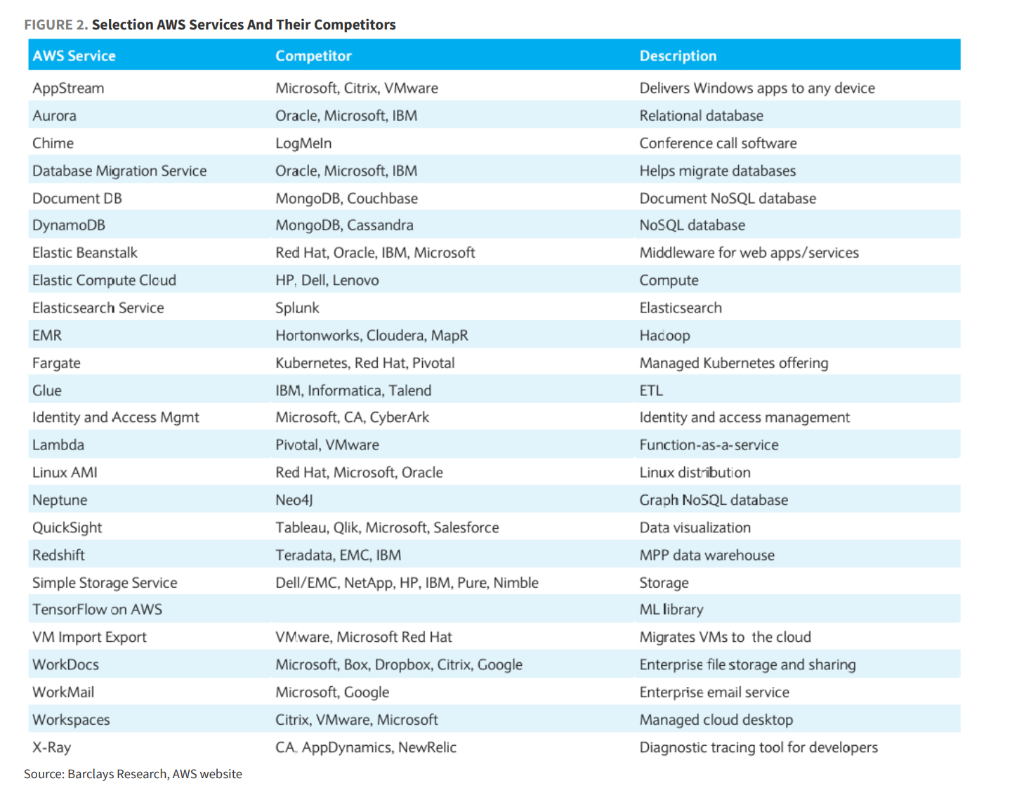
Core Viewpoint - Barclays believes that the current market panic regarding generative AI (GenAI) is based on a "worst-case scenario" assumption, predicting the extinction of traditional software companies, which mirrors the panic seen a decade ago with the rise of Amazon AWS [1][2] Historical Context - The current investor sentiment in the software sector is extremely negative, with a simplistic investment logic of buying AI newcomers and shorting traditional software [2] - This situation is reminiscent of the panic surrounding AWS's growth, where established software companies faced similar doomsday predictions, yet none went bankrupt due to AWS competition [4][5] Market Dynamics - Historical data shows that while AWS gained significant market share, it did not lead to the extinction of mature software companies; instead, these companies evolved and thrived [4][5] - The market's current indiscriminate sell-off of software stocks, with the IGV (software ETF) down approximately 24% year-to-date, is viewed as irrational [6] Mispricing Opportunities - Barclays identifies significant mispricing opportunities in the current market, particularly for companies with strong core record systems and specific domain moats that are being undervalued [1][6] - The panic selling creates an opportunity for investors to identify industry leaders that have been unfairly punished [7] Defensive Sectors - Two defensive sectors highlighted are: 1. Owners of record systems, such as Salesforce and SAP, which hold core enterprise data and are difficult to replace [9] 2. Vertical SaaS companies, like Veeva Systems and Tyler Technologies, which possess deep domain-specific data moats [9] Company Performance - Notable company performances include: - CyberArk's market cap surged from $885 million to $22.516 billion, a 2443% increase [8] - Microsoft and Google also saw significant market cap growth, with increases of 1048% and 871%, respectively [8] - Traditional companies like Teradata experienced a 73% decline, while others like Tableau and Splunk were acquired at high premiums [8]



捷蛙科技2025财年营收增长24%,亏损收窄现金流改善
Jing Ji Guan Cha Wang· 2026-02-13 22:51
经济观察网 根据捷蛙科技(FROG.US)截至2025年12月31日的2025财年第四季度及全年财报,其核心 亮点如下: 公司基本面尽管全年归母净利润为-7181.9万美元,但第四季度单季亏损收窄至-1521万美元,环比改善 7.4%。全年经营活动现金流达14.57亿美元,自由现金流为14.23亿美元,流动性充裕。 业绩经营情况2025财年全年营收达53.18亿美元,同比增长24.12%;第四季度单季营收14.53亿美元,同 比增长25.18%。订阅收入占比55.76%,SaaS收入占比39.20%,显示其混合通用DevOps平台的收入结构 稳健。 机构观点参与评级的22家机构中,86%给予"买入"建议,14%为"持有",无"卖出"评级。市场关注其在 高波动软件服务行业中的长期技术壁垒与全球化业务布局。 财务状况全年毛利率为76.26%,第四季度毛利率进一步提升至77.74%,反映其软件平台模式具备较强 的成本控制能力和高附加值特性。 以上内容基于公开资料整理,不构成投资建议。 ...
捷蛙科技财务表现与机构评级情况
Jing Ji Guan Cha Wang· 2026-02-12 16:22
经济观察网捷蛙科技(FROG.US)近期财务数据显示,公司最近财报营业收入为1.37亿美元,净利润 为-1643万美元,每股收益-0.14美元,市盈率(TTM)为-88.73倍。在机构评级方面,参与评级的22家机构 中,86%给予"买入"建议,14%给予"持有"建议,无"卖出"建议。 公司基本面 捷蛙科技是一家提供端到端混合通用DevOps平台的公司,产品组合包括Artifactory、Pipelines、Xray 等。其大部分收入来自以色列,同时在美国、印度等其他地区开展业务。 行业政策与环境 公司所处的软件服务行业波动较大,同业公司股价表现分化明显,这可能对个股走势产生影响。 以上内容基于公开资料整理,不构成投资建议。 ...
AI vs SaaS:先卖再问,市场只“卖对了一半”?
华尔街见闻· 2026-02-12 09:55
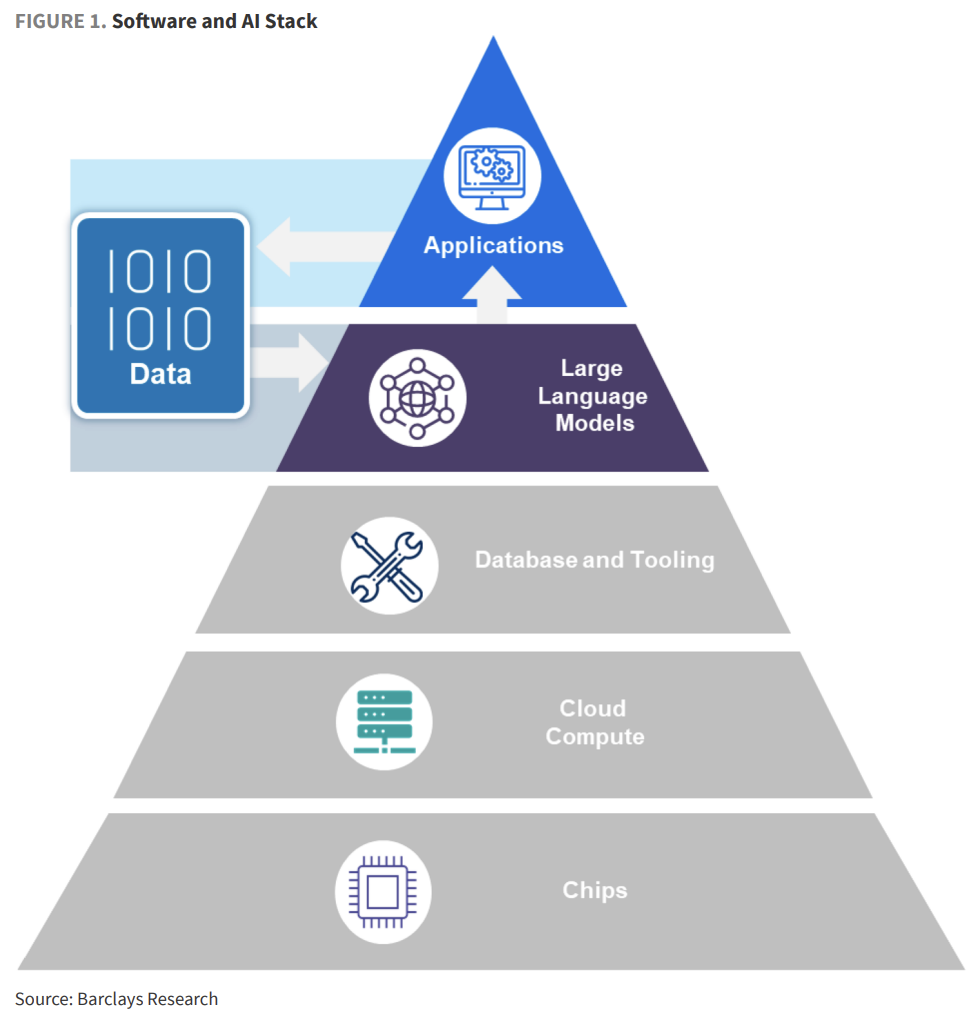
Core Viewpoint - Barclays highlights a critical technological distinction: AI tools are indeed encroaching on the application layer of SaaS companies, but they cannot shake the foundational "system of record" infrastructure, which is the core moat for companies like Salesforce and SAP [1][2]. Group 1: Impact of AI on SaaS Companies - The recent release of products like Claude Cowork by Anthropic has led to a significant decline in enterprise software stocks, with Salesforce and Workday dropping over 40% in the past 12 months [2]. - Investors are confused about the boundaries of AI capabilities, leading to a panic sell-off as they believe new AI tools will completely replace traditional SaaS software, resulting in a zero valuation for legacy companies [2][3]. - Barclays' report argues that a simplistic "one-size-fits-all" logic does not apply to most enterprise software companies [3]. Group 2: AI Capabilities and Limitations - Generative AI excels in pattern recognition and "draft generation," but its probabilistic nature poses fundamental limitations, particularly in scenarios requiring absolute accuracy [5]. - Traditional software operates on deterministic rules, ensuring consistent outputs, while AI software is probabilistic and cannot guarantee the same level of consistency [5][6]. - This indicates that AI operates at a higher level of abstraction and is not a direct replacement for traditional software [6]. Group 3: Mispriced Software Companies - Barclays identifies three categories of enterprise software companies that have been mispriced during the sell-off, starting with system of record companies like Salesforce, which provide critical data requiring certainty [9]. - SAP's position is even more secure, as it manages essential business data and workflows that cannot be handled by advanced generative AI models [9][10]. - The report suggests that AI will not replace these systems but will increase their importance, as AI agents will create more data touchpoints, raising the complexity that system records need to manage [10]. Group 4: Additional Misjudged Investment Opportunities - Besides system of record companies, Barclays points out two other categories that have been misjudged: beneficiaries of AI agents and AI computing providers [11]. - Companies like JFrog, Snowflake, and MongoDB may see increased usage due to the demand for more code and data driven by AI expansion [11]. - There is a logical contradiction in the market's reaction; if AI is powerful enough to disrupt the software industry, the demand for computing power should surge, yet companies like Oracle and CoreWeave have also faced significant sell-offs [11]. Group 5: Reevaluation of Software Sector Valuations - The market correction is deemed necessary for the application layer of enterprise software, which has long enjoyed inflated valuations due to controlling both infrastructure and interface [15]. - If AI technologies can overlay on system records, they may begin to erode the pricing power of SaaS companies [15]. - Barclays concludes that the era of easy high profits for bloated application layers may be over, but this does not signify the end of the entire industry [15][16]. Group 6: Market Sentiment and Future Outlook - The indiscriminate nature of the current sell-off indicates that investors with limited understanding of the software industry are making decisions based on extreme viewpoints [16]. - As understanding of AI capabilities and SaaS business models deepens, the market may reprice companies incorrectly categorized as "AI victims" [16].
AI vs SaaS:先卖再问,市场“卖对了一半”?
Hua Er Jie Jian Wen· 2026-02-12 08:24
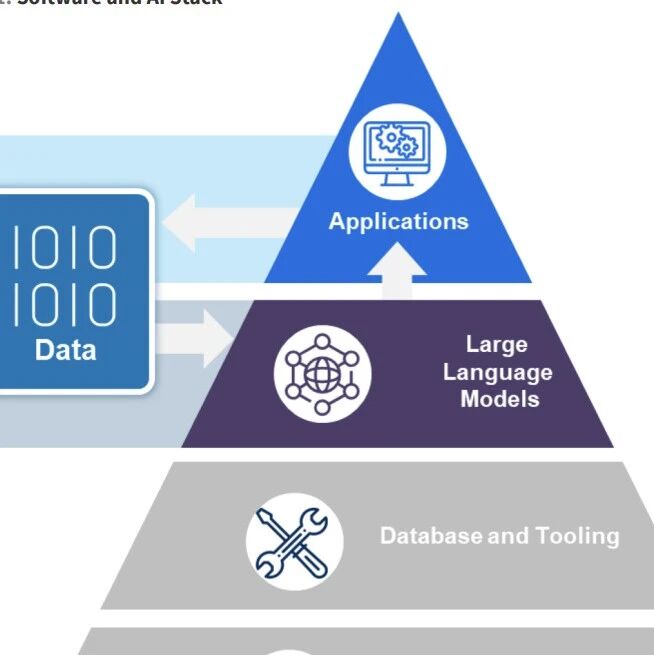
Core Insights - The recent release of Anthropic's products has triggered a significant sell-off in enterprise software stocks, revealing an overreaction in the market regarding AI threats [1][3] - Barclays highlights that while AI tools are encroaching on the application layer of SaaS companies, they do not threaten the foundational "system of record" infrastructure, which is crucial for companies like Salesforce and SAP [1][3] Group 1: Market Reaction and Misunderstandings - The release of Claude Cowork by Anthropic has been described as the tipping point for the decline in enterprise software stocks, with Salesforce and Workday seeing over a 40% drop in the past year [3] - Investors are confused about the capabilities of AI, mistakenly believing that new AI tools will completely replace traditional SaaS software, leading to a devaluation of established companies [3][12] - Barclays' report argues that the simplistic view of AI as a total replacement for software does not apply to most enterprise software companies [3] Group 2: AI Capabilities and Limitations - Generative AI excels in pattern recognition and initial draft generation but has fundamental limitations due to its probabilistic nature, making it less effective in scenarios requiring absolute accuracy [4][5] - Traditional software operates on deterministic rules, ensuring consistent outputs, while AI software functions probabilistically, lacking guaranteed consistency [5][6] Group 3: System of Record Companies - Barclays identifies three categories of enterprise software companies that have been mispriced during the sell-off, starting with system of record companies like Salesforce and SAP, which provide critical data requiring certainty [7][8] - SAP's position is particularly strong, as it manages essential business data and workflows that generative AI cannot handle effectively [7][8] - The report suggests that AI will not replace these systems but will instead increase their importance as AI creates more data touchpoints [8] Group 4: Misjudged Investment Opportunities - Besides system of record companies, Barclays points out two other categories that are misjudged: beneficiaries of AI agents and AI computing providers, which may see increased demand due to AI expansion [9] - There is a contradiction in the market logic; if AI is powerful enough to disrupt the software industry, the demand for computing power should rise, yet companies like Oracle and CoreWeave have also faced sell-offs [9] Group 5: Application Layer Challenges - The market's panic is not entirely unfounded, as SaaS companies have struggled with poor user interfaces, high prices, and security vulnerabilities, leading to customer dissatisfaction [10] - Companies like Klarna are moving away from traditional SaaS products in favor of smaller firms, utilizing AI tools to build their own applications, which highlights a genuine threat to the SaaS model [10] Group 6: Future Market Dynamics - The current market correction is seen as necessary, as SaaS companies have enjoyed inflated valuations by controlling both infrastructure and interface [11] - The emergence of AI technologies that can operate above system records may erode the pricing power of SaaS companies, indicating a shift in the profitability landscape [11] - As understanding of AI capabilities and SaaS business models deepens, the market may begin to re-evaluate companies incorrectly labeled as "AI victims," while those relying on poor application layers may face continued valuation pressure [12]