MicroAlgo Inc.

Search documents
微算法科技(NASDAQ:MLGO)基于后量子阈值算法的区块链隐私保护技术
Sou Hu Cai Jing· 2026-02-03 06:20
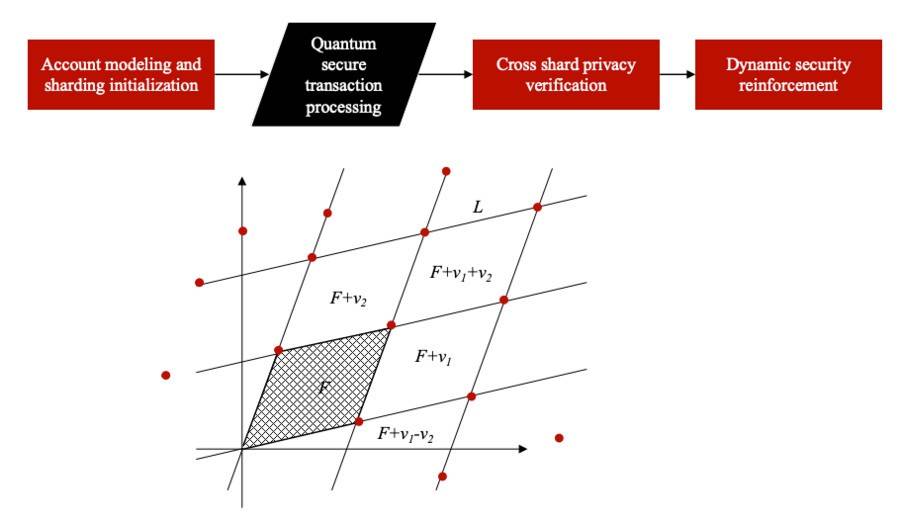
Core Viewpoint - The traditional cryptographic systems face threats from quantum computing, which can compromise blockchain security. MicroAlgorithm Technology (NASDAQ: MLGO) proposes a post-quantum threshold algorithm framework to ensure quantum resistance and privacy protection in blockchain infrastructure for the Web 3.0 era [1][5]. Group 1: Technology Overview - The proposed technology utilizes post-quantum cryptography, specifically the CRYSTALS-Dilithium signature algorithm, replacing traditional ECDSA to enhance security against quantum attacks [1][4]. - The framework incorporates threshold signature technology, distributing key management across multiple nodes to prevent single points of failure and enhance privacy [4][5]. - A dynamic sharding mechanism maps blockchain accounts to a weighted graph structure, optimizing transaction density within shards while controlling cross-shard communication costs [3][4]. Group 2: Transaction Processing - The transaction signing module employs the CRYSTALS-Dilithium algorithm to generate quantum-resistant signatures, with storage space for these signatures controlled to be 1.2 times that of non-quantum signatures [3][4]. - Communication between nodes utilizes the NewHope key exchange protocol, combined with Physical Unclonable Functions (PUF) to defend against quantum man-in-the-middle attacks [3][4]. - Smart contracts are enhanced with lattice-based homomorphic encryption, allowing for condition-based payment verification without exposing original data, particularly in supply chain finance scenarios [3][4]. Group 3: Privacy and Compliance - Cross-shard privacy verification is achieved through zero-knowledge proofs generated by the source shard, ensuring transaction legitimacy and state verification while minimizing data exposure [4]. - The system supports a dual-chain architecture, where the main chain handles quantum-safe transactions and the side chain remains compatible with existing protocols, facilitating a smooth transition [4][5]. - A linkable group signature scheme is implemented for regulatory compliance, enabling transaction audits without revealing user identities, thus maintaining privacy while ensuring compliance with regulations [4][5]. Group 4: Future Prospects - As quantum computing technology advances, the quantum resistance of MicroAlgorithm Technology's blockchain privacy protection technology will become increasingly significant [5][6]. - Future optimizations in algorithm efficiency and scalability are expected to accommodate larger blockchain networks and enhance applications in privacy-sensitive areas [5][6].


微算法科技(NASDAQ :MLGO)通过检查点优化共识算法,提升区块链效率与可扩展性
Sou Hu Cai Jing· 2025-12-02 05:53
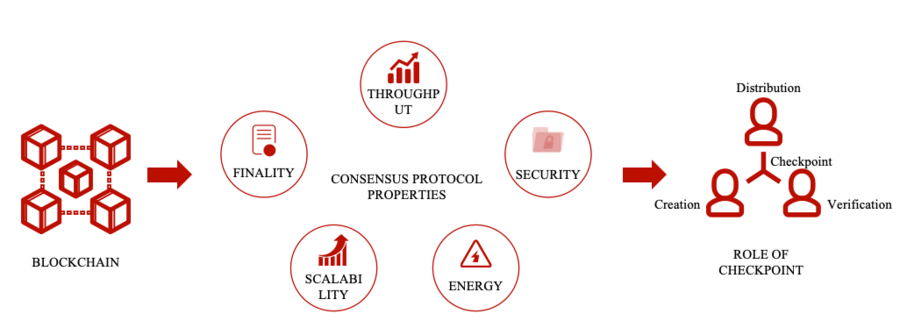
Core Viewpoint - The traditional consensus algorithms in blockchain technology are facing significant challenges due to increasing demands for processing speed and capacity, necessitating innovative solutions to enhance efficiency and scalability [2] Group 1: Challenges in Traditional Consensus Algorithms - Bitcoin's Proof of Work (PoW) algorithm struggles with high energy consumption and slow transaction confirmations, making it unsuitable for efficient business applications [2] - Ethereum's Proof of Stake (PoS) also encounters issues with consensus delays and network congestion under large-scale node collaboration [2] Group 2: Introduction of Checkpoint-Driven Consensus Algorithm - Micro Algorithm Technology (NASDAQ: MLGO) focuses on a checkpoint-driven mechanism to optimize blockchain consensus algorithms, combining stability from traditional algorithms like PBFT or Raft with dynamic checkpoint settings [2][4] - The system divides the blockchain network into multiple consensus periods, allowing nodes to achieve data consistency through an optimized consensus process [4] Group 3: Operational Mechanism of Checkpoint-Driven Consensus - Nodes are categorized into ordinary and validating nodes, with validating nodes leading the consensus process and ordinary nodes following their decisions [4] - Checkpoints are generated based on predefined frequencies, allowing for efficient data recovery and reducing storage pressure by deleting redundant historical data [5] Group 4: Efficiency and Scalability Improvements - The checkpoint-driven consensus algorithm significantly enhances scalability, allowing the number of supported nodes to increase from dozens to hundreds, and reduces transaction confirmation time from seconds to milliseconds, with throughput improved by 3-5 times [6] - The fault recovery time is reduced from minutes to seconds, and storage space requirements for nodes are decreased by over 50% [6] Group 5: Applications Across Various Sectors - The algorithm supports high-frequency trading in financial markets, real-time settlement, and rapid reconciliation in cross-border payments, reducing transaction times from hours to minutes and lowering fees by 30% [6] - In supply chain management, it enables precise tracking of product flows, while in government systems, it enhances data sharing and collaboration efficiency [6] - The gaming and copyright sectors benefit from efficient virtual asset transactions and real-time documentation of creative works [6] Group 6: Future Innovations - Future innovations will explore dynamic adjustments to checkpoint strategies based on real-time network loads and business types, optimizing the creation frequency and hierarchical logic of checkpoints [7] - This will address issues of transaction congestion and high fees in public chains and simplify cross-chain verification processes, promoting interoperability within the blockchain ecosystem [7]
Morning Market Movers: ETNB, APVO, PBM, BEEM See Big Swings
RTTNews· 2025-09-18 11:43
Core Insights - Premarket trading is showing notable activity with significant price movements indicating potential trading opportunities before the market opens [1] Premarket Gainers - 89bio, Inc. (ETNB) increased by 83% to $14.84 [3] - Aptevo Therapeutics Inc. (APVO) rose by 75% to $2.47 [3] - Psyence Biomedical Ltd. (PBM) saw a 29% increase to $4.82 [3] - Beam Global (BEEM) gained 27% reaching $3.23 [3] - MicroAlgo Inc. (MLGO) was up 14% at $13.06 [3] - Akero Therapeutics, Inc. (AKRO) increased by 12% to $47.50 [3] - Hyperion DeFi, Inc. (HYPD) rose by 11% to $13.69 [3] - Sonnet BioTherapeutics Holdings, Inc. (SONN) increased by 11% to $7.85 [3] - FuelCell Energy, Inc. (FCEL) was up 9% at $8.34 [3] - Robo.ai Inc. (AIIO) gained 6% to $2.05 [3] Premarket Losers - Presidio Property Trust, Inc. (SQFT) decreased by 14% to $7.58 [4] - Aeluma, Inc. (ALMU) fell by 10% to $15.18 [4] - FGI Industries Ltd. (FGI) dropped 10% to $7.65 [4] - Lazydays Holdings, Inc. (GORV) was down 9% at $2.26 [4] - StableX Technologies, Inc. (SBLX) decreased by 8% to $5.40 [4] - Artelo Biosciences, Inc. (ARTL) fell by 8% to $4.48 [4] - SciSparc Ltd. (SPRC) decreased by 8% to $4.10 [4] - Cracker Barrel Old Country Store, Inc. (CBRL) was down 7% at $45.75 [4] - Columbus Circle Capital Corp I (BRR) fell by 7% to $9.42 [4] - Visionary Holdings Inc. (GV) decreased by 7% to $2.58 [4]






微算法科技(NASDAQ: MLGO)结合子阵列算法,创建基于区块链的动态信任管理模型
Cai Fu Zai Xian· 2025-09-16 02:34
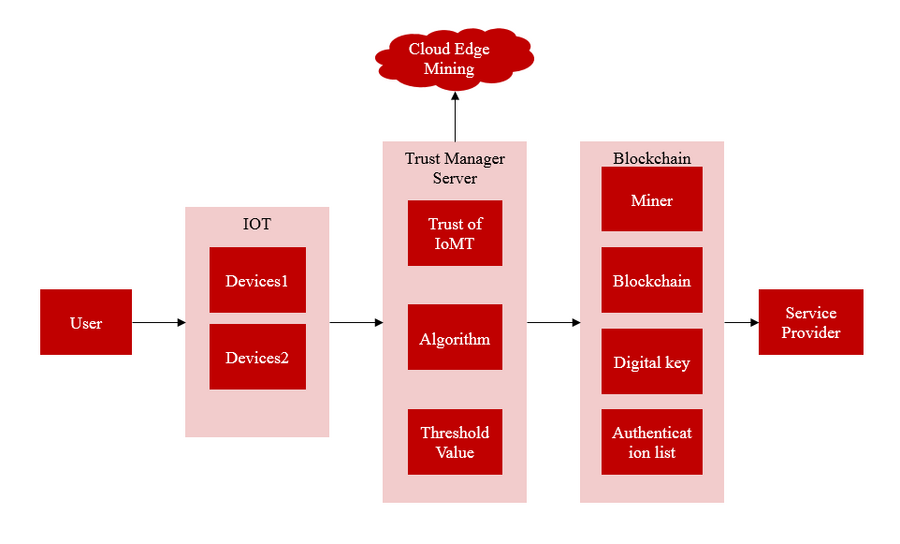
Core Viewpoint - The article discusses the innovative dynamic trust management model developed by Micro Algorithm Technology (NASDAQ: MLGO), which integrates sub-array algorithms with blockchain technology to address the challenges of trust assessment in distributed systems, particularly in the context of IoT, supply chain finance, and decentralized storage. Group 1: Model Overview - The dynamic trust management model utilizes blockchain as the underlying data infrastructure, combined with a distributed computing framework of sub-array algorithms to create a decentralized trust assessment system [1]. - The model divides network nodes into multiple sub-arrays based on geographical location, resource type, or historical behavior characteristics, allowing for independent local trust calculations [1][2]. - The model ensures real-time and reliable trust assessment by dynamically adjusting sub-array members and updating trust values, leveraging blockchain's transparency and immutability for data security [1]. Group 2: Operational Mechanism - The model operates through five core processes: data collection and preprocessing, sub-array division, trust calculation, cross-array consensus, and dynamic updating [2]. - Data is collected from nodes and verified via smart contracts before being stored in a distributed ledger, with key features extracted and historical data weighted down using time decay functions [2]. - Sub-arrays are formed using K-means clustering or geographical hashing algorithms, with dynamic adjustments based on node load and trust value fluctuations [2]. Group 3: Trust Calculation and Consensus - Each sub-array independently runs trust evaluation algorithms to compute local trust values, integrating direct and indirect trust assessments [2][3]. - A modified PBFT consensus mechanism synchronizes trust evaluation results across sub-arrays, reducing communication rounds and computational complexity [3]. - The global trust value is generated by aggregating results from sub-arrays, weighted by their historical reliability [3]. Group 4: Dynamic Updates and Applications - The system triggers trust value updates every 30 seconds, allowing nodes to query their trust scores and adjust interaction strategies accordingly [3]. - The model has applications in various fields, including vehicle networking for enhanced safety and efficiency, e-commerce supply chains for optimized operations, and distributed energy systems for stable energy supply [5]. - As technology evolves, the model is expected to expand into IoT, healthcare, and financial services, integrating with AI and big data to foster innovative trust management solutions [5].
微算法科技(NASDAQ:MLGO)应用区块链联邦学习(BlockFL)架构,实现数据的安全传输
Zhong Guo Chan Ye Jing Ji Xin Xi Wang· 2025-07-31 02:53
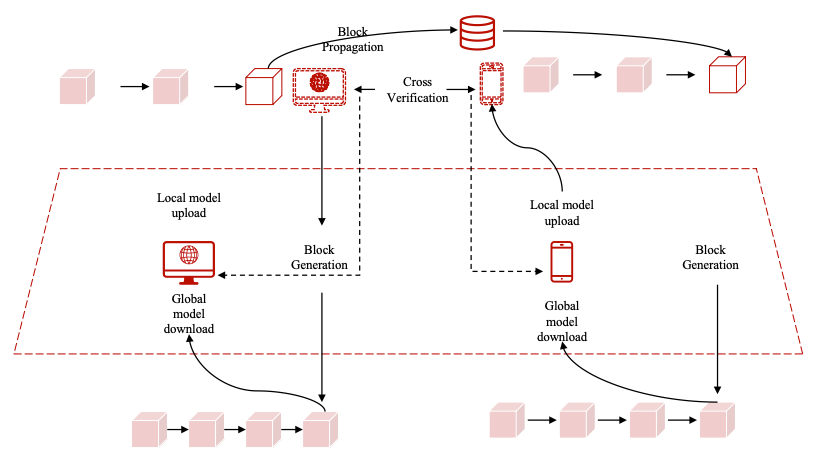
Core Viewpoint - The rapid development of big data and artificial intelligence has highlighted data security and privacy issues, with traditional data transmission methods posing significant risks. The introduction of blockchain technology offers new solutions, exemplified by MicroAlgorithm Technology's innovative BlockFL architecture, which ensures secure, efficient, and privacy-protecting data transmission [1][6]. Group 1: BlockFL Architecture - BlockFL architecture utilizes blockchain networks to achieve efficient data exchange and synchronization in federated learning, allowing devices to upload local model updates and download global model updates quickly and effectively [2]. - The decentralized nature and high concurrency of blockchain ensure that all devices receive the same global model updates, maintaining consistency and accuracy in model training [2]. Group 2: Process Overview - Initialization involves the system administrator creating an initial model and broadcasting it to all participating nodes while the blockchain records metadata of the federated learning activity [4]. - Each node trains the model on its local dataset without exposing original data, thus protecting data privacy [4]. - Nodes upload encrypted model parameters to the blockchain, where smart contracts validate their effectiveness and integrity, preventing malicious actions [4]. - Once verified, a central server or designated aggregation node extracts parameters from the blockchain, averages them, and generates a new version of the global model [4]. - The updated global model is then broadcasted to all nodes for the next training round, with the blockchain ensuring traceability of all operations [4]. - An incentive and penalty mechanism is integrated into BlockFL to encourage participation and quality data contribution, with smart contracts automatically executing rewards and penalties [4]. Group 3: Applications and Future Prospects - BlockFL architecture can be applied across various sectors, including healthcare, financial risk control, smart manufacturing, and smart cities, facilitating data collaboration while maintaining security and privacy [5]. - In healthcare, BlockFL enables hospitals to collaboratively train diagnostic models while protecting patient privacy; in finance, it allows institutions to identify fraud without sharing sensitive information; in smart manufacturing, it promotes collaboration between factories; and in smart cities, it supports inter-departmental cooperation without compromising sensitive data [5]. - The combination of blockchain and federated learning in BlockFL addresses traditional data transmission challenges, enhancing efficiency and accuracy in model training, positioning it as a significant technological support in data transmission and machine learning in the future [6].
微算法科技(NASDAQ MLGO)研究非标准量子预言机,拓展量子计算边界
Zhong Guo Chan Ye Jing Ji Xin Xi Wang· 2025-07-10 03:05
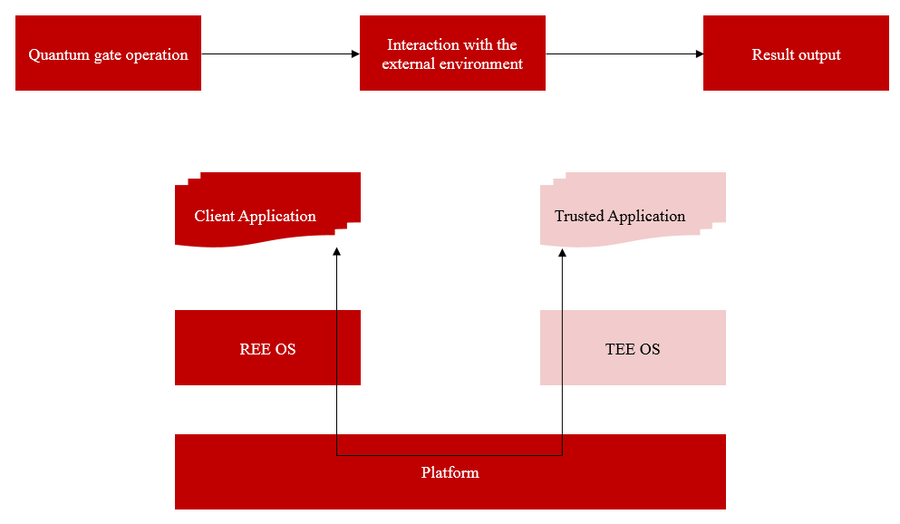
Core Insights - Quantum computing is evolving with the exploration of non-standard quantum oracles, which aim to overcome the limitations of standard quantum oracles in addressing complex computational needs [1][4] - Microalgorithm Technology (NASDAQ MLGO) is focusing on the development of non-standard quantum oracles to enhance quantum computing capabilities and provide new solutions for complex problems [1][5] Group 1: Non-Standard Quantum Oracles - Non-standard quantum oracles offer greater flexibility and can perform more complex logical operations compared to traditional quantum oracles, which are limited to specific tasks [1][3] - These oracles can dynamically adjust their computational logic based on different application scenarios, enhancing the efficiency and applicability of quantum algorithms [1][3] Group 2: Quantum Gate Operations - Microalgorithm Technology integrates new quantum interaction mechanisms into its design, creating innovative quantum gate combinations that allow for precise information processing [3] - The unique handling of environmental interactions by non-standard quantum oracles transforms noise and decoherence into beneficial elements for computation, improving efficiency and accuracy [3] Group 3: Applications and Potential - Non-standard quantum oracles can tackle complex mathematical problems and physical system simulations that standard quantum oracles struggle with, leading to new problem-solving approaches [4] - In cryptography, these oracles can enhance encryption algorithms, making them more resistant to quantum attacks and improving information security [4] - They also have the potential to optimize logistics and resource allocation, as well as improve machine learning model training, thereby advancing artificial intelligence [4] Group 4: Future Prospects - The research on non-standard quantum oracles by Microalgorithm Technology holds significant promise for overcoming current technical bottlenecks, moving from theoretical research to practical applications [5]
微算法科技(NASDAQ:MLGO)基于可解释的人工智能技术XAI,增强区块链网络威胁检测的决策能力
Zhong Guo Chan Ye Jing Ji Xin Xi Wang· 2025-06-20 02:15
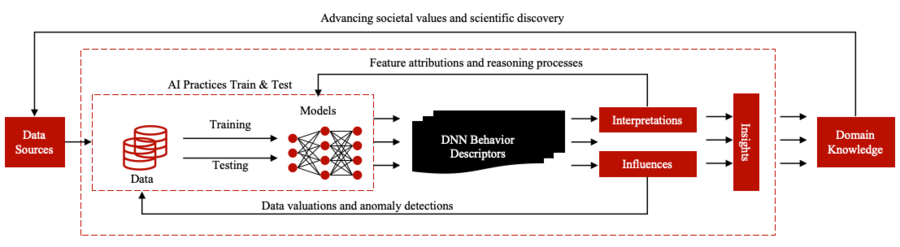
Core Viewpoint - The integration of Explainable AI (XAI) technology by Micro Algorithm Technology (NASDAQ: MLGO) significantly enhances threat detection capabilities in blockchain networks, providing transparency and understanding in decision-making processes [1][5]. Group 1: Technology and Methodology - Micro Algorithm Technology has developed an intelligent threat detection system that combines deep learning models with an explainability module, allowing for automatic learning of attack patterns from large volumes of network traffic data [1][3]. - The system employs data collection and preprocessing techniques to ensure data quality and consistency, followed by feature extraction and selection using machine learning algorithms [3]. - The threat detection model is trained and evaluated using explainable machine learning algorithms, ensuring high accuracy and interpretability through iterative optimization [3]. Group 2: Applications and Impact - The application of Micro Algorithm Technology's XAI in blockchain networks has led to significant improvements in threat detection accuracy and efficiency, particularly in identifying anomalous transactions and malicious nodes [4]. - The technology effectively detects unusual transaction patterns, such as large or frequent transactions, which may indicate fraudulent activities, enabling rapid response to mitigate losses [4]. - In smart contract auditing, the technology analyzes code logic to identify potential security vulnerabilities, thereby preventing attacks due to contract flaws [4]. Group 3: Future Prospects - As technology continues to evolve, Micro Algorithm Technology's solutions are expected to find broader applications, contributing to the creation of a more secure and intelligent network environment [5].
微算法科技(NASDAQ:MLGO)采用量子卷积神经网络(QCNN),检测区块链中的DDoS攻击
Zhong Guo Chan Ye Jing Ji Xin Xi Wang· 2025-06-18 02:18
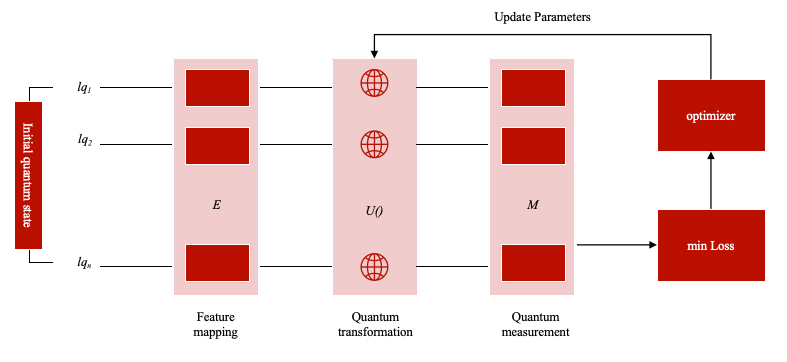
Core Viewpoint - The article discusses the increasing security issues in blockchain technology, particularly focusing on DDoS attacks and how quantum convolutional neural networks (QCNN) developed by Micro Algorithm Technology (NASDAQ: MLGO) can enhance detection and response capabilities against these threats [1][7]. Group 1: Quantum Convolutional Neural Network (QCNN) Development - Micro Algorithm Technology has innovatively improved QCNN for detecting DDoS attacks in blockchain networks by optimizing quantum bit initialization and control methods, enhancing stability and reliability [1][7]. - The structure of QCNN has been adjusted to better handle blockchain transaction data and network status information, making it more suitable for the specific characteristics of blockchain data [1][7]. - Specialized quantum state reading and parsing technologies have been developed to accurately extract features related to DDoS attacks from quantum computation results [1][7]. Group 2: Data Collection and Preprocessing - Data collection involves gathering various types of data from the blockchain network, including transaction data, node status information, and network traffic data, using APIs and monitoring tools [3]. - Preprocessing of collected data is crucial for the effective operation of QCNN, involving data cleaning, noise reduction, and standardization to ensure data quality [3]. - Feature extraction is performed to identify characteristics related to DDoS attacks, such as transaction frequency and network traffic changes, which serve as inputs for the QCNN [3]. Group 3: Quantum Operations - Quantum bit initialization ensures that quantum bits are in a stable initial state, balancing the number of quantum bits with computational complexity [4]. - Quantum convolution operations utilize the properties of quantum bits to extract features and recognize patterns from input data through a series of quantum gate operations [4]. - Quantum pooling operations reduce data dimensions while retaining important features, employing a measurement-based pooling method to select the most probable quantum states [5]. Group 4: Classification and Output - After quantum convolution and pooling, a quantum fully connected layer processes the low-dimensional quantum state for DDoS attack classification and detection [6]. - The output from the quantum fully connected layer is a quantum state representing classification results, which is converted into a readable format using specialized quantum state reading techniques [6]. - If the probability distribution indicates a high likelihood of a DDoS attack, alerts are generated to notify network administrators for appropriate defensive actions [6]. Group 5: Applications and Future Prospects - The QCNN developed by Micro Algorithm Technology can monitor blockchain networks in real-time, promptly detecting signs of DDoS attacks and issuing alerts for immediate defensive measures [7]. - This technology can be integrated with other security measures, such as encryption and access control, to create a more secure blockchain environment [7]. - As quantum computing technology advances, the application prospects for QCNN in detecting DDoS attacks will expand, potentially enhancing computational power and accuracy [7].
微算法科技(NASDAQ:MLGO)通过引入链接(LINK)和声誉评价机制,提高区块链委托权益证明DPoS机制的稳定性和安全性
Zhong Guo Chan Ye Jing Ji Xin Xi Wang· 2025-06-13 02:00
Core Insights - The development of blockchain technology is rapidly evolving, with consensus mechanisms being crucial for the normal operation of blockchain networks [1] - Micro Algorithm Technology (NASDAQ: MLGO) innovatively integrates LINK and a reputation evaluation mechanism into the DPoS mechanism to enhance blockchain processing efficiency and security [1][3] Group 1: DPoS Mechanism Overview - DPoS mechanism selects a certain number of super nodes through elections to generate and verify blocks, allowing token holders to delegate their voting rights to agents (super nodes) [1] - The registration and voting process involves token holders registering as candidate nodes and promoting their capabilities to attract votes, leading to the election of super nodes responsible for block generation and transaction verification [2] Group 2: LINK and Reputation Mechanism - LINK is introduced as a value transfer medium, with its distribution dynamically adjusted based on the performance of super nodes, incentivizing active participation in network governance [2] - The reputation evaluation mechanism supervises super nodes' behavior, ensuring compliance with network requirements, and dynamically adjusts rewards based on performance metrics such as block generation speed and transaction verification accuracy [3] Group 3: Applications and Future Prospects - The technology can be applied in various blockchain scenarios, including digital currency trading platforms, supply chain management, and the Internet of Things (IoT), enhancing security and efficiency [4] - The potential for further refinement and promotion of this technology exists as blockchain technology continues to develop, with more enterprises likely to adopt and optimize the DPoS mechanism [4]

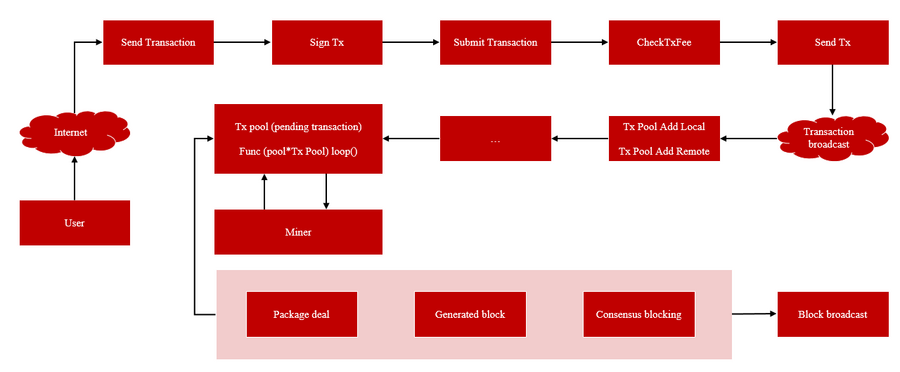
微算法科技(NASDAQ:MLGO)利用Pool验证池机制,结合传统分布式一致性技术(如Paxos和Raft),实现秒级共识验证
Zhong Guo Chan Ye Jing Ji Xin Xi Wang· 2025-06-12 02:01
Core Viewpoint - The article discusses the increasing demand for consensus mechanisms in blockchain and distributed systems, highlighting the limitations of traditional methods and introducing the Pool validation mechanism as a solution for achieving rapid consensus in high-demand applications [1][4]. Group 1: Consensus Mechanisms - Traditional consensus mechanisms face limitations in speed, scalability, and fault tolerance, particularly in real-time applications such as financial transactions and IoT data processing [1]. - The Pool validation mechanism enhances consensus efficiency by concentrating a certain number of validation nodes to collaborate on transaction or data verification [1][4]. - Micro Algorithm Technology (NASDAQ: MLGO) combines the Pool validation mechanism with traditional distributed consistency technologies like Paxos and Raft to achieve sub-second consensus verification [1][4]. Group 2: Technical Process - In distributed systems, nodes enter an undecided state upon initialization, storing the current term number for synchronization and state transitions [3]. - The Raft algorithm involves a leader election process where candidates seek majority approval to become leaders, while Paxos ensures proposal consistency through a prepare phase [3]. - Data verification in the Pool validation mechanism includes checksums and hash values to ensure data integrity, with nodes rejecting invalid entries [4]. Group 3: Advantages and Applications - The Pool validation mechanism improves verification efficiency and meets the real-time demands of various applications by concentrating validation resources [4][5]. - The technology is applicable in finance for high-frequency trading and cross-border payments, enhancing transaction efficiency and security [5]. - In IoT, it ensures data consistency and reliability between devices, while in supply chain management, it improves transparency and traceability [5]. Group 4: Future Developments - Micro Algorithm Technology's consensus mechanism is expected to evolve with advancements in distributed systems and blockchain technology, optimizing validation pool structures and algorithms [6]. - The company may explore integration with advanced technologies like artificial intelligence and machine learning to enhance system intelligence and decision-making capabilities [6]. - As application scenarios expand, the technology is anticipated to find broader applications across various industries, supporting their development [6].