SEMI

Search documents
越南首个芯片制造厂,即将建成
半导体行业观察· 2025-11-08 02:10
Core Viewpoint - Vietnam aims to establish its first semiconductor manufacturing plant by 2026, highlighting its ambition to secure a position in the global chip supply chain [2][4]. Group 1: Government Initiatives - The Vietnamese government has set a long-term vision to become a high-income economy by 2045, with the semiconductor industry as a strategic pillar for this model [4]. - A national semiconductor industry development strategy has been released, targeting 2030 and looking ahead to 2050, alongside a talent cultivation plan [4][5]. - The government plans to establish a national one-stop investment office to streamline administrative processes for foreign investors [5]. Group 2: Industry Development - Vietnam currently has over 50 chip design companies employing around 7,000 engineers, with approximately 15 companies involved in chip packaging and testing [5]. - As of August 2025, Vietnam has about 170 foreign direct investment projects in the semiconductor and high-tech sectors, with a total registered capital of nearly $11.6 billion [6]. Group 3: Education and Workforce - There are 166 universities offering semiconductor-related programs, with over 6,300 undergraduate students majoring in this field and an additional 12,000 students studying related areas [6]. - The country has developed standardized semiconductor education curricula to support workforce development [6]. Group 4: International Collaboration - The government seeks international support in funding, human resource training, technology transfer, and administrative management to establish the semiconductor production base [5]. - SEMI leaders have urged the Vietnamese government to accelerate reforms and simplify administrative procedures to foster a technology-driven growth path [5].


Chiplet和异构集成到底是什么?
半导体行业观察· 2025-03-22 03:17
Core Viewpoint - The article discusses the emerging concepts of "chiplet" and "heterogeneous integration," highlighting the lack of standardized definitions and the implications for the semiconductor industry [2][3][4]. Summary by Sections Chiplet Definition and Characteristics - Chiplets are discrete components that can be integrated into a single package, differing from traditional multi-chip modules (MCM) [3][4]. - A key feature of chiplets is the direct connection between chips through standardized interfaces, which enhances performance and efficiency compared to MCMs [4][5]. - The economic rationale for chiplets stems from the high costs associated with advanced nodes and the inability to produce larger chips [4][5]. Standardization and Interoperability - The standardization of interfaces, such as UCIe and Bunch of Wires (BoW), is crucial for ensuring interoperability among chiplets from different sources [5][6]. - There is a debate on whether a chiplet must have a standardized interface to qualify as such, with some experts arguing that the presence of a die-to-die interface is essential [12][19]. Heterogeneous Integration - Heterogeneous integration involves combining different types of chips within a single package, which can include various nodes and materials [13][14]. - The definitions of heterogeneous integration vary, with some emphasizing the need for different functionalities among the chips involved [13][17]. - The complexity of integrating analog and photonic chips adds further challenges to the standardization of definitions in this area [10][18]. Industry Implications - The lack of consensus on definitions may hinder interoperability and complicate the development of advanced packaging processes [19]. - As the industry evolves, the need for clear definitions will become increasingly important for decision-making and market differentiation [19][20].
SEMI:2025半导体市场两位数增长,AI是关键驱动因素
半导体芯闻· 2025-03-12 10:48
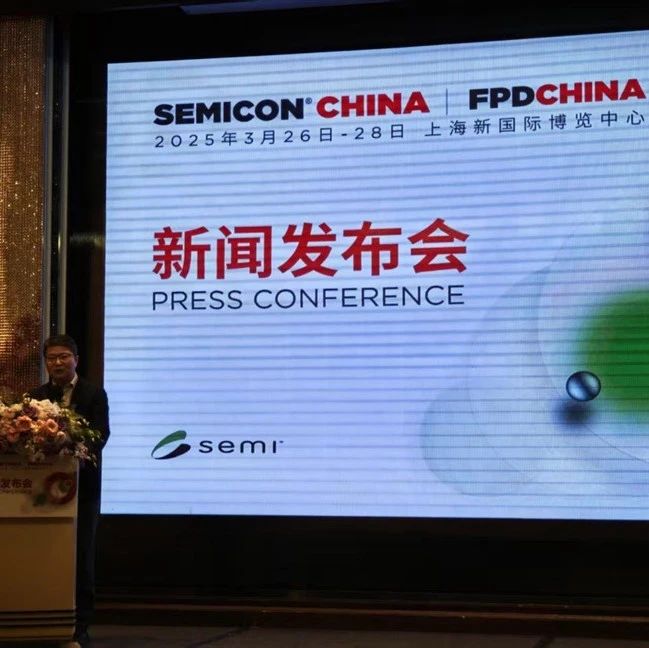
Core Viewpoint - The SEMICON China 2025 event is set to take place in Shanghai, showcasing the growth and significance of the semiconductor industry, with expectations of substantial market recovery and growth in the coming years [1][2]. Group 1: Event Overview - SEMICON China 2025 will open on March 26 at the Shanghai New International Expo Center, featuring an exhibition area of 100,000 square meters, 1,400 exhibitors, and 5,000 booths [1][6]. - The event aims to facilitate product displays, technical exchanges, and trade cooperation across the entire semiconductor industry chain, which includes design, manufacturing, packaging, equipment, materials, photovoltaics, and displays [1][6]. Group 2: Market Growth Projections - Despite a downturn in the semiconductor market in 2023, a recovery is expected in 2024, with global semiconductor industry growth projected to exceed double digits by 2025, reaching a market size of $1 trillion by 2030, with a CAGR of 10% from 2023 to 2030 [2]. - The Chinese wafer fabrication equipment (WFE) market is anticipated to reach $101 billion in 2024 and grow to approximately $108 billion in 2025, with a further acceleration to $122.6 billion by 2026 [2]. Group 3: Segment Insights - In 2024, spending on foundry and logic equipment is expected to remain stable, while DRAM equipment spending is projected to surge by 35% to $19 billion, with a further 10% increase to $21 billion in 2025 due to capacity expansion and HBM investments [3]. - NAND equipment sales are expected to remain weak in 2024 but are forecasted to grow significantly by 48% to $14 billion in 2025 [3]. Group 4: Talent and Sustainability Initiatives - The semiconductor industry faces a talent shortage, and SEMI China is actively promoting talent attraction and retention through initiatives like the SEMI U learning platform, aimed at bridging the talent gap in the global semiconductor industry [3]. - SEMI is also committed to sustainability, with initiatives like the SEMI Forest project, which has planted over 120,000 trees globally, contributing significantly to environmental responsibility [4].