世界中国学

Search documents
《黑神话:悟空》走红可见,中国文化的厚度是未来的核心竞争力
Xin Lang Cai Jing· 2026-02-11 14:37
(来源:上观新闻) 中国要在国际舞台上掌握话语权,不能仅靠宣读文件或生硬输出概念,而必须构建一套能够与世界对话 的学术体系——这便是"世界中国学"的使命。其核心在于对"人类命运共同体"进行学术解读,并针对中 外共同关注却未达共识的重大问题展开研究。 首先,要从文明根源上回应"西方中心论"。针对汤因比关于中华文明为何能延续至今的追问,答案深藏 于我们的文字之中。作为象形文字,汉字不仅承载了丰富的意象,更决定了中国人"由此及彼"的关联性 思维逻辑;这与西方字母文字抽象的、由表及里的逻辑截然不同。这种独特的语言与思维载体,加之地 理屏障,使中华文明在数千年中保持了相对独立的传承,未被西方话语体系完全同化。 最后,要在历史与未来的维度上重塑自信。西方叙事往往通过淡化东方贡献来神话自身文明,如掩盖希 腊文明经阿拉伯传入西欧的路径,或以工业革命贬低中国的"手工业革命"。然而,在文化创意产业成为 新引擎的今天,相较于美国等年轻国家有限的文化资源,中国数千年的历史积淀是无尽的宝藏。从《黑 神话:悟空》的全球走红可见,中国文化的厚度正是未来发展的核心竞争力。 面向未来,我们的目标不应止步于打造西方式的"全球城市",而应致力于建 ...


和音:推进世界中国学研究 丰富人类文明百花园
Ren Min Ri Bao· 2025-10-16 03:31
Core Insights - The Second World Chinese Studies Conference held in Shanghai from October 13 to 15 gathered around 500 experts and scholars to discuss "Historical China and Contemporary China from a Global Perspective" [1] - The conference highlighted the increasing global interest in studying China, emphasizing the importance of understanding China's civilization, experiences, and its contributions to human civilization [1][2] - Xi Jinping has placed significant emphasis on promoting global Chinese studies since the 18th National Congress of the Communist Party of China, with recent statements reinforcing the need for cultural exchange and mutual learning [1][3] Group 1 - The World Chinese Studies naturally connects Chinese and foreign civilizations, enriching the understanding of Chinese narratives through diverse cultural perspectives [2] - Scholars view World Chinese Studies as a bridge for mutual learning and understanding between different civilizations, which helps to clarify a comprehensive view of China to the world [2][3] - The increasing interest in World Chinese Studies reflects a global urgency to update perceptions of contemporary China, with scholars using Chinese studies to better understand their own contexts and the world [3] Group 2 - The concept of Chinese-style modernization is gaining traction among researchers from both developed and developing countries, highlighting its relevance in the global discourse on modernization [3] - The ongoing research in World Chinese Studies contributes to the richness of modernization theories and offers references for countries pursuing their own modernization paths [3][4] - Advancing World Chinese Studies is seen as essential for fostering better understanding of Chinese civilization and promoting mutual progress among civilizations [4]
推进世界中国学研究 丰富人类文明百花园
Ren Min Ri Bao· 2025-10-16 03:00
Core Insights - The Second World Sinology Conference held in Shanghai from October 13 to 15 gathered around 500 experts and scholars to discuss "Historical China and Contemporary China from a Global Perspective" [1] - The conference emphasized the importance of world Sinology in enhancing international understanding of Chinese civilization and the Chinese path, promoting cultural exchange and mutual learning [1][4] - The growing interest in studying China reflects a global need for updated perceptions of contemporary China, with scholars using Chinese studies to better understand their own contexts and the world [3] Group 1 - The conference highlighted the significance of Sinology as a bridge for cultural exchange, combining narratives rooted in Chinese civilization with diverse perspectives from other cultures [2] - Scholars noted that understanding Chinese modernization is crucial for grasping future trends and achieving common development goals globally [3] - The concept of "China as an open book" was discussed, indicating that research in Chinese studies fosters harmonious coexistence and win-win cooperation among nations [3] Group 2 - The historical context is essential for understanding the current world, and cultural roots are vital for recognizing contemporary China [4] - Advancing world Sinology research is seen as a way to inspire wisdom and consensus in addressing global challenges and contributing to the construction of a community with a shared future for humanity [4]
共话中国之学 共享中国智慧 约500位嘉宾交流观点碰撞思想 世界中国学图景愈加清晰生动富有张力
Jie Fang Ri Bao· 2025-10-16 01:52
Core Insights - The second World Chinese Studies Conference successfully concluded, gathering around 500 participants from over 50 countries to discuss and exchange ideas on the development of Chinese studies globally [1] Group 1: Key Initiatives and Publications - The conference launched the "Shanghai Initiative," emphasizing the importance of dialogue and cultural exchange, particularly in light of the shifting global power dynamics towards Asia and China [2] - The inaugural issue of "Chinese Studies (Chinese and English)" was released, marking a significant milestone in providing an independent academic platform for Chinese studies and facilitating dialogue between Chinese and foreign scholars [2] - A report titled "World Chinese Studies: Contemporary Development and Future Outlook" was introduced, showcasing the evolution and future directions of Chinese studies from a regional and national perspective [3] - A recommended bibliography focusing on the theme "Historical and Contemporary China from a Global Perspective" was published, featuring 54 significant works from the past two decades to support global scholars in their research [3] Group 2: Research Perspectives and Methodologies - The conference highlighted the need for integrative research that connects historical and contemporary China, emphasizing a comprehensive understanding of China's 5000-year civilization and its modern social practices [4] - A global perspective was stressed, advocating for dialogue-based research that engages with various traditions and real-world issues, aiming to create a knowledge system that resonates globally [4] - The importance of a multidisciplinary approach was discussed, encouraging the integration of history, literature, philosophy, sociology, political science, and international relations to form a new knowledge framework [5] - The role of youth in the future of Chinese studies was emphasized, with new researchers redefining boundaries through digital tools, field studies, and cross-cultural exchanges [5] Group 3: Cultural Exchange and Global Significance - Chinese studies are positioned not only as a field of research but also as a bridge for cultural exchange, promoting mutual understanding and dialogue among civilizations [6] - The contemporary study of Chinese culture should be rooted in China's social practices and cultural norms, extracting globally significant ideas from China's modernization experience [6] - The conference underscored the value of Chinese studies in fostering equal dialogue among different civilizations, seeking common ground amidst diversity, and achieving mutual development through exchange [6]
“地图式”指南把握学术前沿 《世界中国学:当代发展与未来展望》发布
Jie Fang Ri Bao· 2025-10-16 01:52
Core Insights - The second World Sinology Conference's sub-forum focused on "The Knowledge System of World Sinology from a Multidisciplinary Perspective" was held in Shanghai, where the book "World Sinology: Contemporary Development and Future Outlook" was released [1] Group 1 - The book enhances and optimizes previous works related to Sinology by adopting a horizontal regional perspective, analyzing representative institutions, figures, and topics within various countries' academic circles, and extracting cutting-edge core concepts and specific viewpoints [1] - It emphasizes the analysis of academic lineage across countries, clearly outlining the generational transmission and value orientations of scholars in the field of Sinology, including older, middle-aged, and younger generations [1] - The book focuses on the contemporary development of world Sinology, providing insights into foreign perspectives on contemporary issues in China's economy, society, culture, and international relations [1] Group 2 - It expands the geographical scope of research, extending focus beyond Europe and the United States to include Southern countries along the Belt and Road Initiative and developing nations, thereby constructing an inclusive, diverse, and mutually beneficial research framework [1] - The publication serves as a "map-like" academic guide, providing a window for Chinese scholars and the general public to understand how the world perceives China, promoting deeper and broader exchanges and dialogues between China and foreign countries in the future [1]
推进世界中国学研究 丰富人类文明百花园(和音)
Ren Min Ri Bao· 2025-10-15 22:22
Core Viewpoint - The Second World Sinology Conference held in Shanghai from October 13 to 15, 2023, gathered around 500 experts and scholars to discuss "Historical China and Contemporary China from a Global Perspective," emphasizing the importance of advancing world Sinology research to enhance understanding of Chinese civilization and the Chinese path, and to promote cultural exchange and mutual learning [1][4]. Group 1 - The conference highlighted the increasing global interest in Sinology, with scholars from various countries focusing on China to better understand their own contexts and the world [3]. - Xi Jinping has placed significant emphasis on the promotion of world Sinology research since the 18th National Congress of the Communist Party of China, indicating a strategic direction for enhancing international academic dialogue [1][3]. - The concept of world Sinology is characterized as a cross-cultural academic practice that bridges Chinese and foreign civilizations, fostering mutual understanding and enriching the discourse on Chinese topics [2][3]. Group 2 - The study of world Sinology is seen as essential for understanding modern China and its unique path of modernization, which transcends traditional East-West dichotomies and appeals to both developed and developing nations [3]. - Scholars express that deeper understanding of Chinese-style modernization can provide valuable insights for other countries pursuing their own modernization paths, thus contributing to global development [3][4]. - The ongoing research in world Sinology is viewed as a means to address contemporary global challenges and promote the construction of a community with a shared future for humanity [4].
世界中国学大会发布“上海倡议”
Jie Fang Ri Bao· 2025-10-15 01:48
Core Points - The second World Chinese Studies Conference released the "Shanghai Initiative," emphasizing the importance of a global perspective in studying China's development within the context of human civilization [1][2] - The initiative promotes an open spirit and deepens exchange and cooperation, positioning World Chinese Studies as a platform for dialogue among different cultures and fields [1][2] - It highlights the need to draw from traditional wisdom to address contemporary issues, explaining China's path and governance in response to international inquiries [1] - The initiative encourages the growth of youth and academic innovation, advocating for a closely-knit academic community that supports young scholars and utilizes digital and intelligent methods to enhance research outcomes [1] Summary by Categories - **Global Perspective**: The initiative calls for placing China's development within the broader context of human civilization, aiming to share wisdom and contribute to global challenges [1] - **Cultural Exchange**: It emphasizes the role of World Chinese Studies as a significant platform for cultural dialogue, inviting collaboration among experts from various backgrounds [1][2] - **Traditional Wisdom**: The initiative stresses the importance of integrating traditional Chinese values with contemporary practices to effectively respond to global questions about China [1] - **Youth and Innovation**: It advocates for the establishment of an academic community that fosters young scholars and promotes resource sharing and innovative research methodologies [1]
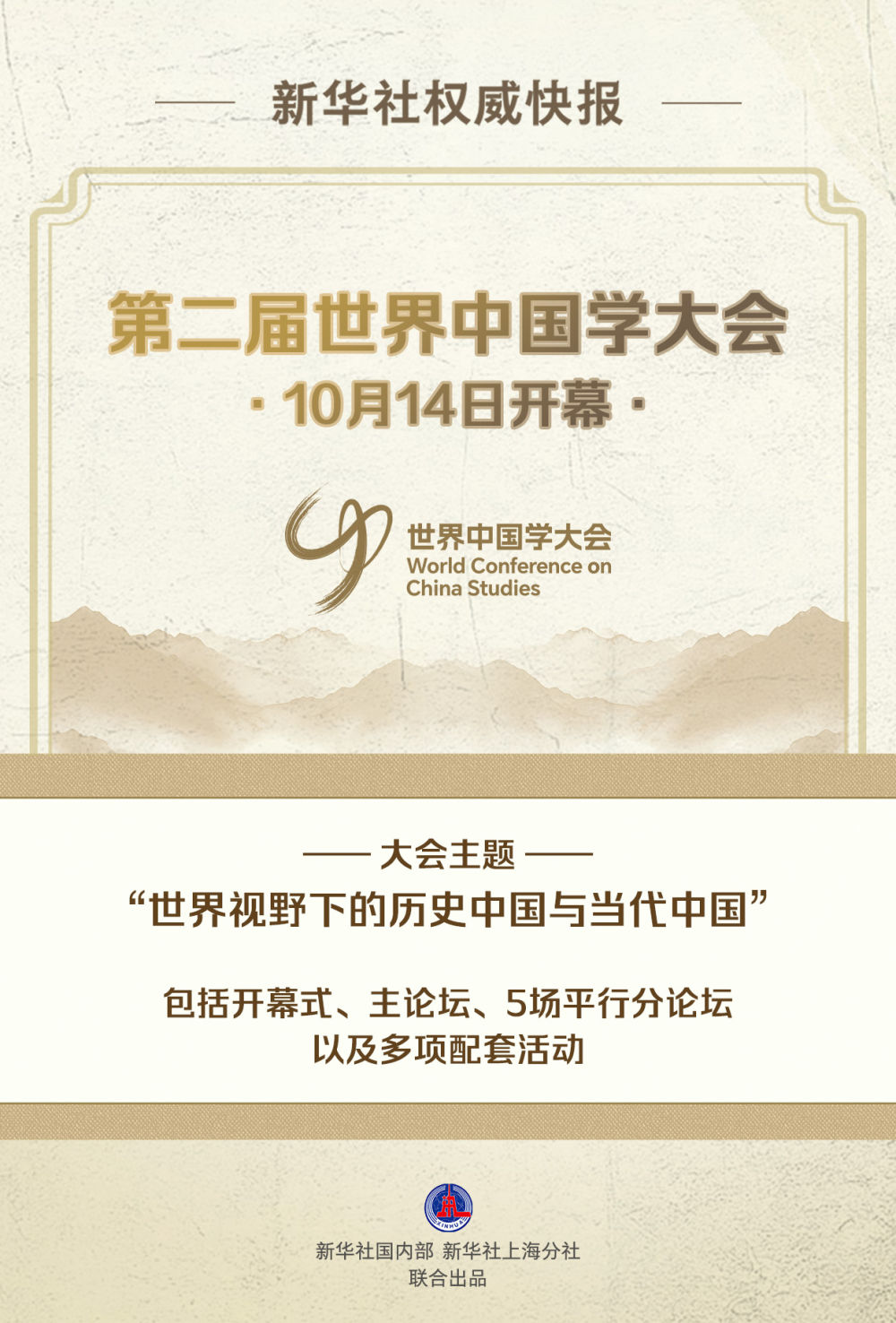
新华社权威快报|第二届世界中国学大会开幕
Xin Hua She· 2025-10-14 09:07
Group 1 - The second World Sinology Conference will open on October 14 in Shanghai, focusing on the theme "Historical China and Contemporary China from a Global Perspective" [4] - The conference will include an opening ceremony, a main forum, five parallel sub-forums, and various accompanying activities [2][4] - Approximately 500 renowned experts and scholars from home and abroad will engage in in-depth discussions around the theme [4] Group 2 - The conference will launch the World Sinology Development Initiative and introduce a recommended bibliography for Sinology research [4] - An exhibition titled "From Civilized Cities to Urban Civilization" will be held during the conference [4] - The event is organized by the State Council Information Office and the Shanghai Municipal Government, with support from various cultural and academic institutions [4]
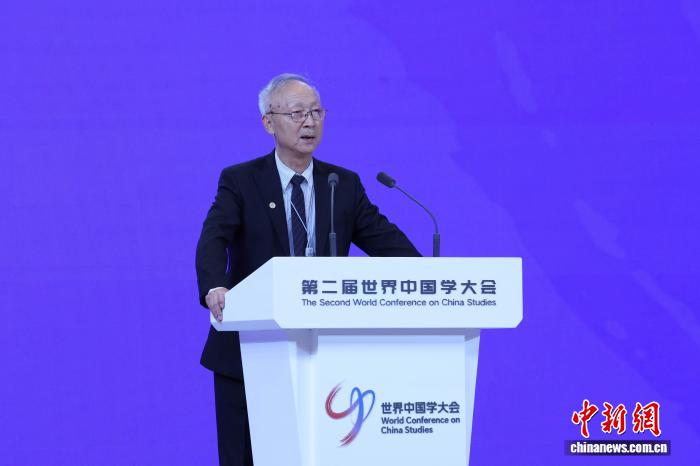
李伯重:“今天看中国的任何问题都要从世界这个大视野的角度”
Zhong Guo Xin Wen Wang· 2025-10-14 07:54
Core Viewpoint - The discussion emphasizes the importance of viewing Chinese issues from a global perspective, highlighting that the study of China is not only a national endeavor but also a global one [1][3]. Group 1: Conference Overview - The Second World Chinese Studies Conference was held in Shanghai, with around 500 experts and scholars participating to discuss "Historical and Contemporary China from a Global Perspective" [3]. - The conference marks a significant development in the field of World Chinese Studies, indicating its growing importance in international academia [4]. Group 2: Perspectives on Chinese Studies - Li Bozhong argues that understanding China requires both internal and external perspectives, suggesting that scholars must combine insights from both to gain a clearer understanding of China [4]. - The traditional approach of using Western historical experiences to analyze China is being challenged, with a call for a more reciprocal understanding that also considers China's historical context in relation to Europe [3][4]. Group 3: Global Significance of Chinese Studies - The concept of "World Chinese Studies" is presented as an essential component of international scholarship, with the conference serving as a platform for enhancing communication and cooperation among scholars from different countries [4].
东西问·中国学|短评:数智时代,中国学将往何处?
Zhong Guo Xin Wen Wang· 2025-10-14 03:18
Core Perspective - The Second World Chinese Studies Conference in Shanghai emphasizes the evolution of Chinese studies from "other narratives" to "subject narratives," particularly in the context of artificial intelligence and global discourse [2]. Group 1: Evolution of Chinese Studies - Chinese studies are transitioning to a more active role, integrating historical insights with future technological advancements, including governance of technology for good [2]. - The paradigm shift in Chinese studies has been accompanied by advancements in information access and cultural integration, with AI facilitating deeper research methodologies [2][4]. - The development of multilingual resources, such as the "Greater China Library," has garnered international acclaim, showcasing China's classical literature in various languages, thus promoting global academic collaboration [4]. Group 2: Global Collaboration and Knowledge Sharing - The conference highlights the importance of building an inclusive academic ecosystem that emphasizes fairness and inclusivity in the face of technological innovation [2]. - The integration of diverse perspectives from scholars around the world, including reflections on modernization from African scholars and South-South cooperation discussions from Latin America, illustrates the global sharing of Chinese studies [4][6]. - The shift in perception of China from a static object to an active participant in global development signifies a profound transformation in understanding and dialogue [6]. Group 3: Future Directions - The future of Chinese studies is rooted in deep humanistic traditions while leveraging digital advancements, aiming for a collective resonance rather than a singular voice [8]. - The emphasis on human-centered intelligence seeks to bridge the past and future, positioning Chinese studies as a vital link between China and the world in addressing common challenges [8].