
两岸关系

Search documents
马英九提字送马年祝福,谈及新一年两岸关系前景
Xin Lang Cai Jing· 2026-02-17 08:02
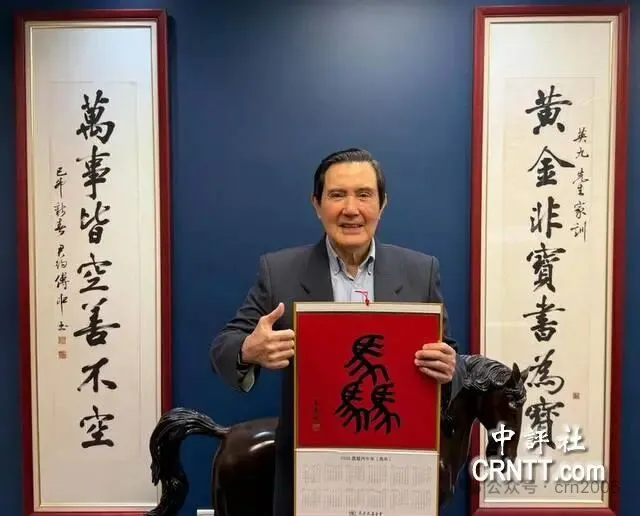
据香港中评社2月17日报道,农历新年到来,台湾地区前领导人马英九接受专访谈及新一年的两岸关系前景。他认为,如果赖清德不愿意放弃"台 独"的意识形态,甚至将意识形态凌驾于台湾民众的利益之上,两岸未来是没有乐观空间的。 马英九强调,他已经卸任多年,马英九基金会作为民间单位推动两岸青年交流工作,舒缓两岸民间因缺乏交流产生的隔阂与紧张,是他认为还能 为两岸关系有所贡献之处。 他表示,在基金会两位执行长萧旭岑、王光慈积极努力下,带了很多台湾学生团到大陆参访,与大陆同学打成一片。两岸青年之间的交流,就 是"浑然天成、欲罢不能",对两岸之间产生相当正面的效果。 马英九说,未来他会要求马英九基金会继续朝此方向努力。 郑丽文除夕撞钟祈福 喊话共同为和平努力 (来源:直新闻) 2026年对马英九来说是非常特别的马年,他之前公布的春联文字为"八方风雨辞青蟒,击壤歌衢望骅骝",也特别请马英九基金会设计限量新年小 物,是以"骉"为意象的限定挂历,要让民众有万马"骉"腾的新年好运。 马英九说,赖清德曾经说自己是"务实的'台独'工作者",他一直认为,这句话充满逻辑的矛盾,因为"台独"根本是不务实的,得不到国际任何力量 的支持,更缺乏台湾内 ...

百岁台胞关注两岸关系:唯有交流合作才能共同发展
Xin Lang Cai Jing· 2026-02-08 12:19
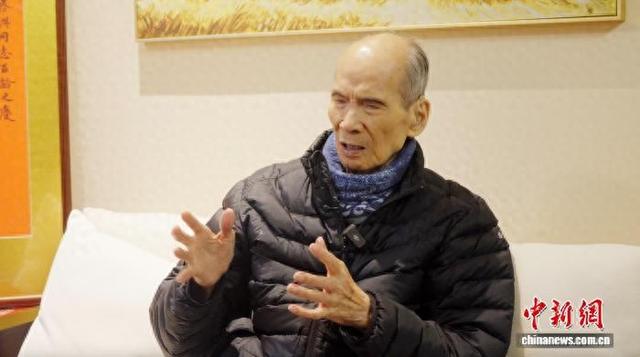
Core Viewpoint - The article emphasizes the importance of cross-strait communication and cooperation for mutual development, as expressed by Lin Shengxing, a centenarian Taiwanese who has lived through significant historical events and advocates for national reunification [1][3][4]. Group 1: Personal Background and Historical Context - Lin Shengxing, born in 1926 in Taipei, has experienced the Japanese colonial rule in Taiwan and later moved to the mainland for education and work, becoming one of the first Taiwanese to settle in mainland China [3]. - He recalls the painful memories of the "Japanization Movement" during the colonial period, which stripped Taiwanese of their cultural identity and rights, making them second-class citizens [3]. - His experiences during the Korean War and interactions with fellow students influenced his understanding of national identity and the importance of having a homeland [3]. Group 2: Cultural Connections and Concerns - Lin highlights the cultural similarities between Taiwanese and mainland Chinese people, such as shared religious beliefs and culinary traditions, emphasizing that they are essentially one family [3]. - He expresses concern over the growing influence of "Taiwan independence" forces that threaten the shared cultural foundation between Taiwan and the mainland [3]. - Lin advocates for more Taiwanese people to visit the mainland to witness its economic and technological advancements and to experience the warmth and friendliness of the mainland populace [3]. Group 3: Vision for the Future - Lin asserts that "Taiwan independence" has no future and that only through communication and cooperation can both sides accelerate their development [4].
慌了手脚,赖清德抛出所谓“四个不变”,岛内舆论喊话:睁眼看清世界
Xin Lang Cai Jing· 2026-02-06 23:02
Group 1 - The core viewpoint of the articles revolves around the changing dynamics of Taiwan's relationship with the U.S. and China, particularly in light of recent statements from U.S. President Trump regarding Taiwan, which have caused concern among Taiwan's leadership [1][2][3] - Taiwan's leader Lai Ching-te emphasized the "four unchanging" principles in Taiwan-U.S. relations, which include mutual non-subordination, U.S. commitments under the Taiwan Relations Act, maintaining peace and stability in the Indo-Pacific, and the steadfastness of Taiwan-U.S. relations [1][2] - Criticism from opposition parties highlights the perceived dangers of Lai's interpretation of U.S. support, suggesting that Taiwan is becoming a bargaining chip rather than a strategic partner [2][3] Group 2 - The articles suggest that the U.S. is gradually accepting the reality of Taiwan being under Chinese control, as indicated by Trump's evolving statements on Taiwan [3] - There is a call for Taiwan to shift from a defensive posture against China to a more cooperative approach, emphasizing the need for renewed cross-strait exchanges to avoid marginalization [3][4] - The commentary suggests that Taiwan should reject U.S. influence and instead focus on re-establishing ties with the mainland as a pathway to stability and global integration [4]
马英九叮嘱郑丽文访陆不穿高跟鞋、勤练书法,萧旭岑独家解读
Xin Lang Cai Jing· 2026-01-21 11:18
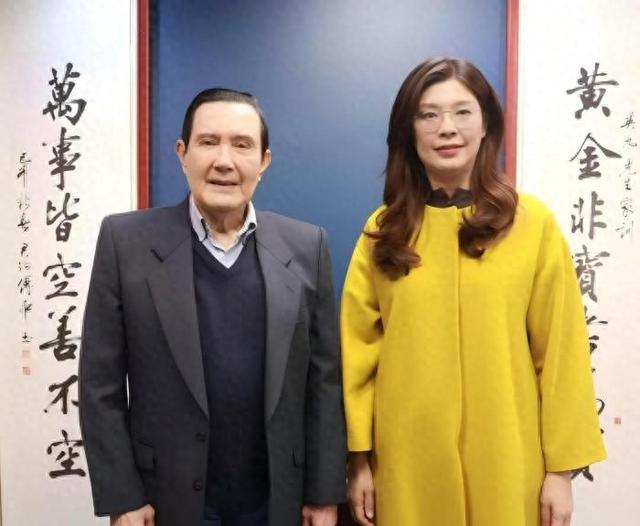
Core Viewpoint - The meeting between KMT Chairperson Zheng Liwen and former KMT Chairman Ma Ying-jeou highlights the ongoing concern for cross-strait relations and the support for KMT's efforts to promote dialogue and exchanges with mainland China [1][5]. Group 1 - Zheng Liwen conveyed that Ma Ying-jeou expressed strong support for the KMT's approach to cross-strait exchanges and breaking the ice in relations [1][5]. - Ma Ying-jeou criticized Lai Ching-te's self-identification as a "pragmatic Taiwan independence worker," stating that "pragmatism" and "Taiwan independence" are fundamentally incompatible, and emphasized that there is no international support for Taiwan independence, labeling it a dead end [2][5]. - Ma Ying-jeou offered practical advice to Zheng Liwen for her potential visit to mainland China, suggesting she avoid wearing high heels and practice calligraphy, which he believes reflects the importance of Chinese culture [2][5]. Group 2 - KMT Vice Chairman Hsiao Hsu-tsen explained that Ma Ying-jeou's suggestions were made in a warm manner, aiming for Zheng Liwen to present her best self during any future visits to the mainland [5]. - Hsiao Hsu-tsen noted that Ma Ying-jeou's recommendations stem from his own experiences visiting mainland China, encouraging Zheng Liwen to engage more with mainland friends [5]. - Ma Ying-jeou expressed confidence in Zheng Liwen's leadership and her commitment to advancing cross-strait relations since taking over as party chair [5].
国台办:愿同包括中国国民党在内的台湾各政党团体和各界人士保持良性互动
Xin Hua She· 2026-01-14 02:14
Core Viewpoint - The Chinese government expresses willingness to strengthen exchanges and interactions with Taiwan's political parties, including the Kuomintang (KMT), based on the "1992 Consensus" and opposition to "Taiwan independence" [1] Group 1: Government Stance - The spokesperson, Zhu Fenglian, emphasizes the importance of maintaining a political foundation for peaceful development of cross-strait relations [1] - The government criticizes the Democratic Progressive Party (DPP) for its persistent stance on "Taiwan independence," accusing it of undermining normal cross-strait exchanges and inciting anti-China sentiment [1] Group 2: Public Sentiment - There is a strong public dissatisfaction and opposition in Taiwan towards the DPP's actions, which are seen as detrimental to the interests of Taiwanese people and contributing to instability [1]
台海观澜 | 为了台湾大选这一天,两岸各方都在做哪些准备
Jing Ji Guan Cha Wang· 2026-01-12 03:38
Group 1 - The upcoming Taiwan election in January 2028 is seen as a critical turning point for cross-strait relations, with various parties preparing for potential outcomes [2] - The pro-independence camp in Taiwan, led by Lai Ching-te, is reportedly preparing for both a "decapitation" strategy and escape routes in response to potential threats from mainland China [2][3] - The blue camp in Taiwan is focusing on promoting peace across the strait while also preparing for the 2028 election, with optimistic internal predictions about the election outcome [5] Group 2 - Japan has announced plans to evacuate approximately 120,000 residents from Okinawa within six days in the event of a crisis in Taiwan, indicating a potential capacity to receive evacuees from Taiwan [3] - The Philippines has indicated that it would be "inevitably" drawn into conflict if a situation arises in Taiwan, suggesting a serious consideration of military involvement [4] - Mainland China is preparing for any outcome of the Taiwan election and any potential changes in the situation before the election, indicating a readiness to respond to developments [6]
郑丽文推动重启中断近10年的“国共论坛”,或聚焦两岸共通议题
Xin Lang Cai Jing· 2026-01-12 03:34
Core Viewpoint - The Kuomintang (KMT) under Chairperson Zheng Liwen is actively promoting cross-strait dialogue and is preparing to resume the "Cross-Strait Forum," which has been suspended for nearly a decade, indicating a potential thaw in relations between Taiwan and mainland China [1][2]. Group 1: Cross-Strait Dialogue Initiatives - Zheng Liwen stated that communication with the mainland is currently "very smooth," and there is a sense of goodwill from the other side [2]. - The KMT is preparing for the upcoming "Cross-Strait Forum" by focusing on forward-looking major issues [2]. - KMT Vice Chairman Xiao Xucen emphasized that the KMT can maintain mutual trust and communication between the two sides, contrasting the DPP's approach [3]. Group 2: Political Context and Criticism - Zheng criticized the DPP's National Security Council for spreading rumors instead of seeking solutions, suggesting that the DPP should facilitate dialogue rather than obstruct it [2]. - KMT legislators criticized the DPP for lacking the ability to improve relations with the mainland and for damaging communication bridges [4]. - The KMT aims to position itself as a facilitator of cross-strait exchanges in various fields, including culture, education, and technology [4]. Group 3: Historical Context of the Cross-Strait Forum - The "Cross-Strait Forum" was initiated in 2005 and has served as an important communication platform, with the last session held in 2016 [5]. - Historical forums have led to beneficial policies for Taiwan, such as recognizing Taiwanese higher education qualifications and increasing agricultural exports to the mainland [5]. - The forum has previously facilitated discussions on economic cooperation and trade agreements, highlighting its significance in cross-strait relations [5]. Group 4: Public Sentiment and Future Outlook - There is a growing sentiment among the public for self-help and a desire to break away from the current political tensions, with the resumption of the "Cross-Strait Forum" seen as a potential turning point [7]. - The KMT's past governance is associated with frequent interactions and a more stable cross-strait relationship, contrasting with the current administration's approach [7]. - The forum is viewed as a means to enhance communication and reduce hostility, aligning with the public's desire for peace and stability [7].
倒计时两年,2028年两岸关系的3个时间节点
经济观察报· 2026-01-07 11:10
Core Viewpoint - The upcoming Taiwan election will be a critical turning point for cross-strait relations, with potential outcomes leading to either peaceful unification or various forms of unification depending on the election results [1][4]. Group 1: Key Time Nodes - Experts highlight 2027 as a significant year for Taiwan, but the author identifies 2028 as the more crucial year due to three key dates: January 8 or January 15, May 20, and the U.S. election day [2][10]. - The first key date is the potential date for the next Taiwan election, which could be January 8 or January 15, 2028, based on the previous election schedule [4]. Group 2: Election Outcomes and Implications - If the Democratic Progressive Party (DPP) wins the next election, it would mark 16 years of DPP governance, raising questions about the implications for peaceful unification as outlined in the Anti-Secession Law [3][6]. - The DPP's push for "de jure independence" is unlikely, as recent proposals to change legal terminology were quickly retracted after warnings from the mainland [6][7]. - Despite the low likelihood of formal independence, the DPP may still employ strategies to promote independence sentiments and deepen cross-strait tensions [7]. Group 3: Mainland China's Response - Mainland China's actions in the lead-up to the election are expected to serve as warnings, but if the DPP continues to govern, these actions may escalate [8][9]. - The inauguration of the new Taiwanese leader on May 20 will be another critical moment, influencing mainland China's policy decisions based on the leader's inaugural speech [9]. Group 4: Alternative Scenarios - Besides the DPP winning, two other scenarios for the 2028 Taiwan situation include the Kuomintang (KMT) winning the election or the absence of an election altogether [11][12].
台海观澜 | 倒计时两年,2028年两岸关系的3个时间节点
Jing Ji Guan Cha Bao· 2026-01-07 03:35
Core Viewpoint - The critical time node regarding the Taiwan issue is identified as 2028, with three significant dates: January 8 or January 15, May 20, and the U.S. election day. These dates will influence cross-strait relations and potential outcomes for Taiwan's political landscape [1]. Group 1: Upcoming Elections and Their Implications - The next Taiwan election is projected to occur on January 8 or January 15, 2028, which could mark a significant turning point in cross-strait relations depending on the election outcome [2]. - If the Democratic Progressive Party (DPP) wins, it would signify 16 years of DPP governance, potentially triggering provisions in the Anti-Secession Law regarding the loss of peaceful unification possibilities [2]. - The election results will determine the direction of cross-strait relations, with a DPP victory possibly leading to a more aggressive unification approach, while a victory for the opposition could favor peaceful unification [2]. Group 2: DPP's Position and Legislative Actions - The likelihood of the DPP pushing for "de jure independence" is considered low, as evidenced by the withdrawal of a proposal to change the name of the cross-strait relations law, which would have escalated tensions [4][5]. - The DPP may still employ various strategies to promote "Taiwan independence" rhetoric and deepen cross-strait tensions, despite the reduced likelihood of formal independence actions [5]. Group 3: Mainland China's Response and Future Scenarios - Mainland China's actions leading up to the 2028 election are characterized as warning signals, with potential for escalation if the DPP remains in power post-election [6][7]. - The inauguration of the new Taiwanese leader on May 20, 2028, will be pivotal, as China's subsequent actions will depend on the leader's inaugural speech and stance on cross-strait relations [7]. - The outcome of the U.S. election, likely to occur around the same time, could also influence China's policy towards Taiwan, particularly if a Democratic administration is perceived to be more lenient towards "Taiwan independence" [7].
宋涛发表新年寄语:携手奋进 共创福祉
Xin Hua She· 2026-01-02 11:12
Core Viewpoint - The articles emphasize the importance of cross-strait relations and the commitment to national unity, highlighting the year 2025 as a pivotal moment for both Taiwan and mainland China, with a focus on enhancing cooperation and mutual benefits for Taiwanese compatriots [1][2]. Group 1 - 2025 is identified as a year for overcoming challenges in cross-strait relations and building momentum for national unification, with increased convenience for Taiwanese individuals traveling to the mainland [2]. - There has been a significant increase in the number of Taiwanese compatriots, including youth, visiting the mainland, indicating progress in cross-strait exchanges and cooperation [2]. - The establishment of high-quality cross-strait integration development demonstration zones aims to enhance the welfare of Taiwanese compatriots and businesses [2]. Group 2 - The year 2026 marks the beginning of the "15th Five-Year Plan," with a commitment to implementing the guiding principles of Xi Jinping's thought and the resolutions from the 20th National Congress of the Communist Party [2]. - The articles stress the importance of adhering to the "One China" principle and the "1992 Consensus" to promote peaceful development of cross-strait relations and advance national unification [2]. - There is a call for dialogue and consultation with various political parties and groups in Taiwan to foster cooperation and address the issue of national unification [2].