
一中政策

Search documents
慌了手脚,赖清德抛出所谓“四个不变”,岛内舆论喊话:睁眼看清世界
Xin Lang Cai Jing· 2026-02-06 23:02
Group 1 - The core viewpoint of the articles revolves around the changing dynamics of Taiwan's relationship with the U.S. and China, particularly in light of recent statements from U.S. President Trump regarding Taiwan, which have caused concern among Taiwan's leadership [1][2][3] - Taiwan's leader Lai Ching-te emphasized the "four unchanging" principles in Taiwan-U.S. relations, which include mutual non-subordination, U.S. commitments under the Taiwan Relations Act, maintaining peace and stability in the Indo-Pacific, and the steadfastness of Taiwan-U.S. relations [1][2] - Criticism from opposition parties highlights the perceived dangers of Lai's interpretation of U.S. support, suggesting that Taiwan is becoming a bargaining chip rather than a strategic partner [2][3] Group 2 - The articles suggest that the U.S. is gradually accepting the reality of Taiwan being under Chinese control, as indicated by Trump's evolving statements on Taiwan [3] - There is a call for Taiwan to shift from a defensive posture against China to a more cooperative approach, emphasizing the need for renewed cross-strait exchanges to avoid marginalization [3][4] - The commentary suggests that Taiwan should reject U.S. influence and instead focus on re-establishing ties with the mainland as a pathway to stability and global integration [4]
俄罗斯看透特朗普:美国在全球横行霸道,唯独不敢碰中国!
Sou Hu Cai Jing· 2026-01-11 05:08
Group 1 - The article discusses the geopolitical tensions involving the United States and China, highlighting that the U.S. is unlikely to engage in direct military conflict with China due to its military capabilities and the economic interdependence between the two nations [1][10][12] - The U.S. has attempted to exert economic pressure on China through tariffs and sanctions, but these measures have backfired, leading to significant domestic discontent and inflation in the U.S. [3][10] - The U.S. defense budget for fiscal year 2026 has reached $900 billion, with a core objective of containing China's development, including measures like capital restrictions on investments in key Chinese sectors [12][14] Group 2 - The article notes that the U.S. is constructing a global supply chain blockade against China, prohibiting collaborations in critical technology sectors and aiming to cut off supply chains [14] - The U.S. military is facing challenges in maintaining its naval capabilities, with a significant reduction in shipbuilding capacity compared to China, which has the largest navy in the world [9][14] - Despite U.S. efforts to contain China, the latter is enhancing its technological innovation and defense capabilities, positioning itself to effectively respond to external threats [14]

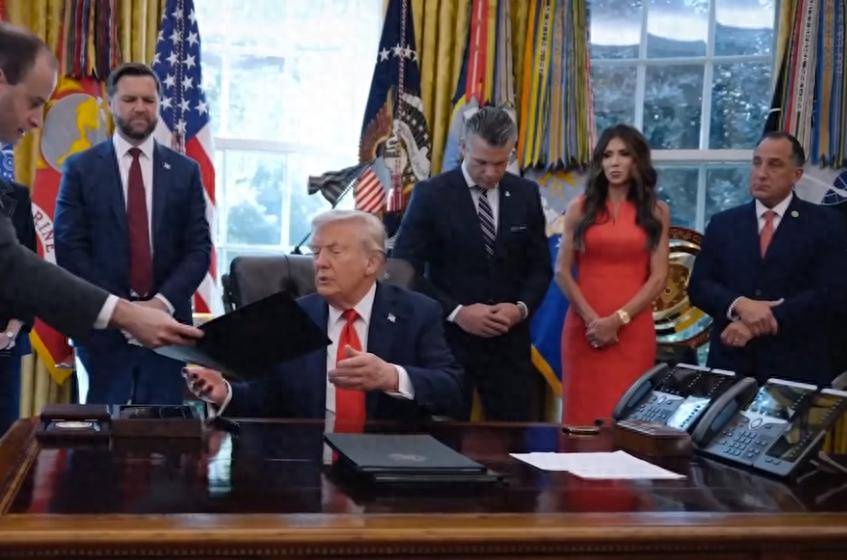
张思南:中方反制20家美军火商,打破“台湾牌”的“窗口期赌局”
Xin Lang Cai Jing· 2025-12-27 15:38
Core Viewpoint - The recent arms sale to Taiwan, amounting to a record $11.1 billion, signals a strategic shift in U.S. policy towards Taiwan, emphasizing systematic militarization rather than merely managing risks in the Taiwan Strait [11] Group 1: U.S. Arms Sale and Strategic Implications - The timing of the arms sale coincides with a perceived stable period in U.S.-China relations, allowing the U.S. to leverage the "Taiwan card" for geopolitical advantage without immediate confrontation [3] - The arms sale represents a structural shift in U.S. strategy, moving from a focus on maintaining balance in the Taiwan Strait to using arms sales as a strategic deterrent against China [12] - The nature of the arms being sold has transitioned from defensive and symbolic weapons to a focus on asymmetric warfare capabilities, including mobile and cost-effective systems designed to increase China's strategic costs [13] Group 2: China's Response and Countermeasures - In response to the arms sale, China has initiated systematic and escalated countermeasures against 20 U.S. defense companies and 10 executives involved in the arms sale, indicating a comprehensive approach to counter U.S. military support for Taiwan [5] - China's countermeasures target the underlying industrial and technological networks that support U.S. arms sales to Taiwan, signaling a shift towards institutional dismantling of these networks [7] - The ongoing U.S. arms sales and China's responses have evolved into a strategic game of rules and endurance, with China clearly delineating that the Taiwan issue is a non-negotiable red line [9]
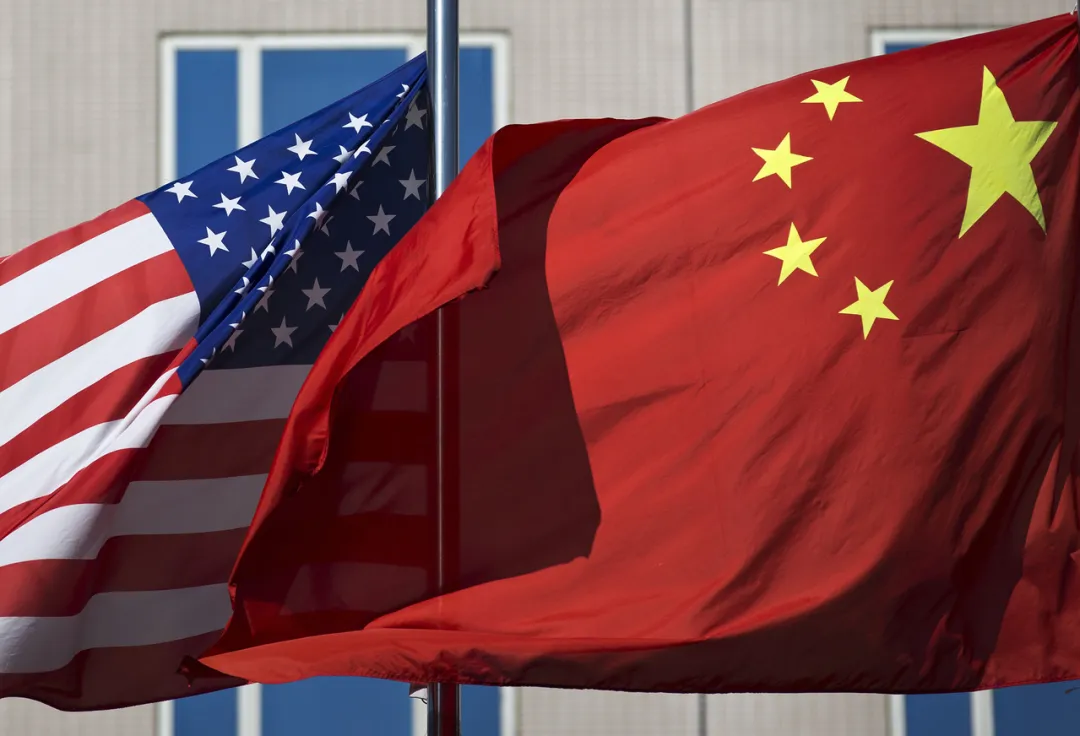
赖清德当局迎合高市早苗涉台谬论遭台湾各界持续挞伐
Xin Hua She· 2025-11-24 11:52
Group 1 - The core viewpoint of the articles is the criticism of Taiwan's leadership, particularly Lai Ching-te and the Democratic Progressive Party (DPP), for their perceived alignment with Japan's right-wing figures and their failure to uphold national dignity, which has led to public backlash in Taiwan [1][2][3] - Lai Ching-te and DPP officials have been accused of using the situation to promote pro-Japan sentiments, including encouraging tourism to Japan and promoting "Taiwan-Japan friendship," which many view as a betrayal of Taiwan's historical context and national interests [1][2] - Various Taiwanese organizations and political figures have expressed strong opposition to the DPP's stance, emphasizing the historical grievances against Japan and calling for a rejection of any military involvement from Japan in Taiwan's affairs [1][2][3] Group 2 - The criticism extends to the handling of food safety issues related to the lifting of bans on food imports from Fukushima, which is seen as politically motivated and detrimental to the health of Taiwanese citizens [1] - The articles highlight the historical context of Japan's colonial rule over Taiwan, with calls for the DPP to acknowledge this history and refrain from actions that could be interpreted as supporting Japanese militarism [2][3] - The sentiment among critics is that the DPP's actions are not only politically motivated but also risk escalating tensions in the Taiwan Strait, potentially leading to a more dangerous regional situation [2][3]
美国国务院就高市“台湾有事”言论发声
日经中文网· 2025-11-13 02:46
Group 1 - The U.S. is committed to maintaining peace and stability in the Taiwan Strait and opposes any unilateral changes to the status quo by either side [2][4] - The U.S. supports dialogue between the two sides of the Taiwan Strait and hopes that differences can be resolved peacefully without threats [2] - The U.S. continues to provide arms to Taiwan to support its self-defense capabilities, in accordance with the Taiwan Relations Act [4]
德国外长访华行程推迟,德方表示遗憾
Huan Qiu Shi Bao· 2025-10-24 22:52
Group 1 - German Foreign Minister Baerbock's planned visit to China has been postponed due to insufficient meetings arranged in China, which highlights the importance of China in trade and international affairs [1] - The visit was originally scheduled to start on the 26th and was intended to address export control issues related to rare earths and semiconductors, emphasizing the need for stable and reliable global trade relations [1] - Baerbock expressed that Germany aims to maintain close economic ties with China, stating that "decoupling" is not the correct strategy [1] Group 2 - Baerbock reiterated Germany's commitment to the One China policy while emphasizing that Germany will decide its policy implementation independently and does not support the use of force to change the status quo in the Taiwan Strait [2] - China's Foreign Ministry responded by stating that the greatest threat to peace in the Taiwan Strait is "Taiwan independence" and external forces supporting it, urging Germany to uphold the One China principle [2] - A commentary from German media suggested that Baerbock should adopt a more curious and learning-oriented approach towards China, rather than a punitive one, which could benefit Germany's export sector [2]