历史文化保护

Search documents
东总布胡同:青砖载岁月,轶事映京华(北京胡同时光叙事之十六)
Xin Lang Cai Jing· 2026-02-10 06:38
东总布胡同,西起东单北大街,东至建国门北大街,与长安街咫尺相望,却藏着一份远离喧嚣的厚重与 沉静。 东总布胡同的起源,可追溯至元代大都城的街巷格局,但其真正成型并得名,始于明代。元代定都大都 后,奠定了北京"棋盘式"街巷的雏形,彼时东总布胡同所在的区域,隶属于大都城的东南部,因靠近城 墙根下,多为驻军与平民杂居之地,街巷尚未有明确的名称与规整的形制。明成祖朱棣迁都北京后,对 都城进行了大规模的扩建与修缮,设立五城兵马司,分管京城治安与防卫,同时在城内各处设立"总 铺",负责传递公文、巡查街巷、维护秩序,"总布"一词,便源于明代的"总铺"制度,取"总辖铺舍、布 防巡查"之意。彼时,这条胡同作为城东重要的巡查与传递节点,被命名为"总布胡同",后因京城胡同 数量增多,为加以区分,便在前面冠以"东"字,定名"东总布胡同",沿用至今。 内设有书房、客厅、花园,书房内珍藏着大量的西方书籍与翻译手稿。严复在东总布胡同居住期间,一 边主持京师大学堂的工作,一边潜心翻译西方著作,深夜时分,书房里的灯火常常彻夜通明,他常常伏 案工作至凌晨,只为将西方的先进思想与文化准确地传递给中国人。闲暇之时,他会在院中散步,或与 友人闲谈,探 ...
中国人民政治协商会议第十四届广州市委员会常务委员会工作报告
Guang Zhou Ri Bao· 2026-02-04 02:53
Core Viewpoint - The report highlights the achievements and initiatives of the Guangzhou Municipal Committee in 2025, focusing on economic development, innovation, and community engagement as part of the "14th Five-Year Plan" and preparing for the "15th Five-Year Plan" [3][20]. Group 1: Economic Development - The committee emphasized the importance of building a modern industrial system, with suggestions for fostering emerging industries such as AI and robotics, and enhancing the service sector [4][5]. - Significant progress was made in establishing the Guangdong-Hong Kong-Macao Greater Bay Area Life and Health Industry Innovation Zone, showcasing collaboration among various governmental bodies [4]. - The report noted the successful promotion of cross-border logistics and the development of a vibrant water economy, with the Pearl River cruise index ranking first globally for two consecutive years [4]. Group 2: Innovation and Technology - The committee focused on enhancing innovation capabilities, proposing the establishment of a public stem cell resource bank and promoting joint laboratories in the medical field [5]. - Efforts to improve the conversion of innovative results into practical applications were highlighted, including the establishment of a regional technology transfer center [5][6]. Group 3: Business Environment - Recommendations were made to create a market-oriented, law-based, and international business environment, including the introduction of mediation mechanisms and the establishment of a financial legal service center [7]. - The report mentioned the successful implementation of a plan to optimize administrative procedures, significantly reducing the number of regulatory items [7]. Group 4: Urban and Regional Development - The committee advocated for coordinated urban and rural development, proposing initiatives to enhance the quality of life in western districts and promote cultural tourism in northern mountainous areas [8]. - Suggestions included improving land use efficiency and activating idle urban spaces to support rural revitalization [8]. Group 5: Health and Safety - The report emphasized the importance of enhancing healthcare services, with initiatives aimed at improving emergency medical services and establishing a digital health data management system [10][11]. - Proposals were made to strengthen mental health services and support for vulnerable groups, including the elderly and children [11]. Group 6: Cultural Development - The committee underscored the significance of cultural heritage protection and promotion, with initiatives to develop historical sites and enhance cultural tourism [12]. - Efforts to increase cultural influence through various community engagement activities and educational programs were also highlighted [12].
青海省城市更新历史文化保护评价报告编制工作指引
Xin Lang Cai Jing· 2026-02-02 18:02
更新片区(项目)现状建(构)筑物调查及综合评估方法 (一)評估体系的选择依据 很据《中国历史文化名称(村)评价指标体系(试行)其传统村若评价认定指标体系 (代行)》,站合合发现场发现在合成,《行社》。 (二)评估方法 1. 按照本指引对建(約)筑物的历史文化价值(占比20分)、社会文化价值(占比20 分)、艺术价值(占比15分)、科学价值(占比15分)、保存状态(占比15分)和建筑安全评价 (占比15分)六项内容,开展评估(上述内容合共100分)。综合评价应当填写现状建(始) 筑物综合评价表(附表1-2)。 附件1-2 | 价值本平 | 价值指标 | 价值描述填写栏(描述参考) 评分值 能够体现其所在地焦久历史(为1949年以前建造);反映古代城市建设成就、 | | --- | --- | --- | | | | 乡村聚居形态特色,反映近现代变革发展,见证中国共产党诞生与发展,见证 | | | | 新中国建设发展,见证改革开放伟大进程,见证其他某一特定时期的建设成 | | 1. 反映音符省某一特定 | | 就。体现"青海是中国民族地区实现社会经济跨越式发展的重要见证""多民 | | 时期的建设风格和形式 | ...

山东省出台实施意见推动城市高质量发展
Xin Hua Wang· 2026-01-22 04:44
Group 1 - The core viewpoint of the news is the implementation of the "Implementation Opinions on Promoting High-Quality Urban Development" by the Shandong Provincial Government, which outlines a roadmap for urban development focusing on modern, innovative, and resilient cities [1] - The document emphasizes the importance of optimizing urban systems and infrastructure, aiming for integrated urban cluster development and enhanced transportation networks [1] - It highlights the need for a modern industrial system and improved technological innovation capabilities, as well as deeper integration into the Belt and Road Initiative [1] Group 2 - Urban high-quality development is linked to land resource planning and management, with a focus on optimizing land supply structures and encouraging mixed-use development [2] - The province aims to enhance green building standards and promote energy-efficient construction, including the development of low-carbon and zero-carbon buildings [2] - A carbon trading system for buildings is being explored to transform buildings from energy-consuming entities into green assets [2] Group 3 - The preservation of historical and cultural heritage is identified as a key task for high-quality development, with measures to protect and restore historical sites and neighborhoods [3] - The province plans to implement a pre-protection system for historical areas and promote gradual updates to enhance urban aesthetics while ensuring safety [3] - Shandong is advancing digital transformation across all cities, leveraging technologies like AI and big data for community governance and improving living environments [3]
我省出台实施意见推动城市高质量发展
Da Zhong Ri Bao· 2026-01-22 01:05
我省出台实施意见推动城市高质量发展 推进济青都市圈协同联动发展 想知道你所在的城市未来会变成什么样吗?省政府新闻办1月21日召开政策例行吹风会,对省委、 省政府近日印发的《关于推动城市高质量发展的实施意见》进行解读,《意见》不仅关乎城市未来的宏 观布局,也与群众的就业、居住、出行、环境息息相关。 《意见》锚定建设现代化人民城市,系统提出9个方面、23条具体举措,为山东城市发展描绘出一 幅清晰的"路线图"。 着眼于加快建设创新、宜居、美丽、韧性、文明、智慧的现代化人民城市,《意见》进一步优化城 市体系,夯实发展根基。省发展改革委二级巡视员封立树表示,"十五五"时期是加快济青现代化都市圈 建设、推进两圈协同联动发展的关键时期,《意见》明确提出"推动城市群一体化、都市圈同城化发 展"的要求。在实施路径上,将加快推动基础设施互联互通,共建便捷通达交通网络。共建现代化产业 体系,优化两圈产业布局,提升科技创新策源能力。提高协同开放能级,发挥好开放载体作用,深度融 入共建"一带一路"。深化淄烟潍与两圈合作,构建济青高质量发展轴带。 城市高质量发展离不开国土空间规划引领和土地资源要素保障。省自然资源厅二级巡视员段秀铭指 出 ...
明起,故宫养心殿将重新开放:清代8位皇帝“起居办公室”,经历近10年修缮
Mei Ri Jing Ji Xin Wen· 2025-12-25 11:34
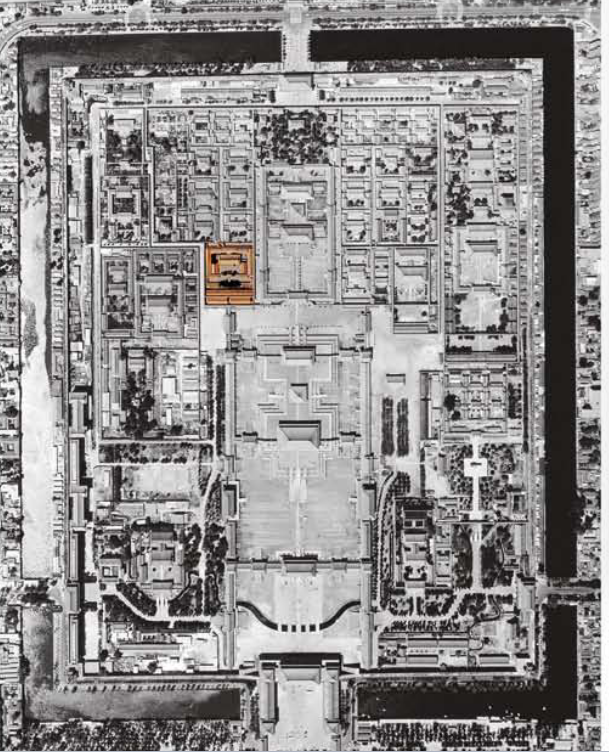
每经编辑|何小桃 12月23日,故宫博物院发布"关于养心殿重新开放的公告"。 公告称,经过近10年的研究性保护和系统性修缮,养心殿将于2025年12月26日(周五)对观众重新开放。 据介绍,养心殿位于乾清宫西侧,西六宫迤南,始建于明代嘉靖十六年(1537年)。2015年,养心殿研究性保护项目启动,经过为期10年的系统性修缮保 护,有效解决了建筑本体存在的问题,恢复并延续了养心殿区域的健康状态,改善了室内文物的保存环境。 此次养心殿室内原状陈列的布展遵循历史原貌,正殿宝座上方悬挂雍正御笔"中正仁和"匾,西暖阁"勤政亲贤"匾额下的楹联恢复如初,三希堂内则按记载 还原了乾隆时期的陈列场景。 据新京报报道,养心殿位于内廷乾清宫西侧。清初顺治皇帝病逝于此地。康熙年间,这里曾经作为宫中造办处的作坊,专门制作宫廷御用物品。 ▲养心殿在紫禁城中的位置示意图。 自雍正皇帝居住养心殿后,造办处的各作坊遂逐渐迁出内廷,这里就一直作为清代皇帝的寝宫,至乾隆年加以改造、添建,成为一组集召见群臣、处理政 务、皇帝读书、学习及居住为一体的多功能建筑群。一直到溥仪出宫,清代有八位皇帝先后居住在养心殿。 养心殿为工字形殿,前殿面阔三间,通面阔 ...
成都:小区名禁用“万国”“宇宙”“天下”“中央”“欧洲”等词语,一般不得使用“中国”“中华”“国际”
Xin Lang Cai Jing· 2025-12-25 02:17
禁用夸张用语:禁止使用"万国""宇宙""天下""中央""欧洲"等刻意夸大的词语。一般不得使用"中国""中 华""全国""国际""世界"等词语,确需使用的应有充分理由并严格审核。 外文使用规范:原则上不得使用外文音译命名。确有必要使用时,需说明原因,并确保外文原意健康、 中文名称无不良含义且不产生歧义。 专有名称保护:使用如"世博""奥林匹克"等国家明令保护的标语、文字,必须事先取得主管部门的书面 同意。 地域指向要求:冠以本市行政区划名或区片名的,其实际位置应在该区域范围内。 《四川日报》12月25日消息,成都市住房和城乡建设局、成都市民政局日前联合印发《成都市具有重要 地理方位意义的住宅区、楼宇名称批准管理办法》(下称《管理办法》),进一步规范成都市具有重要 地理方位意义的住宅区与楼宇的命名、更名工作。 《管理办法》明确了多项住宅区、楼宇命名要求,包括—— 政治与文化底线:严禁使用损害国家主权、民族尊严、民族团结、宗教和睦、社会稳定以及违背公序良 俗的词语。 名称来源限制:禁止使用人名、外国地名及其简称;禁止使用具有特定政治色彩的词语、帝王称谓、官 衔、职位等词语;原则上不得使用企业名称、商标名称,防止变相 ...
海陵:高质量推进城市更新,“文化古城”展新颜
Xin Hua Ri Bao· 2025-12-02 06:00
Core Viewpoint - The article highlights the efforts of Hailing District in Taizhou to preserve and revitalize its historical and cultural heritage while promoting urban renewal, aiming to create a modern, livable, and resilient ancient city that integrates tradition with contemporary life [1][2][3]. Group 1: Urban Renewal and Cultural Preservation - Hailing District adopts a "small-scale, incremental" approach to urban renewal, focusing on integrating historical and cultural preservation into urban development [2]. - The district has completed the restoration of 11 cultural heritage sites and established several memorial museums, enhancing public cultural spaces [2]. - A total of 126 old residential communities built before 2000 have undergone renovation, benefiting approximately 50,000 residents [3]. Group 2: Community Engagement and Innovative Mechanisms - Hailing District promotes community involvement in urban renewal through initiatives like the "street discussion system," encouraging residents to participate in the maintenance and improvement of their neighborhoods [2][8]. - The district has implemented a "micro-renewal" strategy, focusing on restoring building facades and enhancing the visual appeal of streets while maintaining their historical character [4]. - A unique long-term maintenance mechanism has been established, involving local businesses in maintaining cleanliness and order in the streets [8][9]. Group 3: Economic Development and Tourism - The revitalization of historical streets has led to the emergence of new commercial activities, attracting young consumers and boosting local employment [6][7]. - The "Ten Victory Street" has seen significant foot traffic, with over 800,000 visitors since its opening, creating more than 600 jobs [6]. - Hailing District is actively promoting cultural tourism by integrating historical sites with modern commercial offerings, enhancing the overall visitor experience [7][10].
百年街巷焕新颜——济南以城市更新赓续古城文脉
Xin Hua Wang· 2025-10-05 05:31
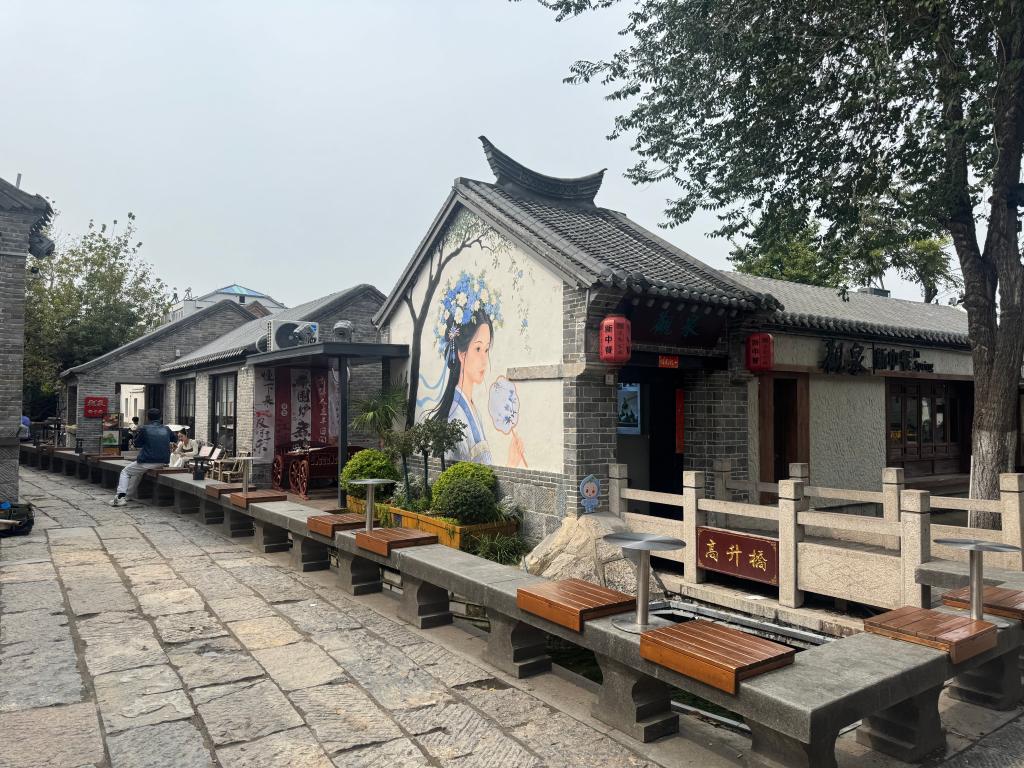
Core Viewpoint - The renovation of the Mingfu City area in Jinan has successfully integrated traditional culture with modern elements, attracting tourists and enhancing the local cultural landscape [1][2][4]. Group 1: Renovation and Cultural Integration - The Mingfu City area is a historical and cultural hub in Jinan, featuring numerous historical sites and water systems [2]. - Recent renovations have followed the principles of preservation and restoration, enhancing 31 historical courtyards while maintaining their original characteristics [2][4]. - The area now includes a mix of traditional and modern shops, appealing to a diverse range of visitors [1][4]. Group 2: Architectural and Historical Significance - The renovated Xinxin Street showcases a "poetry corridor" that highlights classic literary quotes from historical figures, enhancing the cultural atmosphere [2]. - The area includes several protected historical buildings and has become a landmark for cultural tourism [2][4]. - The renovation efforts have created a vibrant space that combines cultural heritage with contemporary retail and hospitality offerings [4]. Group 3: Urban Development and Cultural Spaces - Jinan has initiated multiple urban renewal projects, creating a positive cycle of historical preservation, business upgrade, and improved living conditions [4]. - The focus on creating culturally rich spaces is seen as a response to the lack of unique cultural and historical environments in many cities [4]. - The integration of culture, art, history, and commerce is aimed at revitalizing the urban landscape and enhancing the city's image [4].
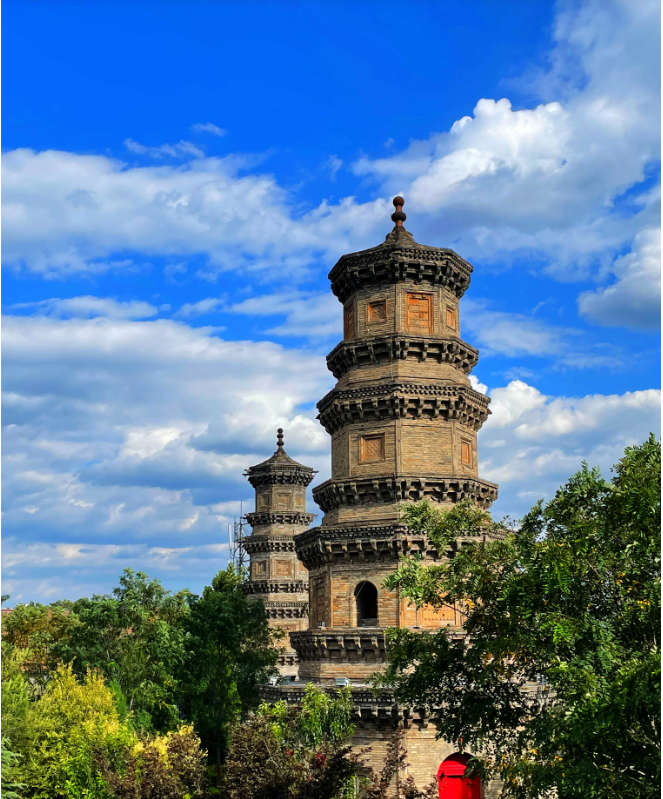
山西平定天宁寺双塔 千年建筑的美丽与神秘
Yang Guang Wang· 2025-09-19 01:55
Core Viewpoint - The article highlights the historical and architectural significance of the Tian Ning Temple Twin Towers in Pingding, Shanxi Province, showcasing their unique features and the cultural heritage they represent [1][11]. Architectural Features - The Twin Towers are octagonal brick pagodas, approximately 21 meters tall, showcasing exquisite craftsmanship with intricate details that reflect the elegance of Song Dynasty architecture [2][5]. - The East Tower is solid, symbolizing stability, while the West Tower is hollow, allowing visitors to ascend and enjoy panoramic views, creating a striking contrast between the two structures [5]. Archaeological Discoveries - In 2005, during restoration work, a small Song Dynasty crypt was discovered beneath the West Tower, revealing vibrant wall paintings and artifacts that illustrate the prosperity of the era [6]. Historical Significance - The temple, originally named Shou Ning Temple, features a plaque inscribed by Cai Jing, a prominent figure of the Northern Song Dynasty, adding a royal dimension to its history [7]. - The construction of the towers was overseen by local military and political leaders, indicating their historical importance and the high standards of their construction [7]. Cultural Recognition - The Twin Towers were restored in 2006 and designated as a municipal cultural heritage site, receiving professional protection and management [8]. - In 2013, they were officially recognized as a national key cultural relic, affirming their historical and cultural value within Chinese civilization [11].