
历史文化遗产保护

Search documents
习近平总书记关切事 | 新春万里暖山河
Xin Hua She· 2026-02-10 06:29
Core Viewpoint - The articles highlight the deep concern and commitment of President Xi Jinping towards grassroots communities, emphasizing the importance of modernization and revitalization efforts across various regions in China, particularly during the Spring Festival [1][2][5]. Group 1: Community Revitalization - The transformation of the Simo La Wa ethnic village in Yunnan, which has evolved from a poverty-stricken area to a thriving community, is attributed to the implementation of a cooperative model that integrates agriculture with tourism, aiming for 631,000 visitors and over 15 million yuan in tourism revenue by 2025 [2][3]. - In Fen Nanguan village, post-disaster recovery efforts have led to a significant increase in collective income from 81,000 yuan in 2021 to over 400,000 yuan by 2025, showcasing the effectiveness of community-driven initiatives [5]. Group 2: Cultural Heritage and Tourism - The ancient city of Pingyao is focusing on sustainable development and cultural preservation, with expectations of over 11 million tourists by 2025, driven by events like the "Pingyao China Year" and the "Pingyao International Photography Exhibition" [7]. - The protection of historical sites is emphasized as a means to maintain cultural identity while promoting tourism, with ongoing efforts to ensure the safety and integrity of ancient structures [6][7]. Group 3: Energy Supply and Infrastructure - The Tarim Oilfield has been pivotal in ensuring energy supply, with over 3,900 billion cubic meters of gas delivered through the West-to-East Gas Pipeline, supporting nearly 500 million residents [10]. - The commitment to maintaining energy supply is underscored by the continuous upgrades and operational efficiency improvements at the Tarim Oilfield, which has maintained a stable production of over 30 million tons of oil and gas equivalent for six consecutive years [10]. Group 4: Agricultural Supply and Food Security - The importance of agricultural supply chains is highlighted, with efforts in regions like Yunnan and Hunan ensuring the availability of vegetables and rice during the Spring Festival, reflecting a commitment to food security [11][12]. - The emphasis on maintaining a stable supply of essential food items is seen as crucial for the well-being of households, with local markets actively working to meet increased demand during festive periods [11][12].
新春万里暖山河
Xin Lang Cai Jing· 2026-02-08 18:30
Core Viewpoint - The articles highlight the deep concern and commitment of Xi Jinping towards grassroots communities, emphasizing the importance of modernization and revitalization efforts across various regions in China, particularly in rural areas and traditional villages [1][2][5]. Group 1: Community Revitalization - The transformation of the Simo La Wa ethnic village in Yunnan showcases a successful model of poverty alleviation and community development, with tourism projected to generate over 15 million yuan in revenue by 2025 [2]. - The implementation of a "cooperative + enterprise + farmer" model in Simo La has led to a collaborative approach in agriculture and tourism, enhancing local income and community engagement [2]. - In Fen Nanguan Village, post-disaster recovery efforts have resulted in a significant increase in collective income from 81,000 yuan in 2021 to over 400,000 yuan by 2025, establishing it as a provincial-level rural revitalization demonstration village [5]. Group 2: Cultural Heritage and Tourism - The preservation and promotion of historical sites, such as the Pingyao Ancient City, are being prioritized, with expectations of over 11 million tourists by 2025, enhancing both cultural heritage and local tourism [7]. - The integration of cultural events like "Pingyao China Year" and "Pingyao International Photography Exhibition" is aimed at enriching the cultural tourism experience in the ancient city [7]. Group 3: Energy Supply and Infrastructure - The Tarim Oilfield has maintained a stable production of over 30 million tons of oil and gas equivalent annually for six consecutive years, ensuring energy supply across the country [10]. - The West-to-East Gas Pipeline has delivered over 390 billion cubic meters of gas to downstream consumers, benefiting nearly 500 million residents [10]. Group 4: Agricultural Supply and Food Security - The emphasis on agricultural supply chains is evident, with efforts to ensure the availability of fresh produce during peak seasons, particularly around the Spring Festival [11][12]. - The coordination among various regions, such as Yunnan and Hunan, in supplying vegetables and rice is crucial for maintaining food security and meeting consumer demand during festive periods [12].
习近平总书记关切事丨新春万里暖山河
Xin Hua She· 2026-02-08 14:14
Group 1 - The article emphasizes the importance of grassroots leaders and communities, highlighting Xi Jinping's consistent visits and care for them during the Spring Festival [2][3] - It showcases the transformation of the Simo La Wa ethnic village in Yunnan, which has evolved from a poverty-stricken area to a thriving community with a focus on tourism and local agriculture [3][4] - The village's tourism revenue is projected to reach over 15 million yuan by 2025, with 631,000 visitors expected [4] Group 2 - The article details the recovery efforts in Fengnang Village, which suffered severe damage from flooding in 2021, and how community members are working together to rebuild their homes and livelihoods [5][6] - The village's collective income has increased from 81,000 yuan in 2021 to over 400,000 yuan by 2025, indicating significant economic growth [6] - The narrative illustrates the broader theme of community resilience and the impact of leadership on local development across various regions [6][11] Group 3 - The article discusses the importance of energy supply, particularly through the West-to-East Gas Transmission Project, which has delivered over 390 billion cubic meters of gas to downstream consumers [17] - It highlights the commitment of energy workers to ensure reliable energy supply during winter, reflecting the government's focus on meeting the basic needs of the population [17][18] - The agricultural sector is also emphasized, with efforts to ensure sufficient food supply during the Spring Festival, showcasing the interconnectedness of energy and food security [18][21]

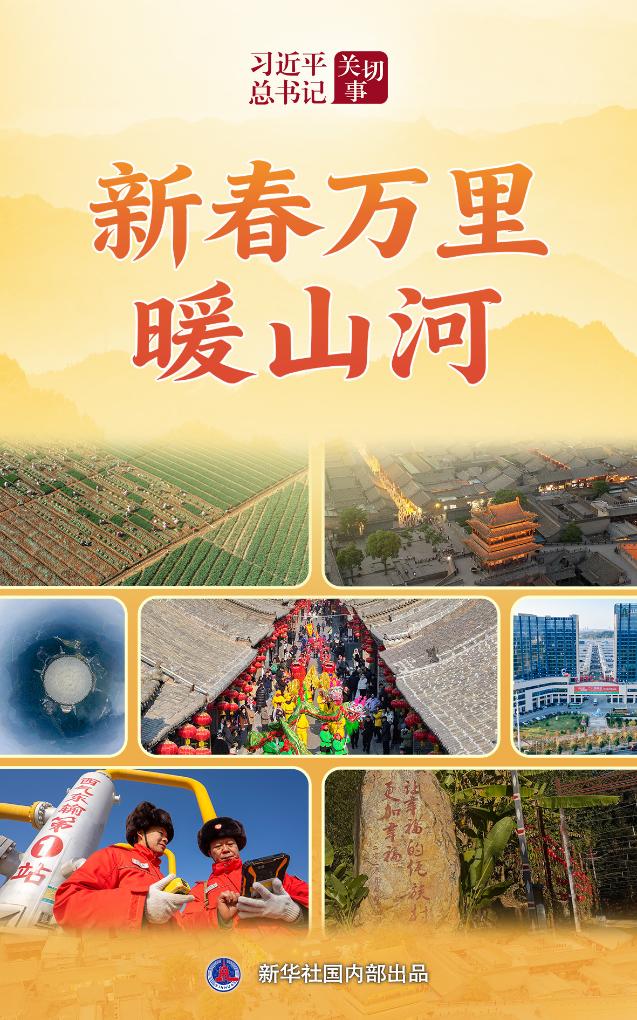
习近平总书记关切事|新春万里暖山河
Xin Hua She· 2026-02-08 12:38
Group 1 - The article emphasizes the importance of grassroots leaders and communities, highlighting Xi Jinping's consistent visits and care for them during the Spring Festival [1][2][3] - The transformation of the Simo La Wa ethnic village in Yunnan, which has evolved from poverty to a thriving community, is showcased as a model of rural revitalization [2][3] - The village's tourism revenue is projected to reach over 15 million yuan by 2025, with 631,000 visitors expected [2] Group 2 - The article discusses the recovery efforts in Fengnang Village after severe flooding, with collective actions leading to increased village income from 81,000 yuan in 2021 to over 400,000 yuan by 2025 [5] - The narrative includes the dedication of workers in Pingyao Ancient City, who are actively involved in preserving cultural heritage while managing tourism during peak seasons [6][7] - The "FAST" telescope project is highlighted, showcasing advancements in China's astronomical capabilities and the commitment of scientists to achieve international leadership in the field [8] Group 3 - The article details the operations of the Tarim Oilfield, emphasizing its role in ensuring energy supply across the country, with over 3.9 trillion cubic meters of gas supplied to downstream consumers [10][11] - The importance of agricultural supply chains is underscored, with various regions ensuring the availability of vegetables and grains during the Spring Festival, reflecting a commitment to food security [11][12] - The collective efforts of grassroots workers and communities are portrayed as essential in achieving a prosperous and stable society, aligning with the broader goals of national rejuvenation [13]
平潭新增52处未定级不可移动文物
Xin Lang Cai Jing· 2026-02-01 23:26
Core Viewpoint - The recent findings from the fourth national cultural relics census in Pingtan have significantly enriched the region's historical and cultural heritage resources, with a total of 52 newly identified immovable cultural relics and 33 previously unregistered sites since 2012 [1] Group 1: Newly Discovered Cultural Relics - A diverse range of cultural relics has been identified, spanning various types and historical periods, including ancient cultural sites, architecture, tombs, rock caves, stone carvings, and modern historical sites [1] - Key sites such as the Guishan site and Donghua Qiu site have been designated as national key cultural relic protection units, highlighting their importance [1] Group 2: Cultural Significance - Several relics reflecting Pingtan's maritime culture, cross-strait connections, and modern development have been included in the protection list, showcasing the region's unique historical trajectory as an island [1] - Notable sites include the Yandun site with its maritime defense characteristics, the Dazhuji water channel representing irrigation history, lighthouse facilities witnessing maritime transportation, and the old wind power experimental station documenting contemporary construction [1]
阴山岩画艺术展在京开幕
Xin Lang Cai Jing· 2026-01-08 20:05
Core Viewpoint - The "Thousand Miles of Yinshan · Ancient Rock Paintings" exhibition showcases over 100 artworks, highlighting the significance of Yinshan rock paintings as a rare cultural heritage and their role in promoting cultural identity and awareness [1][2]. Group 1: Exhibition Details - The exhibition features more than 100 pieces, including oil paintings, traditional Chinese paintings, rubbings, and replicas of rock paintings [1]. - It is organized by the People's Government of Bayannur City and will last for 12 days [2]. Group 2: Cultural Significance - Yinshan rock paintings are a significant cultural asset, with over 50,000 discovered across 156 groups, including 19 dense areas, serving as valuable resources for studying the interactions of ancient northern ethnic groups [1]. - The exhibition aims to enhance public awareness of cultural heritage protection and promote the understanding of China's diverse cultural identity [1].
解码中华文化基因:西夏陵,中华文明多元一体的见证
Zhong Guo Xin Wen Wang· 2025-11-11 05:24
Core Viewpoint - Historical and cultural heritage is a vital carrier of Chinese civilization and a valuable asset that continues the historical roots of China, with significant emphasis placed on the protection of such heritage by the government [1] Group 1 - The Western Xia Mausoleum is the largest, highest-grade, and best-preserved archaeological site of the Western Xia dynasty, providing irreplaceable evidence for the nearly 200-year history of the Western Xia dynasty and its royal lineage [1] - The Western Xia Mausoleum serves as a testament to the Western Xia dynasty's pivotal role as a hub along the Silk Road, highlighting its importance in historical trade and cultural exchange [1] - The preservation of the Western Xia Mausoleum contributes significantly to understanding the formation of a unified multi-ethnic nation and the multi-faceted nature of Chinese civilization [1]
山东创新历史文化遗产活态传承,吸引年轻群体旅游打卡、创业生活
Qi Lu Wan Bao· 2025-09-24 11:12
Core Viewpoint - The Shandong Provincial Government has issued the "Implementation Opinions on Continuing to Promote Urban Renewal Actions," emphasizing strict protection of historical and cultural heritage during urban renewal efforts [1][3]. Group 1: Historical and Cultural Protection - Shandong Province will introduce the "Shandong Provincial Historical Building Protection Measures," establishing a dual protection framework of "provincial regulations + measures," making it the first in the nation to do so [1][3]. - The province has already implemented the "Shandong Provincial Regulations on the Protection of Historical Cities, Towns, and Villages," and is encouraging other historical cities to develop local regulations [3][4]. - The government aims to prevent large-scale demolitions and ensure that urban renewal projects do not violate the protection requirements of historical districts and cultural streets [3][4]. Group 2: Urban Renewal Strategy - Shandong will conduct special surveys of old urban areas and streets to create a new list of potential historical cultural districts, ensuring a pre-protection system is in place [3][4]. - The province promotes a small-scale, incremental approach to urban renewal, focusing on the restoration of historical cultural districts and buildings, while improving living environments and municipal infrastructure [4]. - There will be regular assessments of historical cultural protection, focusing on the dimensions of "finding, protecting, repairing, using, and managing" to ensure comprehensive coverage of historical sites [4]. Group 3: Community Engagement and Cultural Integration - The government plans to innovate in the active transmission of cultural heritage, integrating traditional culture with modern life to create vibrant neighborhoods that attract young people for tourism and entrepreneurship [4]. - A new mechanism will be explored for the protection and utilization of historical sites, emphasizing community involvement in the implementation of protection measures [4]. - Efforts will be made to enhance the promotion and interpretation of urban historical culture, aiming to showcase Shandong's rich cultural heritage through exemplary cases [4].

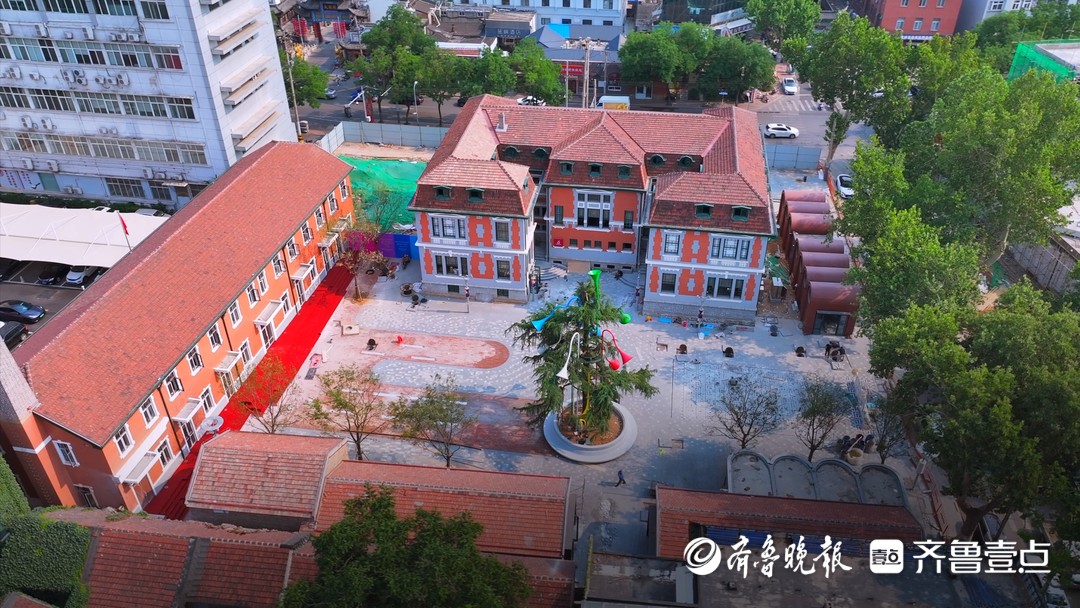
我省“一城四镇三村”保护规划全部获批实施
Hai Nan Ri Bao· 2025-09-24 01:11
Core Points - The new round of "One City, Four Towns, and Three Villages" protection plan in Hainan has been fully approved for implementation by the provincial government, focusing on classified protection and exploring revitalization paths [2][3] - Hainan Island, as an important node of the Maritime Silk Road, possesses unique island culture and a number of historically significant cities, towns, and villages, including 1 national historical cultural city, 4 historical cultural towns, and 3 historical cultural villages [2][3] Protection Strategy - The plan emphasizes an overall protection concept, establishing a comprehensive and multi-layered protection system with specific control measures for different types of historical cultural heritage [3] - It proposes a tiered protection approach, detailing construction control requirements for core protection areas, construction control areas, and environmental coordination areas based on various factors such as construction content, volume, height, color, material, and style [3] Heritage Preservation and Utilization - The plan addresses the issue of heritage transmission by strengthening the protection and inheritance of historical cultural heritage, creating a value-centered protection and utilization system [3] - It aims to enhance the living environment of cultural heritage sites, improve the interpretation of archaeological sites, and promote the revitalization of intangible cultural heritage and time-honored brands [3] Infrastructure and Economic Development - The government plans to improve living conditions by enhancing infrastructure such as water supply, electricity, communication, gas, and disaster prevention, while also increasing public service facilities [4] - The strategy includes leveraging historical cultural resources to develop characteristic industries, promoting cultural tourism, traditional crafts, and processing of traditional skills, thereby achieving a dual empowerment of historical cultural protection and economic development [4]
新闻调查丨把考古遗址融入机场 这个博物馆火了
Yang Shi Wang· 2025-09-07 01:27
Core Viewpoint - The opening of the museum at Xi'an Xianyang International Airport has become a hot topic, highlighting the city's rich historical and cultural heritage as a former capital of thirteen dynasties [1] Group 1: Historical Significance - Xi'an is renowned for its profound historical and cultural background, making it a unique cultural heritage site in the world [1] - The archaeological discoveries during the expansion of Xianyang Airport raise questions about the integration of history within modern infrastructure [1] Group 2: Urban Development - The construction of the museum at the airport reflects a new challenge for city builders and guardians in preserving the complete heritage of Xi'an [1] - The initiative aims to enhance the city's identity and cultural value on a global scale [1]