工伤认定

Search documents
有结果了!32 岁猝死程序员被认定为视同工伤。他叫高广辉!他是一个群体的缩影!
程序员的那些事· 2026-03-13 07:11
Core Viewpoint - The Guangzhou Huangpu Human Resources Bureau has officially recognized the death of programmer Gao Guanghui as work-related, following his sudden death on November 29, 2025, due to cardiac arrest, which has sparked widespread attention and discussions about labor rights and workplace conditions [1][8]. Timeline Review - Gao Guanghui, a 32-year-old programmer, died at home on November 29, 2025, due to cardiac arrest [5]. - His wife submitted a work injury recognition application to the HR department on December 19, 2025 [6]. - On February 14, 2026, the HR department issued a decision recognizing his death as work-related [7]. - The recognition result gained media attention on March 12/13, 2026, after being reported by "Kankan News" [8]. Core Basis for Recognition - The HR department based its decision on a strong evidence chain linking Gao's death to his work, including: - On the day of his death, he accessed the company OA system at least five times and had four work tasks due, indicating he was fulfilling his work responsibilities [10]. - Family records showed he consistently worked late, returning home after 9 PM, with the latest return at 10:47 PM the week before his death [10]. - During his rescue, he was added to a work group, and he received work instructions eight hours after his death, with former colleagues confirming a culture of hidden overtime at the company [10]. Violations in Labor Contracts - Gao's wife revealed that his labor contracts with Guangzhou Vision Source Co., Ltd. included clauses that allowed the company to extend working hours without proper consent from the employee, which is considered illegal under labor laws [12][15]. - Legal experts stated that employees have the right to refuse overtime, and any forced overtime is deemed illegal [15]. Improper Calculation of Overtime Pay - Gao's labor contract specified a base salary of 3,000 yuan for overtime calculations, which is against labor laws that require overtime to be paid at 150% of the regular wage [17][19]. - The correct calculation for overtime pay should include both the position salary and the base salary, which was not adhered to in Gao's case [19]. Ongoing Online Harassment of Family - Since advocating for their rights, Gao's wife has faced online harassment, with attackers using her public posts and interviews as material for their attacks [20][21]. - She has been advised to gather evidence against the harassers for potential legal action [24]. Supportive Media Coverage - The recognition of Gao's death as work-related was significantly influenced by continuous media coverage, starting with reports from "Red Star News" and later "Blue Whale News," which specifically named Guangzhou Vision Source [25][26]. - "Kankan News" provided a comprehensive report on March 12, 2026, including surveillance footage from the time of Gao's death [27]. - Gao's family is currently compiling evidence of his overtime work to pursue legal action against CVTE for unpaid overtime from the past six years [28].


工伤认定由谁申请?需要哪些材料?
蓝色柳林财税室· 2026-03-03 05:24
Core Viewpoint - The article provides a comprehensive guide on how to apply for work-related injury recognition, detailing the responsibilities of employers and the necessary steps for employees or their relatives to follow in the application process. Group 1: Application Process - The application for work-related injury recognition must be submitted by the employee's employer within 30 days of the injury occurrence or the diagnosis of an occupational disease, with possible extensions under special circumstances approved by the social insurance administrative department [1][3]. - If the injured employee is receiving treatment and cannot apply in person, close relatives such as spouses, parents, or adult children can submit the application on their behalf [2]. Group 2: Required Materials - The application must include the work-related injury recognition application form, which should detail the time, place, cause of the accident, and the degree of injury [5][8]. - Additional required materials include proof of the employment relationship and medical diagnosis or occupational disease diagnosis documents [8]. Group 3: Timelines and Notifications - The social insurance administrative department is required to make a decision on the work-related injury recognition within 60 days from the date of accepting the application [7]. - The decision must be delivered to the injured employee (or their relatives) and the employer within 20 days after the decision is made [10].

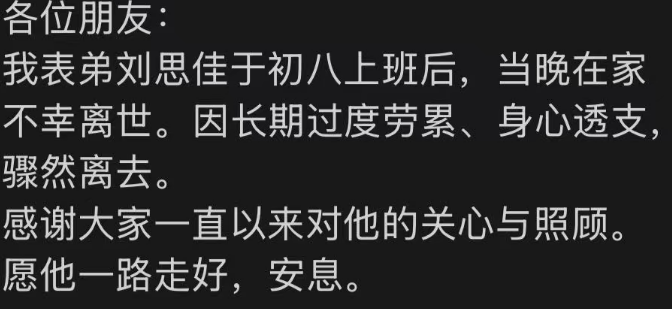
米哈游回应员工春节返工猝死出租屋,家属质疑过劳,律师解读
Yang Zi Wan Bao Wang· 2026-02-27 12:55
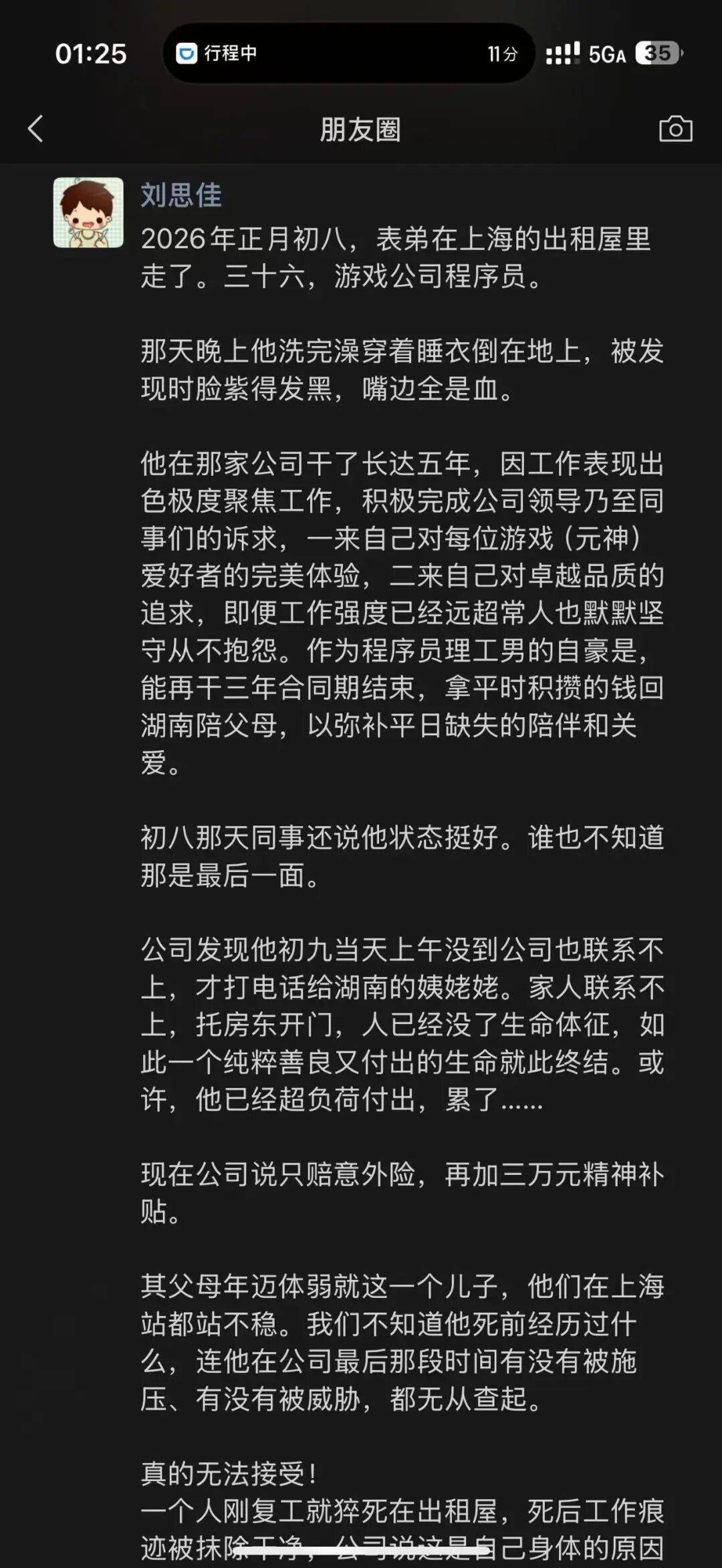
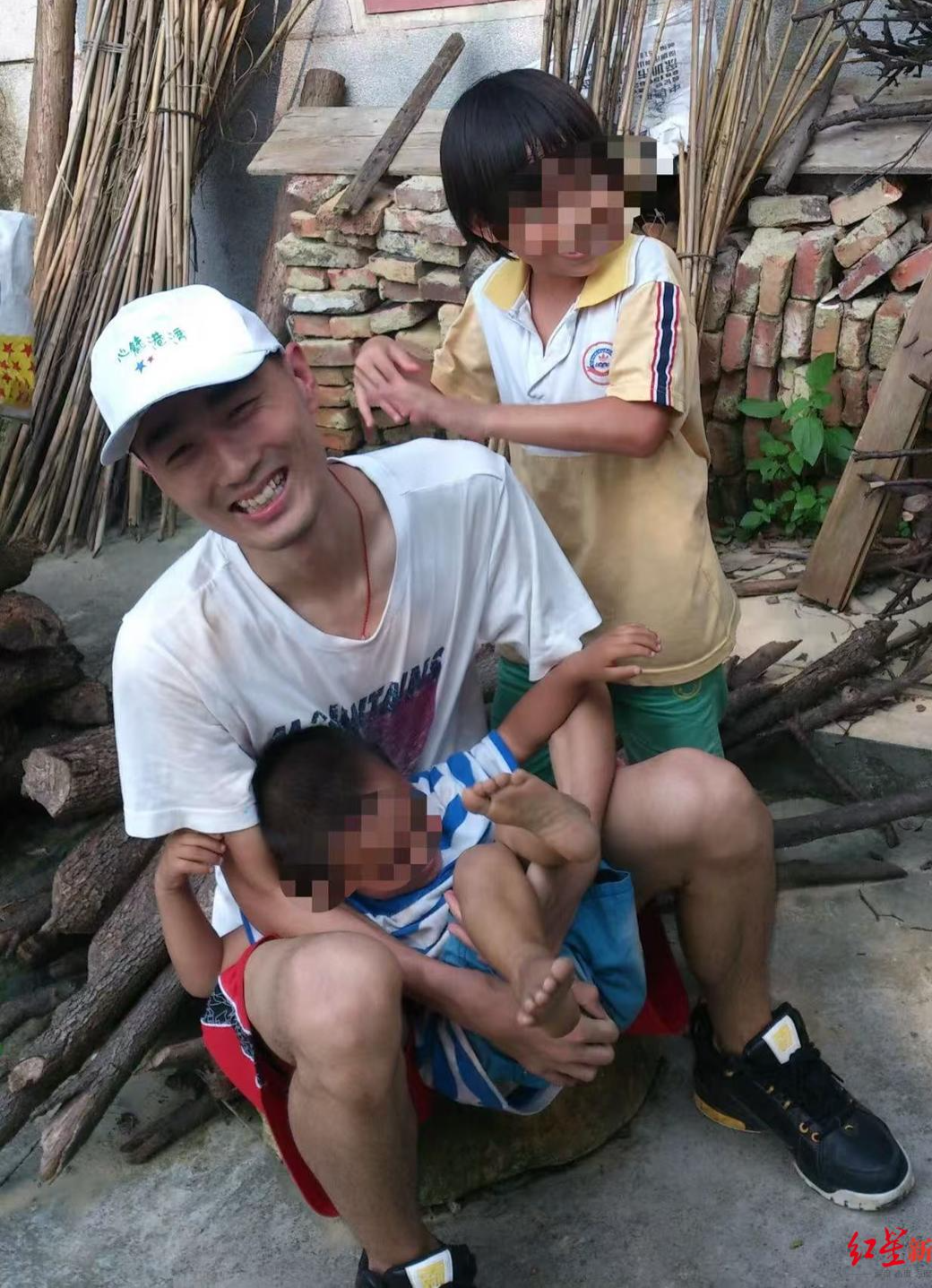
Core Viewpoint - The incident involving the sudden death of a 36-year-old programmer at miHoYo has raised concerns about employee welfare and work-related stress within the gaming industry [1][4]. Group 1: Incident Details - The employee returned to work on February 24 after the Spring Festival holiday and was found deceased at his residence on February 25, after failing to attend a morning meeting [4]. - The family claims that the employee's death was due to long-term overwork, highlighting the intense work culture at miHoYo [1][6]. - The company expressed deep sorrow over the incident and has formed a special team to assist the family with post-incident arrangements [3][4]. Group 2: Company Response - miHoYo stated that it has a comprehensive employee care policy, including commercial insurance and compensation for unforeseen circumstances [8]. - The company has offered a compensation of 30,000 yuan and an insurance payout, but the family has not reached an agreement with the company regarding this compensation [4][6]. Group 3: Legal Considerations - Legal experts indicate that the recognition of the incident as a work-related injury may be challenging due to strict criteria, as the employee died after leaving work [8]. - The family can pursue two avenues: verifying if the employee had any symptoms while at work to seek work injury recognition, and gathering evidence of potential illegal overtime that may have contributed to the death [8][9].
网传《原神》员工返岗首日猝死出租屋,公司回应
Sou Hu Cai Jing· 2026-02-27 12:00
Core Viewpoint - A tragic incident occurred involving a MiHoYo employee who unexpectedly passed away on February 24, 2023, raising concerns about workplace conditions and employee welfare [1][3]. Group 1: Incident Details - The employee, a 36-year-old programmer for the game "Genshin Impact," was found deceased in their residence after returning to work on the same day [3]. - MiHoYo has established a special team to assist the family and is providing necessary support, including commercial insurance and funeral compensation [3]. Group 2: Legal Considerations - Legal expert Xiao Jinyang indicated that the determination of whether the death qualifies as a "work-related injury" is crucial for compensation obligations [4]. - If the employee exhibited clear health issues during work hours and died within 48 hours, it may be classified as a work-related injury, which would require the company to provide compensation [4]. - Xiao advised that the family should gather evidence related to the employment relationship, illness, and death to apply for work-related injury recognition within one year [4].
年后返岗在公司宿舍吃早餐发病死亡,算不算工伤?
Xin Lang Cai Jing· 2026-02-06 05:31
Core Viewpoint - The court ruled that the death of an employee, who suffered a heart attack while having breakfast in the company dormitory, does not qualify as a work-related injury under the Work Injury Insurance Regulations, as it did not occur in the workplace or during work hours [3][8][10]. Group 1: Case Background - The employee, identified as Gao, was a maintenance worker at a coal mine and returned to work after the Spring Festival holiday, staying in the company dormitory [2]. - Gao suffered a heart attack while eating breakfast in the dormitory and was pronounced dead after unsuccessful medical intervention [2]. Group 2: Legal Proceedings - The coal company applied for work injury recognition to the local human resources department, which denied the application based on the circumstances of Gao's death [3][4]. - Gao's family appealed the decision to the court, which focused on whether the death met the criteria for work-related injury recognition [5]. Group 3: Court's Analysis - The court determined that the location of Gao's death (the dormitory) was not considered a workplace or a reasonable extension of the workplace [6]. - The time of the incident was classified as normal rest time, as Gao was not engaged in work-related activities during that period [7]. - The nature of the activity (eating breakfast) was deemed a personal daily life activity, not related to work duties [8]. Group 4: Legal Interpretation - The court emphasized that the core standards for work injury recognition include "work time, work location, and work cause," with the "work cause" being the most critical element [10]. - The court clarified that the regulations regarding "viewed as work-related injury" must still align with the definitions of work time and work location, and cannot be broadly applied to sudden health issues [11].
一场宿舍小聚后的悲剧,谁担责?
Xin Lang Cai Jing· 2026-02-01 23:26
Core Viewpoint - The incident involving Liu Ming's sudden death after a private gathering raises questions about the applicability of work-related injury compensation, highlighting the complexities of legal definitions and human compassion in workplace settings [4][6][7]. Group 1: Incident Overview - Liu Ming, an employee at a manufacturing company, died suddenly after a private gathering with relatives and friends, leading to a diagnosis of sudden cardiac death, potentially induced by alcohol consumption [4][6]. - Liu Ming's family believes his death should be classified as a work-related injury since it occurred in company-provided accommodation [4][5]. Group 2: Company Response - The company expressed sympathy for Liu Ming's family but clarified that his death did not meet the legal criteria for work-related injury compensation, as it occurred outside of work hours and was not work-related [4][6]. - The company suggested that if the family insisted on compensation, they should pursue legal action, indicating a reluctance to provide compensation outside of legal obligations [4][5]. Group 3: Mediation Process - A local mediator engaged with both the family and the company to clarify the legal definitions surrounding work-related injuries, emphasizing the importance of understanding the legal framework [5][6]. - The mediator highlighted that under the relevant regulations, deaths resulting from intoxication are not classified as work-related injuries, which was a key point in the discussions [6][7]. Group 4: Resolution and Compensation - After discussions, the company agreed to provide a one-time humanitarian compensation to Liu Ming's family, reflecting a balance between legal obligations and human compassion [7][8]. - Liu Ming's drinking companions also expressed remorse and provided a small monetary gesture to the family, indicating a sense of responsibility and empathy [7][8].
32岁程序员周末晕倒后猝死,涉事公司HR已离职;知情人士:因此前言论引争议被网暴
Mei Ri Jing Ji Xin Wen· 2026-01-30 06:30
Core Viewpoint - The recent death of programmer Gao Guanghui has sparked significant public discussion regarding workplace culture and employee well-being, particularly in high-pressure environments [2][4]. Group 1: Incident Details - Gao Guanghui passed away suddenly while still engaged in work-related tasks, even being pulled into a work group during his medical emergency [5][6]. - His workload was reportedly equivalent to that of six to seven individuals due to a lack of staffing in his department, leading to excessive work demands [5]. - Gao's compensation structure was characterized by a low base salary of approximately 3,000 yuan, with a pre-tax monthly income of about 20,000 yuan, emphasizing a "performance-based" pay model [5]. Group 2: Company Response - The HR representative involved in the incident has resigned following backlash over controversial comments made during discussions with Gao's family [2][4]. - The company has provided financial compensation to Gao's family, including 390,000 yuan in humanitarian aid, a 60,000 yuan year-end bonus, and a salary payment of 20,000 yuan for November [6]. - The local labor authorities are currently investigating the circumstances surrounding Gao's death and the company's practices, with a decision expected within 60 days of the case being accepted [6].

冲上热搜!猝死程序员公司内部会议记录曝光
Zhong Guo Jing Ying Bao· 2026-01-24 01:13
Core Viewpoint - The incident involving a programmer's sudden death while working has sparked widespread attention and discussions regarding workplace conditions and responsibilities of companies towards their employees [1] Group 1: Company Response - The company, Guangzhou Shiyuan Electronic Technology Co., Ltd., has not publicly addressed the incident or provided explanations to the deceased's family [2] - Internal meeting records indicate that the company claims to have covered medical expenses and other costs for the family, but the family disputes this, stating they have not received the promised funds [2] - The company has instructed employees not to engage with rumors or misinformation regarding the incident and to report any false information [2] Group 2: Employee Work Conditions - The deceased, Gao Guanghui, had been working at the company since September 2019, with increasing responsibilities and pressure leading to frequent overtime work [3][4] - Gao's wife reported that he had mentioned a performance evaluation system that included a "bottom elimination" policy, which considered overtime hours as part of the evaluation [4] - On the day of his death, Gao was actively engaged in work tasks, with multiple deadlines approaching, and was still being contacted for work-related matters during his medical emergency [4][7] Group 3: Legal Considerations - Legal experts suggest that the determination of whether Gao's death is classified as a work-related injury hinges on evidence proving he was working at the time of his medical emergency [3][7] - If recognized as a work-related injury, the family could receive various compensations, including funeral allowances and survivor benefits [8] - The company has reportedly provided a total of 390,000 yuan in humanitarian compensation, along with a year-end bonus and salary for November [8]

程序员猝死背后:公司曾给 39 万“封口费”,家属若造成公司负面评价,需反赔 50 万
程序员的那些事· 2026-01-23 12:03
Group 1 - The company CVTE responded to media inquiries regarding the death of an employee, stating that they have submitted relevant materials to the labor department [1] - Following the death of the employee, CVTE provided the family with a humanitarian compensation of 390,000 yuan, which the family described as insufficient [2] - A controversial agreement was signed between the company and the family, stipulating that if the family made negative comments about the company, they would have to compensate the company 500,000 yuan [4]
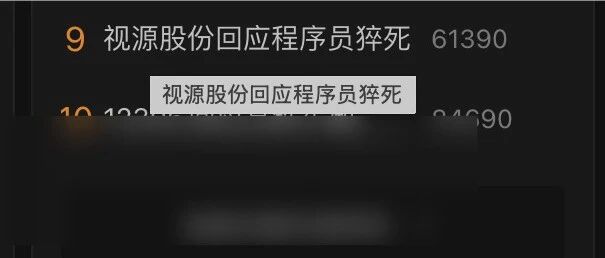
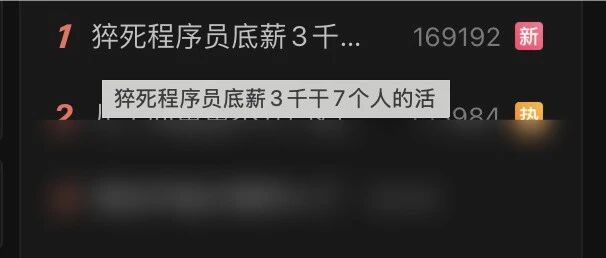
拼什么命!猝死程序员底薪 3000,加绩效到手不到 2 万,还几乎 24 小时待命
程序员的那些事· 2026-01-23 04:35
Core Viewpoint - The tragic death of a 32-year-old programmer, Gao Guanghui, highlights the severe pressures and overwork prevalent in the tech industry, raising concerns about workplace culture and employee well-being [3][10][11] Company Summary - Gao Guanghui worked at Guangzhou Shiyuan Electronic Technology Co., Ltd. (CVTE), where he faced extreme work pressure and was overloaded with responsibilities after his team was downsized [2][3] - The company promotes a culture of overtime, with a salary structure that emphasizes high performance over base pay, leading to blurred lines between work and personal life [5][7] - Despite the tragic incident, the company has been accused of obscuring evidence related to Gao's work conditions and has not cooperated with the family regarding the work injury claim [8][12] Industry Summary - The incident serves as a wake-up call for the tech industry, emphasizing the need for a balance between responsibility and personal health, urging professionals to set boundaries against unreasonable demands [10][11] - The narrative reflects a broader issue within the industry where employees are often expected to sacrifice their well-being for work, which can lead to dire consequences [11]