村镇银行改革重组

Search documents
又一家银行 解散!
Zhong Guo Ji Jin Bao· 2026-02-11 06:34
(原标题:又一家银行 解散!) 7月10日,金融监管总局官网披露的行政许可信息显示,平山西柏坡冀银村镇银行已于日前获批解散。 平山西柏坡冀银村镇银行获批解散 批复文件显示,鉴于河北银行收购平山西柏坡冀银村镇银行,7月5日,河北金融监管局同意该行因被合 并而解散,该行全部业务、财产、债权、债务以及其他各项权利义务由河北银行承继。 资料显示,平山西柏坡冀银村镇银行成立于2010年,河北银行为主发起人,注册资本达5000万元。 河北银行成立于1996年5月,是河北省省属地方法人银行,总部位于河北省石家庄市。目前在河北省11 个区市和天津、青岛设立13家分行级机构,营业网点有257家。除前述平山西柏坡冀银村镇银行外,还 发起设立了冀银金融租赁股份有限公司、新疆尉犁达西冀银村镇银行。 截至2023年末,该集团口径资产总额为5317.36亿元,较年初增长8.69%。全年实现营业收入112.19亿 元,实现净利润27.39亿元。不良贷款率为1.31%,较年初下降0.21个百分点。拨备覆盖率为175.04%。 村镇银行改革重组持续推进 5月下旬,金融监管总局农村中小银行监管司党支部在署名文章《统筹推进改革化险推动农村中小银行 ...
村镇银行改革重组有序推进
Jing Ji Ri Bao· 2026-01-26 22:04
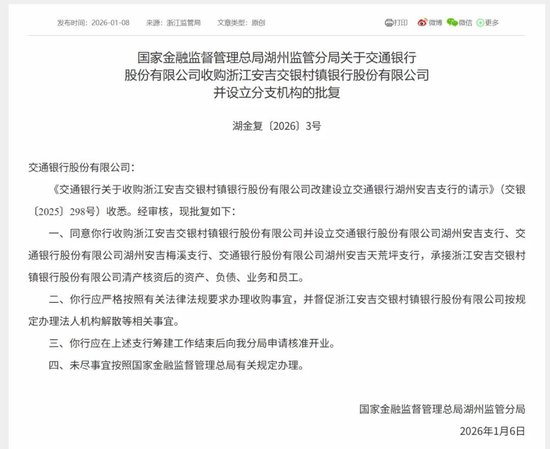
Group 1 - The core viewpoint of the news is the approval of the acquisition of Zhejiang Anji Jiaoyin Village Bank by Bank of Communications, which aims to enhance financial services in rural areas through the establishment of new branches [1] - Village banks are independent legal entities established to provide financial services primarily for local agriculture and small enterprises, addressing the low coverage and supply issues in rural financial institutions [1] - Recent challenges faced by village banks include limited economic scale, a narrow customer base, and weak technology and risk control capabilities, leading to difficulties in profitability and sustainability [1] Group 2 - Rural commercial banks and other small financial institutions are also accelerating the "village-to-branch" transformation, exemplified by the recent opening of four new branches by Shunde Rural Commercial Bank [2] - The transformation allows for direct sharing of systems, funds, and risk control resources from the main initiating bank, significantly enhancing survival capabilities and optimizing regional financial layouts [2] - Small rural banks play an irreplaceable role in serving county economies, with initiatives like "Grain Farmer Loans" to alleviate financing difficulties for grain producers [2] Group 3 - The central government's policy emphasizes the need for orderly reform and restructuring of village banks to enhance risk resistance and operational capabilities, as outlined in the 2025 Central No. 1 Document [3] - The recent Central Economic Work Conference highlighted the importance of reducing the number of independent legal entities while improving quality through concentrated management to mitigate operational risks [3] - The focus is on balancing reduction and quality improvement, ensuring that financial service coverage is not diminished while enhancing the efficiency of financial services [3]
村镇银行重组提速 “村改支”密集落地
Zhong Guo Zheng Quan Bao· 2026-01-19 21:25
Core Viewpoint - The reform of rural banks is accelerating in 2026, with a focus on improving the quality of rural financial supply rather than merely reducing the number of institutions [1][4]. Group 1: Mergers and Acquisitions - SuNong Bank announced the absorption and merger of Jiangsu Zhangjiagang Yunnong Commercial Rural Bank, planning to acquire 100% of its shares and convert it into a branch [2]. - The acquisition of Zhejiang Anji Jiaoyin Rural Bank by Bank of Communications has been approved, with plans to establish multiple branches [2]. - Since the beginning of 2026, 53 rural banks have been listed for exit, indicating a trend of consolidation in the sector [3]. Group 2: Policy and Industry Demand - The acceleration of rural bank reforms is driven by both policy guidance and the inherent needs of the industry [3]. - The 2020 notice from the former CBIRC encouraged the orderly merger and restructuring of rural banks, allowing larger banks to absorb high-risk rural banks [3]. - The 2025 Central Document No. 1 emphasized the need for innovative financing mechanisms for rural revitalization and the importance of small banks in supporting agriculture and small enterprises [3]. Group 3: Quality Improvement - The primary goal of rural bank reform is to enhance the quality of financial services provided to agriculture and rural economies [4]. - Mergers and restructuring are seen as effective methods to resolve operational risks and improve competitiveness through resource integration [4]. - Experts suggest that the focus should be on quality improvement rather than just reducing the number of institutions, aiming for more efficient and higher-quality development [4]. Group 4: Challenges in Restructuring - The process of mergers and restructuring involves complex stakeholder interests and requires careful balancing of various demands [5]. - Some rural banks face challenges with historical non-performing assets, complicating the restructuring process [5]. - Recommendations include developing reasonable disposal plans for shareholder rights and creating specialized plans for addressing non-performing assets [5].


村镇银行重组提速“村改支”密集落地
Zhong Guo Zheng Quan Bao· 2026-01-19 21:11
Core Viewpoint - The reform of rural banks is accelerating in 2026, with a focus on improving the quality of rural financial supply rather than merely reducing the number of institutions [1][2][3] Group 1: Mergers and Acquisitions - SuNong Bank has announced the absorption and merger of Jiangsu Zhangjiagang Yunnong Commercial Rural Bank, planning to acquire 100% of its shares and convert it into a branch [1] - The acquisition of Zhejiang Anji Jiaoyin Rural Bank by Bank of Communications has been approved, allowing the establishment of multiple branches [2] - Since the beginning of 2026, 53 rural banks have been listed for exit, indicating a trend of consolidation in the sector [3] Group 2: Policy and Industry Demand - The acceleration of rural bank reform is driven by both policy guidance and the inherent needs of the industry [2] - The 2020 notice from the former CBIRC encourages the orderly merger and restructuring of rural banks, allowing larger banks to convert high-risk rural banks into branches [2] - The 2025 Central Document No. 1 emphasizes the need for innovative financing mechanisms for rural revitalization and supports the reform of rural credit cooperatives [2] Group 3: Quality Improvement in Rural Financial Supply - The primary goal of rural bank reform is to enhance the quality of financial services for agriculture, rural areas, and small enterprises [3] - Mergers and restructuring are seen as essential for resolving operational risks and integrating resources, leading to improved competitiveness [3] - Experts suggest that addressing shareholder rights and managing historical bad assets are critical for successful restructuring [3]
一年之内,超300家村镇银行“消失”,啥情况?
Xin Lang Cai Jing· 2026-01-16 05:15
Core Viewpoint - The restructuring of village banks is accelerating, with state-owned banks actively converting village banks into branches, reflecting a trend of market exit and consolidation in the rural banking sector [1][10]. Group 1: Recent Developments - On January 6, 2026, the China Banking Regulatory Commission approved the acquisition of Zhejiang Anji Jiaoyin Village Bank by Bank of Communications, which will be converted into three branches [2][10]. - Since 2025, Bank of Communications has completed multiple "village-to-branch" conversions, including acquisitions in Qingdao and Sichuan [2][10]. - A total of 300 village banks have exited the market since 2025, with "village-to-branch" and "village-to-subsidiary" becoming the mainstream exit strategies [10][11]. Group 2: Participation of State-Owned Banks - State-owned banks, including Industrial and Commercial Bank of China and Agricultural Bank of China, have also engaged in "village-to-branch" conversions, with ICBC being the first to do so in June 2025 [3][11]. - By the end of 2025, state-owned banks had completed conversions for 10 village banks, indicating a significant trend in the industry [3][11]. Group 3: Strategic Implications - The "village-to-branch" strategy aims to integrate rural financial resources and enhance operational efficiency, driven by the need for state-owned banks to expand their reach in rural areas [4][13]. - Analysts suggest that merging village banks into branches can improve service capabilities and risk management, while also allowing for potential expansion in areas lacking existing branches [5][12]. Group 4: Regulatory Environment - The 2025 Central Document No. 1 emphasized the need for rural small and medium-sized banks to focus on agricultural support, leading to a significant increase in market exits among village banks [6][14]. - As of 2026, over 430 village banks have been listed for exit since 2010, with 310 exiting in 2025 alone, representing over 70% of the total exits [6][14]. Group 5: Future Outlook - The ongoing trend of "reduction and quality improvement" in small and medium-sized banks is expected to continue, with a focus on effective measures to prevent the emergence of high-risk institutions [16][17]. - The emphasis on optimizing the financial institution system and enhancing governance is crucial for the sustainable development of the rural banking sector [17].



2025年村镇银行大撤退
21世纪经济报道· 2025-12-25 16:08
Core Viewpoint - The year 2025 marks a significant retreat of village banks in China, with both domestic and foreign banks withdrawing from this sector due to various challenges and risks associated with village banking operations [1][2]. Group 1: Market Exit Trends - A total of 226 village banks have exited the market by December 25, 2024, with 93 banks exiting throughout the entire year [1]. - The trend of shrinking village banks was established early in 2024, with a focus on reform and restructuring as highlighted in the central government's directives [1]. Group 2: Reasons for Withdrawal - The primary reason for the exit of village banks, particularly foreign ones, is linked to the inherent risks associated with these institutions, as indicated by the People's Bank of China's Financial Stability Report, which identified 324 instances of risk warnings primarily involving village and rural commercial banks [2]. - Foreign banks, such as HSBC, faced challenges in brand recognition and integration into local economies, leading to their gradual withdrawal from the village banking sector [5]. Group 3: Financial Performance - HSBC's village banks in China have issued loans totaling approximately 39.788 billion yuan, with a loan balance of about 2.36 billion yuan as of 2024, where agricultural loans accounted for 65.3% and small business loans for 85.83% of the total [8]. - The Chongqing Rongchang HSBC Village Bank reported a total of 4,174 customers, with a loan balance of 60.1224 million yuan, reflecting a modest increase of 1.22% from the previous year [8]. - Other village banks, such as Dazhu HSBC Village Bank, reported a decrease in loan balances and customer numbers, indicating a broader trend of declining profitability across HSBC's village banking network [9]. Group 4: Future Outlook and Recommendations - Despite the exit of village banks, the financial needs in county areas remain unmet, suggesting a shift in service providers rather than a decrease in demand [11]. - Experts recommend structural reorganization of village banks to refocus on core services and risk management, emphasizing their role in supporting rural revitalization and small enterprises [11][12].


展业近20年,外资行也在撤出村镇银行
2 1 Shi Ji Jing Ji Bao Dao· 2025-12-25 10:48
Core Viewpoint - The year 2025 marks a significant retreat for village banks in China, with both domestic and foreign banks withdrawing from this sector due to various challenges and risks associated with village banking operations [1][2]. Group 1: Market Exit Trends - A total of 226 village banks have exited the market as of December 25, 2024, compared to 93 that exited throughout 2024 [1]. - The central government's focus on "orderly reform and restructuring of village banks" has been highlighted in recent policy documents, indicating a shift towards addressing the risks associated with these institutions [2]. Group 2: Foreign Bank Withdrawals - The exit of foreign banks from the village banking sector, such as HSBC, is not surprising due to challenges like low brand recognition and difficulty integrating into local economies [3]. - HSBC was one of the first foreign banks to enter the rural market in China, establishing multiple village banks since 2007, but has now decided to withdraw [3][4]. Group 3: Financial Performance Challenges - Village banks, including HSBC's, have struggled to achieve profitability, with HSBC's village banks reporting a total loan issuance of approximately 39.788 billion yuan and a loan balance of about 2.36 billion yuan as of 2024 [6]. - The Chongqing Rongchang HSBC Village Bank reported a total of 4,174 customers, with only 172 being loan customers, and a loan balance of 60.1224 million yuan, reflecting a modest increase of 1.22% from the previous year [6][7]. Group 4: Broader Implications for Financial Services - The exit of foreign banks indicates a failure to adapt international banking standards to the local credit culture, which relies heavily on personal relationships and informal information [8]. - Despite the withdrawal of village banks, the demand for financial services in rural areas remains, with state-owned banks and local commercial banks stepping in to fill the gap [8][9].
村镇银行加速瘦身提质:年内超200家村镇银行“消失” 兰州银行一年内三度“村改支”
Mei Ri Jing Ji Xin Wen· 2025-12-24 15:04
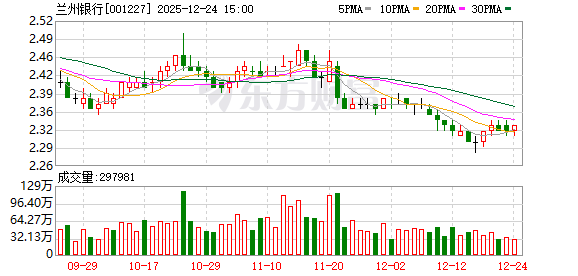
11月,兰州银行(SZ001227)股东大会审议通过该行收购庆城县金城村镇银行设立支行的议案。记者梳理发现,这至少是该行自2024年以来第四次对旗 下村镇银行进行吸收合并。 图片来源:公告截图 2025年,我国村镇银行改革化险进入深水区。多地城商行频频出手,通过"收购+分支行改建"模式整合旗下村镇银行,标志着"村改支"已成为行业重组的 主流路径。 与此同时,工商银行等国有大行也首次下场参与,超200家村镇银行被批复合并或批复解散。这场由政策驱动与风险化解双轮驱动的结构性改革,正重塑 着农村金融版图,在"减量"的同时力求"提质",为乡村振兴战略注入更稳健的金融活水。 兰州银行今年多次"村改支" 兰州银行自2024年起加快了整合旗下村镇银行的步伐。2024年初,公司股东大会上,审议通过了拟收购永靖县金城村镇银行和甘肃西固金城村镇银行并设 立支行的相关议案。 2024年12月,国家金融监督管理总局批准了兰州银行收购合水县金城村镇银行和甘肃西固金城村镇银行的申请。 图片来源:网页截图 收购完成后,两家村镇银行解散法人资格,新设为兰州银行的分支机构,包括合水支行、山丹街支行等。 2025年8月,兰州银行再次完成对陇南市 ...
浦发银行“村改支”再落一子:股份行领跑农村金融结构性重塑
Guan Cha Zhe Wang· 2025-12-24 10:32
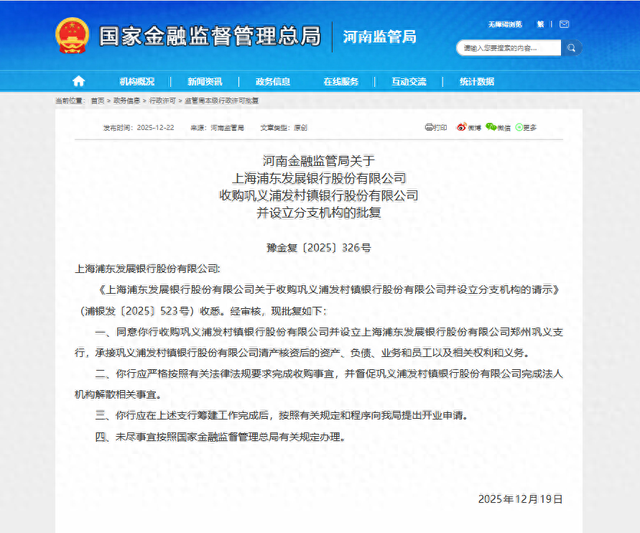
浦发系村镇银行的集体转身 浦发银行布局村镇银行的历史可追溯至2008年。当年,该行在四川绵竹发起设立首家浦发村镇银行,此 后逐步将版图扩展至全国19个省市,共计设立28家村镇银行,其中七成以上机构分布在中西部和东北 部。这一战略布局承载着"城市金融反哺农村金融"的初衷,试图将股份制银行的管理经验和资源优势输 送至县域市场。 然而十余年的运营实践暴露出独立法人模式下的诸多掣肘。截至2024年末,28家浦发村镇银行资产总额 402.21亿元,存款余额331.86亿元、贷款余额224.39亿元,结算客户143.32万户。但全年营业收入仅6.93 亿元,净利润为-0.69亿元。户均贷款40.88万元的数据显示其确实在服务小微群体,但亏损的财务状况 也说明这种商业模式难以为继。 【文/羽扇观金工作室】 12月22日,国家金融监督管理总局河南监管局发布批复,同意浦发银行收购巩义浦发村镇银行并设立郑 州巩义支行。这家成立于2009年、注册资本1.5亿元的村镇银行将告别独立法人身份,全部资产、负 债、业务及员工被纳入浦发银行统一管理框架。 这是浦发银行年内完成的第十二家村镇银行吸收合并。仅约一个月前,该行刚刚获批收购浙江平阳 ...

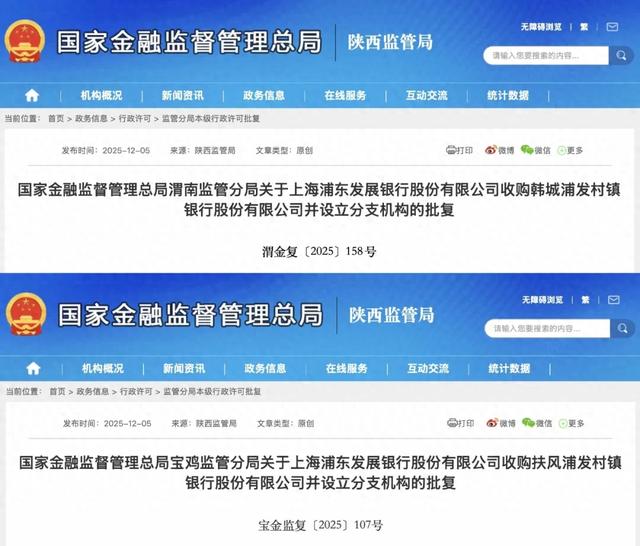
浦发银行,收购陕西两家银行
Bei Jing Ri Bao Ke Hu Duan· 2025-12-08 16:14
转自:北京日报客户端 据国家金融监督管理总局陕西监管局官网消息,日前,上海浦东发展银行股份有限公司获批收购陕西省 韩城浦发村镇银行、扶风浦发村镇银行,并设立分支机构。 两份批复显示,浦发银行在收购两家银行后,将分别设立上海浦东发展银行股份有限公司渭南韩城支 行、上海浦东发展银行股份有限公司宝鸡扶风支行,并承接其清产核资后的资产、负债、业务和员工 等。 长安街知事注意到,收购前,浦发银行是这两家村镇银行的控股股东。它们属一级法人机构,是由浦发 银行作为主发起行,吸收当地优良民间资本,共同发起设立的。 收购后,浦发银行将这两家村镇银行纳入统一管理体系,成为其支行。 11月以来,浦发银行正以密集动作承接旗下多家村镇银行,将它们改为支行,包括:辽宁大连甘井子浦 发村镇银行、山西泽州浦发村镇银行、重庆铜梁浦发村镇银行、新疆乌鲁木齐米东浦发村镇银行、山东 邹平浦发村镇银行、云南昆明富民浦发村镇银行、浙江平阳浦发村镇银行等。 2025年政府工作报告强调,按照市场化、法治化原则,统筹推进地方中小金融机构的风险处置与转型发 展。中央一号文件则明确提出,"一省一策"加快农村信用社改革,稳妥有序推进村镇银行改革重组。 1月,金融监 ...