电力中长期市场

Search documents
现货环境下的电力中长期交易
广东电力交易中心· 2026-02-28 03:20
Investment Rating - The report does not explicitly state an investment rating for the electricity mid-to-long term market. Core Insights - The electricity mid-to-long term market is designed to provide adequate market liquidity while mitigating risks associated with price fluctuations in the spot market. It aims to align with the actual production needs of the electricity industry and facilitate the stable operation of enterprises [12][74]. Summary by Sections Overview of the Electricity Mid-to-Long Term Market - The market is categorized by trading cycles: multi-year, annual, monthly, and weekly markets, allowing users to respond to price fluctuations effectively [11]. - The market is also classified by trading objects, including energy markets, capacity markets, ancillary service markets, and financial transmission rights markets [11]. Design Principles of the Electricity Mid-to-Long Term Market - The design reflects the unique attributes of electricity commodities and serves the development of the real economy [12]. - It aims to achieve a good connection with the spot market to avoid risks from price volatility [12]. Basic Requirements of the Electricity Mid-to-Long Term Market - Market participants include various electricity enterprises (generation, grid, and supply companies), consumers, and market managers [13][15]. - The market contract elements include delivery methods (physical and financial), delivery times, trading prices, and trading curves [19][23]. Trading Mechanisms and Products - The market employs various trading mechanisms, including bilateral negotiations, centralized bidding, and listing trading [26][43]. - Centralized bidding allows for a unified price that reflects market supply and demand, while bilateral negotiations offer flexibility [47]. Risk Management in the Market - The report discusses market price risks, credit risks, and market power risks, emphasizing the need for effective risk management strategies [50][52][61]. - Measures include price review for mid-to-long term contracts and establishing a credit management system to minimize default risks [52][54]. Comparison with International Markets - The report compares the domestic market with international counterparts like the US PJM and Nordic markets, highlighting differences in contract types and trading mechanisms [66][68]. - It notes that most international mid-to-long term contracts are physical, while domestic contracts are primarily financial [68]. Trading Frequency and Types - The report outlines various trading types and their frequencies, including annual, monthly, and weekly centralized competitive trading, as well as bilateral negotiations [80][84]. - It emphasizes the importance of diverse trading products to enhance market participation and liquidity [80].
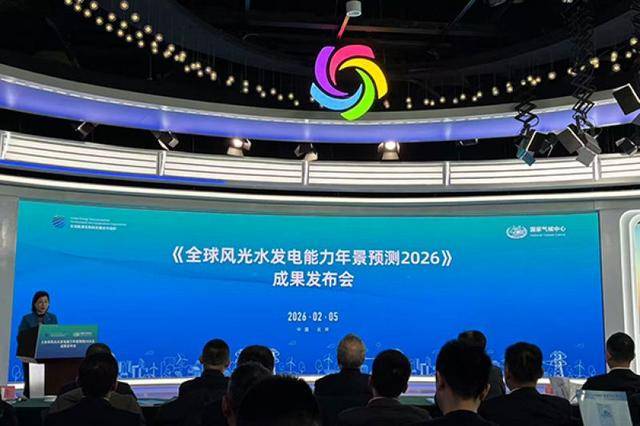
光伏发电能力增加25%!2026年全球风光水发电能力年景预测发布,助力新能源参与电力中长期市场
Sou Hu Cai Jing· 2026-02-07 08:35
Core Insights - China has established the world's largest and fastest-growing renewable energy system, becoming a leader in global green low-carbon development, with cumulative installed capacity of wind and solar power expected to exceed 1.8 billion kilowatts by the end of 2025, accounting for over 60% of renewable energy generation capacity [2][3] Group 1: Global Renewable Energy Capacity Forecast - The "Global Wind, Solar, and Hydropower Generation Capacity Annual Forecast 2026" predicts that global average wind power generation hours will be approximately 2310, while solar power generation hours will be around 1340, with overall generation capacity increasing by 6%, 25%, and 7% respectively [2][4] - The prediction framework integrates meteorological forecasting, wind and solar site identification, and renewable energy generation capacity forecasting, filling a technical gap in medium- to long-term renewable energy forecasting [3][4] Group 2: Regional Differences and Impacts - There are significant regional differences in global wind and solar generation capacity, with some countries experiencing increases while others face declines; for instance, 16 countries saw increased wind generation hours, while 17 countries, including India, experienced declines [4] - In China, average wind generation hours are expected to decrease slightly to 2100, while solar generation hours will remain stable at 1320, leading to an overall increase in generation capacity of approximately 2% for wind and 25% for solar [4][5] Group 3: Implications for Energy Market - The global renewable energy sector is entering a period of rapid acceleration, with an expected addition of 70 million kilowatts of new capacity in 2025, a 20% increase from 2024 [5] - The annual forecast is crucial for supporting the electricity spot market and decision-making for new energy site selection, allowing energy companies to develop strategies and sign long-term contracts based on predicted trends [5][6] - The release of the annual forecast will facilitate energy conservation and carbon reduction efforts, aligning with China's transition to stricter carbon emission controls during the 14th Five-Year Plan period [6]

江苏:参与电力市场交易的经营主体不再人为规定分时电价
Xin Lang Cai Jing· 2026-01-26 11:18
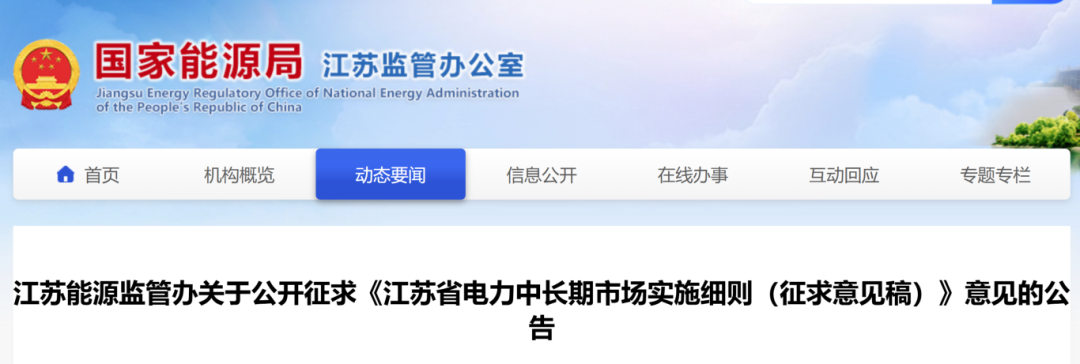
Core Viewpoint - The Jiangsu Energy Regulatory Office has released a draft for the "Implementation Rules for Jiangsu Province's Mid- to Long-Term Electricity Market" to standardize trading behaviors and protect the rights of market participants, aiming to ensure a unified, open, competitive, and orderly electricity market [2][3]. Group 1: Market Structure and Participants - The draft outlines the structure of the electricity market, including members such as power generation companies, electricity trading companies, electricity users, and new types of operators [5][7]. - New types of operators are categorized into single-technology and resource aggregation types, including distributed solar, wind power, and virtual power plants [3][7]. - The market participants are required to adhere to market rules and are prohibited from manipulating prices or engaging in unfair competition [8][9]. Group 2: Trading Mechanisms - The mid- to long-term electricity market allows for various trading periods, including multi-year, annual, monthly, and intra-month transactions [30][31]. - The trading methods include direct energy trading and contract transfer trading, with specific rules for green electricity trading [32][33]. - The pricing mechanism for mid- to long-term contracts can be fixed or flexible, depending on market supply and demand [50][51]. Group 3: Regulatory Framework - The rules are established in accordance with national policies and laws, including the Energy Law and Electricity Law, to ensure compliance and effective market operation [5][6]. - The Jiangsu Energy Regulatory Office and the Provincial Development and Reform Commission are responsible for the implementation and supervision of these rules [9]. - The draft emphasizes the importance of information disclosure and market transparency to maintain fair competition [12][13]. Group 4: Rights and Obligations of Market Participants - Power generation companies must fulfill obligations such as timely settlement of electricity fees and compliance with grid access services [14][15]. - Electricity users are required to provide necessary information for market participation and adhere to the rules for electricity trading [16][17]. - New types of operators must also meet specific conditions to participate in the market, including technical capabilities and compliance with regulatory requirements [18][19].
陕西电力交易中心董事长李鹏解读《电力中长期市场基本规则》
Zhong Guo Dian Li Bao· 2026-01-12 01:11
Core Viewpoint - The new "Basic Rules for the Electric Power Medium and Long-term Market" aims to enhance the efficiency and stability of China's electric power market, responding to the integration of renewable energy and the emergence of new market participants, with implementation starting on March 1, 2026 [2][8]. Group 1: Comprehensive Transformation of the Electric Power Medium and Long-term Market - The new rules focus on upgrading the market structure from traditional models to a diversified approach that includes new participants and extends trading cycles [3]. - The rules clarify the entry paths for new market participants, ensuring equal market status and defining the roles of virtual power plants and distributed resources [3]. - The rules propose a comprehensive trading framework covering multiple time periods, enhancing resource allocation efficiency and ensuring better alignment with real-time supply and demand [3]. Group 2: Market Pricing Mechanism - The pricing mechanism remains market-driven, with all transaction prices formed through competition among market participants, preventing third-party interference [4]. - The rules allow for flexible pricing mechanisms based on market supply and demand, while also establishing price limits to prevent market manipulation [4]. Group 3: Risk Prevention Mechanisms - The rules identify six major risk categories, emphasizing the need for local governments to establish risk warning and emergency response plans [5]. - A closed-loop risk management system is proposed, including monitoring, warning, response, and disclosure processes to ensure market stability [5]. Group 4: Implementation and Operational Enhancements - Local implementation guidelines must be completed by March 1, 2026, tailored to regional characteristics and market maturity [6]. - The rules call for a unified technical support platform to enhance digital operations and ensure efficient market functioning [6]. - Emphasis is placed on the integration of cross-regional trading to maximize resource utilization and ensure market coordination [6]. Group 5: Monitoring and Risk Control - Establishing a robust market monitoring and risk control system is crucial for maintaining market order and preventing violations [7]. - The development of intelligent systems for identifying and addressing improper trading behaviors is highlighted [7]. Conclusion - The introduction of the "Basic Rules for the Electric Power Medium and Long-term Market" signifies a new phase in the reform and development of China's electric power market, aiming to solidify market stability and enhance operational efficiency [8].
湖北电力交易中心董事长詹智民解读《电力中长期市场基本规则》
Zhong Guo Dian Li Bao· 2026-01-08 05:52
Core Viewpoint - The release of the "Basic Rules for the Medium and Long-term Electricity Market" marks a significant step towards a balanced approach to construction and operation in the electricity market, providing essential institutional support for the development of a unified national energy market [2] Group 1: Market Function Enhancement - The "Basic Rules" strengthen the medium and long-term market's role as a stabilizing force in supply assurance, expectation stabilization, risk avoidance, and investment attraction through systematic arrangements in transaction timing, clearing verification, and price linkage [3] - Transaction timing is extended in both directions, balancing stability and flexibility, with regular trading schedules established for multi-year, annual, and monthly transactions to provide stable expectations for power investment and user production planning [3] - A robust transaction verification mechanism is established to ensure the executability of medium and long-term contracts, reinforcing the principle of physical delivery and supporting supply-demand balance [3] - The price linkage mechanism is improved to accurately reflect real-time supply and demand, promoting closer alignment between short-term trading limits and spot price limits [3] Group 2: Market Operation Standardization - The "Basic Rules" promote standardization in the electricity market through unified business processes, data interaction, and technical platforms, aiming to reduce transaction costs and enhance operational efficiency [4] - Unified business processes are mandated for market registration, trading organization, and settlement to eliminate operational discrepancies across provinces, providing transparent and convenient services to market participants [4] - Standardized data interaction is required between electricity trading platforms and grid companies to facilitate efficient data flow and support resource optimization [4] - The introduction of platform norms, including "four unifications" and "dual-active backup," is aimed at ensuring market safety and preparing for more complex, high-frequency trading [4] Group 3: Risk Prevention and Control - The "Basic Rules" establish a comprehensive risk control system, evolving risk prevention to a more systematic approach in response to the complexities of market reforms [5] - Market risks are categorized into five types, including supply-demand imbalance and price anomalies, providing a clear framework for differentiated monitoring and intervention [5] - Proactive risk management measures are emphasized, with daily monitoring and preemptive strategies to enhance the timeliness and foresight of risk responses [5] - The operational authority is clarified for implementing intervention measures, ensuring effective risk management while preventing overreach or neglect in interventions [5] Group 4: Future Outlook - The medium and long-term market in Hubei has achieved continuous operation and integration with spot markets, with market participants exceeding 10,000 and market transactions accounting for nearly 60% of total electricity consumption [6] - Looking ahead, Hubei aims to deepen efforts in multi-market integration, standardized management, and intelligent risk prevention, contributing to the establishment of a leading provincial electricity market system in the context of national market construction [6]
山东电力交易中心董事长李锋解读《电力中长期市场基本规则》
Zhong Guo Dian Li Bao· 2026-01-07 06:28
Core Viewpoint - The release of the "Basic Rules for the Electric Power Medium and Long-term Market" marks a significant step in the development of China's electric power market, aiming to enhance energy security, promote green transformation, and stabilize market operations [1] Group 1: One Goal - The "Basic Rules" focus on three core objectives: ensuring supply, promoting transformation, and stabilizing prices [2] - To ensure supply, the rules strengthen the medium and long-term market's foundational role in stabilizing electricity supply and demand, encouraging long-term contracts to provide clear market expectations for power investment and grid planning [2] - For promoting transformation, the rules establish a green electricity trading mechanism, allowing for independent accounting of green electricity's environmental value and encouraging participation in long-term green electricity trading [2] - The rules also incorporate new market participants like virtual power plants and distributed energy sources to support energy structure transformation [2] Group 2: Two Connections - The "Basic Rules" emphasize the need for dynamic connections between inter-provincial and intra-provincial markets, as well as between medium-long-term and spot markets, to create a multi-level collaborative operating system [4] - The rules promote coupling between inter-provincial and intra-provincial trading, encouraging innovative mechanisms for cross-regional electricity trading [4] - They also clarify the timing and settlement mechanisms for medium-long-term and spot markets, enhancing market flexibility and stability [4] Group 3: Three Coverages - The "Basic Rules" aim to establish a comprehensive medium and long-term electricity market system that covers spatial, temporal, and varietal dimensions [5] - Spatially, the rules create a three-tier trading organization system across grid operating areas, provinces, and regions, ensuring nationwide electricity trading coverage [6] - Temporally, the rules establish a full-cycle trading system covering multiple time frames, from several years to monthly and daily transactions [6] - In terms of variety, the rules define various trading methods, including bilateral negotiation, centralized bidding, and listing, to meet diverse trading needs [6] Group 4: Outlook - By 2025, Shandong aims to implement the national unified electricity market construction requirements, achieving significant results and establishing itself as a provincial model for the national unified electricity market [7] - The introduction of the "Basic Rules" provides guidance for Shandong to better integrate into the national market system, enhancing its medium and long-term trading mechanisms and promoting green electricity trading [7]
两部门明确:不再人为规定分时电价水平和时段
中国有色金属工业协会硅业分会· 2026-01-05 02:12
Core Viewpoint - The article discusses the newly released "Basic Rules for the Medium and Long-term Electricity Market," which aims to establish a unified national electricity market, regulate medium and long-term trading behaviors, and adapt to the needs of electricity reform and development [3]. Group 1: Market Structure and Trading Mechanism - The medium and long-term electricity market prices will be determined by market participants without third-party interference, except for government-regulated prices [29]. - The rules promote the integration of medium and long-term electricity markets with spot markets, ensuring a smooth connection in trading sequences, clearing, and market settlement [12]. - The market will allow for flexible and continuous trading to accommodate the volatility of renewable energy outputs and promote long-term power purchase agreements [12][29]. Group 2: Market Participants and Rights - All electricity users participating in the medium and long-term market can purchase their entire electricity volume through wholesale or retail markets, but cannot participate in both simultaneously [2]. - The rights of power generation companies include participating in the market according to rules, signing contracts, and receiving fair access to grid services [16]. - Electricity users have the right to participate in the market, sign contracts with power generation companies, and receive fair grid access services [20]. Group 3: Pricing Mechanism - The pricing mechanism for the medium and long-term market will be based on market formation, with no artificial price levels set for peak and valley periods for direct market participants [30]. - Green electricity trading prices will consist of energy prices and green environmental values, with specific regulations on how these values are treated in pricing [29]. - The government will set upper and lower limits on reported prices to prevent market manipulation and unhealthy competition [30]. Group 4: Transaction Organization and Execution - Cross-grid medium and long-term transactions will be organized by designated electricity trading centers, with a focus on integrating provincial and cross-regional trading [32]. - The trading platform will support continuous operations and must meet the requirements for daily trading activities [41]. - Transactions must be announced in advance, with specific timelines for different types of trading [43]. Group 5: Contract Management and Settlement - Market participants must sign medium and long-term trading contracts, which will serve as the basis for execution [64]. - The settlement process will occur monthly, with daily clearing and reference points established for market transactions [72]. - Green electricity trading will involve separate settlements for energy and environmental values, ensuring clarity in financial transactions [78].
《电力中长期市场基本规则》解读之六︱科学、有序、协调发展的电力中长期市场如何支持新能源高质量发展?
国家能源局· 2026-01-03 09:56
Core Viewpoint - The article discusses the significance of the newly released "Basic Rules for the Medium and Long-term Electricity Market" (referred to as "25 Rules") in the context of supporting high-quality development of renewable energy in China, especially in a spot market environment [3]. Group 1: Definition of Medium and Long-term - The term "medium and long-term" in the electricity market encompasses two dimensions: "far" and "long," where "far" refers to transactions conducted well in advance of electricity delivery, and "long" refers to transactions involving electricity over extended periods [4]. - The "25 Rules" clarify that medium and long-term trading involves electricity products or services for future periods, including various time dimensions such as years, months, and shorter intervals [4]. Group 2: Role of Medium and Long-term Market - The medium and long-term market plays a crucial role in stabilizing supply and demand relationships by allowing parties to lock in prices and revenues, thereby reducing risks associated with supply fluctuations and financial uncertainties [5]. - From a "long" perspective, the medium and long-term market facilitates trading across multiple time periods with different price levels, helping to mitigate risks associated with price volatility [5]. Group 3: Changes and Developments in New Rules - The inclusion of new types of market participants, such as energy storage and virtual power plants, enhances the market's risk management capabilities and supports innovative trading systems [8]. - The "25 Rules" provide clearer definitions of rights and obligations for market participants, detailing the information they must provide, such as power plant maintenance schedules and demand forecasts [8]. - The trading methods have been diversified to improve market liquidity, with requirements for regular and continuous trading sessions to address uncertainties arising from increased penetration of renewable energy [9]. - Green electricity trading has been incorporated into the new rules, promoting long-term green power transactions and establishing flexible contract adjustment mechanisms [9]. - The new rules emphasize market-driven pricing mechanisms and the need for coordination with spot market mechanisms, ensuring that prices reflect market conditions [10]. - The "25 Rules" aim to create a comprehensive, low-cost, transparent, and highly liquid medium and long-term market, essential for balancing supply and demand risks and price anomalies in the context of rapid renewable energy development [10].

两部门明确:不再人为规定分时电价水平和时段
中国有色金属工业协会硅业分会· 2025-12-29 01:23
Core Viewpoint - The article discusses the implementation of the "Basic Rules for the Medium and Long-term Electricity Market," which aims to establish a unified national electricity market, regulate medium and long-term electricity trading behaviors, and adapt to the needs of electricity reform and development [5][11]. Group 1: Market Structure and Trading Mechanism - The medium and long-term electricity market prices will be determined by market participants without third-party intervention, except for government-regulated prices [2][31]. - The rules will facilitate the integration of medium and long-term markets with spot markets, ensuring a smooth transition in trading sequences, clearing, and market settlement [2][14]. - The market will allow for flexible and continuous trading to accommodate the volatility of renewable energy output, promoting long-term power purchase agreements [2][14]. Group 2: Market Participants and Rights - All electricity users participating directly in the medium and long-term market can purchase their entire electricity volume through wholesale or retail markets, but cannot participate in both simultaneously [2][11]. - The rights of market participants, including generation companies, retail companies, and electricity users, are defined, ensuring fair access to services and information [18][19][20]. Group 3: Pricing Mechanism - The pricing mechanism for green electricity transactions will consist of energy prices and green electricity environmental values, with specific regulations on how these values are treated in pricing [31][32]. - The government will set upper and lower limits on prices to prevent market manipulation and unhealthy competition [38][39]. Group 4: Implementation Timeline - The rules will take effect on March 1, 2026, and will be valid for five years [3][66].
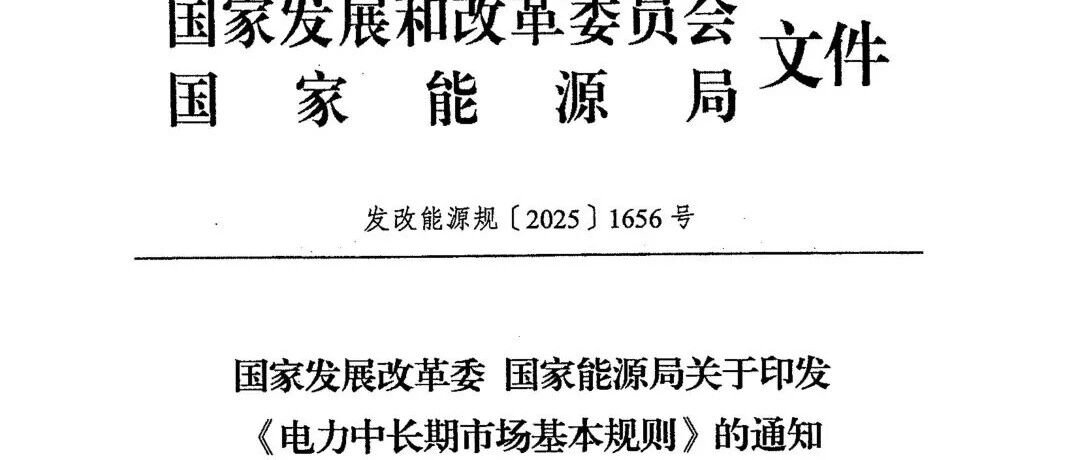
国家发改委、国家能源局重磅发布!
中国能源报· 2025-12-26 12:45
Core Viewpoint - The article discusses the release of the "Basic Rules for the Medium and Long-term Electricity Market" by the National Development and Reform Commission and the National Energy Administration, emphasizing the need for a unified national electricity market and the importance of balancing long-term supply and demand in the electricity sector [1][2]. Group 1: General Principles - The rules aim to accelerate the construction of a unified national electricity market system, standardize medium and long-term trading behaviors, and protect the legitimate rights and interests of market participants [5]. - The medium and long-term electricity market is defined as a market where registered entities conduct electricity trading for future delivery periods, including various time dimensions such as years, months, and weeks [5][6]. Group 2: Overall Requirements - The rules promote the integration of medium and long-term electricity markets with spot markets, ensuring smooth transitions in trading sequences, clearing, and market settlements [8]. - There is a focus on adapting to the volatility of renewable energy output, enabling flexible continuous trading, and promoting long-term power purchase agreements to stabilize consumption [8]. Group 3: Market Participants - Market participants include generation companies, electricity users, and new types of operators, all of whom must adhere to market rules and avoid manipulating prices [12][15]. - Generation companies have rights to participate in the market, sign contracts, and receive fair access to grid services [13]. Group 4: Trading Types and Price Mechanism - Medium and long-term trading includes various delivery periods, with different trading methods such as centralized trading and bilateral negotiations [25][30]. - The pricing mechanism for the medium and long-term market is determined by market forces, with specific provisions for green electricity trading [29][30]. Group 5: Trading Organization - Cross-regional electricity trading will be organized by designated electricity trading centers, with a focus on ensuring continuous operation and timely publication of trading calendars [32][34]. - The rules stipulate that key parameters for trading must be clearly defined before trading begins, and adjustments cannot be made during the trading process [44]. Group 6: Contract Management - All market participants must sign medium and long-term trading contracts, which serve as the basis for execution and help stabilize market expectations [64]. - Green electricity trading contracts must specify the traded electricity volume and pricing, including the environmental value of green electricity [66]. Group 7: Measurement and Settlement - The settlement of the medium and long-term market will generally occur on a monthly basis, with provisions for different types of settlements [72][76]. - Green electricity trading will involve separate settlements for energy and environmental value, ensuring compliance with sustainability pricing mechanisms [78]. Group 8: Information Disclosure - Market information will be disclosed periodically, with a retention period of at least two years, ensuring transparency for all market participants [81][83]. Group 9: Technical Support System - The electricity trading platform must include various functional modules to support market operations, ensuring interoperability and data exchange among different systems [84][88].