
空气币

Search documents
警惕虚拟货币领域无序创新
Sou Hu Cai Jing· 2025-12-07 22:57
Core Viewpoint - The People's Bank of China (PBOC) has reiterated its stance on combating virtual currency trading and speculation, with multiple associations warning about the associated risks, particularly concerning the rise of real-world asset tokens and other related activities [1][3][4]. Group 1: Risks Associated with Virtual Currencies - A joint risk warning was issued by seven associations, including the China Internet Finance Association and the China Banking Association, highlighting the dangers of virtual currencies, stablecoins, and real-world asset tokens [1][3]. - The warning emphasizes that activities related to stablecoins and real-world asset tokens could lead to various risks, including false asset risks, operational failure risks, and speculative trading risks [4][6]. - The rise of concepts like stablecoins and real-world asset tokens has been linked to illegal fundraising and scams, with the PBOC categorizing stablecoins as a form of virtual currency [3][4]. Group 2: Regulatory Measures and Industry Response - Financial institutions are prohibited from engaging in any business related to virtual currencies and must conduct thorough due diligence to identify potential risks [6][7]. - The associations have called for heightened vigilance among the public regarding virtual currency activities, urging individuals to be cautious of high-yield promises and to avoid engaging with suspicious platforms [6][7]. - The joint risk warning aims to enhance compliance and reduce the presence of virtual currencies and related activities in the domestic market, promoting a more coordinated regulatory approach across financial sectors [7][8].


7家协会联合发布风险提示背后,警惕虚拟货币领域无序创新
Bei Jing Shang Bao· 2025-12-07 12:29
Core Viewpoint - The People's Bank of China has reiterated its commitment to combat virtual currency trading and speculation, with multiple associations warning about the risks associated with virtual currencies and related activities [1][3]. Group 1: Risks Associated with Virtual Currencies - A joint risk warning was issued by seven associations, including the China Internet Finance Association and the China Banking Association, highlighting the dangers of virtual currencies, stablecoins, and real-world asset tokens [1][4]. - The warning emphasizes that activities related to stablecoins and real-world asset tokens could lead to false asset risks, operational failure risks, and speculative trading risks [3][4]. - The rise of concepts related to virtual currencies has led to illegal fundraising and fraud, with criminals exploiting these terms to conduct illicit activities [3][4]. Group 2: Regulatory Environment - The risk warning states that no real-world asset tokenization activities have been approved by Chinese financial authorities, and engaging in such activities may involve illegal fundraising and unauthorized issuance of securities [4][6]. - Financial institutions are prohibited from providing services related to virtual currencies and must conduct thorough due diligence to identify potential risks [6][7]. - Internet platforms are also warned against promoting or providing services for virtual currency activities, emphasizing the need for compliance in information dissemination [7][8]. Group 3: Public Awareness and Education - The public is urged to remain vigilant against various forms of virtual currency activities, as these are often associated with speculation and fraudulent schemes [7][8]. - There is a call for continuous public education to enhance risk awareness and promote rational investment practices, which is essential for maintaining financial security [8].

七家协会联合颁布禁令,这一行业在境内彻底歇菜
Di Yi Cai Jing· 2025-12-07 04:18
Core Viewpoint - The seven associations in China have issued a risk warning prohibiting their member units from participating in virtual currency and real-world asset token issuance and trading activities within the country, following a crackdown by 13 government departments on cryptocurrency speculation [1][2]. Group 1: Regulatory Actions - Member units are explicitly forbidden from engaging in any activities related to the issuance and trading of virtual currencies and real-world asset tokens within China [1][2]. - The associations emphasize that virtual currencies are not issued by monetary authorities and do not hold the same legal status as legal tender in China [2]. - Institutions and individuals conducting exchanges between legal currency and virtual currencies, or engaging in the issuance and financing of real-world asset tokens, are deemed to be involved in illegal financial activities [2][3]. Group 2: Risks Associated with Virtual Currencies - The risk warning highlights that virtual currencies are often used for speculative trading and illegal activities such as Ponzi schemes and fraud [4]. - Specific examples of risks include the volatility of virtual currency prices, with Bitcoin experiencing significant fluctuations, such as dropping below $85,000 and then rebounding above $90,000 within a few days [4]. - The warning also identifies "air coins" like π coin as lacking substantial technological innovation and clear commercial applications, making them susceptible to fraud and market manipulation [2]. Group 3: Compliance Requirements - Financial institutions, including banks and payment service providers, must not offer any services related to the issuance and trading of virtual currencies or real-world asset tokens [3]. - Member units are required to conduct thorough customer due diligence to identify any involvement in virtual currency transactions or money laundering risks [3]. - Internet platform companies must ensure compliance by not providing marketing or technical services for virtual currency-related activities [3].
公众应守好“钱袋子” 远离虚拟货币
Zheng Quan Shi Bao· 2025-12-05 22:33
Core Viewpoint - The joint announcement by seven associations emphasizes the illegality of virtual currencies in China, warning the public against engaging in related activities and highlighting the risks associated with such investments [1][2]. Group 1: Regulatory Actions - The China Internet Finance Association and six other associations issued a risk warning regarding virtual currencies, stating they do not hold the same legal status as fiat currencies and cannot be circulated within China [1]. - The People's Bank of China has convened a meeting to coordinate efforts against virtual currency trading and has reiterated its stance on prohibiting virtual currency-related activities [1]. Group 2: Public Warnings - Member units are prohibited from participating in the issuance and trading of virtual currencies and real-world asset tokens within China, and they must not provide related services to clients [2]. - The associations urge the public to enhance their risk awareness and avoid involvement in virtual currency and real-world asset token activities, including illegal fundraising and securities issuance disguised as "mining" [2].
七家协会联合提示涉虚拟货币等非法金融活动风险 公众应守好“钱袋子” 远离虚拟货币
Zheng Quan Shi Bao· 2025-12-05 17:19
Core Viewpoint - The joint announcement by seven associations emphasizes that virtual currencies do not have the same legal status as fiat currencies and cannot be circulated as money within China [1][2] Group 1: Regulatory Actions - The China Internet Finance Association and six other associations have issued a risk warning against illegal activities related to virtual currencies, highlighting the need for public vigilance [1] - The People's Bank of China has convened a meeting to coordinate efforts against virtual currency trading speculation, reaffirming the prohibition of virtual currency-related activities [1] Group 2: Prohibitions and Warnings - Member units are prohibited from participating in the issuance and trading of virtual currencies and real-world asset tokens within China [2] - The associations urge member units to educate the public on the risks associated with virtual currencies and to help them identify and avoid illegal activities [2] Group 3: Public Awareness - The associations warn that virtual currencies are often used for speculative trading and fraudulent activities, advising the public to enhance their risk awareness and protect their finances [2] - Individuals are cautioned against engaging in activities related to virtual currencies and real-world asset tokens, including illegal fundraising and securities issuance disguised as "mining" [2]
七家协会联合警示涉虚拟货币等非法活动风险
Guo Ji Jin Rong Bao· 2025-12-05 16:05
Core Viewpoint - The rapid rise of virtual currency concepts has led to illegal activities such as fraud and illegal fundraising, prompting regulatory bodies in China to issue warnings and guidelines to prevent risks associated with virtual currencies and related activities [1][2][3][4] Group 1: Regulatory Actions - Chinese regulatory authorities, including the People's Bank of China and the China Securities Regulatory Commission, have issued announcements to prevent risks related to token issuance and virtual currency trading [1][2] - Seven financial associations in China have reiterated that their members must not participate in the issuance or trading of virtual currencies or reality world asset tokens within the country [3] Group 2: Risks Associated with Virtual Currencies - Virtual currencies are not issued by monetary authorities and do not have the same legal status as fiat currencies, making them unsuitable for circulation in China [1] - Stablecoins currently fail to meet customer identification and anti-money laundering requirements, posing risks of being used for illegal activities such as money laundering and fundraising fraud [2] - The tokenization of real-world assets carries multiple risks, including false asset risks and speculative trading risks, and no such activities have been approved by Chinese financial authorities [2] Group 3: Public Warnings - The public is urged to be vigilant against various forms of virtual currency and real-world asset token activities, which are often associated with speculation and fraud [4] - Individuals are advised to avoid participating in virtual currency and real-world asset token activities, as well as illegal fundraising and securities issuance disguised as "mining" [4] - The public should report any suspicious activities related to virtual currencies and real-world asset tokens to regulatory authorities and law enforcement [4]
公众需守好“钱袋子”!七协会联合发声:虚拟货币非法定货币 | 快讯
Hua Xia Shi Bao· 2025-12-05 13:55
Core Viewpoint - The recent announcement by the China Internet Finance Association and six other associations highlights the risks associated with virtual currencies and illegal activities, emphasizing the need for public awareness and caution against scams and illegal fundraising activities [2][3]. Group 1: Risks of Virtual Currencies - Virtual currencies are not issued by monetary authorities and do not have the same legal status as fiat currencies, making them illegal for circulation within China [3]. - Air coins, such as π coin, lack substantial technological innovation and clear commercial applications, with serious issues related to fraud and market manipulation [3]. - Stablecoins currently do not meet customer identification and anti-money laundering requirements, posing risks of being used for money laundering and illegal fundraising [3]. Group 2: Regulatory Stance - The announcement reiterates that no institutions are allowed to engage in activities related to virtual currencies or tokenization of real-world assets [3]. - The financial management authorities in China have not approved any activities related to the tokenization of real-world assets, highlighting the regulatory stance against such practices [3]. Group 3: Historical Context - Previous warnings have been issued by the China Internet Finance Association regarding risks associated with NFTs and virtual currency trading, emphasizing the need for compliance with national laws and regulations [4]. - In April 2022, a call was made to curb the financialization and securitization of NFTs, and in May 2021, a warning was issued against virtual currency trading speculation [4].
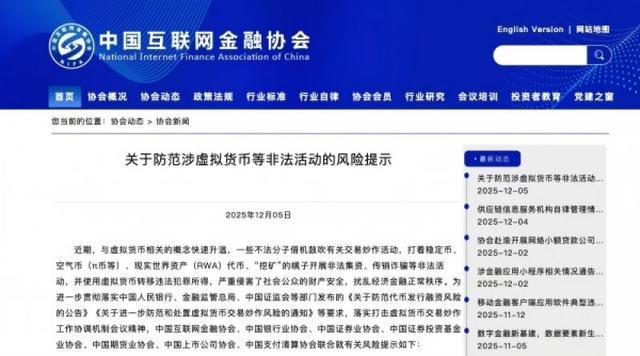
七家协会联合发布风险提示,事关防范涉虚拟货币等非法活动
Qi Huo Ri Bao· 2025-12-05 13:31
Core Viewpoint - The Chinese financial regulatory authorities have issued a risk warning regarding virtual currencies and related illegal activities, emphasizing that virtual currencies are not legal tender and warning the public against participating in such activities [1][4][5]. Group 1: Regulatory Actions - On December 5, multiple financial associations in China jointly released a risk warning to prevent illegal activities related to virtual currencies [1]. - The warning highlights that virtual currencies are not issued by monetary authorities and do not have the same legal status as legal tender, thus cannot be circulated or used within China [4]. Group 2: Risks Associated with Virtual Currencies - Recent trends show a rise in illegal activities related to virtual currencies, including illegal fundraising and Ponzi schemes, often disguised as stablecoins or asset-backed tokens [4]. - Specific tokens like π coin are identified as lacking substantial technological innovation and clear commercial applications, leading to significant fraud and market manipulation risks [4]. - The warning outlines that stablecoins currently do not meet requirements for customer identity verification and anti-money laundering, posing risks of being used for money laundering and illegal fundraising [4]. Group 3: Prohibitions for Financial Institutions - Domestic institutions and individuals are prohibited from engaging in activities related to the exchange of legal tender for virtual currencies and the issuance of asset-backed tokens [5][6]. - Financial institutions, including banks and payment service providers, are instructed not to offer any services related to virtual currencies or asset-backed tokens, including mining operations [6]. Group 4: Public Awareness and Precautions - The public is urged to remain vigilant against various forms of virtual currency and asset-backed token activities, which are often associated with speculation and illegal activities [7]. - Individuals are advised to enhance their risk awareness and avoid participating in any virtual currency-related activities, including those disguised as mining operations [7].
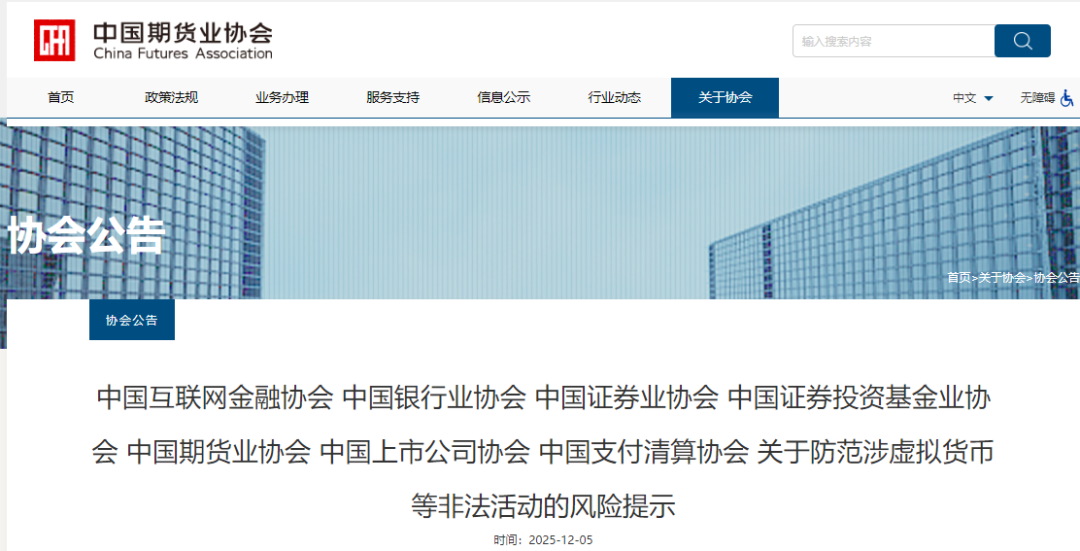
七家协会联合提示!远离虚拟货币、现实世界资产代币
Bei Jing Shang Bao· 2025-12-05 13:23
Core Viewpoint - The Chinese Internet Finance Association and other regulatory bodies have issued a risk warning regarding illegal activities related to virtual currencies, highlighting the rise of speculative trading and fraudulent schemes under the guise of stablecoins and other tokens [1][2]. Group 1: Regulatory Actions - The warning is part of efforts to implement directives from the People's Bank of China and other financial regulatory authorities aimed at preventing risks associated with token issuance and virtual currency trading [1]. - Various associations, including the China Banking Association and the China Securities Association, have collaborated to issue this risk alert [1]. Group 2: Risks and Warnings - Virtual currencies are characterized by extreme price volatility and are often associated with speculative trading and illegal activities such as Ponzi schemes [2]. - The public is advised to enhance their risk awareness and avoid participating in activities related to virtual currencies and real-world asset tokens, as well as illegal fundraising under the guise of "mining" [2]. - Individuals are urged to report any suspicious activities related to virtual currencies to regulatory authorities and law enforcement [2].
中国互金协会等:不得在境内参与虚拟货币、现实世界资产代币发行和交易活动
Bei Jing Shang Bao· 2025-12-05 13:23
Core Viewpoint - The recent surge in virtual currency-related activities has led to illegal fundraising and fraud, prompting regulatory bodies to issue warnings and guidelines to prevent such activities [1][2] Group 1: Regulatory Actions - The China Internet Finance Association and other financial regulatory bodies have issued a risk warning regarding virtual currencies and related activities [1] - Member units are prohibited from participating in the issuance and trading of virtual currencies and real-world asset tokens within China [2] - Financial institutions must conduct thorough due diligence to identify potential risks related to virtual currencies and report any suspicious activities to the relevant authorities [2] Group 2: Prohibitions on Services - Banks and payment institutions are not allowed to provide any services related to the issuance and trading of virtual currencies and real-world asset tokens [2] - Securities, fund, and futures institutions are also barred from offering services for the issuance and trading of virtual currencies and related financial products [2] - Internet platform companies must refrain from marketing or providing technical services for virtual currency-related activities and ensure compliance in information dissemination [2] Group 3: Public Awareness and Education - Member units are encouraged to conduct risk awareness campaigns to educate the public about the dangers of virtual currencies and illegal activities [2] - The emphasis is placed on helping the public discern risks and avoid illegal activities related to virtual currencies [2]