美国党争

Search documents
爱泼斯坦案成为美国党争博弈筹码
Xin Lang Cai Jing· 2026-02-03 23:53
【#爱泼斯坦案成为美国党争博弈筹码#】#爱泼斯坦案撕破美国精英遮羞布#据报道,当地时间2月2日, 面对藐视国会罪的表决压力,美国前总统比尔·克林顿与前国务卿希拉里·克林顿,已同意接受美国国会 众议院监督委员会"不设时限、涵盖更广泛内容的"的问询,就杰弗里·爱泼斯坦相关调查作证。 民主党想借此打击特朗普政府的执政合法性,共和党则试图通过"有限曝光"进行政治止损。2025年11月 国会以压倒性多数通过了《爱泼斯坦档案透明法案》,名为"透明",实为"暗战",从一波三折的案卷解 密过程就可见一斑。 党争喧嚣掩盖了对真相的诉求,丑陋案件成为权力博弈的筹码,司法公信与社会正义早已沦为牺牲品。 (长安街知事;视频:环球网此前报道) 美国司法部日前解密了最新一批爱泼斯坦案件相关文件,涉及300万页材料、2000段视频和18万张图 片,美国商务部长霍华德·卢特尼克、企业家埃隆·马斯克、特朗普前顾问斯蒂芬·班农等大批政商精英牵 涉其中。"常年占据道德高地、对世界指手画脚的美国精英统治集团,原来内部早已爬满了蛆虫。"这一 现实令无数民众出离愤怒。 爱泼斯坦案之所以能长期被掩盖,就在于牵涉其中的精英凭借财富和权力渗透到司法、政治体系 ...
遭遇“民主党倒戈”,标志“共和党胜利”,克林顿夫妇同意就爱泼斯坦案作证
Huan Qiu Shi Bao· 2026-02-03 22:57
【环球时报特约记者 刘皓然】历经数月角力,美国前总统、民主党人克林顿及其妻子希拉里2日同意就爱泼斯坦案的相关调查接受国会方面的问 询。作为民主党的代表人物,克林顿的被迫让步折射出美国党争的白热化,而一位前总统被国会"强制传唤"的案例在美国政治史上更是堪称罕 见。在舆论看来,爱泼斯坦事件本就是特朗普政府把持的一枚政治筹码,如今事态的发展与真相已是渐行渐远,"萝莉岛"真正的受害群体更加无 人问津。 美国《纽约时报》2日报道,周一晚上,克林顿夫妇的代理律师向国会众议院监督与问责委员会主席、共和党人詹姆斯·科默发送电子邮件,明确 表示其委托人将会在"双方商定的日期出面作证",同时请求国会众议院不要继续推动针对二人原定于周三的"藐视国会"指控投票。美联社报道 称,虽然克林顿一方已经"服软",但科默表示不会即刻撤销对二人的指控,众议院也只是在程序上暂缓了这一进程,因为双方尚未达成任何书面 协议。科默在一份声明中强调,克林顿夫妇作出妥协的"唯一原因"就是针对二人的"藐视国会"指控。据了解,众议院举行全院投票前,有关该项 指控的决议要接受众议院规则委员会的审议,该委员会目前暂时中止了这一进程,但警告称如果在短期内看不到克林顿 ...


党争漩涡下,美国人的这一年
Xin Hua She· 2025-12-25 13:57
Core Viewpoint - The article highlights the severe political polarization and governance failures in the United States during 2025, exacerbated by a record-long government shutdown that significantly impacted millions of Americans and their daily lives [1][2][4]. Group 1: Government Shutdown Impact - The government shutdown lasted for 43 days, affecting millions of travelers with flight delays and cancellations, disrupting food assistance programs for over 40 million low-income individuals, and leaving many federal employees without pay [1][2]. - The shutdown was a result of escalating partisan conflicts between the Republican and Democratic parties, focusing on healthcare spending as a pretext for political maneuvering [1][2]. Group 2: Public Sentiment and Economic Conditions - Public sentiment is increasingly negative, with many Americans expressing frustration towards Congress, as evidenced by protests demanding action from lawmakers [2]. - Economic indicators show a rise in the unemployment rate to 4.6%, the highest since October 2021, and nearly half of surveyed individuals report significant financial pressure regarding daily expenses [2][3]. Group 3: Political Leadership and Public Perception - Despite presenting a polished image and claiming achievements, the current administration under Trump faces skepticism from the public, who feel disconnected from the realities of rising costs and economic insecurity [3]. - The article suggests that the political elite's lack of empathy for the struggles of ordinary citizens contributes to a growing divide and dissatisfaction among the populace [5].
记者手记·2025回望丨党争漩涡下,美国人的这一年
Xin Hua She· 2025-12-25 10:30
Core Viewpoint - The article highlights the severe impact of political polarization and government dysfunction in the United States, particularly illustrated by the record 43-day government shutdown in 2025, which affected millions of Americans and exacerbated existing economic challenges [1][3][4]. Group 1: Government Shutdown and Its Effects - The government shutdown lasted for 43 days, leading to significant disruptions including flight cancellations affecting millions of travelers and interruptions in food assistance programs for over 40 million low-income individuals [3][4]. - Federal employees, such as a Defense Department worker, expressed frustration over being used as political pawns in the ongoing partisan conflict [3][4]. - The shutdown is seen as a symptom of deeper systemic issues within the U.S. political system, where accountability and compromise have diminished, leading to governance failures [3][4]. Group 2: Economic Conditions and Public Sentiment - Economic indicators show a rising unemployment rate of 4.6% in November, the highest since October 2021, reflecting growing economic distress among the population [4]. - Polls indicate that nearly half of respondents feel significant pressure regarding daily expenses such as food, housing, and healthcare, with many experiencing the highest living costs in recent memory [4]. - Despite the challenging economic landscape, the current administration's attempts to portray a positive narrative about governance have not resonated with the public, who continue to feel the weight of high prices and insecurity [4][6]. Group 3: Political Climate and Public Response - The ongoing political strife has led to increased social tensions and a sense of division within the country, with citizens expressing dissatisfaction towards both major political parties [4][6]. - Public protests have emerged, reflecting a growing frustration with political leaders and a demand for effective governance that prioritizes the needs of ordinary Americans [3][4]. - The narrative of a divided America is reinforced by sentiments that the interests of the wealthy and powerful often overshadow those of the lower-income population [6].

国际观察|美国从最长“停摆”走向下次“停摆”
Xin Hua She· 2025-11-14 03:29
Core Points - The U.S. Congress passed a temporary funding bill, ending the longest government shutdown in history, lasting 43 days [1] - Despite the temporary resolution, core disagreements over healthcare spending remain unresolved, indicating a potential for future shutdowns [1][4] - The political landscape shows increasing polarization, with both parties using the shutdown to advance their agendas [2][4] Group 1: Legislative Actions - The House of Representatives passed the temporary funding bill with a vote of 222 in favor and 209 against, showcasing partisan tensions [2] - The Senate's failure to pass a funding bill before the government shutdown led to a record duration of the shutdown, attributed to deep-seated disagreements over healthcare spending [2][3] - Some Democratic senators voted in favor of the bill due to their political circumstances, indicating a strategic compromise [3] Group 2: Political Implications - Analysts view the shutdown as a "lose-lose" situation for both parties, with ongoing disputes over healthcare likely to continue [4] - The Democratic Party faces internal criticism for compromising, losing leverage against the Republican Party [4][6] - The Republican Party's approval ratings have suffered due to the shutdown, with public sentiment blaming them for the impasse [6] Group 3: Governance Challenges - The temporary funding bill only extends funding until January 30, 2026, suggesting that negotiations will continue and future shutdowns are possible [7] - Historical data shows that since 1980, the U.S. has experienced 15 government shutdowns, with increasing frequency and duration in recent years [7] - Experts argue that the root cause of frequent shutdowns lies in a lack of political compromise and governance dysfunction, rather than just policy disagreements [7][8]
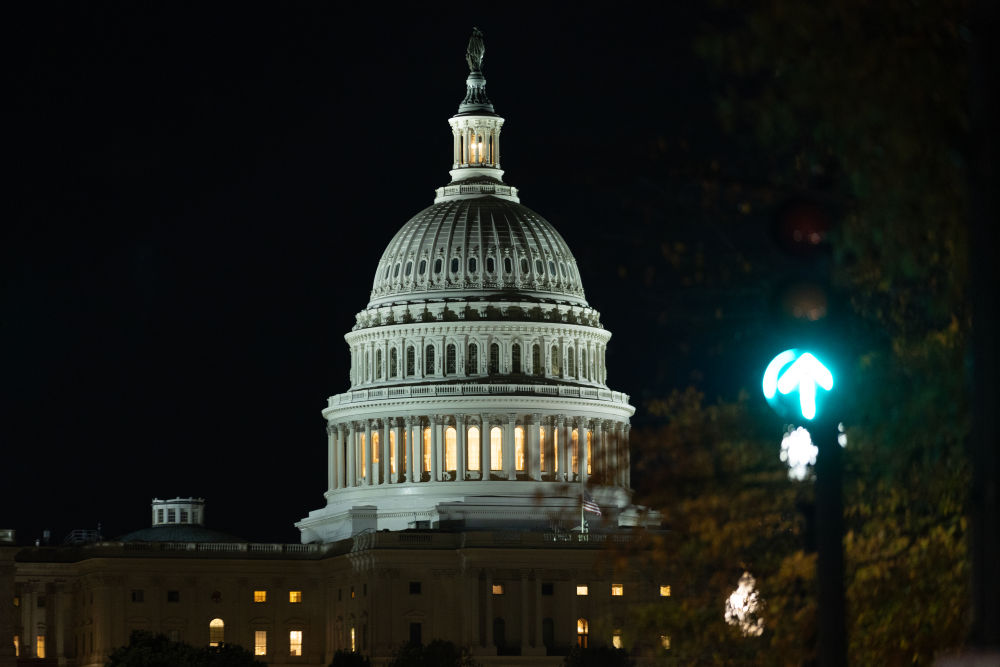
视频丨美政府“停摆”时长破纪录 专家:美国两党“摆烂” 罔顾民生
Yang Shi Xin Wen Ke Hu Duan· 2025-11-05 08:14
Core Points - The U.S. federal government shutdown has reached its 36th day, breaking the previous record of 35 days set in late 2018 to early 2019, marking it as the longest shutdown in U.S. history [1] - Experts believe this shutdown highlights the increasing polarization between the Republican and Democratic parties, with both sides using the shutdown to blame each other and further their political agendas, showing no signs of compromise [1] Group 1 - The deep-rooted cause of repeated government shutdowns is the deterioration of the U.S. federal fiscal legislative system under the influence of intensified party conflicts, with no budget approval completed at the start of any fiscal year since the 21st century [4] - The current budget crisis is expected to have negative impacts on various aspects of American society, including the economy and public welfare, with many effects being hidden and only surfacing in the future [4] - The ongoing crisis is likely to further diminish both domestic and global perceptions of the U.S., accelerating the decline of its national image [4] Group 2 - This shutdown crisis is notably different from previous ones, as both parties are indifferent to resolving the issue, viewing the shutdown as an opportunity to advance their own political agendas [6] - The likelihood of a compromise between the two parties is decreasing, leading to a prolonged and escalating shutdown crisis [6]
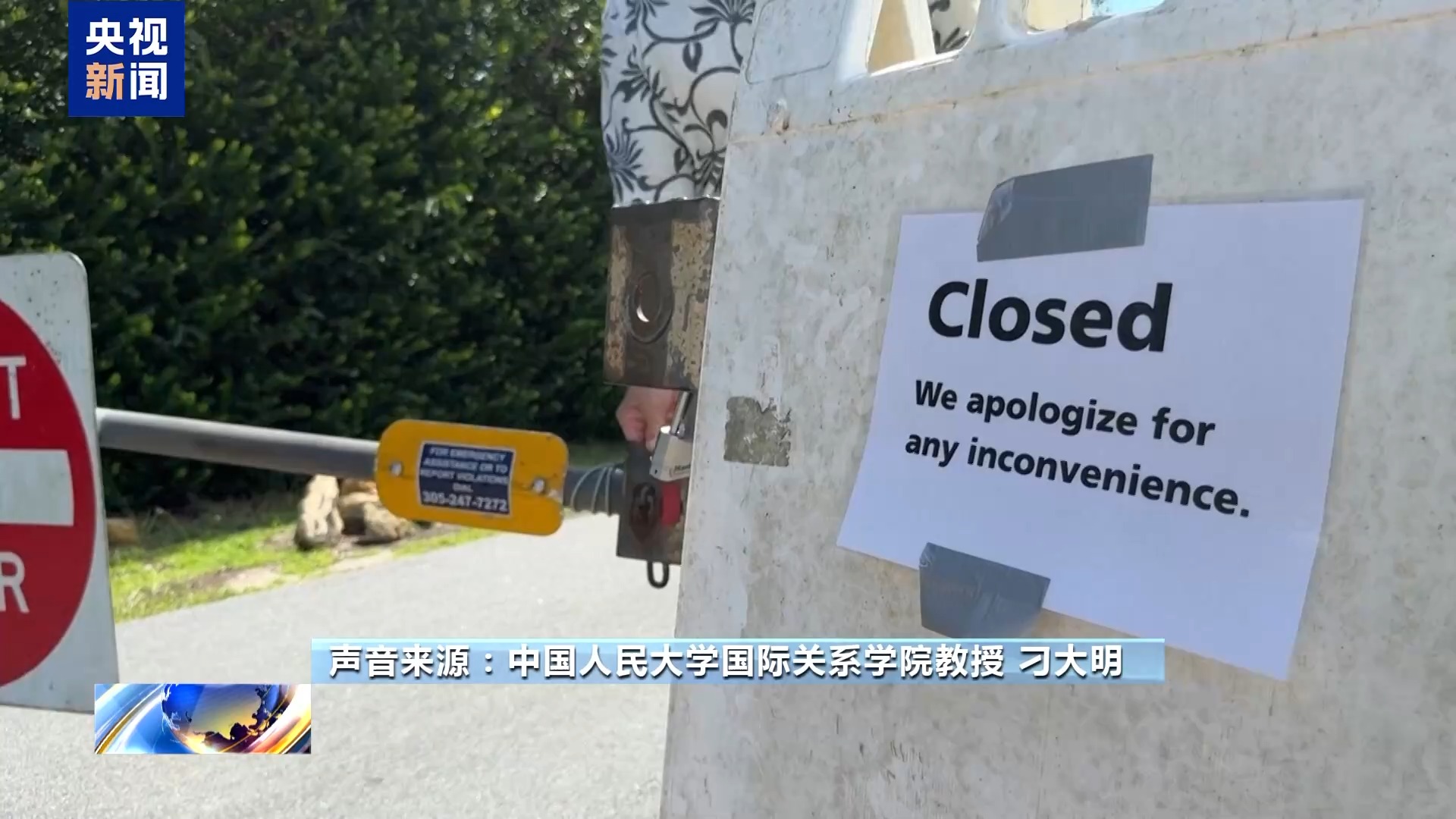
临时拨款法案再遭否决 美政府“停摆”已追平纪录!
Jin Rong Shi Bao· 2025-11-05 05:06
Group 1: Government Shutdown Impact - The U.S. government shutdown is set to become the longest in history, surpassing the previous record of 35 days from late 2018 to early 2019, as the Senate failed to pass a temporary funding bill [1] - The shutdown has already affected over 420 million Americans, with significant disruptions in military pay and food assistance programs [1] - The Congressional Budget Office estimates that the shutdown could reduce the U.S. GDP growth rate by 1-2 percentage points in Q4, translating to a potential economic loss of $7 billion to $14 billion depending on the duration of the shutdown [2] Group 2: Sector-Specific Effects - The shutdown has severely impacted various sectors, including aviation, food relief, early education, and healthcare, with significant delays and disruptions reported [3] - The healthcare sector is particularly affected, with insurance premiums expected to rise by $1,000 per person annually due to the lack of government subsidies [3] - The tourism industry has warned that the shutdown could have disastrous economic consequences, especially with the upcoming Thanksgiving holiday, which is a peak travel period [3] Group 3: Aviation Industry Challenges - Approximately 13,000 air traffic controllers and 50,000 airport security personnel are working without pay, leading to staffing shortages and increased flight delays [4] - Nearly 90% of air traffic controllers in the New York area have been absent from work, exacerbating the situation [4] - On November 2, nearly 4,300 flights were delayed and over 550 flights were canceled, highlighting the operational challenges faced by the aviation sector [4]
美政府“停摆”纪录即将刷新,两党相互指责不休
Yang Shi Xin Wen· 2025-11-05 01:01
Group 1 - The U.S. federal government shutdown has lasted for 35 days as of November 4, matching the previous record set during Trump's presidency, with the potential to extend further as the Senate rejected a temporary funding bill for the 14th time [1][4] - The shutdown has severely impacted various sectors, including aviation, food assistance, early education, and healthcare, highlighting the increasing political polarization in the U.S. [1][4] - The Senate's failure to advance the temporary funding bill means the shutdown will become the longest in U.S. history, surpassing the previous record of 35 days from late 2018 to early 2019 [4] Group 2 - Approximately 13,000 air traffic controllers and 50,000 airport security personnel are working without pay due to the shutdown, leading to increased flight delays and heightened safety risks in the aviation sector [5][7] - The Federal Aviation Administration reported that nearly half of the major air traffic control facilities in the U.S. are experiencing staffing shortages, with New York seeing nearly 90% of its air traffic controllers absent [7] - Over 3.2 million airline passengers have been affected by flight delays or cancellations since the shutdown began [7] Group 3 - The shutdown has halted the issuance of food assistance through the Supplemental Nutrition Assistance Program, affecting over 40 million Americans, with emergency funds being utilized to cover only part of the month's benefits [8] - Trump has attributed the shutdown to the Democrats, stating that food assistance can only resume once the government is reopened [8] Group 4 - The ongoing budget impasse has led to significant increases in healthcare premiums, with estimates suggesting that individuals may face an additional $1,000 in annual costs without government subsidies [9][11] - Democratic leaders are blaming Republicans for the healthcare crisis, emphasizing the rising living costs and the potential loss of insurance for 4 million Americans [11][13] Group 5 - Despite ongoing negotiations, the two parties remain at an impasse, with Trump stating he will not negotiate until the government reopens, while some lawmakers express optimism about resolving the budget deadlock [16]
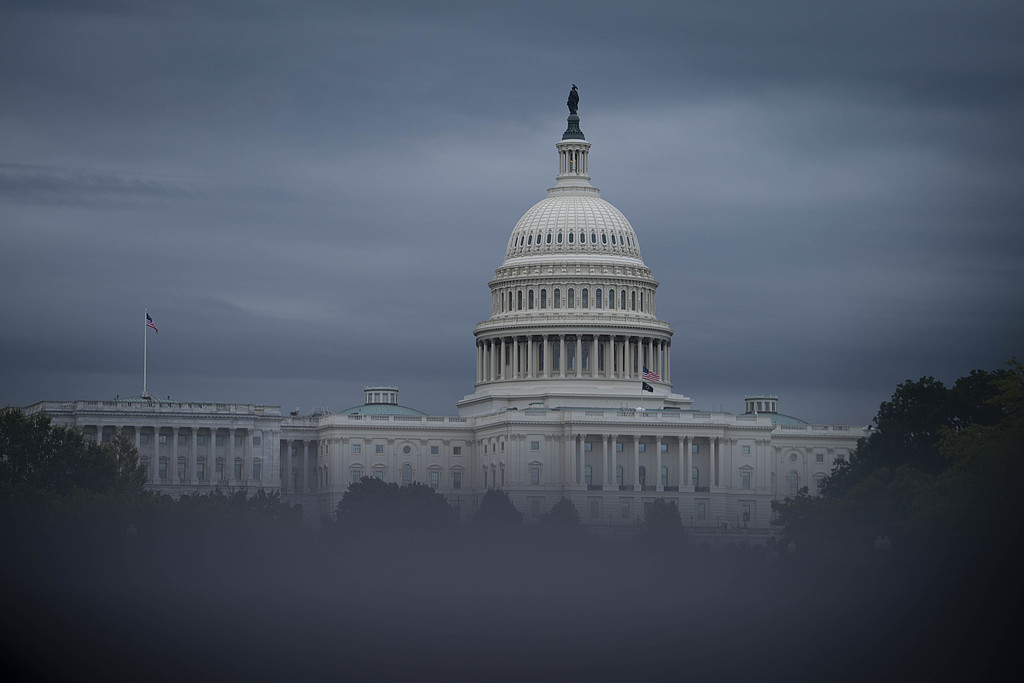
视频丨美政府“停摆”纪录即将刷新 两党相互指责不休
Yang Shi Xin Wen Ke Hu Duan· 2025-11-04 23:41
Group 1 - The U.S. federal government shutdown has lasted for 35 days, matching the previous record set during Trump's presidency, with the potential to become the longest in U.S. history as the Senate has repeatedly failed to pass a temporary funding bill [1][2] - The shutdown has severely impacted various sectors, including aviation, food assistance, early education, and healthcare, highlighting the increasing political polarization in the U.S. [1][2] Group 2 - Approximately 13,000 air traffic controllers and 50,000 airport security personnel are working without pay, leading to increased flight delays and heightened safety risks in the aviation industry [3][5] - The Federal Aviation Administration reported that nearly half of the major air traffic control facilities in the U.S. are experiencing staffing shortages, with New York seeing nearly 90% of air traffic controllers absent [5] - Over 3.2 million airline passengers have been affected by flight delays or cancellations since the shutdown began [5] Group 3 - The shutdown has halted the issuance of benefits under the Supplemental Nutrition Assistance Program, affecting over 40 million Americans, with emergency funds being utilized to maintain partial assistance [6] - The Trump administration has attributed the shutdown to the Democratic Party, stating that food assistance can only resume once the government reopens [6] Group 4 - The ongoing budget impasse has led to significant increases in healthcare premiums, with estimates suggesting that individuals may face an additional $1,000 in annual costs without government subsidies [7][9] - Democratic leaders are blaming Republicans for the healthcare crisis, emphasizing the rising living costs and potential loss of insurance for millions of Americans [9][11] Group 5 - Political negotiations remain stalled, with both parties continuing to blame each other for the shutdown, although some lawmakers express optimism about reaching a resolution soon [12]

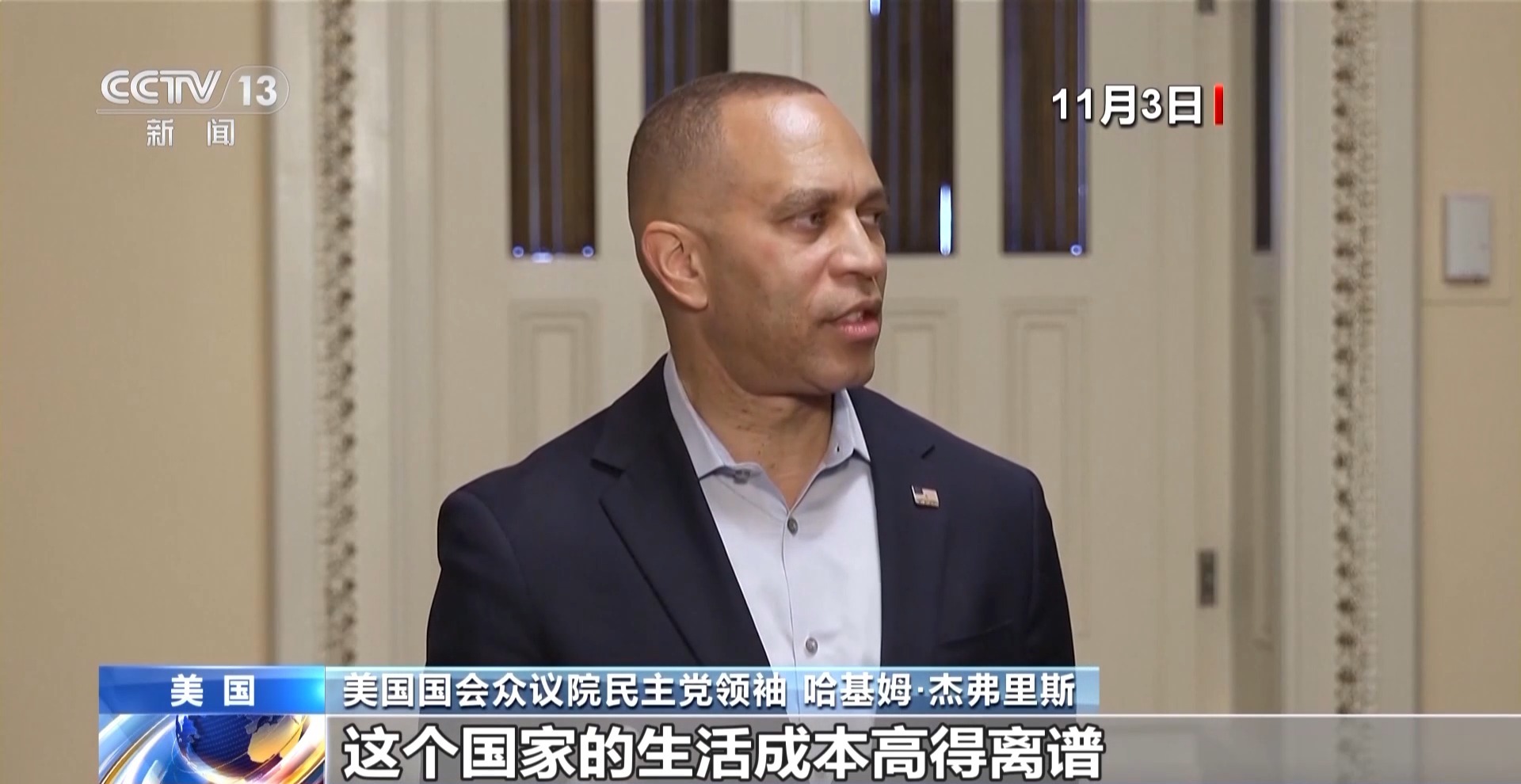
当“停摆”遇上选举 美民众:两党正在分裂美国
Yang Shi Xin Wen Ke Hu Duan· 2025-11-04 23:41
Core Points - The U.S. federal government shutdown has reached its 35th day, matching the record set during Trump's presidency, with no signs of compromise between the Democratic and Republican parties [1] - Elections are taking place in multiple states, intensifying the competition between the two parties over voter influence [6][8] Group 1: Government Shutdown - The ongoing government shutdown has led to widespread frustration among lawmakers, with Republican House Speaker Mike Johnson expressing anger towards the Democratic party for their actions [3] - Democratic House Leader Hakeem Jeffries criticized the rising cost of living and blamed Trump's tariff policies for worsening the situation, emphasizing the need to address the healthcare crisis caused by the Republican party [5] Group 2: Elections and Political Dynamics - Elections are being held in New Jersey, Virginia, New York City, and California, with significant positions at stake, including governorships and congressional redistricting [6][8] - In New Jersey, despite being a traditionally Democratic state, the candidates are closely matched in support; in Virginia, the Democratic candidate is favored for governor, but the Attorney General position may go to the Republicans [8] - The California special vote on redistricting could potentially allow Democrats to gain five additional House seats in the upcoming midterm elections, following similar favorable outcomes for Republicans in Texas and Missouri [12] - The political rivalry and division in the U.S. are exhausting for ordinary citizens, who are seeking more focus on issues that directly affect their lives [14][16]