美国中期选举

Search documents
观点全追踪(3月第5期):晨会精选-20260316
GF SECURITIES· 2026-03-15 23:30
Core Insights - The report discusses the implications of the US-Iran conflict, suggesting that geopolitical situations are unpredictable in the short term, but the impact may be gradually absorbed in the medium term. The technology industry cycle is not expected to reach a peak easily. The upcoming 2026 US midterm elections will focus on "prices," indicating that the ongoing war situation may not be sustainable before the elections. Therefore, once short-term geopolitical uncertainties are resolved, there could be a significant buying opportunity in the Chinese stock market this year [1]. Strategy Overview - The report emphasizes that the logic of a global non-US asset bull market in 2026 is unlikely to be disrupted by geopolitical issues. It suggests that the current geopolitical tensions may create favorable conditions for investment in Chinese stocks once they stabilize [1].
市场不再预计美联储今年一定降息!特朗普敦促鲍威尔立刻降息:别等到下次开会!
美股IPO· 2026-03-13 00:03
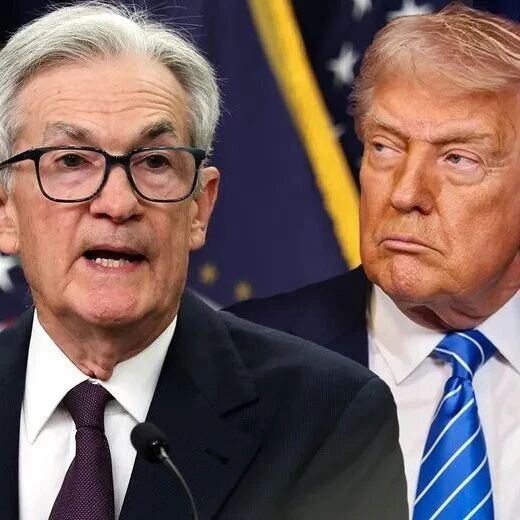
Core Viewpoint - The article discusses the pressure on the Federal Reserve to lower interest rates amid rising oil prices and economic concerns stemming from Middle Eastern conflicts, which could impact the Republican Party's prospects in the upcoming midterm elections [2][3][4]. Group 1: Federal Reserve and Interest Rates - Traders have significantly reduced their bets on interest rate cuts this year, with the probability of a rate cut in 2026 no longer seen as 100% [5]. - Current expectations indicate a mere 24 basis points cut this year, down from an earlier expectation of 30 basis points [5]. - Despite expectations that the Federal Reserve will maintain rates in the upcoming meeting, rising oil prices complicate the monetary policy outlook, with inflation still above the Fed's 2% target [4][6]. Group 2: Economic Impact and Political Pressure - The ongoing Middle Eastern conflict has led to increased oil prices, threatening global supply chains and raising living costs for American citizens, which could negatively affect the Republican Party's control in Congress [2][3]. - Trump has consistently pressured Fed Chair Powell for significant rate cuts, advocating for a chair who actively lowers borrowing costs [4]. - The political landscape is further complicated by Trump's nomination of Kevin Walsh to replace Powell, which is currently stalled due to investigations by the Department of Justice [3]. Group 3: Market Reactions - The U.S. Treasury market has been under pressure due to investor concerns about sustained high energy prices leading to renewed inflation [7]. - On Thursday, the 10-year U.S. Treasury yield rose over 3.30 basis points, reaching a high of 4.2746%, while the 2-year yield increased over 10 basis points to 3.7637% [7].

特朗普的两大软肋,油价和武器库存
经济观察报· 2026-03-11 11:24
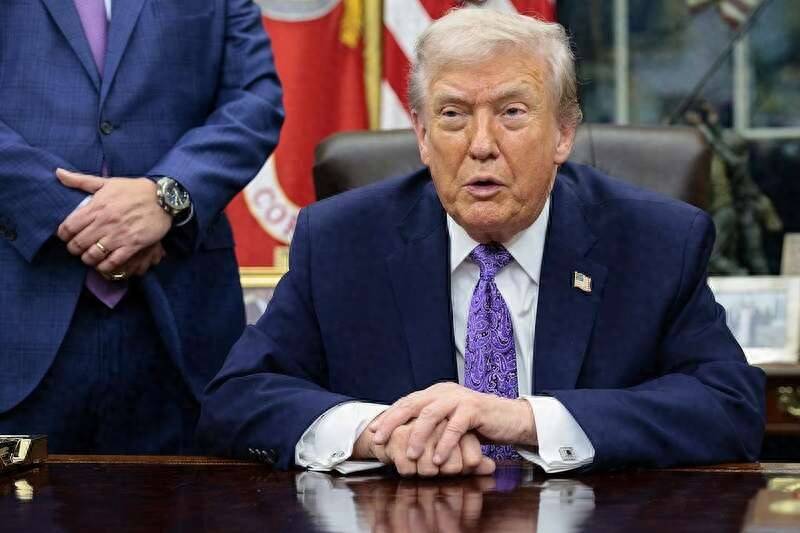
Group 1 - The article discusses the impact of the ongoing conflict involving the U.S. and its allies on oil prices, highlighting that oil prices have recently dropped below $100 per barrel due to various factors, including strategic oil reserves and market reactions to conflicting messages from U.S. officials [2][4][5] - The article notes that Goldman Sachs predicts that if oil transportation through the Strait of Hormuz remains low, oil prices could potentially reach $140 per barrel, which would pose a significant challenge for the Trump administration [6] - The article emphasizes the dilemma faced by Trump regarding military engagement and its implications for oil prices and U.S. military resources, particularly in light of the significant expenditure of military assets like the Patriot missiles [7][10][12] Group 2 - The article mentions that the U.S. has expended over 800 Patriot missiles in the recent conflict, raising concerns about the depletion of military resources and its impact on U.S. strategic positioning against adversaries like China and Russia [7][10] - It highlights the criticism from various experts regarding the U.S. military's overextension and the need to balance military actions in the Middle East with the preservation of military capabilities to deter other global threats [10][11] - The article concludes that Trump is at a critical juncture, needing to decide between continuing military actions or addressing the economic implications of high oil prices [12]

日经平均股指大涨1519点
日经中文网· 2026-03-10 08:00
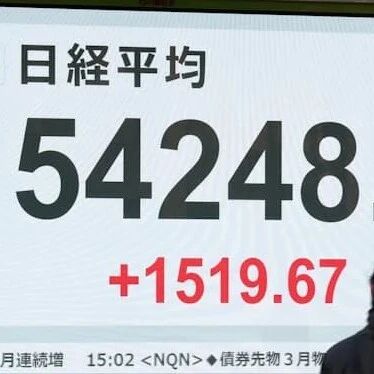
Core Viewpoint - The sudden shift in U.S. President Trump's stance towards Iran, suggesting a halt to attacks, has eased investor risk aversion, leading to a significant rebound in the Nikkei average stock index [4]. Group 1 - On March 10, the Nikkei average stock index surged by 1519 points (2.88%), closing at 54,248 points, with intraday gains exceeding 1900 points [2]. - The previous day, March 9, saw the Nikkei average plummet by 2892 points, marking the third-largest drop in history due to escalating tensions regarding Iran [4]. - The market's recovery on March 10 was driven by increased buying from overseas short-term funds, as investors reacted positively to Trump's comments [4].
连续三次喊话中国后,特朗普撒下弥天大谎,3亿多美国人被当猴耍
Sou Hu Cai Jing· 2026-02-27 04:21
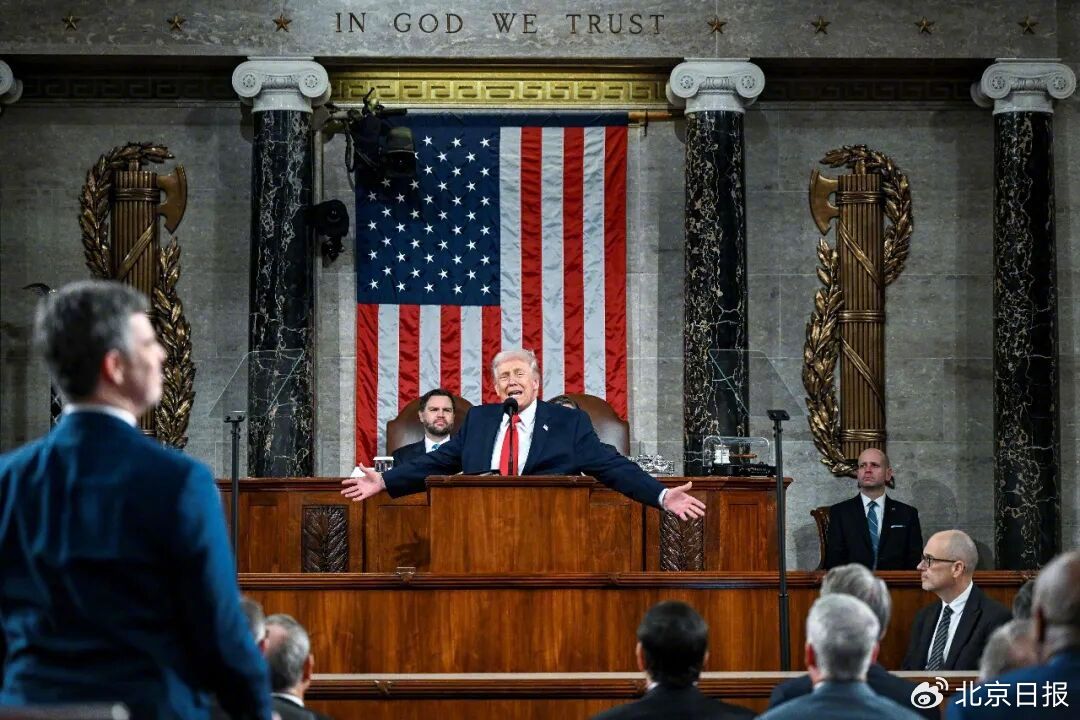
Group 1 - The 2026 State of the Union address is crucial for Trump, especially in light of the upcoming midterm elections and challenges to his tariff policies [1] - U.S. Trade Representative Grier made three statements urging China not to unilaterally tear up trade agreements following a Supreme Court ruling [3] - Trump's confidence was bolstered by China's silence after Grier's statements, allowing him to deliver a lengthy State of the Union address [3] Group 2 - Trump made three significant false claims during his address, including assertions about inflation, investment figures, and the state of the U.S. economy [5] - The U.S. GDP growth for 2025 is projected at only 1.4%, which is below market expectations, contradicting Trump's claims of economic success [5] - Trump's speech largely avoided mentioning China, focusing instead on other international issues, indicating a strategic approach ahead of a planned visit to China [8] Group 3 - Trump is seeking China's support on key issues, including U.S. debt stabilization and increased purchases of American agricultural and energy products [8] - To gain China's backing, Trump has indicated discussions regarding arms sales to Taiwan, showcasing his willingness to make significant concessions for economic benefits [10]
一场演讲,难掩颓势
Xin Lang Cai Jing· 2026-02-25 23:03
Core Points - The article discusses President Trump's State of the Union address, highlighting his self-promotion in areas such as immigration, economy, and foreign policy, while facing significant media fact-checking and public skepticism [1][2][6] - The speech is characterized as a political spectacle, with intense partisan conflict evident during the event, reflecting the increasing polarization in American politics [3][4] Economic Performance - Trump claimed that inflation has decreased, oil prices have dropped, the stock market is performing well, and employment has increased, asserting that the U.S. is in a "golden age" [1] - However, media fact-checks revealed that the U.S. economic growth is projected to slow to 2.2% by 2025, the highest unemployment rate in January was 4.3%, and no state had an average gas price as low as $2.3 per gallon as claimed [1][6] Public Opinion - A joint poll indicated that approximately 60% of Americans disapprove of Trump's economic policies, suggesting a disconnect between his claims and public sentiment [2] - Trump's approval rating has dropped to 36%, down from 48% a year prior, with nearly 70% of respondents feeling that his administration has not adequately addressed core national issues [6] Political Dynamics - The address was marked by stark contrasts in reactions from Republican and Democratic lawmakers, with Republicans showing enthusiasm while Democrats remained largely unresponsive [3] - Some Democratic lawmakers chose to boycott the address, opting instead to participate in an alternative event highlighting the negative impacts of Trump's policies [3][4] Election Implications - The speech is viewed as an attempt to rally support ahead of the midterm elections, but analysts express doubt about its effectiveness given the rising public dissatisfaction with economic and immigration issues [6] - Experts suggest that the Republican Party may lose its slim majority in the House due to growing public discontent, particularly regarding economic pressures and aggressive immigration policies [6]
FXTRADING 财经看点:国情咨文提振复苏叙事,美国经济面临信心考验
Sou Hu Cai Jing· 2026-02-25 20:52
Group 1 - The political atmosphere in the U.S. is heating up as midterm elections approach, with voters expressing pessimism about the current economic situation, particularly regarding high prices and living costs [2] - Trump's recent State of the Union address aimed to boost confidence by highlighting improvements in economic indicators such as income growth and inflation reduction, despite the reality showing mixed results [2][4] - There is a noticeable gap between marginal improvements in economic data and the public's perception of purchasing power, contributing to cautious market sentiment [2] Group 2 - Trade policy remains a contentious issue, with the Supreme Court's rejection of global tariffs imposing constraints on government trade strategies, yet the White House plans to pursue import restrictions through other legal avenues [3] - Concerns about inflation are heightened as tariffs typically pass costs onto businesses and consumers, potentially leading to secondary inflationary pressures [3] - The political landscape is marked by increasing polarization within Congress over immigration, budget, and enforcement issues, complicating the policy advancement process [3] Group 3 - Trump's proposed domestic initiatives include providing matching savings for workers not covered by corporate retirement plans and limiting congressional members' trading in individual stocks, though the fiscal sources and implementation paths for these measures remain unclear [4] - The narrative of economic recovery and strength is being emphasized to stabilize confidence, while voters and markets are reassessing risks based on inflation, employment, and policy uncertainty [4] - The current U.S. policy environment's uncertainty is becoming a significant variable affecting exchange rates and capital flows, with potential for increased volatility in the dollar and a fluctuating international market [4]
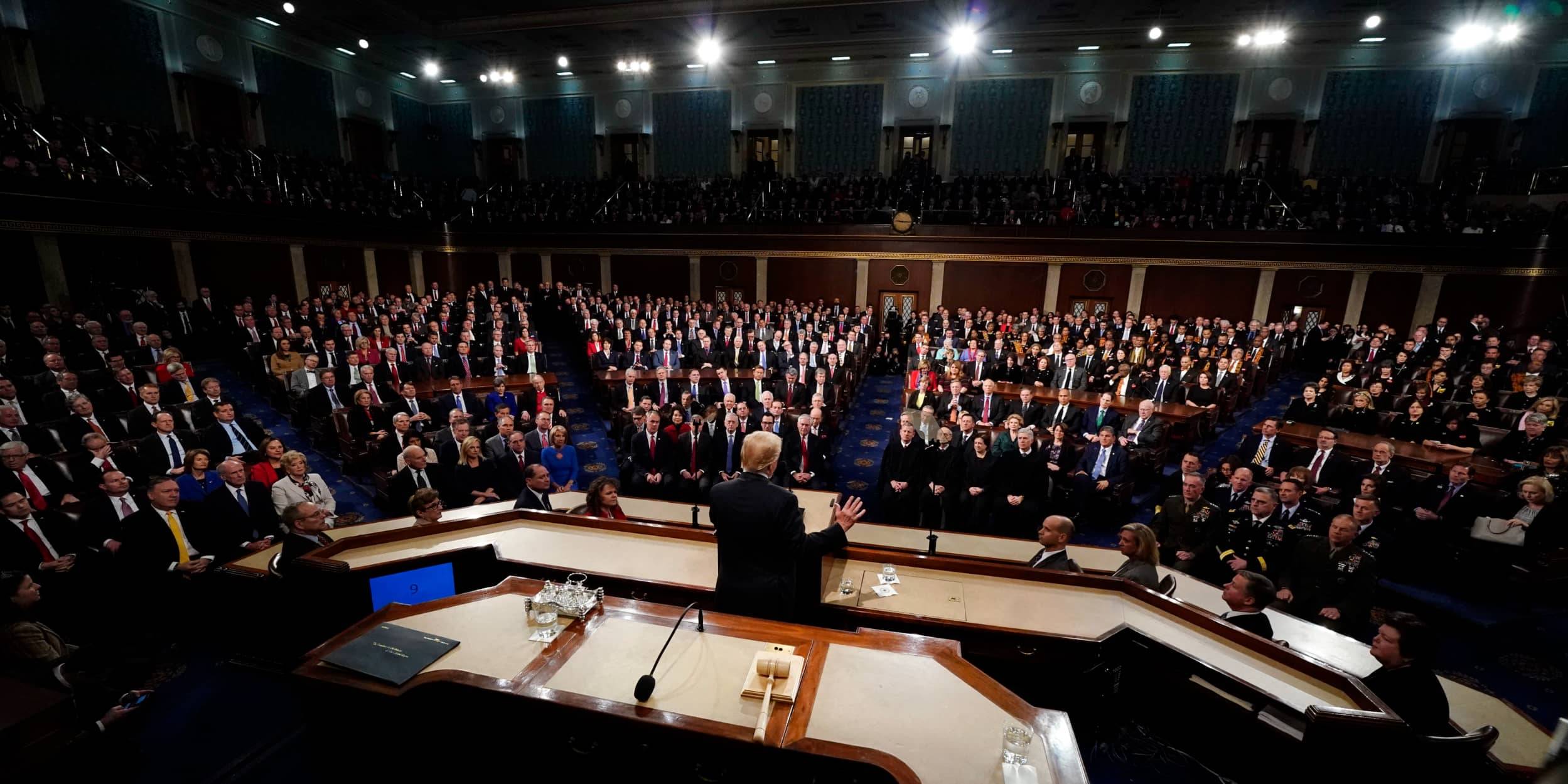
一场演讲 成党争“秀场”
Xin Lang Cai Jing· 2026-02-25 18:57
Group 1 - Trump's State of the Union address on February 24 was marked by self-promotion regarding immigration, economy, and foreign policy, but faced significant media fact-checking [1][2] - The speech lasted a record 107 minutes, with a focus on economic achievements, claiming inflation has decreased, oil prices have dropped, and employment has increased [1] - Despite Trump's claims of a "golden era" for America, media reports indicate a projected economic slowdown with a growth rate of 2.2% by 2025, the highest unemployment rate of 4.3% in January, and ongoing military conflicts [2][3] Group 2 - The political environment surrounding the address was highly polarized, with Republicans showing enthusiasm while Democrats remained largely unresponsive, highlighting the deepening divide in U.S. politics [4] - A significant number of Democratic lawmakers boycotted the address, opting to participate in an alternative event that criticized Trump's policies, indicating a growing dissent within the political landscape [4][5] - Public sentiment towards Trump's economic policies is declining, with a recent poll showing only 36% approval, down from 48% a year prior, and a majority of respondents feeling that the administration is not addressing key national issues [7]
国际观察丨一场演讲,难掩颓势
Xin Lang Cai Jing· 2026-02-25 16:56
Core Viewpoint - The article discusses President Trump's State of the Union address, highlighting his self-promotion in areas such as immigration, economy, and foreign policy, while facing significant media fact-checking and political opposition from both parties [1][4][9]. Economic Performance - Trump claimed that inflation has decreased, oil prices have dropped, the stock market is performing well, and employment has increased, asserting that the U.S. is in a "golden era" [1]. - However, media reports indicate that the U.S. economic growth rate is projected to slow to 2.2% in 2025, the lowest since 2020, and the unemployment rate rose to 4.3% year-on-year in January [3]. - A joint poll revealed that approximately 60% of Americans do not approve of Trump's economic policies, indicating a disconnect between his claims and public sentiment [4]. Political Dynamics - The address has been characterized as a political "show" where both parties engaged in mutual criticism, reflecting the increasing polarization in U.S. politics [5]. - During the speech, there were notable moments of tension, including protests from Democratic representatives and a stark contrast in reactions between Republican and Democratic members [6][8]. - Approximately 30 Democratic lawmakers chose to boycott the address, opting instead to participate in an alternative event highlighting the negative impacts of Trump's policies [8]. Public Sentiment and Election Implications - Trump's efforts to rally support for the upcoming midterm elections are viewed skeptically, with polls showing his approval rating has dropped to 36%, down from 48% a year prior [9]. - Concerns over economic pressures and dissatisfaction with immigration policies are rising among the public, which could negatively impact Republican prospects in the midterm elections [11].
特朗普一场演讲,难掩颓势
Xin Lang Cai Jing· 2026-02-25 15:53
Core Points - President Trump's State of the Union address aimed to highlight his achievements in immigration, economy, and foreign policy, but faced significant media fact-checking and criticism [1][3] - The speech, lasting 107 minutes, was the longest on record and was characterized by a stark divide between Republican and Democratic responses [3][6] - Trump's claims about economic improvements and military engagements were contradicted by data showing rising unemployment and ongoing conflicts [3][6][9] Economic Performance - Trump asserted that inflation had decreased, oil prices had dropped, and employment had increased, claiming the U.S. was in a "golden age" [3][6] - However, data indicated that the U.S. economic growth rate is projected to slow to 2.2% by 2025, the lowest since 2020, and the unemployment rate rose to 4.3% year-on-year in January [3][9] - A CNN poll revealed that Trump's approval rating had fallen to 36%, down from 48% a year prior, indicating growing public dissatisfaction with his economic policies [9][11] Political Climate - The address highlighted the increasing polarization in U.S. politics, with the event becoming a platform for partisan attacks rather than a serious political discourse [6][8] - Democratic lawmakers staged protests during the speech, and many chose to attend an alternative event, indicating a significant divide in political engagement [7][8] - Analysts noted that the current political environment poses challenges for the Republican Party, with potential losses in the upcoming midterm elections due to public discontent over economic issues and immigration policies [11]