美国党争

Search documents
爱泼斯坦案成为美国党争博弈筹码
Xin Lang Cai Jing· 2026-02-03 23:53
Group 1 - The Epstein case has become a political tool for both parties, with former President Bill Clinton and former Secretary of State Hillary Clinton agreeing to testify before Congress regarding the investigation, marking a rare occurrence since 1983 [1] - The U.S. Department of Justice has released a new batch of documents related to the Epstein case, including 3 million pages of materials, 2,000 videos, and 180,000 images, implicating numerous political and business elites [1] - The long-term cover-up of the Epstein case is attributed to the elite's infiltration into the judicial and political systems, creating a "protection net" that has allowed them to evade accountability [2] Group 2 - The bipartisan cooperation in protecting elite interests has shifted, with the scandal now being used as a weapon against political opponents, particularly with Democrats aiming to undermine the legitimacy of the Trump administration [2] - The passage of the "Epstein Archives Transparency Act" by Congress in November 2025, despite its name suggesting transparency, reflects the ongoing political maneuvering surrounding the case [2] - The focus on political conflict has overshadowed the pursuit of truth, with the case becoming a bargaining chip in power struggles, compromising judicial integrity and social justice [2]
遭遇“民主党倒戈”,标志“共和党胜利”,克林顿夫妇同意就爱泼斯坦案作证
Huan Qiu Shi Bao· 2026-02-03 22:57
Core Viewpoint - The agreement of former President Bill Clinton and his wife Hillary to testify regarding the Epstein case reflects the intensifying political rivalry in the U.S., marking a rare instance of a former president being compelled to appear before Congress [1] Group 1: Congressional Inquiry - Clinton's legal representatives communicated to the House Oversight Committee that they would appear for testimony on mutually agreed dates, requesting the postponement of contempt charges against them [3] - The House Oversight Committee has temporarily halted the process of contempt charges but warned that it would resume if Clinton's side does not show sincerity in negotiations [4] Group 2: Political Implications - The shift in focus from "Trump and Epstein" to "Democratic leaders and Epstein" is seen as a victory for the Republican side, as the investigation's emphasis has changed [4] - Several Democratic members of the Oversight Committee supported the push for contempt charges against Clinton, indicating a division within the party regarding associations with figures linked to sexual misconduct [5] Group 3: Historical Context - The situation surrounding Clinton is unprecedented in recent decades, with the last former president to appear before Congress being Gerald Ford in 1983 for a celebratory discussion, contrasting sharply with Clinton's current predicament [5]


党争漩涡下,美国人的这一年
Xin Hua She· 2025-12-25 13:57
Core Viewpoint - The article highlights the severe political polarization and governance failures in the United States during 2025, exacerbated by a record-long government shutdown that significantly impacted millions of Americans and their daily lives [1][2][4]. Group 1: Government Shutdown Impact - The government shutdown lasted for 43 days, affecting millions of travelers with flight delays and cancellations, disrupting food assistance programs for over 40 million low-income individuals, and leaving many federal employees without pay [1][2]. - The shutdown was a result of escalating partisan conflicts between the Republican and Democratic parties, focusing on healthcare spending as a pretext for political maneuvering [1][2]. Group 2: Public Sentiment and Economic Conditions - Public sentiment is increasingly negative, with many Americans expressing frustration towards Congress, as evidenced by protests demanding action from lawmakers [2]. - Economic indicators show a rise in the unemployment rate to 4.6%, the highest since October 2021, and nearly half of surveyed individuals report significant financial pressure regarding daily expenses [2][3]. Group 3: Political Leadership and Public Perception - Despite presenting a polished image and claiming achievements, the current administration under Trump faces skepticism from the public, who feel disconnected from the realities of rising costs and economic insecurity [3]. - The article suggests that the political elite's lack of empathy for the struggles of ordinary citizens contributes to a growing divide and dissatisfaction among the populace [5].
记者手记·2025回望丨党争漩涡下,美国人的这一年
Xin Hua She· 2025-12-25 10:30
Core Viewpoint - The article highlights the severe impact of political polarization and government dysfunction in the United States, particularly illustrated by the record 43-day government shutdown in 2025, which affected millions of Americans and exacerbated existing economic challenges [1][3][4]. Group 1: Government Shutdown and Its Effects - The government shutdown lasted for 43 days, leading to significant disruptions including flight cancellations affecting millions of travelers and interruptions in food assistance programs for over 40 million low-income individuals [3][4]. - Federal employees, such as a Defense Department worker, expressed frustration over being used as political pawns in the ongoing partisan conflict [3][4]. - The shutdown is seen as a symptom of deeper systemic issues within the U.S. political system, where accountability and compromise have diminished, leading to governance failures [3][4]. Group 2: Economic Conditions and Public Sentiment - Economic indicators show a rising unemployment rate of 4.6% in November, the highest since October 2021, reflecting growing economic distress among the population [4]. - Polls indicate that nearly half of respondents feel significant pressure regarding daily expenses such as food, housing, and healthcare, with many experiencing the highest living costs in recent memory [4]. - Despite the challenging economic landscape, the current administration's attempts to portray a positive narrative about governance have not resonated with the public, who continue to feel the weight of high prices and insecurity [4][6]. Group 3: Political Climate and Public Response - The ongoing political strife has led to increased social tensions and a sense of division within the country, with citizens expressing dissatisfaction towards both major political parties [4][6]. - Public protests have emerged, reflecting a growing frustration with political leaders and a demand for effective governance that prioritizes the needs of ordinary Americans [3][4]. - The narrative of a divided America is reinforced by sentiments that the interests of the wealthy and powerful often overshadow those of the lower-income population [6].

国际观察|美国从最长“停摆”走向下次“停摆”
Xin Hua She· 2025-11-14 03:29
Core Points - The U.S. Congress passed a temporary funding bill, ending the longest government shutdown in history, lasting 43 days [1] - Despite the temporary resolution, core disagreements over healthcare spending remain unresolved, indicating a potential for future shutdowns [1][4] - The political landscape shows increasing polarization, with both parties using the shutdown to advance their agendas [2][4] Group 1: Legislative Actions - The House of Representatives passed the temporary funding bill with a vote of 222 in favor and 209 against, showcasing partisan tensions [2] - The Senate's failure to pass a funding bill before the government shutdown led to a record duration of the shutdown, attributed to deep-seated disagreements over healthcare spending [2][3] - Some Democratic senators voted in favor of the bill due to their political circumstances, indicating a strategic compromise [3] Group 2: Political Implications - Analysts view the shutdown as a "lose-lose" situation for both parties, with ongoing disputes over healthcare likely to continue [4] - The Democratic Party faces internal criticism for compromising, losing leverage against the Republican Party [4][6] - The Republican Party's approval ratings have suffered due to the shutdown, with public sentiment blaming them for the impasse [6] Group 3: Governance Challenges - The temporary funding bill only extends funding until January 30, 2026, suggesting that negotiations will continue and future shutdowns are possible [7] - Historical data shows that since 1980, the U.S. has experienced 15 government shutdowns, with increasing frequency and duration in recent years [7] - Experts argue that the root cause of frequent shutdowns lies in a lack of political compromise and governance dysfunction, rather than just policy disagreements [7][8]
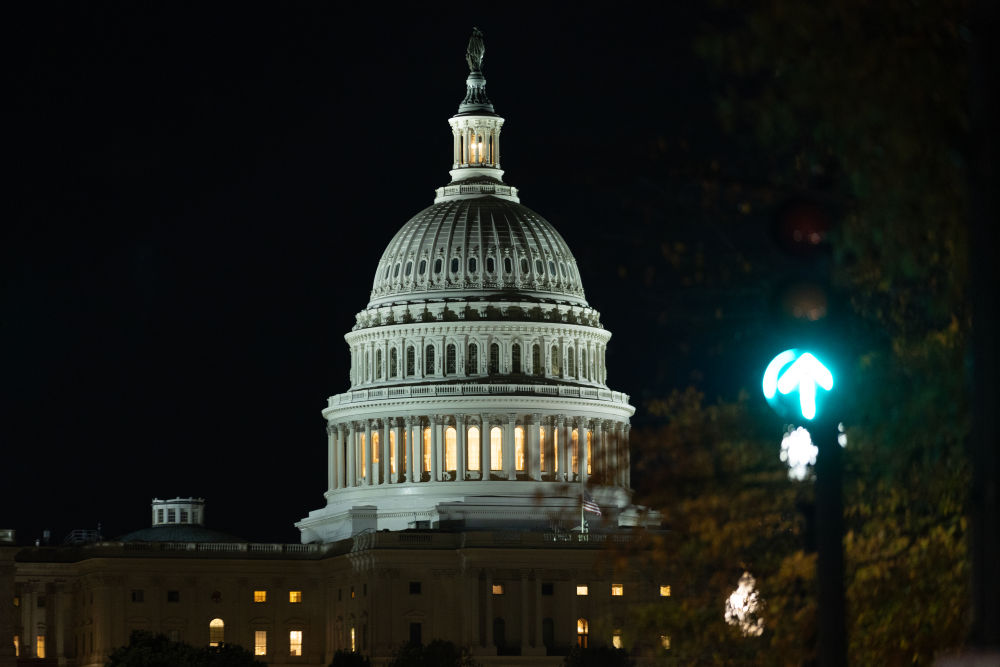
视频丨美政府“停摆”时长破纪录 专家:美国两党“摆烂” 罔顾民生
Yang Shi Xin Wen Ke Hu Duan· 2025-11-05 08:14
Core Points - The U.S. federal government shutdown has reached its 36th day, breaking the previous record of 35 days set in late 2018 to early 2019, marking it as the longest shutdown in U.S. history [1] - Experts believe this shutdown highlights the increasing polarization between the Republican and Democratic parties, with both sides using the shutdown to blame each other and further their political agendas, showing no signs of compromise [1] Group 1 - The deep-rooted cause of repeated government shutdowns is the deterioration of the U.S. federal fiscal legislative system under the influence of intensified party conflicts, with no budget approval completed at the start of any fiscal year since the 21st century [4] - The current budget crisis is expected to have negative impacts on various aspects of American society, including the economy and public welfare, with many effects being hidden and only surfacing in the future [4] - The ongoing crisis is likely to further diminish both domestic and global perceptions of the U.S., accelerating the decline of its national image [4] Group 2 - This shutdown crisis is notably different from previous ones, as both parties are indifferent to resolving the issue, viewing the shutdown as an opportunity to advance their own political agendas [6] - The likelihood of a compromise between the two parties is decreasing, leading to a prolonged and escalating shutdown crisis [6]
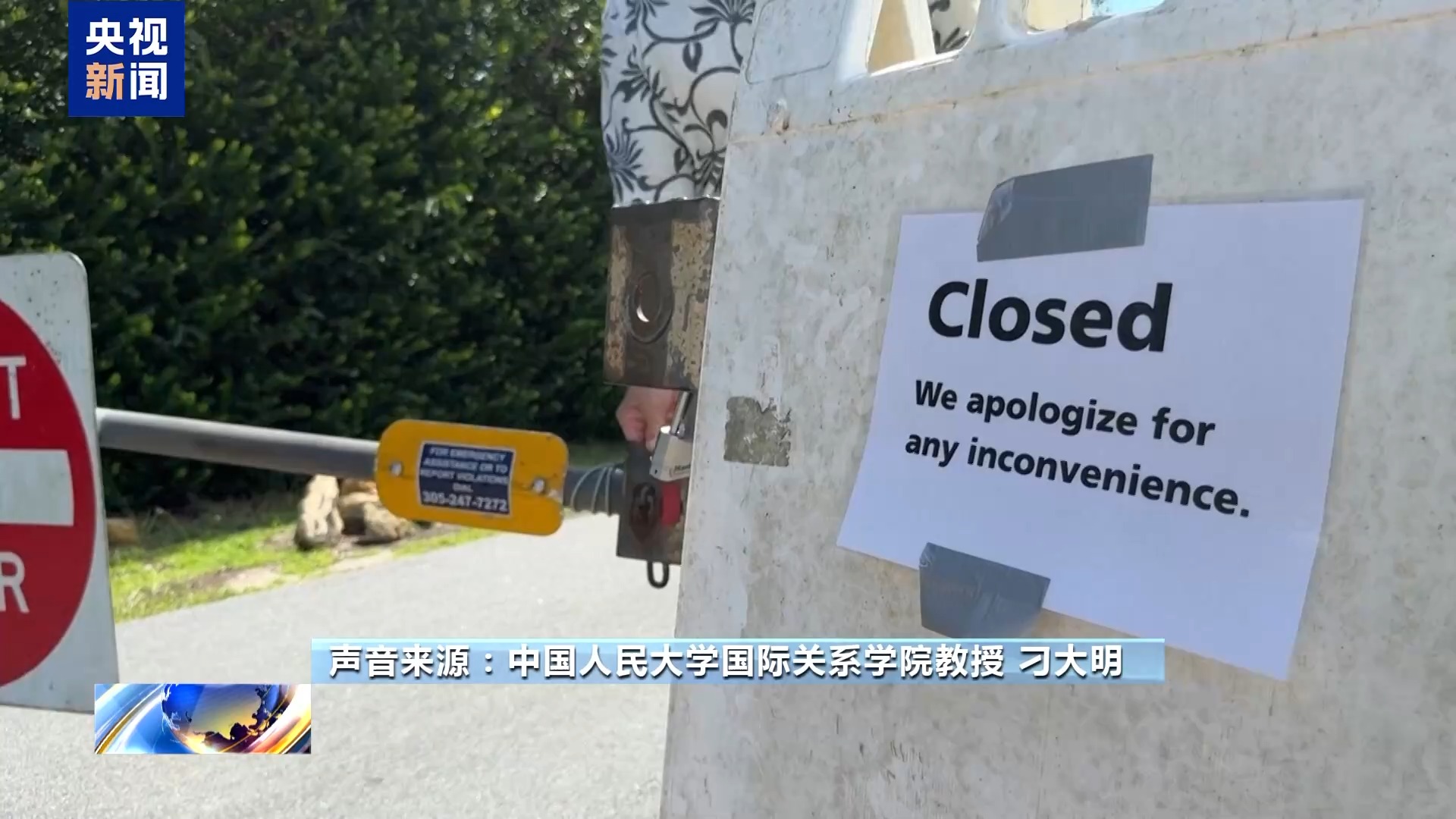
临时拨款法案再遭否决 美政府“停摆”已追平纪录!
Jin Rong Shi Bao· 2025-11-05 05:06
Group 1: Government Shutdown Impact - The U.S. government shutdown is set to become the longest in history, surpassing the previous record of 35 days from late 2018 to early 2019, as the Senate failed to pass a temporary funding bill [1] - The shutdown has already affected over 420 million Americans, with significant disruptions in military pay and food assistance programs [1] - The Congressional Budget Office estimates that the shutdown could reduce the U.S. GDP growth rate by 1-2 percentage points in Q4, translating to a potential economic loss of $7 billion to $14 billion depending on the duration of the shutdown [2] Group 2: Sector-Specific Effects - The shutdown has severely impacted various sectors, including aviation, food relief, early education, and healthcare, with significant delays and disruptions reported [3] - The healthcare sector is particularly affected, with insurance premiums expected to rise by $1,000 per person annually due to the lack of government subsidies [3] - The tourism industry has warned that the shutdown could have disastrous economic consequences, especially with the upcoming Thanksgiving holiday, which is a peak travel period [3] Group 3: Aviation Industry Challenges - Approximately 13,000 air traffic controllers and 50,000 airport security personnel are working without pay, leading to staffing shortages and increased flight delays [4] - Nearly 90% of air traffic controllers in the New York area have been absent from work, exacerbating the situation [4] - On November 2, nearly 4,300 flights were delayed and over 550 flights were canceled, highlighting the operational challenges faced by the aviation sector [4]
美政府“停摆”纪录即将刷新,两党相互指责不休
Yang Shi Xin Wen· 2025-11-05 01:01
Group 1 - The U.S. federal government shutdown has lasted for 35 days as of November 4, matching the previous record set during Trump's presidency, with the potential to extend further as the Senate rejected a temporary funding bill for the 14th time [1][4] - The shutdown has severely impacted various sectors, including aviation, food assistance, early education, and healthcare, highlighting the increasing political polarization in the U.S. [1][4] - The Senate's failure to advance the temporary funding bill means the shutdown will become the longest in U.S. history, surpassing the previous record of 35 days from late 2018 to early 2019 [4] Group 2 - Approximately 13,000 air traffic controllers and 50,000 airport security personnel are working without pay due to the shutdown, leading to increased flight delays and heightened safety risks in the aviation sector [5][7] - The Federal Aviation Administration reported that nearly half of the major air traffic control facilities in the U.S. are experiencing staffing shortages, with New York seeing nearly 90% of its air traffic controllers absent [7] - Over 3.2 million airline passengers have been affected by flight delays or cancellations since the shutdown began [7] Group 3 - The shutdown has halted the issuance of food assistance through the Supplemental Nutrition Assistance Program, affecting over 40 million Americans, with emergency funds being utilized to cover only part of the month's benefits [8] - Trump has attributed the shutdown to the Democrats, stating that food assistance can only resume once the government is reopened [8] Group 4 - The ongoing budget impasse has led to significant increases in healthcare premiums, with estimates suggesting that individuals may face an additional $1,000 in annual costs without government subsidies [9][11] - Democratic leaders are blaming Republicans for the healthcare crisis, emphasizing the rising living costs and the potential loss of insurance for 4 million Americans [11][13] Group 5 - Despite ongoing negotiations, the two parties remain at an impasse, with Trump stating he will not negotiate until the government reopens, while some lawmakers express optimism about resolving the budget deadlock [16]
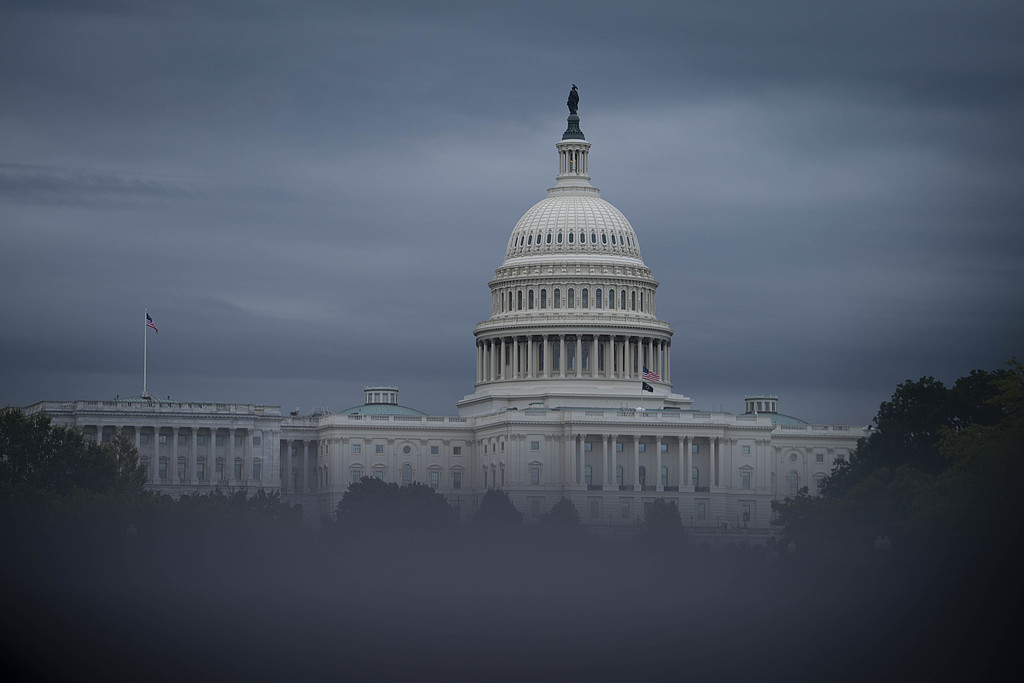
视频丨美政府“停摆”纪录即将刷新 两党相互指责不休
Yang Shi Xin Wen Ke Hu Duan· 2025-11-04 23:41
Group 1 - The U.S. federal government shutdown has lasted for 35 days, matching the previous record set during Trump's presidency, with the potential to become the longest in U.S. history as the Senate has repeatedly failed to pass a temporary funding bill [1][2] - The shutdown has severely impacted various sectors, including aviation, food assistance, early education, and healthcare, highlighting the increasing political polarization in the U.S. [1][2] Group 2 - Approximately 13,000 air traffic controllers and 50,000 airport security personnel are working without pay, leading to increased flight delays and heightened safety risks in the aviation industry [3][5] - The Federal Aviation Administration reported that nearly half of the major air traffic control facilities in the U.S. are experiencing staffing shortages, with New York seeing nearly 90% of air traffic controllers absent [5] - Over 3.2 million airline passengers have been affected by flight delays or cancellations since the shutdown began [5] Group 3 - The shutdown has halted the issuance of benefits under the Supplemental Nutrition Assistance Program, affecting over 40 million Americans, with emergency funds being utilized to maintain partial assistance [6] - The Trump administration has attributed the shutdown to the Democratic Party, stating that food assistance can only resume once the government reopens [6] Group 4 - The ongoing budget impasse has led to significant increases in healthcare premiums, with estimates suggesting that individuals may face an additional $1,000 in annual costs without government subsidies [7][9] - Democratic leaders are blaming Republicans for the healthcare crisis, emphasizing the rising living costs and potential loss of insurance for millions of Americans [9][11] Group 5 - Political negotiations remain stalled, with both parties continuing to blame each other for the shutdown, although some lawmakers express optimism about reaching a resolution soon [12]

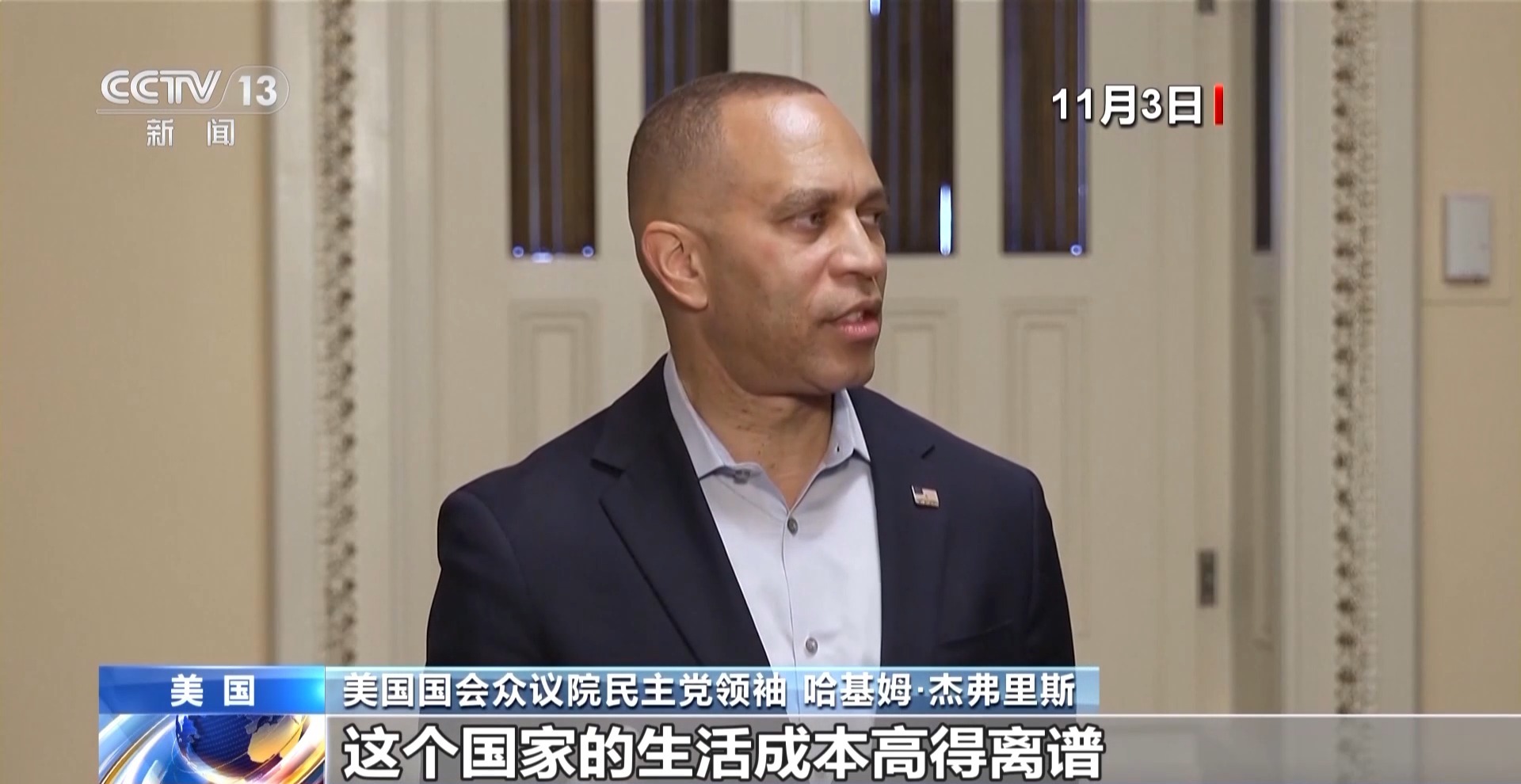
当“停摆”遇上选举 美民众:两党正在分裂美国
Yang Shi Xin Wen Ke Hu Duan· 2025-11-04 23:41
Core Points - The U.S. federal government shutdown has reached its 35th day, matching the record set during Trump's presidency, with no signs of compromise between the Democratic and Republican parties [1] - Elections are taking place in multiple states, intensifying the competition between the two parties over voter influence [6][8] Group 1: Government Shutdown - The ongoing government shutdown has led to widespread frustration among lawmakers, with Republican House Speaker Mike Johnson expressing anger towards the Democratic party for their actions [3] - Democratic House Leader Hakeem Jeffries criticized the rising cost of living and blamed Trump's tariff policies for worsening the situation, emphasizing the need to address the healthcare crisis caused by the Republican party [5] Group 2: Elections and Political Dynamics - Elections are being held in New Jersey, Virginia, New York City, and California, with significant positions at stake, including governorships and congressional redistricting [6][8] - In New Jersey, despite being a traditionally Democratic state, the candidates are closely matched in support; in Virginia, the Democratic candidate is favored for governor, but the Attorney General position may go to the Republicans [8] - The California special vote on redistricting could potentially allow Democrats to gain five additional House seats in the upcoming midterm elections, following similar favorable outcomes for Republicans in Texas and Missouri [12] - The political rivalry and division in the U.S. are exhausting for ordinary citizens, who are seeking more focus on issues that directly affect their lives [14][16]