《平价医疗法案》医保

Search documents
美国人对医疗成本的担忧远超汽油和食品杂货
Xin Lang Cai Jing· 2026-01-29 12:57
健康政策研究机构凯泽家庭基金会发布的调查显示,三分之二的美国人表示,对医疗问题的担忧超过食 品杂货、公用事业、汽油和住房开支。超半数成年人称今年自身医疗成本有所上涨,大多数人认为,国 会未延长《平价医疗法案》的保险补贴抵扣政策是 "错误的决定",该政策此前曾助力民众支付医保费 用。 凯泽家庭基金会的报告指出,今年 11 月的选举中,超四成选民将把医保账单问题作为首要投票考量因 素。此次民调恰在 1 月 1 日《平价医疗法案》补贴政策到期后开展,该政策到期已导致医保保费大幅上 涨。华盛顿智库城市研究所的数据显示,税收抵免优惠政策的终止,预计将使 2026 年有 730 万人失去 《平价医疗法案》的医保保障,其中 480 万人将沦为无医保人群。 该机构表示,税收抵免政策到期带来的经济压力,叠加医保价格持续上涨进一步加剧 —— 保险公司将 2026 年《平价医疗法案》对应的医保保费上调了近 22%。雇主提供的这类私人医保保费也在持续走 高,过去三年,家庭私人医保保费的涨幅均达到 6% 及以上。 最新民调数据显示,中期选举临近,医疗价格高居美国民众经济担忧清单榜首,"可负担性" 也成为美 国两党政客争相标榜的热门词汇 ...
见证历史!美联邦政府“停摆”,创纪录!
Zheng Quan Shi Bao· 2025-11-05 09:16
Core Points - The U.S. federal government shutdown has reached its longest duration in history, entering the 36th day, surpassing the previous record of 35 days from late 2018 to early 2019 [1][2] - The ongoing shutdown is primarily due to disagreements between the Republican and Democratic parties over healthcare and welfare spending, leading to the failure to pass a temporary funding bill before the fiscal year ended on September 30 [2] - The Congressional Budget Office estimates that if the shutdown continues for six weeks, the economic loss will reach $11 billion, with a potential decline in the annual GDP growth rate of 1 to 2 percentage points for the fourth quarter [3] Economic Impact - The shutdown is projected to result in significant economic losses: $7 billion for four weeks, $11 billion for six weeks, and $14 billion for eight weeks [3] - Thousands of flights have been delayed, affecting over 3.2 million travelers, due to staffing shortages among air traffic controllers and airport security personnel, with approximately 13,000 air traffic controllers and 50,000 airport security staff working without pay [4] - The U.S. Department of Transportation has indicated a shortage of 2,000 to 3,000 air traffic controllers, which may lead to the closure of certain airspace if the shutdown persists [4] Social Consequences - The shutdown has severely impacted the Supplemental Nutrition Assistance Program (SNAP), halting aid to 42 million Americans, which constitutes about one-eighth of the U.S. population, with low-income individuals being the most affected [4][7] - The lack of government subsidies is expected to increase annual healthcare costs by $1,000 per enrollee, as the new enrollment period for the Affordable Care Act began on November 1, with around 24 million participants [5][6] - Small businesses are also suffering, with approximately 320 small businesses unable to access about $170 million in government-backed loans daily due to the shutdown [8]


见证历史!美联邦政府“停摆”,创纪录!
证券时报· 2025-11-05 09:08
Core Points - The U.S. federal government shutdown has reached its longest duration in history, entering its 36th day, surpassing the previous record of 35 days from late 2018 to early 2019 [2][4] - The Congressional Budget Office estimates that if the shutdown continues for six weeks, the economic loss will rise to $11 billion, with a projected decline in the annual GDP growth rate of 1 to 2 percentage points for the fourth quarter [2][6] Economic Impact - The shutdown is expected to result in a $7 billion loss to the economy if it lasts four weeks, escalating to $11 billion at six weeks, and potentially reaching $14 billion if it extends to eight weeks [6] - The aviation sector is experiencing significant disruptions, with thousands of flights delayed, affecting over 3.2 million travelers since the shutdown began [7] Public Services and Welfare - Approximately 1.3 million air traffic controllers and 50,000 airport security personnel are working without pay, leading to staffing shortages and increased flight delays [7][8] - The Supplemental Nutrition Assistance Program (SNAP) has ceased issuing benefits since November 1, impacting 42 million Americans, many of whom live below the poverty line [8][10] - The Affordable Care Act's enrollment for the new year has started, but due to the lack of agreement on government subsidies, insurance premiums are expected to rise significantly, with an estimated increase of $1,000 per enrollee annually without government support [8] Small Business Impact - The shutdown is also affecting small businesses, with approximately 320 small enterprises unable to access about $170 million in government-backed loans daily [11]

美政府“停摆”纪录即将刷新,两党相互指责不休
Yang Shi Xin Wen· 2025-11-05 01:01
Group 1 - The U.S. federal government shutdown has lasted for 35 days as of November 4, matching the previous record set during Trump's presidency, with the potential to extend further as the Senate rejected a temporary funding bill for the 14th time [1][4] - The shutdown has severely impacted various sectors, including aviation, food assistance, early education, and healthcare, highlighting the increasing political polarization in the U.S. [1][4] - The Senate's failure to advance the temporary funding bill means the shutdown will become the longest in U.S. history, surpassing the previous record of 35 days from late 2018 to early 2019 [4] Group 2 - Approximately 13,000 air traffic controllers and 50,000 airport security personnel are working without pay due to the shutdown, leading to increased flight delays and heightened safety risks in the aviation sector [5][7] - The Federal Aviation Administration reported that nearly half of the major air traffic control facilities in the U.S. are experiencing staffing shortages, with New York seeing nearly 90% of its air traffic controllers absent [7] - Over 3.2 million airline passengers have been affected by flight delays or cancellations since the shutdown began [7] Group 3 - The shutdown has halted the issuance of food assistance through the Supplemental Nutrition Assistance Program, affecting over 40 million Americans, with emergency funds being utilized to cover only part of the month's benefits [8] - Trump has attributed the shutdown to the Democrats, stating that food assistance can only resume once the government is reopened [8] Group 4 - The ongoing budget impasse has led to significant increases in healthcare premiums, with estimates suggesting that individuals may face an additional $1,000 in annual costs without government subsidies [9][11] - Democratic leaders are blaming Republicans for the healthcare crisis, emphasizing the rising living costs and the potential loss of insurance for 4 million Americans [11][13] Group 5 - Despite ongoing negotiations, the two parties remain at an impasse, with Trump stating he will not negotiate until the government reopens, while some lawmakers express optimism about resolving the budget deadlock [16]
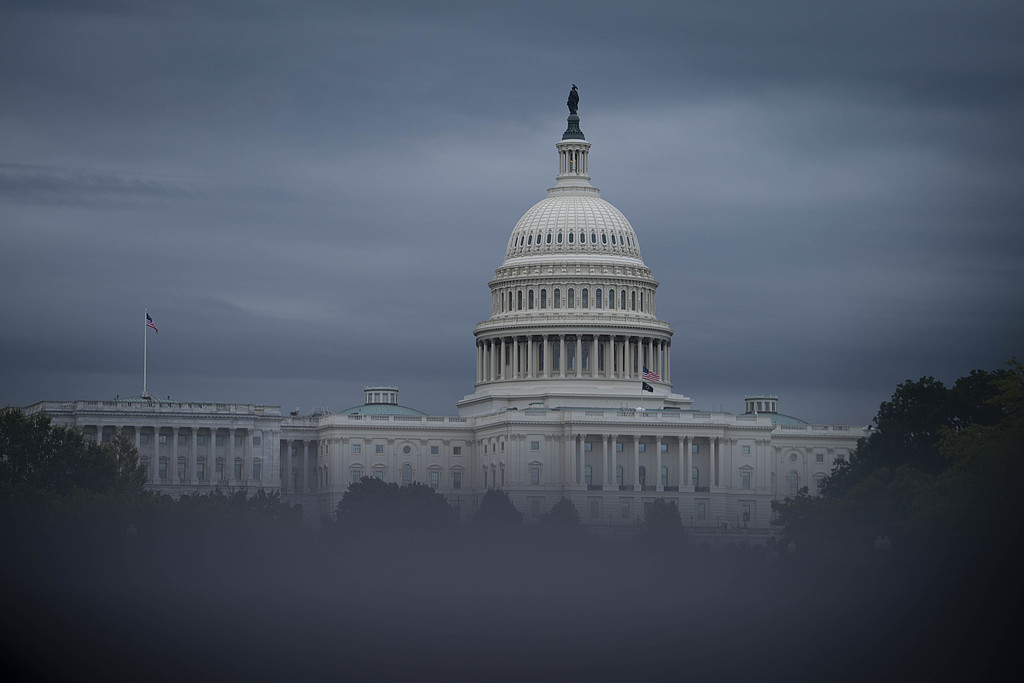
美政府“停摆”时间追平历史纪录 多领域影响持续扩大
Yang Shi Wang· 2025-11-04 12:46
Group 1 - The US federal government shutdown has reached its 35th day, matching the record set during the Trump administration from late 2018 to early 2019 [1] - The American Airlines Association reported that the shutdown has exacerbated air traffic controller shortages, affecting over 3.2 million travelers due to flight delays or cancellations [1] - The US Transportation Secretary stated that if the shutdown compromises the safety of air travel, the government may close the US air transportation system [1] Group 2 - A food assistance program covering 42 million Americans has suspended benefits due to funding exhaustion as of November 1 [1] - The government plans to use emergency funds to maintain 50% of food assistance payments for November [1] - The ongoing deadlock between the Republican and Democratic parties over healthcare spending is a primary reason for the current government shutdown [1] Group 3 - The new enrollment period for the Affordable Care Act began on November 1, with potential premium increases of up to 114% for the 2026 plan year if government subsidies are not resolved [1]
国际观察|美联邦政府“停摆”近纪录 民众“伤不起”
Xin Hua She· 2025-11-04 02:15
Core Points - The U.S. federal government shutdown has reached its 34th day, nearing the record of 35 days set in late 2018 to early 2019, causing significant disruptions in various sectors, particularly aviation, food assistance, and healthcare [1][4] - The ongoing political deadlock between the Republican and Democratic parties is exacerbating the situation, with both sides using the shutdown to further their political agendas without signs of compromise [1][7] Aviation Industry - Approximately 13,000 air traffic controllers and 50,000 airport security personnel are working without pay, leading to staffing shortages and increased flight delays [2][3] - Nearly half of the major air traffic control facilities in the U.S. are experiencing personnel shortages, with 90% of air traffic controllers in the New York area absent from work [3] - On November 2, nearly 4,300 flights were delayed and over 550 flights were canceled due to the staffing crisis [3] Food Assistance - The federal food assistance program, known as the Supplemental Nutrition Assistance Program (SNAP), ceased issuing benefits on November 1 due to funding exhaustion, affecting approximately 42 million Americans [4][6] - The interruption of SNAP is expected to have a particularly severe impact on African American communities [4] Healthcare Sector - The new enrollment period for the Affordable Care Act (ACA) began on November 1, with around 24 million participants, but rising premiums are anticipated due to the lack of agreement on government subsidies [6] - The Congressional Budget Office estimates that the shutdown could reduce the U.S. GDP growth rate by 1-2 percentage points in Q4, translating to economic losses of $7 billion to $14 billion depending on the duration of the shutdown [6] Political Landscape - The shutdown is primarily driven by a stalemate over healthcare spending, with both parties unwilling to compromise, which has led to a lack of urgency to resolve the situation [7][9] - The Republican party is leveraging the shutdown to push for budget cuts and a reduction in federal employment, while the Democratic party is using the situation to bolster its image as a representative of low-income groups [7][9]
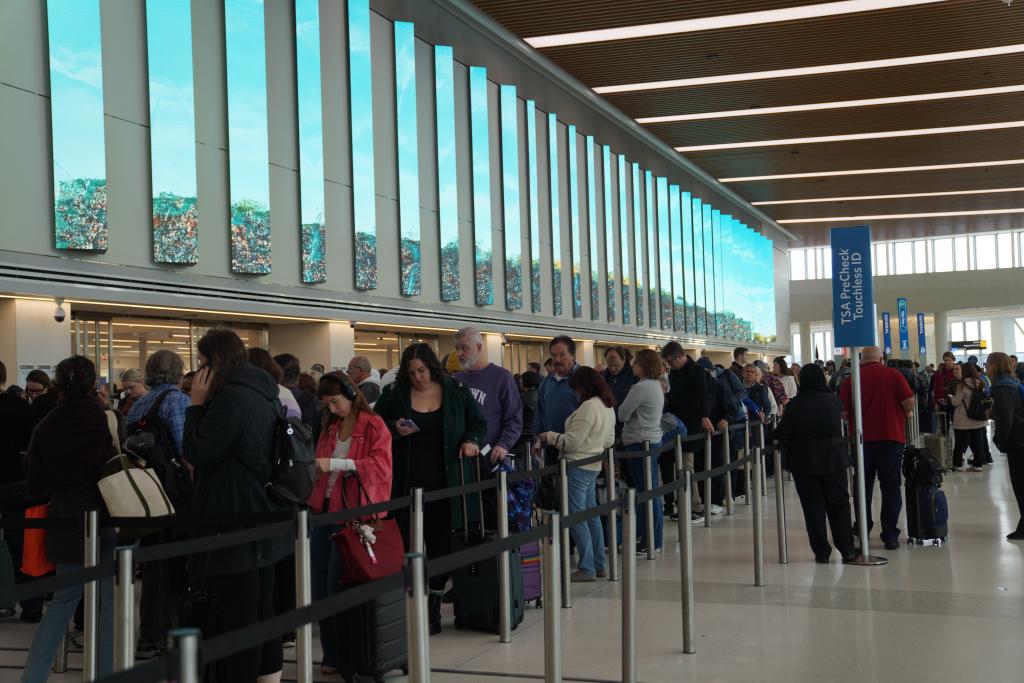
国际观察丨美联邦政府“停摆”近纪录 民众“伤不起”
Xin Hua Wang· 2025-11-04 01:21
Core Points - The U.S. federal government shutdown has reached its 34th day, nearing the record of 35 days set in late 2018 to early 2019, causing significant disruptions in various sectors, particularly aviation, food assistance, and healthcare [1] - The ongoing political deadlock between the Republican and Democratic parties is exacerbating the situation, with both sides using the shutdown to further their political agendas without signs of compromise [1][9] Aviation Industry - Approximately 13,000 air traffic controllers and 50,000 airport security personnel are working without pay, leading to staffing shortages and increased flight delays across the country [2][3] - Nearly half of the major air traffic control facilities in the U.S. are experiencing personnel shortages, with 90% of air traffic controllers in the New York area absent from work [3] - On November 2, nearly 4,300 flights were delayed and over 550 flights were canceled, indicating a severe impact on air travel [3] Food Assistance and Healthcare - The federal food assistance program, the Supplemental Nutrition Assistance Program (SNAP), ceased issuing benefits on November 1, affecting 42 million Americans, many of whom live below the poverty line [6] - The new enrollment period for the Affordable Care Act began on November 1, with 24 million participants expected, but rising premiums are anticipated due to the lack of agreement on government subsidies [8] - The Congressional Budget Office estimates that the shutdown could reduce the U.S. GDP growth rate by 1-2 percentage points in Q4, translating to potential economic losses of $7 billion to $14 billion depending on the duration of the shutdown [8] Political Dynamics - The shutdown is primarily driven by a stalemate over healthcare spending, with both parties unwilling to compromise, and each using the situation to advance their political goals [9][10] - The Republican party is seen as leveraging the shutdown to push for government downsizing, while the Democratic party aims to maintain support among low-income voters by advocating for food assistance [10]

美国政府“停摆”逼近历史纪录
第一财经· 2025-11-04 01:15
Group 1 - The U.S. federal government shutdown has entered its 34th day, nearing the record of 35 days set in late 2018 to early 2019, causing significant disruptions in various sectors including aviation, food, and healthcare, leading to increased pressure on both livelihoods and the economy [3][10] - Approximately 13,000 air traffic controllers and about 50,000 airport security personnel have been forced to work without pay, resulting in a shortage of staff and increased flight delays, raising safety risks in the aviation industry [5][6] - The U.S. Department of Transportation has reported a shortage of 2,000 to 3,000 air traffic controllers, exacerbating the operational challenges faced by the aviation sector [6] Group 2 - The government shutdown has led to the suspension of the Supplemental Nutrition Assistance Program (SNAP) as of November 1, affecting 42 million Americans, which is about one-eighth of the U.S. population, with the most severe impact on low-income individuals [9] - The Affordable Care Act's enrollment for the new year began on November 1, with approximately 24 million participants, but rising premiums are expected due to a lack of agreement on government subsidies between the two parties [9] - The Congressional Budget Office has projected that the ongoing shutdown could reduce the annual GDP growth rate by 1 to 2 percentage points in Q4, translating to an economic loss of $7 billion if the shutdown lasts four weeks, $11 billion for six weeks, and $14 billion for eight weeks [9]
美联邦政府“停摆”近纪录 民众“伤不起”
Xin Hua She· 2025-11-03 12:15
Core Points - The U.S. federal government shutdown has entered its 34th day, nearing the record of 35 days set in late 2018 to early 2019, with significant impacts on various sectors including aviation, food assistance, and healthcare [1] - The ongoing political polarization between the Republican and Democratic parties is exacerbating the situation, with both sides using the shutdown to further their political agendas without signs of compromise [1] Aviation Industry - Approximately 13,000 air traffic controllers and 50,000 airport security personnel are working without pay, leading to staffing shortages and increased flight delays across the country [2] - The Federal Aviation Administration reported that nearly half of the major air traffic control facilities in the U.S. are experiencing staffing shortages, with nearly 90% of controllers in the New York area absent [2] - On November 2, nearly 4,300 flights were delayed and over 550 flights were canceled due to the staffing crisis [2] Food Assistance and Healthcare - The federal food assistance program, the Supplemental Nutrition Assistance Program, ceased operations on November 1 due to funding exhaustion, affecting 42 million Americans, or about one-eighth of the U.S. population [3] - The Affordable Care Act's enrollment for the new year began on November 1, with 24 million expected to enroll, but rising premiums are anticipated due to a lack of agreement on government subsidies [3] - The Congressional Budget Office estimates that the shutdown could reduce the annual GDP growth rate by 1-2 percentage points in Q4, translating to economic losses of $7 billion for a 4-week shutdown, $11 billion for 6 weeks, and $14 billion for 8 weeks [3] Political Stalemate - The shutdown is primarily due to a deadlock between the two parties over healthcare spending, with neither side showing urgency to resolve the issue [4] - The Trump administration has been attempting to significantly cut spending and reduce federal employment, with expectations that over 10,000 federal positions may be eliminated due to the shutdown [5] - Both parties are leveraging the shutdown to solidify their political positions, with Democrats aiming to portray themselves as advocates for low-income groups while Republicans focus on reducing government spending [5]
美国:“停摆”危机逼近“临界点” 吃饭和看病问题沦为党争筹码
Xin Hua Wang· 2025-11-03 01:13
Core Points - The U.S. federal government shutdown has entered its second month, approaching the record for the longest shutdown in U.S. history, with no resolution in sight as both parties remain entrenched in their positions [1][6] - A federal food assistance program, the Supplemental Nutrition Assistance Program (SNAP), which serves approximately 42 million people, is facing funding issues and may stop disbursing benefits due to the shutdown [3][4] - The annual enrollment for the Affordable Care Act (ACA) health insurance began on November 1, but rising premiums are expected if enhanced subsidies are not extended, with potential increases averaging 114% for many enrollees [6][7] Group 1: Federal Food Assistance - The Rhode Island federal district court has ordered the government to utilize emergency funds to continue SNAP benefits, which are critical for low-income individuals [3] - The USDA initially planned to use emergency funds but later stated that funds were exhausted, leading to a halt in food assistance on November 1 [3][4] - The monthly funding requirement for SNAP is approximately $8 billion, and delays in benefit disbursement have already occurred in several states [3] Group 2: Healthcare and ACA Enrollment - The ongoing government shutdown has prevented the Senate from passing a temporary funding bill, primarily due to disagreements over healthcare spending [6][7] - The ACA enrollment period has started, with around 24 million individuals eligible, but the lack of extended subsidies could lead to significant premium increases for many [6] - Political maneuvering by both parties during the shutdown has resulted in a lack of urgency to resolve the funding impasse, impacting healthcare benefits [7]