钠离子电池产业化

Search documents
钠离子电池产业化最新进展
2026-01-28 03:01
钠电池在过去几年经历了几个重要的发展阶段。最初在 2018 年和 2021 年提 出时,由于锂盐价格上涨,钠电池作为替代方案受到关注。然而,当时钠电池 的性能无法满足动力或储能需求,因此未能大规模应用。随着锂盐价格回落, 钠电池的关注度下降,但各公司仍继续进行研发投入。近年来,由于东南亚市 场储能需求增加,以及锂盐价格再次上涨,钠电池逐渐显现出性价比优势,尤 其是在低温性能方面表现突出。目前,各公司开始将钠电池应用于储能、大型 数据中心备用电源等领域,但由于成本和技术限制,其大规模产业化仍需时间。 钠离子电池产业化最新进展 20260127 摘要 钠电池产业化受成本和技术双重制约,普鲁士蓝路线因结晶粉含量问题 受限,层压路线成本高昂且能量密度提升困难,金离子路线实际成本仍 较高,能量密度短板使其在动力应用中缺乏竞争力。 2026 年钠电池性价比追平磷酸铁锂难度大,需负极硬碳、正极焦磷酸 铁钠大幅降本或无负极技术成熟,长期看,通过材料降本和规模化生产 有望逐步接近磷酸铁锂。 中伟新材获千吨级订单标志着其在均匀离子和层压路线上的突破,表明 市场对钠电材料的认可度提升,有助于推动行业加大研发投入,加速产 业化进程。 ...
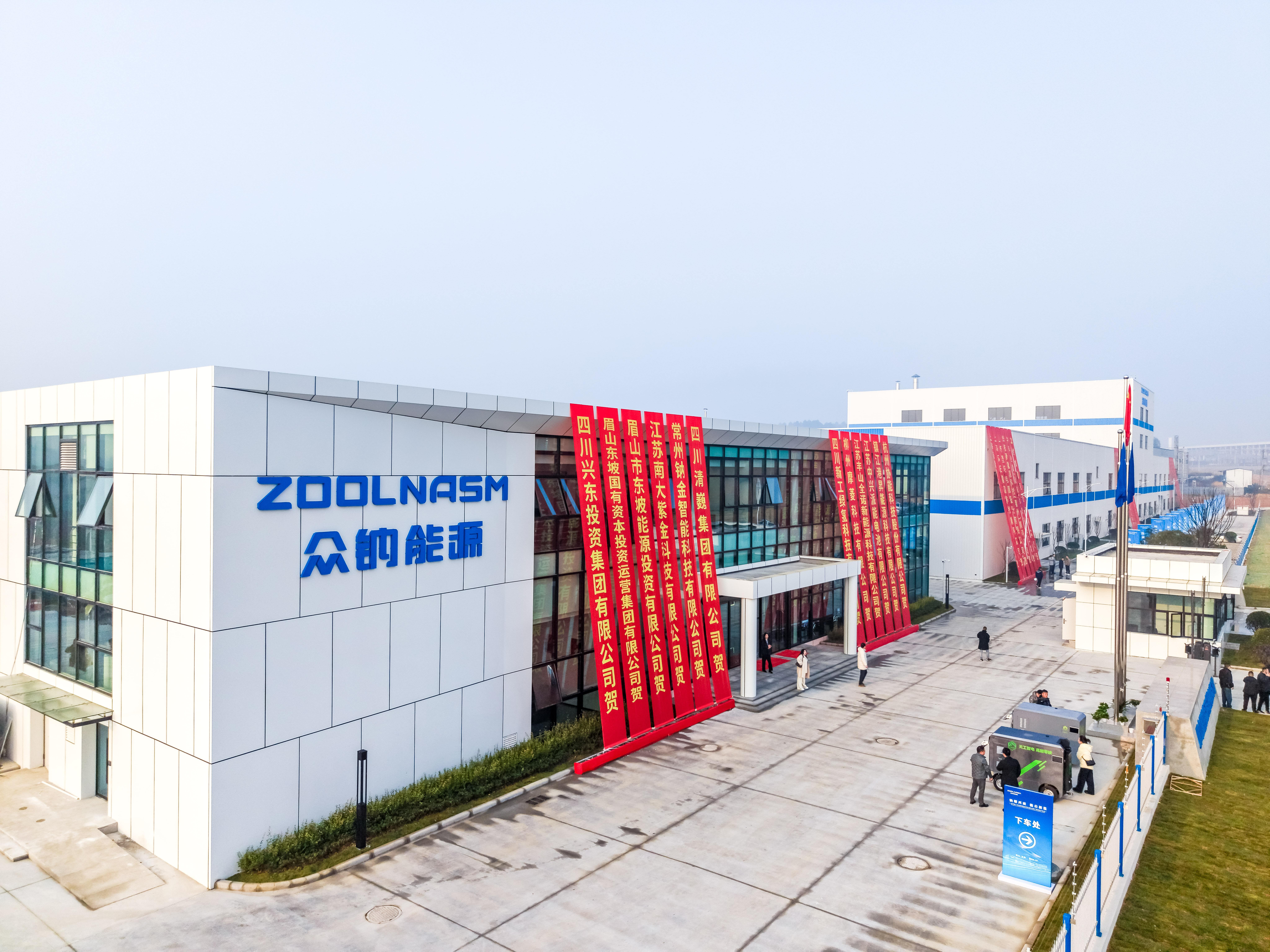
众钠能源启用全球首个万吨级硫酸铁钠正极材料工厂,钠电材料价格有望下探至“1万+”区间
3 6 Ke· 2026-01-19 07:18
Core Insights - The production base of sodium iron sulfate cathode materials by Zhongna Energy in Meishan, Sichuan, has officially commenced operations, marking the world's first production project with a capacity of over 10,000 tons, breaking the long-standing dilemma in the sodium battery industry regarding whether to prioritize market or material availability [1][6][9] Group 1: Cost Breakthrough - The sodium-ion battery industry is experiencing a pivotal turning point, with the cathode material significantly influencing battery performance and cost structure [5] - The price of sodium iron sulfate cathode materials is expected to drop to the "10,000+/ton" range, offering a cost advantage of over 50% compared to mainstream lithium iron phosphate materials [6][9] - The inherent resource advantages of sodium, which is more abundant in the earth's crust than lithium, contribute to this cost reduction, enabling a more autonomous and controllable supply chain [6][9] Group 2: Supply Chain Resolution - The release of the Meishan base's 10,000-ton capacity has resolved the long-standing "chicken-and-egg" dilemma in the sodium battery industry, providing stable and reliable core material supply to downstream battery manufacturers [9][12] - The base's production capabilities will facilitate the planning of at least 5GWh of sodium battery capacity, ensuring a seamless industrial chain [9][12] Group 3: Expanding Applications - Sodium batteries offer advantages beyond just low-cost alternatives, including superior low-temperature performance in cold regions and high discharge rates in specific applications [12] - The Meishan base is not only producing cathode materials but also unlocking new energy application scenarios, such as two-wheeled vehicle battery swap networks and large-scale energy storage systems [12][20] Group 4: Local Empowerment - The Meishan base achieved rapid establishment within 28 days, showcasing effective collaboration between local government and corporate execution, with an expected annual output value exceeding 4 billion yuan [15] - This facility is a strategic component of Zhongna Energy's national production network, enhancing service efficiency and stability for customers across China and potentially globally [15][20] Group 5: Market Potential - The sodium-ion battery market is projected to exceed 1,000GWh by 2030, driven by the ongoing carbon neutrality initiatives [18][19] - The timely launch of the Meishan base positions Zhongna Energy favorably within this trillion-yuan market, facilitating collaboration with downstream partners to develop tailored solutions [20][22]

2025年钠离子电池市场盘点——全年3.45GWh,产业发展迈入新阶段
鑫椤锂电· 2026-01-13 07:38
Core Viewpoint - The sodium-ion battery and materials industry is expected to experience rapid growth in 2025, driven by global energy transition and lithium resource price fluctuations, transitioning from the R&D phase to industrialization [1] Production and Market Overview - In 2025, China's sodium-ion battery production is projected to reach 3.45 GWh, nearly doubling from 1.76 GWh in 2024 [1] - The energy storage sector will dominate downstream applications, accounting for 52%, followed by light-duty power (20%) and start-stop applications (17%), with the power sector representing less than 10% [1] Technical Route and Pricing - By 2025, the polyanion (NFPP) route will establish a dominant position, comprising about 70%, while the layered oxide route will drop from 72% in 2024 to 28% [3] - Sodium battery prices are expected to trend downward, with layered oxide products priced higher than polyanion products. The average price for layered oxide cells is between 0.55-0.6 yuan/Wh, while NFPP cells range from 0.45-0.55 yuan/Wh [5] Market Segmentation Energy Storage Market - Major sodium-ion energy storage system projects are concentrated in regions like Hubei, Yunnan, Guangdong, Guangxi, and Shanghai, with prices dropping from approximately 1.3 yuan/Wh at the beginning of the year to below 0.7 yuan/Wh by Q4 [8] - Sodium-ion batteries are expected to gradually replace lead-acid batteries in data centers and communication base stations, with higher acceptance in overseas markets, particularly Europe [8] Light-Duty Power Market - The light-duty power sector will account for 20% of the downstream market in 2025, with sodium-ion batteries being adopted by several electric two-wheeler manufacturers [10] - The penetration rate of sodium-ion batteries in the small power market is expected to reach 30%-40% due to their low cost and long cycle life advantages [10] Start-Stop Battery Market - Sodium-ion batteries are rapidly emerging in the start-stop battery market for vehicles, with nearly 30 battery companies launching sodium-ion start-stop power products [11] - The market size for start-stop batteries is estimated to approach 100 billion yuan [11] Power Market - Progress in the passenger vehicle sector is slow due to low energy density, while commercial vehicles are actively exploring applications [13] - Sodium-ion batteries are expected to find breakthroughs in range-extended and hybrid models where high cycle counts are required [13] Competitive Landscape - The market is dominated by polyanion and layered oxide routes, with leading companies like Vico Technology, Haifida, and Pioneering Technology focusing on polyanion applications [15] - Major players include CATL and BYD in lithium batteries, and new entrants like Zhongke Haina and Qingna Technology in sodium batteries [15] Future Outlook - The sodium-ion battery industry is anticipated to enter a phase of large-scale application in 2026, supported by technological advancements, cost reductions, and policy backing [22] - Energy density and cycle life are expected to improve, with mainstream sodium batteries achieving energy densities of 170-180 Wh/kg and polyanion batteries reaching 110-120 Wh/kg [23] - The cost of sodium batteries is projected to fall below 0.40 yuan/Wh by 2026, enhancing their competitiveness in energy storage and low-speed electric vehicle applications [23]
储能用钠离子电池团标发布
Zhong Guo Hua Gong Bao· 2026-01-12 03:13
Group 1 - The China Chemical and Physical Power Industry Association has approved the release of the group standard for sodium-ion batteries used in energy storage, which will be implemented on February 1, 2026 [1] - The standard aims to address the lack of specific technical requirements for sodium-ion batteries, which are currently transitioning from initial industrialization to large-scale application [1][2] - The standard focuses on ensuring the safe and reliable operation of sodium-ion batteries in energy storage systems, taking into account their unique material systems, working principles, performance characteristics, and safety features [2] Group 2 - The standard sets performance indicators and safety requirements that align with the current level of sodium-ion battery industrialization while incorporating trends in cutting-edge technology [2] - It aims to provide practical guidelines for the design, production, selection, and evaluation of sodium-ion battery products, ensuring that technical requirements effectively address core issues in energy storage applications [2]
国泰海通|电新:钠电团体标准正式发布,产业化加速推进
国泰海通证券研究· 2026-01-11 13:54
Core Viewpoint - The formal implementation of the group standard "Technical Requirements for Sodium-ion Batteries for Energy Storage" marks a new phase in the standardization of sodium-ion batteries in China's energy storage sector, indicating that the sodium battery industry chain has completed its cold start and is expected to enter a period of industrial scale expansion [1][2]. Group 1: Industry Development - The sodium battery industry is expected to accelerate its deployment, with companies involved in the sodium-ion battery industry chain likely to benefit first from the newly approved group standard [2]. - The group standard, effective from February 1, 2026, provides clear regulations on terminology, testing methods, inspection rules, labeling, packaging, transportation, and storage for sodium-ion batteries used in energy storage [2]. - Sodium batteries are anticipated to become an effective supplement to lithium batteries, with a cost advantage highlighted by the ability to use cheaper sodium carbonate instead of lithium carbonate, and aluminum foil instead of copper foil, resulting in a 30%-40% lower material cost compared to lithium batteries [2]. Group 2: Technological Advancements - In April 2025, CATL launched its new sodium-ion battery brand "CATL Sodium New," achieving an energy density of 175Wh/kg, comparable to lithium iron phosphate batteries, with a range of 500 kilometers and excellent low-temperature performance, maintaining 90% usable capacity at -40°C [3]. - The sodium battery industry chain has completed its basic ecological construction, and rising prices of lithium battery materials are gradually narrowing the cost gap between sodium and lithium batteries, indicating a positive market introduction for sodium batteries driven by leading battery companies like CATL [3].
机构:关注钠离子电池产业化加速带动的投资机会
Zheng Quan Shi Bao Wang· 2026-01-09 00:55
Core Viewpoint - China Chemical (601117) has announced the approval of the group standard "Technical Requirements for Sodium-ion Batteries for Energy Storage" (T/CIAPS0052-2026), which outlines definitions, general requirements, testing methods, inspection rules, and packaging for sodium-ion batteries and modules [1] Group 1: Industry Insights - Sodium-ion batteries are recognized for their cost-effectiveness and excellent low-temperature performance, indicating significant potential for applications in electric vehicles and energy storage [1] - The rapid development of electric vehicles and energy storage stations, combined with advancements in sodium-ion battery technology and accelerated industrialization, is expected to lead to a quick increase in market penetration and growth in market size [1] - The industry is advised to focus on investment opportunities arising from the accelerated industrialization of sodium-ion batteries [1] Group 2: Market Potential - Sodium-ion batteries possess advantages such as low-temperature performance and high power density, along with excellent economic potential [1] - Leading manufacturers are actively advancing product research and industrialization processes, continuously optimizing product performance through collaboration with downstream customers and upstream suppliers [1] - There is significant growth potential for sodium-ion batteries, particularly for material manufacturers with strong R&D capabilities and battery manufacturers that are at the forefront of technology [1]
容百科技成为宁德时代钠电正极粉料供应商
Zheng Quan Ri Bao· 2025-11-17 16:13
Core Viewpoint - The strategic cooperation agreement between Rongbai Technology and CATL marks a significant step in the commercialization of sodium-ion battery technology, recognizing Rongbai's technical strength and market position in this emerging field [1][2]. Group 1: Company Developments - Rongbai Technology has become the first supplier of sodium battery cathode materials for CATL, indicating a strong partnership that could enhance both companies' positions in the energy storage market [1]. - Under the agreement, CATL will procure no less than 60% of its total purchasing volume from Rongbai, with a minimum annual purchase of 500,000 tons, contingent on meeting specific technical and quality requirements [1]. - The collaboration aims to leverage each party's expertise and resources to create a safer and lower-carbon battery ecosystem, focusing on long-term product supply and new product development [2]. Group 2: Industry Context - Sodium-ion batteries are gaining traction due to their abundant raw materials, cost advantages, and safety features, positioning them as a potential alternative to lithium batteries in energy storage and light electric vehicle applications [2]. - Several companies are investing in sodium-ion battery technology, with examples including a 3.2 billion yuan investment by Tongxing Environmental Technology for a 100,000-ton annual production capacity of sodium battery cathode materials [2]. - Jiangsu Chuan Yi Technology is developing sodium-ion battery pack products for electric two-wheelers, enhancing its product matrix and technical support for market entry [2]. Group 3: Market Challenges - The sodium-ion battery industry faces challenges related to technology maturity, capacity construction, and market demand, which could impact the pace of industrialization [3]. - There is a risk of overcapacity and price competition if downstream demand does not meet expectations, highlighting the need for careful management of production expansion [3]. - Industry players are encouraged to focus on technological iteration and matching application scenarios to enhance competitiveness and ensure sustainable development of the sodium-ion battery sector [3].


钠离子电池加速从“实验室”走向“应用场”
Ke Ji Ri Bao· 2025-10-20 23:44
Core Viewpoint - The sodium-ion battery technology is advancing from laboratory testing to large-scale application, with the recent launch of the Fulin sodium-ion battery energy storage station marking a significant milestone in China's energy storage technology development [1] Group 1: Cost and Safety Advantages - Sodium-ion batteries are gaining attention due to their lower costs and higher safety compared to lithium-ion batteries, which are facing rising costs and safety issues [2] - The price of lithium hexafluorophosphate exceeded 70,000 yuan per ton, with a significant increase of 9,500 yuan (approximately 16%) in just five trading days [2] - Sodium-ion batteries exhibit better thermal stability and lower risks of thermal runaway, making them a safer alternative for energy storage [2] Group 2: Industry Development and Ecosystem - The sodium-ion battery industry in China has seen rapid development, with over 200 companies involved across the entire supply chain, including key materials, battery manufacturing, and system integration [3] - Significant breakthroughs have been made in basic research, material preparation, and battery design, leading to improved product performance and expanding application areas [3] - The Ministry of Industry and Information Technology has issued a development action plan for new energy storage manufacturing, focusing on long life, high energy density, and wide temperature range for sodium-ion batteries [3] Group 3: Commercialization Timeline - The period from 2021 to 2025 is identified as the industrialization phase for sodium-ion batteries, with 2026 expected to be a critical year for their commercial application [4] - Enhancing energy density and scaling production are essential for achieving sustainable commercialization of sodium-ion batteries in the next two to three years [4] Group 4: Technological Innovations - Research on materials such as sodium vanadium phosphate and hard carbon has led to the development of high-power sodium battery systems, with significant improvements in electrochemical performance [5][6] - Collaboration between enterprises, universities, and research institutions is encouraged to accelerate innovation and application of sodium-ion battery technologies [6] Group 5: Standardization Efforts - Establishing a standardization framework for sodium-ion batteries is crucial for guiding product quality and technological advancement in the industry [7] - The China Electronics Standardization Institute has initiated the development of industry standards, including terminology and safety requirements, to support the growth of the sodium-ion battery sector [7] - Ongoing evaluation and testing of sodium-ion battery products have shown an average energy density of 106 watt-hours per kilogram, providing a benchmark for industry performance [7][8]
维科技术:高安全聚阴离子钠电池上取得重大技术创新
Jing Ji Guan Cha Wang· 2025-10-11 18:04
Core Viewpoint - Weike Technology is one of the earliest companies in China to industrialize sodium-ion battery technology, having established the country's first GW-level production line with an annual capacity of 2GWh [1] Group 1: Technological Innovations - Significant technological innovations have been achieved in high-safety polyacrylonitrile sodium batteries, including high-temperature resistance technology that enhances cycle life and capacity retention at 60°C [1] - Low-temperature charging technology ensures stable charge and discharge at -20°C [1] - High-rate wide-temperature technology enables performance in extreme temperatures from -40°C to 80°C, supporting 10C fast charging and discharging [1] - Ultra-safe technology has successfully developed a needle-puncture smoke-free cell [1] - The polyacrylonitrile sodium battery can achieve a cycle life exceeding 8000 times, with a capacity retention rate of 90% even in severe cold at -40°C [1] Group 2: Application and Market Deployment - The company's products have been widely applied in several landmark demonstration projects, including a 100MW/200MWh energy storage station by Guangfa, a 2.5MW/10MWh energy storage station in Hohhot, and a 30MW auxiliary frequency regulation storage by China Resources Power [1] - The technology's reliability and large-scale delivery capability have been validated in various applications, including backup power for data centers, communication base stations, and starting power for commercial vehicles [1]

普利特投资建设6GWh钠离子电池生产基地,加速钠电产业化
Ju Chao Zi Xun· 2025-09-30 14:03
Core Insights - The company has signed an investment agreement to establish a 6GWh sodium-ion battery production base in Neijiang Economic and Technological Development Zone [2][3] - The total planned investment for the project is approximately 800 million yuan, with a phased construction approach [2] - The investment aims to enhance the commercialization of sodium-ion batteries and address current capacity bottlenecks [3] Investment Details - The project will include the construction of a 46-series large cylindrical sodium battery production line and a super large square or other model sodium battery production line [2] - The project will be implemented in two phases: Phase 1 will have a designed capacity of 2GWh with an investment of about 300 million yuan, while Phase 2 will expand capacity to 4GWh within 24 months after Phase 1 begins production [2] Strategic Focus - The investment aligns with the company's strategic development plan to deepen its focus on sodium-ion battery technology [3] - The company has already validated multiple sodium-ion cell and module products with leading downstream customers, securing significant orders [3] - Sodium-ion batteries are positioned as a next-generation technology in energy storage and automotive start-stop power applications due to their resource abundance and superior low-temperature performance [3]