
钠离子电池产业化

Search documents
钠电起停出货量全国第一:派能科技独占鳌头
鑫椤锂电· 2026-03-26 14:05
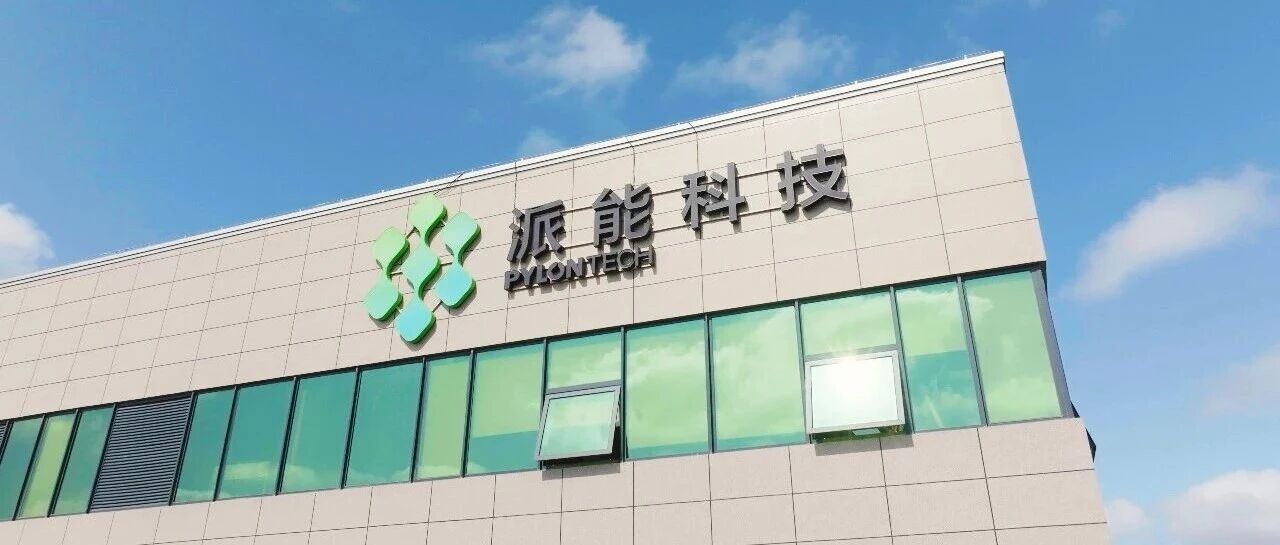
Core Viewpoint - Shanghai Pylon Energy Technology Co., Ltd. (referred to as "Pylon Technology") is set to lead the sodium-ion battery market in China by achieving the highest shipment volume of start-stop batteries by 2025, marking a significant milestone in the industrialization of sodium-ion batteries and showcasing the innovative strength of Chinese enterprises in the global renewable energy technology transformation [1][4]. Group 1: Market Position and Industry Trends - Pylon Technology is projected to ship nearly 200 MWh of sodium-ion start-stop batteries by 2025, making it the only company in the industry to surpass the 100 MWh scale and securing its leading position in this niche market [1][6]. - The sodium-ion battery industry is entering a critical new cycle of industrialization in 2026, shifting from passive replacement driven by lithium price fluctuations to proactive industrialization based on mature technology and controllable costs [1][4]. - The global demand for start-stop batteries is expected to exceed 240 GWh annually, driven by over 1 billion passenger vehicles worldwide and a replacement demand of over 300 million sets per year [4]. Group 2: Technical Advantages and Product Features - Sodium-ion batteries offer significant advantages over traditional lead-acid batteries, including higher energy density, longer lifespan, better low-temperature performance, and environmental benefits [4][5]. - Pylon Technology's sodium-ion batteries maintain over 90% capacity retention at extreme low temperatures of -40°C and can support 15C pulse discharge at -18°C, ensuring reliable performance in cold regions [7]. - The company has developed a sodium-ion start-stop battery system with high safety, low-temperature resistance, and long cycle life, achieving over 15,000 charge cycles at 45°C with a capacity retention above 98% [6][7]. Group 3: Strategic Collaborations and Future Plans - Pylon Technology has established strategic partnerships, including a collaboration with Xupai Power to provide over 1 GWh of battery products, focusing on start-stop and lightweight power applications [9]. - The company aims to complete the entire sodium-ion battery industrial chain by 2025, promoting large-scale applications in start-stop, lightweight power, and energy storage sectors [12]. - Pylon Technology is also advancing the development of negative-free sodium-ion battery technology, expected to enter mass production in the first half of 2026, which will enhance product competitiveness and open new market opportunities [10][12].

继续全面看好新能车锂电赛道
2026-03-24 01:27
Summary of Key Points from Conference Call Records Industry Overview - **Industry Focus**: The records primarily discuss the electric vehicle (EV) and lithium battery sectors, with a particular emphasis on the growth of lithium battery demand and the energy storage market leading up to 2026 [1][5][4]. Key Insights and Arguments - **Lithium Battery Demand**: Global lithium battery demand is projected to exceed 2,800 GWh in 2026, representing a 25% increase from 2025. This includes approximately 2,000 GWh for power batteries (up 13.5%) and around 830 GWh for energy storage batteries [1][5]. - **Energy Storage Growth**: The global energy storage market is expected to grow to 450 GWh, a 45% increase, with significant contributions from the Middle East and Africa, where installations are expected to double [1][4]. - **Material Production Recovery**: The operating rates for lithium battery materials have significantly improved, with the average operating rate for wet separators rising from 60% to 90%. Prices and unit profitability for lithium iron phosphate and hexafluorophosphate are entering a recovery phase due to tight supply and demand [1][9]. - **Geely Auto's Export Strategy**: Geely is expected to export 900,000 to 1 million vehicles by 2026, with significant profits anticipated from its high-end models, contributing over 20 billion yuan in profit [1][13]. - **Solid-State Battery Development**: The solid-state battery sector is entering a critical phase, with several catalysts expected between March and May 2026, including the introduction of semi-solid and fully solid-state battery models [1][15][16]. Market Dynamics - **New Energy Vehicle Sales**: The global new energy vehicle market is projected to grow by over 10% in 2026, with China expected to reach 1.8 million units sold, a 10% increase from 2025. Commercial vehicles are anticipated to see a 40% increase in sales [3][7]. - **Regional Energy Storage Growth**: The energy storage market in China is expected to grow to 275 GWh, with the U.S. market facing uncertainties due to regulatory constraints. Europe is projected to grow by 42%, with potential for exceeding expectations [4][5]. - **Market Recovery Signals**: In March 2026, there are signs of recovery in the new energy vehicle market, with order urgency increasing by 20-30%. High oil prices and local incentives are expected to drive demand [2][7][12]. Additional Important Insights - **Material Price Drivers**: The price increases in the lithium battery materials sector are driven by capacity utilization rates and raw material costs, particularly in petrochemical-related materials [8][9]. - **Investment Logic for Lithium Materials**: The investment logic for lithium materials includes the dual benefits of inventory and energy storage revenues, with significant contributions expected from the energy storage sector in 2026 [10]. - **Sodium-Ion Battery Opportunities**: The sodium-ion battery sector is expected to see significant advancements in 2026, with costs potentially dropping to 0.4 yuan/Wh, making it competitive with lithium batteries [21][22][23]. Conclusion The records highlight a robust growth trajectory for the lithium battery and new energy vehicle sectors, driven by increasing demand, technological advancements, and strategic market positioning by key players like Geely. The anticipated recovery in sales and the introduction of innovative battery technologies are set to shape the industry's landscape in the coming years.


锂电春季策略-排产旺季来临-高斜率复苏驱动春季行情
2026-03-16 02:20
Summary of Conference Call Records Industry Overview - The lithium battery sector is experiencing a strong recovery, with production in March increasing by 20% month-on-month and 40%-50% year-on-year, with April expected to maintain this upward trend [1][3] - The overall demand for new energy vehicles (NEVs) and energy storage is showing significant growth, particularly in Europe, where sales in February increased by 30% year-on-year due to new subsidy policies [1][4] Key Company Insights CATL (宁德时代) - Expected to maintain a unit net profit of over 0.1 yuan/Wh in Q1 2026, with an annual profit target of 95-100 billion yuan [1][6] - The company is effectively hedging against rising costs through high operational efficiency (over 90% utilization) and low-cost inventory management [6] - Anticipated production for 2026 is set at 1.1 TWh, with expected shipments of around 1 TWh, potentially achieving revenues of 90 billion yuan or more [7] Secondary Battery Manufacturers - 中创新航 (China Innovation Aviation) is highlighted for its low valuation and strong production growth, with expected profits of over 3 billion yuan in 2026 [8] - Other second-tier manufacturers like 亿纬锂能 (EVE Energy) and 鹏辉能源 (Penghui Energy) are also expected to see significant recovery in their fundamentals [8] Investment Strategies - The investment strategy favors the materials segment over the battery segment due to better recovery potential and pricing power in the materials sector [5][6] - The lithium iron phosphate (磷酸铁锂) segment is expected to see significant profit improvements due to inventory gains and price recovery [5][15] Market Dynamics - The IDC backup power market is projected to reach 30 billion yuan, with a net profit margin exceeding 20% [1][10] - Domestic manufacturers like 雄韬股份 (Yuntai) and 双登股份 (Shuangdeng) are expected to benefit from the transition to lithium batteries in backup power applications [1][11] Pricing Trends - The separator industry has reached a consensus on price discipline, with leading companies initiating price increases, indicating a tightening supply-demand relationship [1][12] - The price of lithium hexafluorophosphate (六氟磷酸锂) has seen fluctuations but is expected to rise again due to increased demand and supply constraints [1][13] Emerging Technologies - Sodium-ion batteries are expected to enter large-scale production in 2026, with applications in two-wheeled vehicles and energy storage [1][17] - Companies like 维科技术 (Weico Technology) are positioned to benefit from this trend, with significant orders already in hand [17][18] Conclusion - The lithium battery and related sectors are poised for significant growth driven by strong demand, favorable pricing dynamics, and technological advancements. Investment opportunities are abundant, particularly in materials and emerging battery technologies.
钠离子电池产业化最新进展
2026-01-28 03:01
Summary of Sodium-Ion Battery Industry Conference Call Industry Overview - The sodium-ion battery industry faces challenges in cost and technology, with the Prussian blue route limited by crystallization powder content issues, the lamination route being expensive with energy density improvement difficulties, and the gold-ion route having high actual costs and energy density shortcomings, making it less competitive in power applications [1][3][4]. Key Points Current Industry Status - Sodium-ion batteries are gradually being recognized for their cost-performance advantages, especially in low-temperature performance, but large-scale industrialization is still time-consuming due to cost and technical limitations [2]. - The expected shipment volume for sodium-ion batteries is approximately 3-4 GWh in 2024, increasing to 8-9 GWh in 2025, and projected to reach 15 GWh in 2026, primarily for demonstration projects, policy-supported projects, data centers, and high-cold region projects [3][15]. Cost and Technology Challenges - The cost of sodium-ion batteries is primarily concentrated in the positive and negative electrode materials, with potential price reductions of 10% for positive materials and over 20% for negative materials expected by 2026 [3][16]. - Achieving cost parity with lithium iron phosphate (LFP) batteries by 2026 is unlikely without significant advancements in negative carbon and positive sodium iron phosphate technologies [5][16]. Market Developments - Zhongwei New Materials has secured a large order, indicating a breakthrough in the uniform ion and lamination routes, which may encourage increased R&D investment and accelerate industrialization [6]. - Yadi's sodium-ion electric two-wheelers are primarily sold abroad but face limited market space due to high costs, despite advantages in low-temperature performance [7]. Application Potential - Sodium-ion batteries show significant advantages in start-stop systems, particularly for commercial vehicles requiring low-temperature performance. If costs can be reduced to around 0.35 yuan, they may fully replace lead-acid systems [8]. - The market for start-stop systems is expected to grow, with potential annual demand reaching several GWh in optimistic scenarios [26][34]. Future Projections - The sodium-ion battery cost structure is expected to decrease significantly, with projections of costs dropping to around 0.36 yuan/Wh in 2026 and further to 0.32-0.33 yuan/Wh in 2027 [16][24]. - The sodium-ion battery's energy density is lower than that of LFP, necessitating a 10-15% cost advantage for competitive pricing in storage systems [17]. Competitive Landscape - Major suppliers for sodium-ion battery materials include companies like Ding Sheng, Wan Shun, and Zhong Yi for aluminum foil, and various companies for positive materials and hard carbon [30][32]. - The development of negative-free technology is crucial for cost reduction and energy density improvement, with Samsung leading in this area, although widespread application remains a challenge [33]. Additional Insights - The sodium-ion battery industry is still in the early stages of development, with significant potential for growth in specific applications such as energy storage and commercial vehicles, but faces hurdles in cost competitiveness and technology maturity [1][2][5][6][8].
众钠能源启用全球首个万吨级硫酸铁钠正极材料工厂,钠电材料价格有望下探至“1万+”区间
3 6 Ke· 2026-01-19 07:18
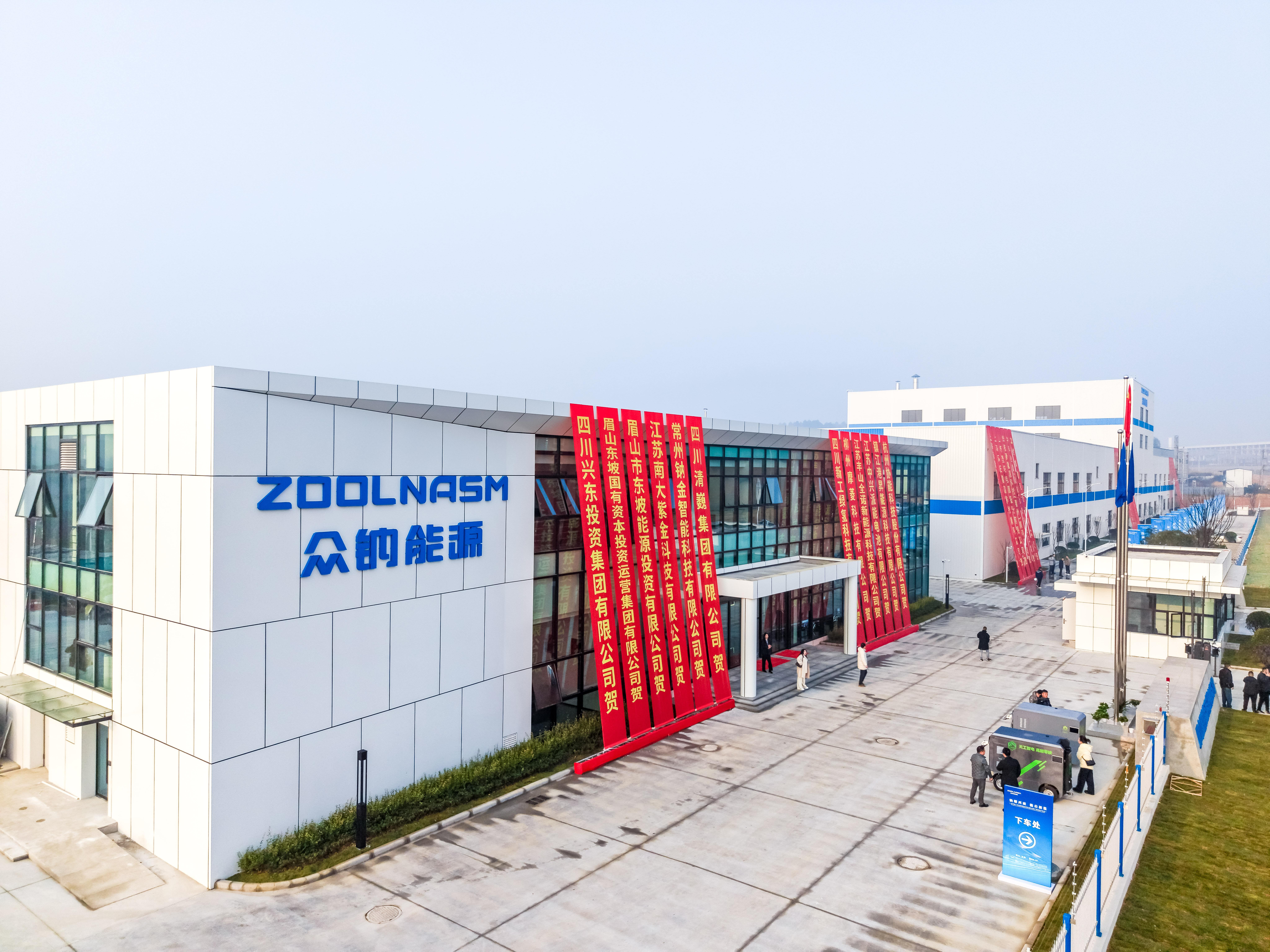
Core Insights - The production base of sodium iron sulfate cathode materials by Zhongna Energy in Meishan, Sichuan, has officially commenced operations, marking the world's first production project with a capacity of over 10,000 tons, breaking the long-standing dilemma in the sodium battery industry regarding whether to prioritize market or material availability [1][6][9] Group 1: Cost Breakthrough - The sodium-ion battery industry is experiencing a pivotal turning point, with the cathode material significantly influencing battery performance and cost structure [5] - The price of sodium iron sulfate cathode materials is expected to drop to the "10,000+/ton" range, offering a cost advantage of over 50% compared to mainstream lithium iron phosphate materials [6][9] - The inherent resource advantages of sodium, which is more abundant in the earth's crust than lithium, contribute to this cost reduction, enabling a more autonomous and controllable supply chain [6][9] Group 2: Supply Chain Resolution - The release of the Meishan base's 10,000-ton capacity has resolved the long-standing "chicken-and-egg" dilemma in the sodium battery industry, providing stable and reliable core material supply to downstream battery manufacturers [9][12] - The base's production capabilities will facilitate the planning of at least 5GWh of sodium battery capacity, ensuring a seamless industrial chain [9][12] Group 3: Expanding Applications - Sodium batteries offer advantages beyond just low-cost alternatives, including superior low-temperature performance in cold regions and high discharge rates in specific applications [12] - The Meishan base is not only producing cathode materials but also unlocking new energy application scenarios, such as two-wheeled vehicle battery swap networks and large-scale energy storage systems [12][20] Group 4: Local Empowerment - The Meishan base achieved rapid establishment within 28 days, showcasing effective collaboration between local government and corporate execution, with an expected annual output value exceeding 4 billion yuan [15] - This facility is a strategic component of Zhongna Energy's national production network, enhancing service efficiency and stability for customers across China and potentially globally [15][20] Group 5: Market Potential - The sodium-ion battery market is projected to exceed 1,000GWh by 2030, driven by the ongoing carbon neutrality initiatives [18][19] - The timely launch of the Meishan base positions Zhongna Energy favorably within this trillion-yuan market, facilitating collaboration with downstream partners to develop tailored solutions [20][22]
2025年钠离子电池市场盘点——全年3.45GWh,产业发展迈入新阶段
鑫椤锂电· 2026-01-13 07:38
Core Viewpoint - The sodium-ion battery and materials industry is expected to experience rapid growth in 2025, driven by global energy transition and lithium resource price fluctuations, transitioning from the R&D phase to industrialization [1] Production and Market Overview - In 2025, China's sodium-ion battery production is projected to reach 3.45 GWh, nearly doubling from 1.76 GWh in 2024 [1] - The energy storage sector will dominate downstream applications, accounting for 52%, followed by light-duty power (20%) and start-stop applications (17%), with the power sector representing less than 10% [1] Technical Route and Pricing - By 2025, the polyanion (NFPP) route will establish a dominant position, comprising about 70%, while the layered oxide route will drop from 72% in 2024 to 28% [3] - Sodium battery prices are expected to trend downward, with layered oxide products priced higher than polyanion products. The average price for layered oxide cells is between 0.55-0.6 yuan/Wh, while NFPP cells range from 0.45-0.55 yuan/Wh [5] Market Segmentation Energy Storage Market - Major sodium-ion energy storage system projects are concentrated in regions like Hubei, Yunnan, Guangdong, Guangxi, and Shanghai, with prices dropping from approximately 1.3 yuan/Wh at the beginning of the year to below 0.7 yuan/Wh by Q4 [8] - Sodium-ion batteries are expected to gradually replace lead-acid batteries in data centers and communication base stations, with higher acceptance in overseas markets, particularly Europe [8] Light-Duty Power Market - The light-duty power sector will account for 20% of the downstream market in 2025, with sodium-ion batteries being adopted by several electric two-wheeler manufacturers [10] - The penetration rate of sodium-ion batteries in the small power market is expected to reach 30%-40% due to their low cost and long cycle life advantages [10] Start-Stop Battery Market - Sodium-ion batteries are rapidly emerging in the start-stop battery market for vehicles, with nearly 30 battery companies launching sodium-ion start-stop power products [11] - The market size for start-stop batteries is estimated to approach 100 billion yuan [11] Power Market - Progress in the passenger vehicle sector is slow due to low energy density, while commercial vehicles are actively exploring applications [13] - Sodium-ion batteries are expected to find breakthroughs in range-extended and hybrid models where high cycle counts are required [13] Competitive Landscape - The market is dominated by polyanion and layered oxide routes, with leading companies like Vico Technology, Haifida, and Pioneering Technology focusing on polyanion applications [15] - Major players include CATL and BYD in lithium batteries, and new entrants like Zhongke Haina and Qingna Technology in sodium batteries [15] Future Outlook - The sodium-ion battery industry is anticipated to enter a phase of large-scale application in 2026, supported by technological advancements, cost reductions, and policy backing [22] - Energy density and cycle life are expected to improve, with mainstream sodium batteries achieving energy densities of 170-180 Wh/kg and polyanion batteries reaching 110-120 Wh/kg [23] - The cost of sodium batteries is projected to fall below 0.40 yuan/Wh by 2026, enhancing their competitiveness in energy storage and low-speed electric vehicle applications [23]
储能用钠离子电池团标发布
Zhong Guo Hua Gong Bao· 2026-01-12 03:13
Group 1 - The China Chemical and Physical Power Industry Association has approved the release of the group standard for sodium-ion batteries used in energy storage, which will be implemented on February 1, 2026 [1] - The standard aims to address the lack of specific technical requirements for sodium-ion batteries, which are currently transitioning from initial industrialization to large-scale application [1][2] - The standard focuses on ensuring the safe and reliable operation of sodium-ion batteries in energy storage systems, taking into account their unique material systems, working principles, performance characteristics, and safety features [2] Group 2 - The standard sets performance indicators and safety requirements that align with the current level of sodium-ion battery industrialization while incorporating trends in cutting-edge technology [2] - It aims to provide practical guidelines for the design, production, selection, and evaluation of sodium-ion battery products, ensuring that technical requirements effectively address core issues in energy storage applications [2]
国泰海通|电新:钠电团体标准正式发布,产业化加速推进
国泰海通证券研究· 2026-01-11 13:54
Core Viewpoint - The formal implementation of the group standard "Technical Requirements for Sodium-ion Batteries for Energy Storage" marks a new phase in the standardization of sodium-ion batteries in China's energy storage sector, indicating that the sodium battery industry chain has completed its cold start and is expected to enter a period of industrial scale expansion [1][2]. Group 1: Industry Development - The sodium battery industry is expected to accelerate its deployment, with companies involved in the sodium-ion battery industry chain likely to benefit first from the newly approved group standard [2]. - The group standard, effective from February 1, 2026, provides clear regulations on terminology, testing methods, inspection rules, labeling, packaging, transportation, and storage for sodium-ion batteries used in energy storage [2]. - Sodium batteries are anticipated to become an effective supplement to lithium batteries, with a cost advantage highlighted by the ability to use cheaper sodium carbonate instead of lithium carbonate, and aluminum foil instead of copper foil, resulting in a 30%-40% lower material cost compared to lithium batteries [2]. Group 2: Technological Advancements - In April 2025, CATL launched its new sodium-ion battery brand "CATL Sodium New," achieving an energy density of 175Wh/kg, comparable to lithium iron phosphate batteries, with a range of 500 kilometers and excellent low-temperature performance, maintaining 90% usable capacity at -40°C [3]. - The sodium battery industry chain has completed its basic ecological construction, and rising prices of lithium battery materials are gradually narrowing the cost gap between sodium and lithium batteries, indicating a positive market introduction for sodium batteries driven by leading battery companies like CATL [3].
机构:关注钠离子电池产业化加速带动的投资机会
Zheng Quan Shi Bao Wang· 2026-01-09 00:55
Core Viewpoint - China Chemical (601117) has announced the approval of the group standard "Technical Requirements for Sodium-ion Batteries for Energy Storage" (T/CIAPS0052-2026), which outlines definitions, general requirements, testing methods, inspection rules, and packaging for sodium-ion batteries and modules [1] Group 1: Industry Insights - Sodium-ion batteries are recognized for their cost-effectiveness and excellent low-temperature performance, indicating significant potential for applications in electric vehicles and energy storage [1] - The rapid development of electric vehicles and energy storage stations, combined with advancements in sodium-ion battery technology and accelerated industrialization, is expected to lead to a quick increase in market penetration and growth in market size [1] - The industry is advised to focus on investment opportunities arising from the accelerated industrialization of sodium-ion batteries [1] Group 2: Market Potential - Sodium-ion batteries possess advantages such as low-temperature performance and high power density, along with excellent economic potential [1] - Leading manufacturers are actively advancing product research and industrialization processes, continuously optimizing product performance through collaboration with downstream customers and upstream suppliers [1] - There is significant growth potential for sodium-ion batteries, particularly for material manufacturers with strong R&D capabilities and battery manufacturers that are at the forefront of technology [1]
容百科技成为宁德时代钠电正极粉料供应商
Zheng Quan Ri Bao· 2025-11-17 16:13
Core Viewpoint - The strategic cooperation agreement between Rongbai Technology and CATL marks a significant step in the commercialization of sodium-ion battery technology, recognizing Rongbai's technical strength and market position in this emerging field [1][2]. Group 1: Company Developments - Rongbai Technology has become the first supplier of sodium battery cathode materials for CATL, indicating a strong partnership that could enhance both companies' positions in the energy storage market [1]. - Under the agreement, CATL will procure no less than 60% of its total purchasing volume from Rongbai, with a minimum annual purchase of 500,000 tons, contingent on meeting specific technical and quality requirements [1]. - The collaboration aims to leverage each party's expertise and resources to create a safer and lower-carbon battery ecosystem, focusing on long-term product supply and new product development [2]. Group 2: Industry Context - Sodium-ion batteries are gaining traction due to their abundant raw materials, cost advantages, and safety features, positioning them as a potential alternative to lithium batteries in energy storage and light electric vehicle applications [2]. - Several companies are investing in sodium-ion battery technology, with examples including a 3.2 billion yuan investment by Tongxing Environmental Technology for a 100,000-ton annual production capacity of sodium battery cathode materials [2]. - Jiangsu Chuan Yi Technology is developing sodium-ion battery pack products for electric two-wheelers, enhancing its product matrix and technical support for market entry [2]. Group 3: Market Challenges - The sodium-ion battery industry faces challenges related to technology maturity, capacity construction, and market demand, which could impact the pace of industrialization [3]. - There is a risk of overcapacity and price competition if downstream demand does not meet expectations, highlighting the need for careful management of production expansion [3]. - Industry players are encouraged to focus on technological iteration and matching application scenarios to enhance competitiveness and ensure sustainable development of the sodium-ion battery sector [3].
