
首都都市圈建设

Search documents
首都都市圈规划“解锁”多重红利
Jing Ji Wang· 2026-02-14 02:47
Group 1 - The approval of the "Modern Capital Urban Circle Spatial Collaborative Planning (2023-2035)" marks the first urban circle plan officially approved by the central government, indicating a significant national strategy that impacts daily life [1] - The planning aims to create a commuting circle of approximately 27,000 square kilometers, encompassing all of Beijing and 12 surrounding districts, with a goal of achieving "1-hour accessibility" [2] - The plan includes enhancements to transportation infrastructure, such as increasing intercity train capacity and expanding public transport services, making cross-city commuting more convenient [2] Group 2 - The plan aims to break down administrative barriers, facilitating the flow of quality resources across provincial borders, with 230 government services already standardized and 209 qualifications mutually recognized [3] - Future expansions of cross-province services and the application of social security "one card" will enhance accessibility to essential services [3] - The collaboration between high-quality schools and hospitals in the Beijing-Tianjin-Hebei region is designed to allow premium resources to flow across provincial lines [3] Group 3 - The urban circle is envisioned as a livable space, with plans for new housing developments and improved public services in areas like education, healthcare, and elderly care [4] - The initiative also focuses on enhancing recreational opportunities, with optimized travel routes in Hebei to promote weekend tourism for residents of Beijing and Tianjin [4] - The essence of the capital urban circle's development is to exchange "collaboration" for "quality," addressing the challenges of dual-city living and transforming them into the benefits of a unified urban experience [4]

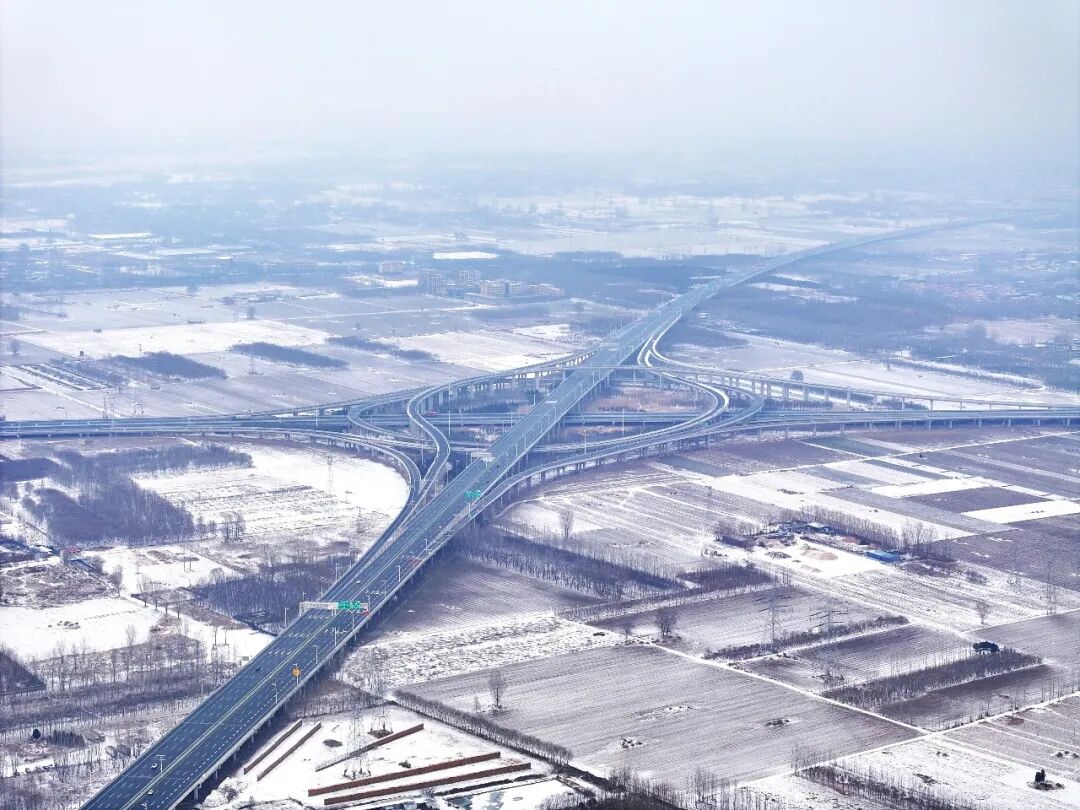
打造世界一流都市圈
Ren Min Ri Bao Hai Wai Ban· 2026-02-14 01:13
Core Viewpoint - The "Modern Capital Urban Circle Spatial Coordination Plan (2023-2035)" marks a significant step in the coordinated development of the Beijing-Tianjin-Hebei region, aiming to establish a world-class urban circle centered around the capital by 2050 [4][6]. Group 1: Planning and Structure - The plan aims to form a modern capital urban circle structure by 2035, with a complete establishment by 2050, serving as a model for Chinese-style modernization [4]. - The strategic positioning of the capital urban circle includes enhancing the capital's functions, serving as a key engine for world-class city group construction, and promoting regional governance [6]. - The plan introduces a multi-layered open structure consisting of commuting circles, functional circles, and industrial collaboration circles to promote deep integration of industrial, innovation, and service chains [6][7]. Group 2: Collaborative Development - "Collaboration" is emphasized as a key theme, requiring the three regions to leverage their comparative advantages for mutual development [8]. - Beijing is tasked with enhancing its "four centers" and facilitating the development of Tianjin and Hebei through the decongestion of non-capital functions [8]. - The plan outlines specific tasks for further collaboration across different dimensions, focusing on inter-provincial areas as breakthrough points for innovation and industrial synergy [8]. Group 3: Implementation and Support - Successful implementation of the plan requires a concerted effort from various departments to optimize capital functions, foster innovation, and ensure public welfare [10][11]. - Key areas of focus include optimizing the layout of central government functions, promoting innovation through the Beijing-Tianjin-Hebei International Technology Innovation Center, and enhancing cross-regional cooperation in education and healthcare [11][12]. - The plan also supports the establishment of mechanisms for dynamic planning maintenance and cross-regional land use coordination to address spatial configuration mismatches [13].
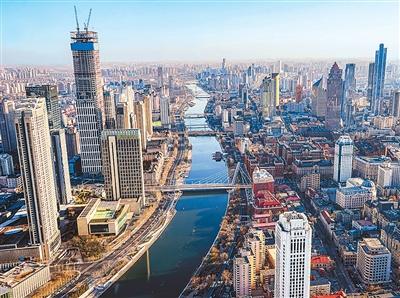
圈层联动 共筑“同心圆”
Xin Lang Cai Jing· 2026-02-13 20:37
Core Viewpoint - The article discusses the approval of the "Modern Capital Urban Circle Spatial Coordination Plan (2023-2035)" by the Central Committee of the Communist Party of China and the State Council, which aims to optimize the structure of the capital urban circle and enhance collaboration among commuting, functional, and industrial coordination circles [1][2]. Group 1: Three Circles Coordination - The commuting circle focuses on the coordination of residence and employment, while the functional circle emphasizes the orderly decongestion and enhancement of non-capital functions, and the industrial coordination circle strengthens division of labor and collaboration [2]. - The plan aims to create a balanced support system for decongestion, functional positioning leading industrial division, and industrial division reinforcing commuting coordination, thereby achieving efficient collaborative development of the capital urban circle [2]. Group 2: Role of Tianjin - Tianjin is encouraged to leverage its dual-city collaboration with "Tianjin City" and "Binhai City" to enhance its role as a technology transfer base, manufacturing hub, and open gateway within the capital urban circle [3]. - The city should focus on becoming a core function area for advanced manufacturing and research and development, complementing Beijing and Hebei's development [3]. Group 3: Innovation Corridor - The collaboration between Beijing and Tianjin is transitioning from infrastructure connectivity to functional collaboration and institutional integration, focusing on deep integration of innovation and industrial chains [4]. - The article suggests that Tianjin should align its industrial chain with Beijing's innovation chain, particularly in fields like artificial intelligence and life sciences, to foster a world-class advanced manufacturing cluster [4][5]. Group 4: Commuting Circle Development - The commuting circle encompasses an area of approximately 27,000 square kilometers, including all of Beijing and 12 surrounding districts, emphasizing the importance of human mobility and urban integration [6]. - The plan aims to address urban challenges such as job-residence imbalance and traffic congestion, promoting a lifestyle where people work in Beijing but live in surrounding areas [6]. Group 5: Specific Recommendations for Wuqing District - Wuqing District is identified as a key area for absorbing functions from Beijing's urban center, with recommendations for developing a high-efficiency commuting system and enhancing public services [7]. - The district should utilize its transportation hubs to attract quality projects and improve the integration of various transport modes to create a 30-minute living circle [7].
首部由党中央、国务院批复的都市圈规划公布——以首都为核心的世界一流都市圈怎么建
Jing Ji Ri Bao· 2026-02-13 05:30
Core Insights - The article discusses the release of the "Modern Capital Urban Circle Spatial Collaborative Planning (2023-2035)" which aims to enhance the capital's functions and regional competitiveness, providing specific guidance for building a world-class urban circle and city cluster [1][2] Group 1: Planning Objectives and Strategies - The planning focuses on three aspects: development goals, functional layout, and policy measures to implement the central government's positioning for the Beijing-Tianjin-Hebei region [1] - The plan emphasizes the need to better serve and guarantee the capital's functions, defining the strategic positioning and spatial layout of the capital urban circle [2] Group 2: Spatial Structure and Development - The planning proposes a spatial structure of "one core, two wings, dual cities, multiple points, dual corridors, and multiple circles" to promote coordinated development among cities and towns [3] - It introduces a nested "concentric circle" spatial division model, facilitating the integration of industrial chains, innovation chains, and service chains [3][4] Group 3: Collaborative Development and Resource Sharing - The plan identifies key areas and tasks for deepening collaboration among the three provinces and cities, focusing on inter-provincial areas as breakthrough points for innovation and industrial collaboration [4] - It aims to enhance public service resource sharing in education, healthcare, and other sectors, promoting a resilient spatial structure [4]
首部由党中央、国务院批复的都市圈规划公布—— 以首都为核心的世界一流都市圈怎么建
Jing Ji Ri Bao· 2026-02-13 04:21
Core Viewpoint - The article discusses the release of the "Modern Capital Urban Circle Spatial Collaborative Planning (2023-2035)" which aims to optimize the capital's functions and enhance regional competitiveness, providing specific guidance for building a world-class urban circle centered around the capital [1][2]. Group 1: Planning and Development Goals - The planning document emphasizes the collaborative development of the Beijing-Tianjin-Hebei region, focusing on development goals, functional layout, and policy measures to leverage the comparative advantages of the three areas [1][2]. - The capital urban circle is positioned as a unique entity with two municipalities, supporting the optimization of capital functions and the construction of major projects like the Xiong'an New Area and the Beijing sub-center [2][3]. Group 2: Spatial Structure and Coordination - The planning proposes a spatial structure of "one core, two wings, dual cities, multiple points, and dual corridors," aimed at orderly promoting the deconcentration of non-capital functions from Beijing and enhancing the region's service capacity [3][4]. - A multi-layered, nested collaborative "concentric circle" spatial division model is introduced, which includes commuting circles, functional circles, and industrial collaboration circles to promote deep integration of industrial chains and innovation [3][4]. Group 3: Key Tasks and Collaborative Development - The planning document identifies key tasks for further collaboration among the three provinces and cities, focusing on inter-provincial areas as breakthrough points to enhance innovation and industrial collaboration [4]. - It emphasizes the need for integrated protection and governance of natural resources, as well as the shared construction of public service resources such as education, healthcare, and elderly care [4].
经济日报:以首都为核心的世界一流都市圈怎么建
Xin Lang Cai Jing· 2026-02-12 23:44
Core Viewpoint - The article discusses the release of the first urban agglomeration plan approved by the Central Committee of the Communist Party and the State Council, focusing on building a world-class urban agglomeration centered around Beijing, with specific guidelines for optimizing the capital's functions and enhancing regional competitiveness and carrying capacity [1][2]. Group 1: Planning and Development Goals - The "Modern Capital Urban Agglomeration Spatial Collaborative Planning (2023-2035)" aims to enhance the overall competitiveness and carrying capacity of the capital region, providing concrete guidance for building a world-class urban agglomeration [1]. - The plan emphasizes the collaborative development of the Beijing-Tianjin-Hebei region, leveraging the comparative advantages of the three areas to form a pattern of mutual promotion and coordinated development [1][2]. Group 2: Strategic Positioning and Challenges - The capital urban agglomeration has a unique role, with Beijing's function as a "four-center" impacting a broader area than typical urban agglomerations, and it is the only urban agglomeration in China with two municipalities [2]. - The plan outlines the strategic positioning and spatial layout of the capital urban agglomeration, focusing on better serving and safeguarding the capital's functions while addressing new tasks and challenges in various aspects such as development dynamics and safety resilience [2][3]. Group 3: Spatial Structure and Development Model - The plan proposes a spatial structure of "one core, two wings, dual cities, multiple points, and dual corridors," which aims to facilitate the orderly transfer of non-capital functions from Beijing and enhance the region's capacity to support the capital's functions [3]. - It introduces a multi-layered, nested collaborative "concentric circle" spatial division model, promoting deep integration of industrial chains, innovation chains, and service chains, and facilitating the two-way flow of urban and rural elements [3][4]. Group 4: Collaborative Development and Resource Sharing - The concentric circles are not simply concentric rings but nested solid circles, with the functional circle being the core area for development and planning, while the industrial collaboration circle extends to the entire Beijing-Tianjin-Hebei urban agglomeration [4]. - The plan emphasizes the need for collaborative development in key areas and sectors, focusing on inter-provincial neighboring regions as breakthrough points to enhance innovation and industrial collaboration [4][5].
以首都为核心的世界一流都市圈怎么建
Xin Lang Cai Jing· 2026-02-12 22:40
Core Viewpoint - The "Modern Capital Urban Circle Spatial Collaborative Planning (2023-2035)" has been released, marking the first urban circle plan approved by the central government, aimed at optimizing the capital's functions and enhancing regional competitiveness [1][2] Group 1: Planning Objectives and Strategies - The planning focuses on three aspects: development goals, functional layout, and policy measures to implement the central government's positioning for Beijing, Tianjin, and Hebei [1] - The plan emphasizes the collaborative development of the Beijing-Tianjin-Hebei region, leveraging the comparative advantages of the three areas to foster a mutually beneficial and interconnected development pattern [1][2] Group 2: Unique Characteristics of the Capital Urban Circle - The capital urban circle has unique characteristics, with Beijing serving as a center of four functions, influencing a broader area than typical urban circles [2] - It is the only urban circle in China with two municipalities, supporting the optimization of capital functions and the construction of the Xiong'an New Area and Beijing's sub-center [2] Group 3: Spatial Structure and Development - The plan proposes a spatial structure of "one core, two wings, dual cities, multiple points, and dual corridors" to enhance the service capacity for the capital's functions [3] - It aims to shift from traditional point-axis development to network-driven and layered development, promoting a transition from scale-driven to innovation-driven spatial development [3][4] Group 4: Layered Collaborative Structure - The plan innovatively establishes a multi-layered, nested collaborative "concentric circle" spatial division model, integrating commuting, functional, and industrial collaboration circles [3][4] - The functional circle is identified as the core area for development, while the industrial collaboration circle extends its influence across the Beijing-Tianjin-Hebei urban cluster and beyond [4]
天津交通三“圈”发力
Xin Lang Cai Jing· 2026-02-12 21:36
Core Viewpoint - Tianjin is actively integrating into the construction of a world-class metropolitan area centered around the capital, focusing on enhancing its transportation system to improve commuting efficiency and service quality, while also promoting industrial collaboration and connectivity [3][4] Commuting Circle - Tianjin is implementing the Beijing-Tianjin commuting action plan to enhance commuting efficiency and service quality, aiming to create a benchmark for regional commuting [3] - Key initiatives include upgrading the Tianjin South Station and Wuqing Station, increasing the capacity of Beijing-Tianjin intercity transport, and optimizing train schedules to better align with public travel habits [3] - The city will also develop diverse passenger transport services, such as cross-regional customized buses and inter-provincial public transport, to minimize commuting time costs between Beijing and Tianjin [3] Functional Circle - Tianjin is advancing the construction of a comprehensive transportation network, focusing on the "Eight Corridors and Two Rings" connectivity, and enhancing the synergy between Tianjin Port, Tianjin Binhai Airport, and rail-road hubs [3] - Key projects include accelerating the construction of the Tianjin-Weifang high-speed railway, the southern section of the Beijing-Binhai intercity railway, and the expansion of the Beijing-Tianjin-Tanggu Expressway [3] - During the 14th Five-Year Plan period, the city will initiate optimization projects for regional road networks, including the expansion of the Beijing-Harbin Expressway and the southern section of the Qin-Bin Expressway [3] Industrial Collaboration Circle - Tianjin aims to promote the integration of port, industry, and city development, enhancing the overall connectivity of regional sea ports and land ports for high-level foreign trade development in the Beijing-Tianjin-Hebei region [4] - The city plans to enhance port capabilities and infrastructure, including the construction of new channels, terminals, and storage areas, while improving the intelligence and sustainability of port operations [4] - Future efforts will focus on ensuring the implementation of transportation initiatives that contribute to the collaborative development of the Beijing-Tianjin-Hebei region [4]
打破“一亩三分地”思维定式京津冀协同发展迈入全新阶段
Xin Lang Cai Jing· 2026-02-12 20:33
Group 1 - The core focus of the "Modern Capital Urban Circle Spatial Collaborative Planning (2023-2035)" is to shift from traditional point-axis development to network linkage and circle-driven development, optimizing the regional urban system [1] - The planning aims to establish a networked, open, and intensive capital urban circle structure characterized by "one core, two wings, dual cities, multiple points, dual corridors, and multiple circles" [1] - The planning outlines phased construction goals for 2030, 2035, and 2050, emphasizing the need for collaboration among Beijing, Tianjin, and Hebei to enhance regional high-quality development [1] Group 2 - Xiong'an New Area is positioned as a concentrated carrier for the decongestion of non-capital functions from Beijing, focusing on deepening industrial innovation collaboration [2] - Tianjin has established nine national key laboratories and is collaborating on five national advanced manufacturing clusters, enhancing the foundation for coordinated development [2] - The focus in Tianjin will be on leveraging its advanced manufacturing and R&D advantages, particularly in key areas such as biomanufacturing and integrated circuits [2] Group 3 - Tianjin aims to strengthen its role as an industrial carrier and extend its innovation collaboration and regional influence [3] - Beijing plans to enhance its comprehensive carrying capacity in the new urban areas, focusing on building an international technology innovation center and accelerating the local transformation of scientific achievements [3] - The collaboration will enhance the overall capability and competitiveness of regional industrial clusters, particularly in information technology, healthcare, and technology services [3] Group 4 - The emphasis is on creating new advantages in innovation development, with a focus on deep integration of innovation and industrial chains [4] - Over 10,000 branches of Zhongguancun enterprises have been established in Tianjin and Hebei, highlighting the need for better alignment of innovation outcomes with industrial demands [4] - The plan includes strengthening collaborative efforts in artificial intelligence, biomedicine, and cybersecurity to enhance the resilience and modernization of the industrial chain [4]
国家发改委:要把省际毗邻地区作为首都都市圈发展“突破点”
Zhong Guo Xin Wen Wang· 2026-02-12 16:55
Core Viewpoint - The "Modern Capital Urban Circle Spatial Coordination Plan (2023-2035)" emphasizes the need for inter-provincial collaboration as a breakthrough point for development [1] Group 1: Development Goals - The plan sets development goals for the capital urban circle within the context of the Beijing-Tianjin-Hebei coordinated development strategy, proposing phased targets for 2030, 2035, and 2050 [2] - Achieving these goals requires enhanced collaborative efforts among Beijing, Tianjin, and Hebei to consolidate and elevate high-quality development [2] Group 2: Functional Layout - The plan aligns with the central government's functional positioning for the three provinces, leveraging their comparative advantages to foster a mutually beneficial and interconnected development pattern [2] - Beijing is tasked with strengthening the "four centers" and alleviating non-capital functions to promote development in Tianjin and Hebei [2] - Xiong'an New Area and Beijing's urban sub-center are identified as new "wings" for Beijing, necessitating coordinated development to enhance capital function support [2] - Tianjin is to leverage its advanced manufacturing advantages and closely connect with Beijing's technological innovation resources [2] - Hebei is encouraged to bolster the supporting roles of cities like Tangshan, Baoding, Zhangjiakou, and Langfang, promoting the linkage between Shijiazhuang urban circle and the capital urban circle [2] Group 3: Policy Measures - The plan focuses on commuting, functional, and industrial coordination circles, identifying key tasks for further collaboration among the three provinces [3] - Inter-provincial neighboring areas are highlighted as breakthrough points, with examples like Beijing's Tongzhou District and Hebei's Langfang City serving as demonstration areas for integrated high-quality development [3] - The plan aims to connect innovation and industry, promoting deep integration of innovation chains and industrial chains, and developing new productive forces tailored to local conditions [3] - It seeks to expand the coverage of collaborative development, emphasizing integrated protection and systematic governance of natural resources, and promoting shared public service resources in education, healthcare, elderly care, and childcare [3]