Context Engineering

Search documents
超越 Chatbot:Long-horizon Agent 如何重新定义 AI 产品形态|Jinqiu Select
锦秋集· 2026-02-05 11:40
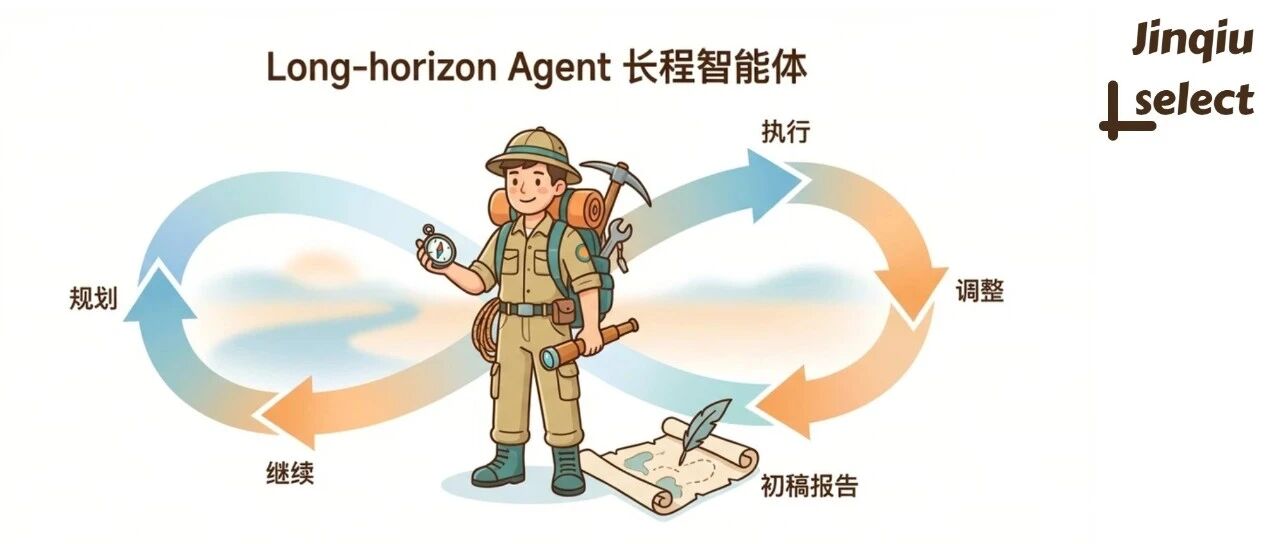
「Jinqiu Select」 跨越语言与时差,传递科技圈最值得被听到的声音。 < Overview > Harrison Chase 作为 LangChain 的联合创始人 兼 CEO,是 AI Agent(AI 智能体)基础设施领域最具影响力的工程实践者之一。 自 2022 年开源 LangChain 以来,他 亲历了从早期 GPT-3.5 的简单链式调用,到如今 Claude Code、Deep Research 等长程 Agent 爆发的完整技术周期。 Chatbot 已经不适合 作为新一代 AI 产品的主流形态了。 这不是模型能力的问题,而是产品形态的问题。 Chatbot 的本质是"即时响应",追求的是低延迟和高流畅度。 但真正有价值的一些日常工作从来不是这样运转的。一份优质的研究报告需要反复检索、交叉验证、结构化整理;一个可靠的代码 PR 需要理解上下文、规划方 案、测试验证、处理边界情况。 这些任务的共同特点是:它们需要时间,需要多步骤的自主决策,需要在过程中不断调整策略。换句话说, 它们需要的不是一个"即时响应者",而是一个"长程执 行者"。 这正是 Long-horizon Agent 崛 ...

Cognizant(CTSH) - 2025 Q4 - Earnings Call Transcript
2026-02-04 14:32
Financial Data and Key Metrics Changes - Revenue for Q4 2025 was $5.3 billion, representing a 3.8% year-over-year growth in constant currency, all organic [30][41] - Full-year revenue reached $21.1 billion, growing 6.4% in constant currency, surpassing the $20 billion mark [6][30] - Adjusted Operating Margin improved to 16%, up 30 basis points year-over-year, with a full-year adjusted operating margin of 15.8%, exceeding guidance [6][39] - Adjusted diluted EPS for Q4 was $1.35, up 12% year-over-year, leading to a full-year EPS of $5.28, an 11% increase from the prior year [41][45] Business Line Data and Key Metrics Changes - Financial Services segment led growth with a 9% year-over-year increase in constant currency for Q4 and 7% for the full year, marking the highest annual level since 2016 [5][32] - Health Sciences segment grew at 6%, outperforming the company average, driven by strong demand for administrative and patient care solutions [86] - BPO business experienced a 9% year-over-year growth, indicating strong demand for AI-enabled operations [80][82] Market Data and Key Metrics Changes - North America was the standout region with over 4% year-over-year growth in constant currency, primarily driven by Financial Services and healthcare [37] - Europe grew 2% in constant currency, with healthy growth in Financial Services and Life Sciences [38] - The Rest of World segment grew in line with the total company, driven by the Middle East [38] Company Strategy and Development Direction - The company aims to bridge the AI velocity gap, focusing on transforming AI technology into measurable returns for clients [11] - Cognizant's strategy includes a three-vector approach to capture demand, emphasizing AI-led productivity and the development of new agentic software [12][13] - The company plans to maintain its position in the industry's winner's circle by continuing to innovate and expand its AI capabilities [29] Management's Comments on Operating Environment and Future Outlook - Management expressed confidence in sustaining growth in 2026, supported by a strong pipeline of large deals and a focus on AI integration [31][67] - The operating environment remains complex, but the company views it as an opportunity to capture wallet share in large deals and help clients reinvest savings into innovation [32] - Management highlighted the importance of maintaining productivity and cost discipline to navigate market challenges [59] Other Important Information - The company returned $2 billion to shareholders through dividends and share repurchases in 2025 [10][41] - The acquisition of 3Cloud was completed, adding over 1,200 Azure specialists to enhance capabilities in AI and cloud services [10] - The company is actively evaluating potential strategic acquisitions and a possible secondary listing in India [46] Q&A Session Summary Question: Insights on AI's impact on revenue and package implementation - Management noted that AI provides opportunities for increased total addressable spend and emphasized the need for reimagining processes to integrate new technologies effectively [50][54] Question: Gross margin dynamics for 2026 - Management indicated that Q4's gross margin decline was primarily due to higher variable compensation, but they expect to maintain productivity and manage costs effectively in 2026 [56][59] Question: Confidence in large deal growth for 2026 - Management expressed optimism about the strong pipeline of large deals and the potential for timely deal ramps, expecting acceleration in growth during the year [68][69] Question: Risks and opportunities of fixed-price contracts - Management explained that fixed-price contracts place delivery risk on the service provider, but they have a robust process to monitor performance and ensure delivery aligns with expectations [75][76] Question: Durability of BPO growth - Management highlighted that the BPO business has shown consistent growth and sees a long-term tailwind due to the need for ongoing transformation and maintenance of AI-enabled processes [82][80]

Cognizant(CTSH) - 2025 Q4 - Earnings Call Transcript
2026-02-04 14:32
Financial Data and Key Metrics Changes - Revenue for Q4 2025 was $5.3 billion, representing a 3.8% year-over-year growth in constant currency, all organic [25][30] - Full-year revenue reached $21.1 billion, growing 6.4% in constant currency, surpassing the $20 billion mark [6][25] - Adjusted Operating Margin improved to 16%, up 30 basis points year-over-year, with a full-year adjusted operating margin of 15.8%, exceeding guidance by 50 basis points [6][30] - Adjusted diluted EPS for Q4 was $1.35, up 12% year-over-year, leading to a full-year EPS of $5.28, an 11% increase from the prior year [31][34] Business Line Data and Key Metrics Changes - Financial Services segment led growth with a 9% year-over-year increase in constant currency for Q4 and 7% for the full year, marking the highest annual level since 2016 [5][25] - Health Sciences segment grew at over 6%, significantly above the company average, driven by strong performance in administrative and clinical processes [78] - Digital Engineering practices saw an 8% year-over-year growth in Q4, supported by proprietary platforms [19] Market Data and Key Metrics Changes - North America was the standout region with over 4% year-over-year growth in constant currency, primarily driven by financial services and healthcare [28] - Europe experienced a 2% growth in constant currency, with healthy performance in financial services and life sciences [28] - The Rest of World segment grew in line with the total company, driven by the Middle East [28] Company Strategy and Development Direction - The company aims to bridge the AI velocity gap, focusing on transforming AI technology into measurable returns for clients [11][12] - Cognizant's strategy includes a three-vector approach to capture demand, emphasizing AI-led productivity and the development of new agentic software [12][13] - The company plans to maintain its position in the industry's winner's circle by 2027, having achieved this goal two years early [8][22] Management's Comments on Operating Environment and Future Outlook - Management expressed confidence in sustaining growth in 2026, supported by a strong pipeline of large deals and a focus on AI integration [24][58] - The operating environment remains complex, but management views it as an opportunity to capture wallet share in large deals and help clients reinvest savings into innovation [25][26] - The company anticipates a modest increase in defined benefit costs due to recent labor law changes in India, but this is not expected to materially impact the P&L [30] Other Important Information - The company returned $2 billion to shareholders through dividends and share repurchases in 2025 [10][32] - Cognizant completed the acquisition of 3Cloud, adding over 1,200 Azure specialists to enhance its capabilities in AI and application innovation [10][32] - The company has a healthy M&A pipeline and intends to maintain an active acquisition strategy aligned with its AI builder strategy [32][34] Q&A Session Summary Question: Insights on AI's impact on revenue and package implementation - Management sees AI as a net positive, increasing total addressable spend and creating opportunities for innovation and productivity [40][41] Question: Gross margin dynamics for 2026 - The decline in Q4 gross margin was primarily due to higher variable compensation, but management remains confident in maintaining margins through productivity measures [47][50] Question: Confidence in large deal growth for 2026 - Management expressed strong confidence in the pipeline for larger deals, expecting timely ramps and acceleration in growth throughout the year [55][58] Question: Risks and opportunities of fixed-price contracts - Management indicated that while delivery risk resides with the service provider, they have a robust process to monitor performance and maintain margins [66][67] Question: Durability of BPO growth - Management believes the BPO segment will continue to grow due to the need for ongoing transformation and maintenance of processes enabled by AI [71][74] Question: Health Sciences segment growth amidst regulatory pressures - Management is confident in the Health Sciences segment's growth, leveraging their platform to transform administrative processes and improve patient care [78][80]
红杉对话 LangChain 创始人:2026 年 AI 告别对话框,步入 Long-Horizon Agents 元年
3 6 Ke· 2026-01-28 01:01
Group 1 - The core assertion of the article is that AGI (Artificial General Intelligence) represents the ability to "figure things out," marking a shift from the era of "Talkers" to "Doers" by 2026, driven by Long Horizon Agents [1][2] - Long Horizon Agents are characterized by their ability to autonomously plan, operate over extended periods, and exhibit expert-level features, expanding their capabilities from specific verticals to complex tasks across various domains [1][2] - The article highlights that the value of Long Horizon Agents lies in their ability to produce high-quality drafts for complex tasks, with a focus on the need for opinionated software harnesses and file system permissions as standard features for all agents [1][2][3] Group 2 - Harrison Chase emphasizes that the recent advancements in models and the understanding of effective harnessing have led to the successful implementation of Long Horizon Agents, particularly in the coding domain, which is rapidly expanding to other fields [2][4] - The article discusses the importance of Scaffolding and Harness in the development of agents, where Scaffolding refers to auxiliary code structures that guide model outputs, while Harness encompasses the software environment that manages context and tool interactions [3][8] - The emergence of AI Site Reliability Engineers (AI SREs) is noted as a significant application of Long Horizon Agents, capable of handling long-duration tasks and generating comprehensive reports for human review [5][6] Group 3 - The article outlines the evolution of agent frameworks, transitioning from general frameworks to more opinionated harness architectures, with a focus on the integration of planning tools and file system interactions [8][10] - The concept of Deep Agents is introduced, which represents the next generation of autonomous agent architecture built on LangGraph, emphasizing the need for effective context management and compression techniques [9][12] - The discussion includes the challenges of context management in Long Horizon Agents, particularly the need for efficient compression strategies as task cycles extend [11][18] Group 4 - The article identifies the critical role of Memory in Long Horizon Agents, allowing them to self-improve and adapt over time, which is essential for maintaining performance in long-duration tasks [36][37] - The future interaction models for Long Horizon Agents are anticipated to combine asynchronous and synchronous modes, allowing for effective management and collaboration between agents and users [38][39] - The necessity for agents to have access to file systems is emphasized, as it enhances context management and operational capabilities, particularly in coding tasks [41][42]
红杉对话 LangChain 创始人:2026 年 AI 告别对话框,步入 Long-Horizon Agents 元年
海外独角兽· 2026-01-27 12:33
Core Insights - The article asserts that AGI represents the ability to "figure things out," marking a shift from the era of "Talkers" to "Doers" in AI by 2026, driven by Long Horizon Agents [2] - Long Horizon Agents are characterized by their ability to autonomously plan, operate over extended periods, and exhibit expert-level features across complex tasks, expanding from coding to various domains [3][4] - The emergence of these agents is seen as a significant turning point, with the potential to revolutionize how complex tasks are approached and executed [3][21] Long Horizon Agents' Explosion - Long Horizon Agents are finally beginning to work effectively, with the core idea being to allow LLMs to operate in a loop and make autonomous decisions [4] - The ideal interaction with agents combines asynchronous management and synchronous collaboration, enhancing their utility in various applications [3][4] - The coding domain has seen the most rapid adoption of these agents, with examples like AutoGPT demonstrating their capabilities in executing complex multi-step tasks [4][5] Transition from General Framework to Harness Architecture - The distinction between models, frameworks, and harnesses is crucial, with harnesses being more opinionated and designed for specific tasks, while frameworks are more abstract [8][9] - The evolution of harness engineering is particularly advanced in coding companies, which have successfully integrated these concepts into their products [12][14] - The integration of file system permissions into agents is essential for effective context management and task execution [24] Future Interactions and Production Forms - Memory is identified as a critical component for self-improvement in agents, allowing them to retain and utilize past interactions to enhance performance [35] - The future of agent interaction is expected to blend asynchronous and synchronous modes, facilitating better user engagement and task management [36] - The necessity for agents to access file systems is emphasized, as it significantly enhances their operational capabilities [39]


Agent元年复盘:架构之争已经结束!?
自动驾驶之心· 2025-12-24 00:58
Core Insights - The article discusses the evolution of "Agent" technology, highlighting the emergence of "Deep Agent" and "Claude Agent SDK" as leading architectures in the field [3][57]. - It emphasizes that 2025 marks a pivotal year for agents, where technology readiness is evident, but full replacement of traditional methods has not yet been achieved [5][6]. Technical Perspectives - The architecture of agents has converged towards a general form represented by Claude Code and Deep Agent, focusing on their capabilities beyond programming [3][4]. - The article notes that the core capabilities of Claude Code, such as planning and context management, are applicable to various tasks beyond coding, leading to its rebranding as Claude Agent SDK [9]. Industry Recognition - The article asserts that while agent products have generated significant revenue in sectors like recruitment and marketing, the impact is less visible domestically due to a concentration of business in overseas markets [10]. - It identifies a shift in focus from technical architecture to business restructuring, emphasizing the need for industry professionals to adapt traditional workflows to be agent-friendly [10]. Definition and Characteristics of Deep Agent - A "Deep Agent" is characterized by its industry-specific knowledge and long-running capabilities, ensuring stability and reliability in task execution [11][12]. - The article outlines that a Deep Agent must demonstrate high levels of specialization and the ability to perform complex, multi-step tasks without failure [12]. Skills and Context Management - The introduction of "Agent Skills" allows for a more dynamic and efficient way to integrate business knowledge into agents, enhancing their capabilities [22][30]. - The concept of progressive disclosure is highlighted as a key design principle, enabling agents to load information as needed rather than all at once, improving context management [32][34]. Planning and Task Management - Planning is identified as a crucial component for agents to execute long-term tasks effectively, with the ability to decompose tasks into manageable sub-tasks [47][50]. - The article discusses the importance of context isolation and parallel execution in sub-agents, which enhances efficiency and reduces context confusion [50]. System Prompt and File Management - The article emphasizes the significance of detailed system prompts in guiding agent behavior and ensuring effective task execution [52]. - A well-structured file system is proposed as a means to manage context and facilitate collaboration among agents, allowing for long-term memory and efficient information retrieval [53][56]. Conclusion on Agent Technology - The article concludes that the agent technology landscape has reached a point of convergence, with established architectures like Claude Agent SDK and Deep Agent leading the way [57][58]. - It suggests that the future of agent technology will involve further specialization and adaptation to specific business needs, leveraging the strengths of existing frameworks [69][71].

最火、最全的Agent记忆综述,NUS、人大、复旦、北大等联合出品
机器之心· 2025-12-22 09:55
Core Insights - The article discusses the evolution of memory systems in AI agents, emphasizing the transition from optional modules to essential infrastructure for various applications such as conversational assistants and code engineering [2] - A comprehensive survey titled "Memory in the Age of AI Agents: A Survey" has been published by leading academic institutions to provide a unified perspective on the rapidly expanding yet fragmented concept of "Agent Memory" [2] Forms of Memory - The survey categorizes agent memory into three main forms: token-level, parametric, and latent memory, focusing on how information is represented, stored, and accessed [16][24] - Token-level memory is defined as persistent, discrete units that are externally accessible and modifiable, making it the most explicit form of memory [18] - Parametric memory involves storing information within model parameters, which can lead to challenges in retrieval and updating due to its flat structure [22] - Latent memory exists in the model's internal states and can be continuously updated during inference, providing a compact representation of memory [24][26] Functions of Memory - The article identifies three core functions of agent memory: factual memory, experiential memory, and working memory [29] - Factual memory aims to provide a stable reference for knowledge acquired from user interactions and environmental facts, ensuring consistency across sessions [31] - Experiential memory focuses on accumulating knowledge from past interactions to enhance problem-solving capabilities, allowing agents to learn from experiences [32] - Working memory manages information within single task instances, addressing the challenge of processing large and complex inputs [35] Dynamics of Memory - The dynamics of memory encompass three stages: formation, evolution, and retrieval, which form a feedback loop [38] - The formation stage encodes raw context into more compact knowledge representations, addressing computational and memory constraints [40] - The evolution stage integrates new memories with existing ones, ensuring coherence and efficiency through mechanisms like pruning and conflict resolution [43] - The retrieval stage determines how memory can assist in decision-making, emphasizing the importance of effective querying strategies [41] Future Directions - The article suggests that future memory systems should be viewed as a core capability of agents rather than mere retrieval plugins, integrating memory management into decision-making processes [49][56] - There is a growing emphasis on automating memory management, allowing agents to self-manage their memory operations, which could lead to more robust and adaptable systems [54][62] - The integration of reinforcement learning into memory control is highlighted as a potential pathway for developing more sophisticated memory systems that can learn and optimize over time [58][60]

Build Hour: Agent Memory Patterns
OpenAI· 2025-12-04 20:28
Agent Memory Patterns & Context Engineering - Context engineering is both an art and a science, requiring judgment to decide what matters most while employing concrete patterns and methods for systematic context management [1] - Modern LLMs perform based on the context provided, making context engineering a broader discipline than prompt engineering or retrieval, encompassing prompt engineering, structured output, RAG, state and history management, and memory [1] - Core strategies for effective context management include reshape and fit (context trimming, compaction, summarization), isolate and route (offloading context to sub-agents), and extract and retrieve (memory extraction, state management, memory retrieval) [1] - Short-term memory (in-session techniques) focuses on maximizing the context window during active interaction, while long-term memory (cross-session) builds continuity across sessions [1] - Context management challenges include context burst (sudden token spikes), context conflict (contradictory information), context poisoning (incorrect information propagation), and context noise (redundant tool definitions) [2] Techniques and Solutions - Solutions involve managing context efficiently using techniques like trimming, compaction, state management, and memories, moving beyond prompt engineering [3] - AI agents can be grouped into RAG-heavy assistants, tool-heavy workflows, and conversational concierges, each with different context profiles [3] - Prompting best practices include being explicit and structured, giving room for planning and self-reflection, and avoiding conflicts in tool definitions [3] - Engineering techniques include context trimming (dropping older turns), context compaction (dropping tool calls from older turns), and context summarization (compressing prior messages into structured summaries) [3][4] - Memory shapes can range from simple JSON notes to complex paragraphs, with extraction using memory tools and state management involving defining state objects [26][27][28][29] Best Practices and Evaluation - Best practices in agent memory design include understanding the typical context, deciding when and how to remember and forget, and continuously cleaning and consolidating memories [31][32] - Evaluation involves running evals with and without memory, building memory-specific evals for long-running tasks, and finding the right heuristics for context engineering techniques [36][37][38][39][40] - Strategies for keeping memory fresh include temporal tags and weighted decay to manage stale memories and prioritize recent information [46][47][48][49] - Scaling agent memory systems involves considering whether to use a retrieval-based approach (scaling vector databases) or a summarization approach (scaling data storage) [51][52][53][54][55]

Summarization Middleware (Python)
LangChain· 2025-12-02 17:01
Core Concept - Context engineering is crucial for optimizing agent performance by providing the right information and tools at the right time [2] - Summarization is a key tool for context engineering, especially for agents with long conversation histories [3] Langchain's Summarization Middleware - Langchain introduces a summarization middleware to help agents focus on relevant information [5] - The middleware allows customization of the summarization model, context size (in tokens, messages, or proportion), and retention policy [6] - Langchain's new API documentation provides options to customize the summary prompt and trim context [7] - The middleware can be triggered based on a percentage of the context window size used, leveraging Langchain's model profiles package for model capability information [9][10] Practical Application - The summarization middleware is demonstrated with an agent retrieving information from Wikipedia [8][11] - The demo showcases how the middleware is triggered after a certain amount of context is used, summarizing previous interactions [13] - The custom prompt and summary output are integrated into the final model request [14]
Managing Agent Context with LangChain: Summarization Middleware Explained
LangChain· 2025-11-25 14:00
Hi there, this is Christian from Lchain. If you build with coding agents like cursor, you probably recognize this. The first few turns with the agents are great.But then as you keep continuing talking to the agent in the same thread, the quality slides, the decision get more fuzzy and the overall code quality drops and then cursor drops this system line context summarized. That's the moment you know you've crossed the context boundary line. So why is summarization such a big deal for context engineering.Eve ...