
Economic Reform

Search documents
Why Foreign Investors Are Seeing Opportunity in Japan
Bloomberg Television· 2026-02-21 15:00
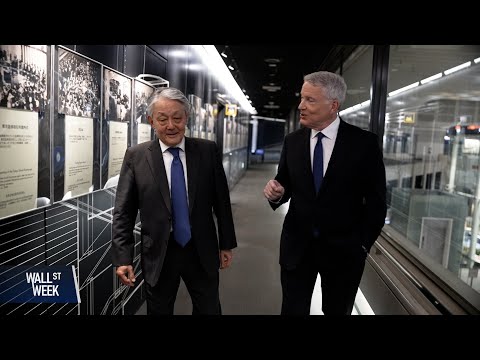
This is a story about Senkaku. That's a Japanese term, meaning fundamental reform. We've come to Japan to see how and why it is changing the way it does business, changing what it expects from its corporations and changing what it expects in its investments, not just for the sake of change, but in order to raise the capital needed to invest in productivity.Over the last three decades, Japan fell from second to fourth in the ranking of world economies as it struggles to climb back up the leaderboard. It is f ...

X @The Economist
The Economist· 2026-02-21 10:30
Geopolitical threats from Russia, China and lately America have convinced many in Europe that business as usual will not do. Economic reform needs to be sped up https://t.co/d4tXYfrxd5 ...
Saudi Arabia Opens Stock Market to Foreign Investors
Bloomberg Television· 2026-02-03 05:00
Saudi Arabia just opened its stock market to all [music] foreign investors. It's the latest in a series of reforms by Saudi Crown Prince Muhammad bin Salman [music] to try to diversify the economy and bring in more foreign cash. He also froze rents in [music] Riyad.He's relaxed rules around alcohol. And he's even allowed foreigners to own property in the holy cities of Mecca [music] and Medina for the first time. The push for investment comes as the Gulf nation [music] seeks to cut down on spending after ye ...

黎巴嫩经济监测,2025年冬季:脆弱的反弹(英)
Shi Jie Yin Hang· 2026-02-03 02:10
Investment Rating - The report does not explicitly provide an investment rating for the industry. Core Insights - Lebanon's economy recorded positive growth in 2025, with real GDP growth revised down to 3.5 percent due to a weaker-than-expected tourism season, reflecting a rebound in tourism and early signs of macroeconomic stabilization [18][21][54]. - The election of a president and the formation of a government have contributed to a degree of institutional and political stabilization, although it remains fragile [18][19]. - Progress on the reform agenda has been uneven, with critical reforms needed to restore macroeconomic and financial stability [19][20]. Summary by Sections 1. Policy Context - A fragile ceasefire and regional escalation have negatively impacted economic activity, particularly tourism [48]. - Political functionality has returned with the election of a president and government formation, supporting economic activity [49]. 2. Recent Economic Developments Output and Demand - Real GDP growth is expected to be 3.5 percent in 2025, down from 4.7 percent due to a weaker tourism season [21][54]. - Private consumption remains the primary driver of growth, supported by remittances and increased dollarization [61][63]. Fiscal Developments - The fiscal stance has improved, with a projected balanced budget in 2025 due to increased revenue collection [23][32][64]. - Tax revenues are expected to reach 16.3 percent of GDP, driven by improved collection efforts [64]. External Sector - The current account deficit is estimated to narrow to 15.8 percent of GDP in 2025, supported by stronger services exports and remittance inflows [24][42]. - Exchange rate stability has persisted since August 2023, aided by improved revenue collection and fiscal measures [25][43]. Money and Banking - The banking sector restructuring law was enacted, but full implementation awaits further legislative action [50][38]. - Public debt remains high, and progress on debt restructuring is slow, limiting access to international capital markets [23][41]. 3. Outlook and Risks - Economic momentum is expected to continue into 2026, with real GDP growth projected at 4 percent, contingent on sustained reform progress and political stability [27][45]. - External vulnerabilities persist, with the current account deficit projected to widen to 16.1 percent of GDP in 2026 due to increased imports [28][47].
India fast-tracks key reforms to shield itself from US tariffs
The Economic Times· 2025-12-20 03:09
Economic Reforms - The Indian Parliament approved significant bills to open the nuclear industry to private firms and allow full foreign ownership of insurance companies, aiming to modernize the financial framework and encourage market participation [1][2] - The finance minister proposed unifying India's securities market laws under a single code, which is expected to attract more investments [1][2] Investment Potential - These reforms could unlock hundreds of billions of dollars in investments, supporting Prime Minister Modi's goal of transforming India into a developed nation within the next two decades [2] - The Adani Group is already planning to capitalize on these changes by developing a commercial nuclear energy project in northern India [2] Economic Growth Projections - Economists predict a growth rate of 6.9% for 2026, with a steady pace of 6.5% expected for the fiscal year through March, although this is below the 8% growth needed for India to achieve developed-nation status by 2047 [6][7] - The recent policy actions are seen as a shift towards diversification and structural reforms, aimed at attracting long-term capital [6] Trade Relations - India's exports to the US have weakened due to higher tariffs imposed by the Trump administration, with ongoing negotiations for a trade deal lacking clarity [8] - Tamil Nadu, a key export-reliant state, has reported significant losses due to high tariffs, highlighting the impact on local businesses [10] Legislative Activity - December's parliamentary session was the most productive in five years, with 61.7 hours spent on legislation and eight bills passed, indicating a proactive legislative environment [11][14] - The burst of policy action is expected to energize Modi's Bharatiya Janata Party ahead of upcoming state elections [12][14]


We desperately need reforms at the Federal Reserve, says Mohamed El-Erian
CNBC Television· 2025-12-01 14:20
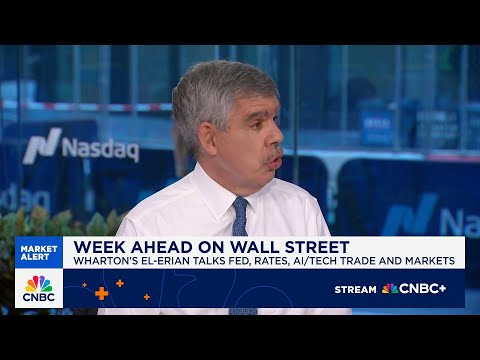
Joining us right now is Muhammad Alerian from the University of Pennsylvania's Wharton School of Business. He's also chief economic adviser at Alons. And Muhammad, welcome. There have been uh some interesting trends in the market lately. What have you made of all these AI trends that looked so concerning two weeks ago and then looked pretty good last week. >> I actually have been encouraged because I think that AI trade has become more differentiated. People have understood that vertical integration matters ...
X @The Economist
The Economist· 2025-11-30 09:40
Vietnam’s leader is racing ahead with economic reform. Yet in the coming year To Lam could find himself caught between two superpowers https://t.co/qO4XAITkSh ...
X @The Economist
The Economist· 2025-11-27 03:00
Economic Reform & Progress - Vietnam's economic model reform, initiated by To Lam, is yielding positive results [1] Challenges Ahead - To Lam is expected to address two significant issues in the coming year [1]
X @The Economist
The Economist· 2025-10-22 11:45
Currency & Economy - Argentina's currency is overvalued and under heavy strain [1] - Two nightmare scenarios could spell the end of Javier Milei's bold reform experiment [1] - There is a third way for Argentina's economic situation [1]
Can Iraq Grow with $60 Oil? PM Al Sudani Shares His Strategy
Youtube· 2025-10-21 02:52
Economic Model and Oil Dependency - Iraq's economy is heavily reliant on oil, with current Brent crude prices around $60 per barrel, which is below the fiscal break-even price of approximately $90 per barrel [1][2] - The government acknowledges the vulnerability of the economy at these prices and aims to diversify away from this mono-discipline economic model [2][6] Economic Reforms and Diversification Efforts - The current government is focused on reforming the economy by supporting sectors such as industry, agriculture, trade, and communications, utilizing oil revenues for investment in these areas [4][5] - There is a commitment to continue reforms to achieve a diversified economy, leveraging Iraq's natural resources and geographical location for trade [5][9] Financial Challenges and IMF Concerns - The IMF has indicated that Iraq is at a critical financial juncture, highlighting rising spending and unsustainable wage bills [6] - The government is working on transforming the taxation and customs systems to increase non-oil revenue and address inherited economic challenges [8][9] Regional Partnerships and Investments - Iraq is strengthening ties with Gulf States, particularly Saudi Arabia and the UAE, to facilitate economic reforms and attract investment [10][12] - Significant investments from Qatar have exceeded $5 billion, with ongoing projects in various sectors, including energy [12][13] Energy Sector and OPEC Relations - Iraq, as a founding member of OPEC, is seeking a review of its oil production quotas to better align with its financial needs for reconstruction [16][17] - The government is committed to maintaining stability in energy markets while advocating for its interests within OPEC [17] Power Supply and Infrastructure Issues - Iraq faces major power outages due to inadequate investment in oil and gas assets, leading to reliance on gas imports from Iran [19][22] - A clear plan has been developed to eliminate gas flaring by early 2028, aiming for self-sufficiency in gas supply and reducing imports [21][23] Oil Exports and Regional Relations - Iraq has resumed oil exports to Turkey from the Kurdistan region after resolving long-standing disputes, marking a significant achievement for the government [24][26] - The government expresses confidence in the Kurdish leadership to honor agreements related to oil and gas, emphasizing the technical and legal nature of the issues involved [27]