
Trade conflict

Search documents
'No to war': Spain PM hits back over Trump's threats to cut trade over military base access
CNBC· 2026-03-04 10:01
Core Viewpoint - The escalating conflict in the Middle East, particularly the U.S. strikes against Iran, is viewed as a "disaster" by Spanish Prime Minister Pedro Sanchez, who emphasizes the need to avoid repeating historical mistakes related to war [1][4]. Group 1: Political Reactions - Spanish Prime Minister Pedro Sanchez criticized the U.S. strikes against Iran and described the situation as a "disaster" [1]. - U.S. President Donald Trump announced plans to cut off trade with Spain in response to the Spanish government's refusal to allow the use of two jointly operated military bases for the strikes [2]. - Sanchez highlighted the dangers of miscalculations and unforeseen circumstances leading to war, urging a cautious approach to international conflicts [3]. Group 2: Historical Context - Sanchez warned against "repeating the mistakes of the past," specifically referencing the invasion of Iraq in the early 2000s [4]. - The Spanish government's position is firmly against war, encapsulated in the statement "No to war" [4].



Dow Jones free fall today: Why is the Dow Jones falling so sharply - Dow, S&P 500 and Nasdaq plunge deep into the red
The Economic Times· 2026-02-23 15:37
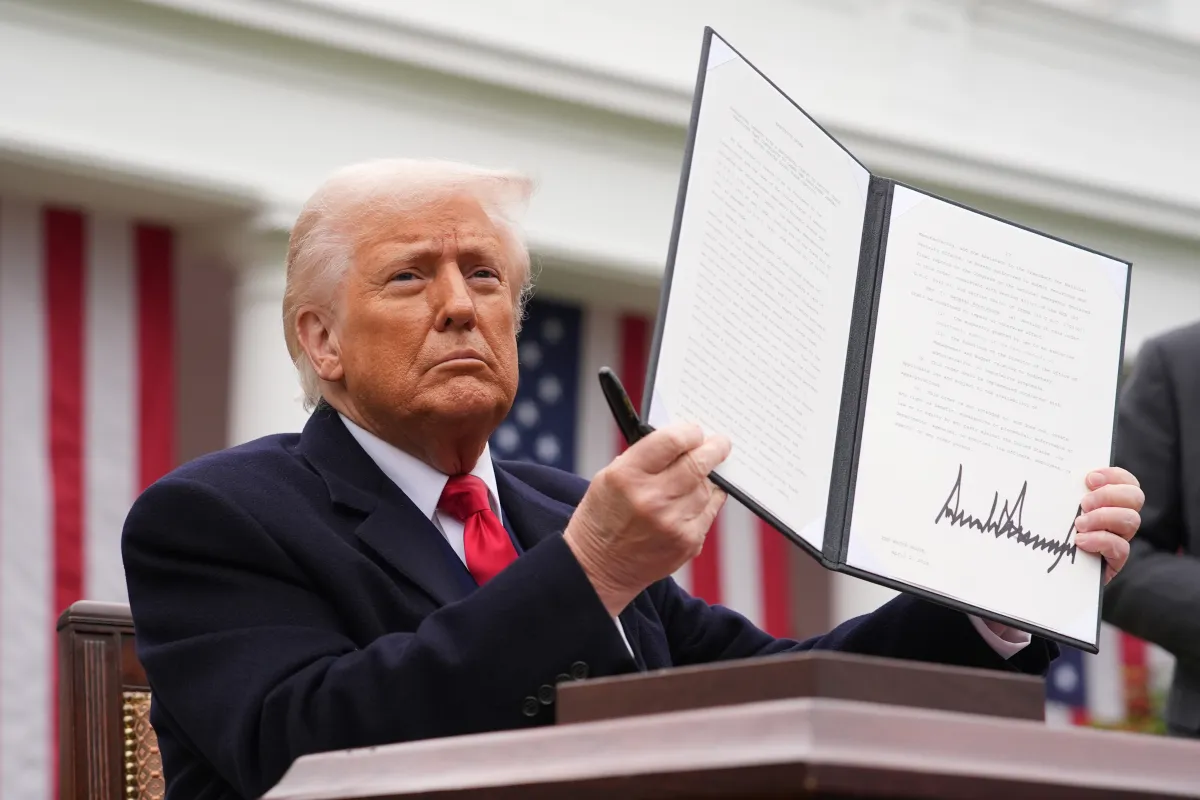
Market Overview - The Dow Jones Industrial Average fell 689 points, or 1.39%, closing at 48,936.45, raising concerns of a broader market crash [1][24] - The S&P 500 and Nasdaq Composite also declined, with the S&P 500 down 0.67% to 6,863.01 and the Nasdaq down 0.60% to 22,749.39 [1][11] Tariff Impact - A primary driver of the market decline is the announcement of a 15% global tariff increase, which raises import costs and could lead to inflation and squeezed profit margins for multinational companies [3][24] - The Dow is more sensitive to global trade issues compared to tech-heavy indexes, as many of its components rely on international supply chains [5][24] Investor Sentiment - Investors are reacting to uncertainty surrounding the tariffs, with fears of retaliation from Europe and other economies, as well as concerns over whether official tariff documents have been signed [6][7][24] - The Nasdaq's decline indicates a risk-off behavior, with growth and technology stocks typically falling during periods of macro uncertainty [8][24] Commodity Movements - Gold prices surged 2.7% to $5,217.90, reflecting increased inflation fears and geopolitical uncertainty, while silver gained 5.25% [2][9][12] - Oil prices also rose, suggesting that markets are pricing in inflation risk rather than an immediate demand collapse [9][13] Cryptocurrency Trends - Bitcoin fell below $66,000, indicating stress in crypto markets, as it continues to behave like a risk asset during periods of market volatility [10][14][24] Federal Reserve Position - The Federal Reserve is taking a cautious approach to future interest rate decisions, with Governor Christopher Waller indicating that tariff-related inflation may be short-lived [15][24] - The Fed's decisions will be data-dependent, and rate cuts are not expected in March unless economic data deteriorates significantly [21][24] Market Outlook - Investors are questioning whether the current market conditions represent a short-term selloff or the beginning of a deeper correction, with tariff uncertainty being the dominant market driver [19][25] - Upcoming events, including the March 6 jobs report and the Fed's March meeting, will be critical in determining market direction [23][25]


Why Is Crypto Crashing? Record $700M Exits Bitcoin ETFs in Single Day as Wall Street De-Risks Ahead of Trade War
Yahoo Finance· 2026-01-24 08:37
Core Insights - Over $700 million was withdrawn from US spot Bitcoin ETFs in a single day, marking the largest outflow since November 20, indicating a significant shift in investor sentiment [1] - The outflow was influenced by renewed trade tensions due to President Trump's tariff threats against Europe, leading to a broader risk-off sentiment in global markets [2][3] Market Dynamics - Bitcoin's price fell below $88,000 during the sell-off but stabilized around $89,500, with the total crypto market cap declining by approximately 2-3% to just above $3 trillion [2][3] - In early January, spot Bitcoin ETFs had net inflows of about $1.4 billion in a week, highlighting the rapid change in market sentiment driven by macroeconomic factors [3] Trading Activity - Derivatives data suggests a de-risking approach rather than a complete market unwind, with Bitcoin futures open interest at approximately $58.5 billion and $63.5 billion traded in the last 24 hours [3] - Liquidations were around $110 million, and the wider crypto market's futures open interest was near $132 billion, indicating cautious repositioning rather than panic selling [4] On-Chain Analysis - Bitcoin's on-chain trading volume remains relatively low, with only $0.7 million in spot DEX volume and $15 million in perpetual flows compared to nearly $14.4 billion in global DEX spot trades [5] - Approximately 15,000 BTC, valued at around $1.35 billion, flowed into centralized exchanges over the past week, suggesting increased selling pressure [6][7]
Trump hits 8 European countries with tariffs: Asian and European markets fall; US stock futures tumble
The Times Of India· 2026-01-19 04:00
Market Reactions - US stock futures fell, with S&P 500 futures down about 0.7% and Nasdaq futures down 1.0% amid thin trading due to a holiday [2][5] - The dollar weakened against safe-haven currencies, slipping against the Japanese yen and the Swiss franc [2][5] - Gold and silver reached record highs as investors sought safety, while oil prices eased due to concerns over a potential trade dispute impacting global growth [2][5] European Market Sentiment - Major European indices, including EUROSTOXX 50 and Germany's DAX futures, were down 1.1% [2][5] - The European Union condemned the tariff threat from the US, viewing it as economic coercion related to Greenland [3][5] - The EU is considering retaliatory tariffs on €93 billion ($108 billion) worth of US imports, which were previously approved but suspended [3][5] Investment Dynamics - European countries hold approximately $8 trillion in US bonds and equities, nearly double that of the rest of the world combined, which could lead to repatriation of investments [3][5] - Analysts warn that leveraging capital flows could be more disruptive to markets than tariffs alone, given the current negative net international investment position of the US [3][5] Economic Data and Corporate Earnings - Investors are awaiting Chinese economic data, with growth expected to slow to 4.4% in the December quarter from 4.8% previously [3][5] - Delayed data on US core inflation and consumer spending for November is expected to influence Federal Reserve interest rate cut expectations [3][5] - Corporate earnings reports are anticipated from major companies including Netflix, Johnson & Johnson, General Electric, and Intel [3][5] Currency and Commodity Markets - The euro rose 0.1% to $1.1613, while sterling increased to $1.3387; the dollar fell 0.2% against the Swiss franc and 0.3% against the yen [3][5] - Gold prices climbed 1.5% to $4,664 an ounce, while oil prices saw a slight decline, with Brent crude down 0.5% at $63.84 a barrel and US crude off 0.4% at $59.18 [3][5]


X @Bloomberg
Bloomberg· 2025-12-03 15:25
Canadian firms’ output per hour worked rose in the third quarter, mostly reversing the initial hit to productivity from the trade conflict with the US https://t.co/6Fdnr9GyPJ ...
China's retaliation cements a bitcoin reset
Yahoo Finance· 2025-10-15 10:00
Core Insights - Bitcoin has faced significant losses due to escalating trade tensions between the US and China, impacting investor sentiment and market stability [1][5] - Despite recent downturns, Bitcoin is still up over 20% year-to-date, outperforming the S&P 500, indicating a volatile yet resilient market [2] - The cryptocurrency market is particularly sensitive to geopolitical issues, with unresolved trade disputes posing risks for future price stability [8][10] Market Performance - Bitcoin experienced a drop of as much as 5% on a recent Tuesday but managed to recover some losses following indications from Fed Chair Jerome Powell about potential rate cuts [7] - The overall bullish sentiment in the stock market has contributed to Bitcoin's strong performance in October, although recent geopolitical tensions have created uncertainty [2][6] Investor Behavior - The excitement surrounding cryptocurrency investments has led to increased leverage among investors, making them vulnerable to market fluctuations and panic selling [6] - Forced liquidations due to aggressive speculative bets have exacerbated the decline in Bitcoin prices, highlighting the risks associated with high-leverage trading [6] Geopolitical Impact - The ongoing trade conflict between the US and China has created a pause in bullish market trends, reminding investors of the fragility of current gains [5][8] - Future developments in trade diplomacy could either stabilize the market or lead to further declines, depending on the outcome of tariff negotiations [10]
China's market rally faces test as U.S. trade rift flare: 'much more difficult couple of weeks now'
CNBC· 2025-10-13 04:37
Core Viewpoint - China's stock market rebound is facing strain due to renewed U.S.-China trade tensions, which threaten investor optimism and could derail the recent rally [1][3]. Market Performance - Chinese shares recently reached multi-year highs, with the CSI 300 index rising nearly 20% and the Hang Seng Index increasing around 33% since the beginning of the year [2]. - However, both indexes experienced a decline of over 2% on a recent Monday, indicating potential instability in market sentiment [3]. Geopolitical Risks - The continuation of the market rally is contingent on stability in geopolitical risks, particularly regarding trade relations [3]. - Analysts express concerns that the re-emergence of tariff rhetoric could quickly unravel positive market sentiment [3][4]. Expectations of Trade Relations - Market expectations for a potential meeting between U.S. President Donald Trump and Chinese President Xi Jinping have diminished, leading to increased uncertainty [4]. - Analysts suggest that if neither side concedes, the U.S. and Chinese economies could lead the global economy into a deep recession [5][7]. Market Conditions - Goldman Sachs highlights that the current market is "overbought," with gains concentrated in a few major stocks like Tencent, Alibaba, and NetEase, making them vulnerable to a pullback [6][8]. - The investment bank warns that the uncertainty surrounding U.S.-China relations could lead to a more negative market outcome, including the reimposition of high tariffs [6][7].

Trump fires back at China's rare earth mineral restrictions by threatening 100% tariffs
TechCrunch· 2025-10-11 16:57
Core Points - President Trump announced a 100% tariff on all imports from China, in addition to existing tariffs, which have a base rate of 40% [1][2] - The announcement is part of an escalating trade conflict, with China tightening export controls on rare earth minerals, essential for the tech industry [2] - The new tariffs are set to take effect on November 1, but Trump indicated they could be reconsidered [4] Market Impact - Following the announcement, stock markets experienced significant declines, with the Dow Jones down 1.9%, S&P 500 down 2.71%, and Nasdaq down 3.56% [5] - Tech companies were particularly affected, with Nvidia and Tesla both dropping around 5% [5] - The crypto markets also saw substantial liquidations, reportedly 10 times the dollar value of liquidations during the FTX collapse [7]
How Will Prudential Financial Stock React To Its Upcoming Earnings?
Forbes· 2025-07-28 10:45
Group 1 - Prudential Financial is expected to report earnings on July 30, 2025, with revenues projected at approximately $13.4 billion, reflecting a 3% year-over-year decline, and earnings per share estimated at $3.23, indicating a slight decrease compared to the previous year [2] - The U.S. insurance operations are anticipated to remain a significant contributor to earnings, with improved underwriting and reduced expenses in Q1, although some areas are experiencing weaker investment and fee-related income [2] - The global investment management division is likely to perform well due to an increase in assets under management driven by equity market appreciation, net inflows, and enhanced investment performance [3] Group 2 - The current market capitalization of Prudential Financial is $37 billion, with total revenue for the past twelve months at $61 billion and net income at $2.3 billion [4] - Historical data shows that Prudential Financial has recorded 20 earnings data points over the past five years, with 9 positive and 11 negative one-day returns, resulting in a 45% occurrence of positive returns [7] - The median of the positive one-day returns is 2.5%, while the median of the negative returns is -2.2% [7] Group 3 - There is a strategy to understand the correlation between short-term and medium-term returns post-earnings, which can help in executing trades based on the strongest correlations observed [8] - The performance of peers can influence the post-earnings stock reaction, with historical data indicating that price adjustments may begin before earnings are disclosed [9] - The Trefis High Quality portfolio has outperformed the S&P 500, delivering returns exceeding 91% since its inception, providing an alternative for investors seeking less volatility [5][10]



X @Bloomberg
Bloomberg· 2025-07-13 17:26
Trade Relations - German Chancellor Friedrich Merz stated that US President Donald Trump's threat of 30% tariffs would significantly impact European exporters [1] - The German Chancellor emphasized the need for a negotiated solution to avoid the potential negative consequences of the tariffs [1]